Capítulo 1
The Invisible Battlefield: Surviving Narcissistic Abuse
When someone you love becomes someone you fear, you've entered the twisted labyrinth of narcissistic abuse. Shahida Arabi's groundbreaking collection of essays on malignant narcissism has become a lifeline for millions, ranking as Amazon's #1 bestseller in personality disorders for eight consecutive months. What makes this work so powerful? Unlike clinical texts that merely describe narcissistic behavior, Arabi combines rigorous research with the raw authenticity of lived experience, creating what therapist Andrea Schneider calls "an essential resource" that validates survivors' reality while providing concrete tools for escape and healing. In a culture that often dismisses psychological abuse as mere relationship difficulties, Arabi's work has sparked a revolution in how we understand these invisible wounds, helping countless victims recognize they aren't crazy, oversensitive, or alone in their suffering.
Capítulo 2
The Calculated Destruction of a Narcissistic Love Story
The narcissist's love story follows a predictable yet devastating script-one that begins not with genuine affection but with calculated manipulation. These predators don't just stumble into toxic behavior; they methodically plan your emotional destruction while presenting a carefully crafted mask of perfection. Through accelerated intimacy, they position themselves as your soulmate, mirroring your interests, dreams, and values with uncanny precision. They isolate you under the guise of wanting you "all to themselves," making you feel special while systematically cutting off your support network.
The peace feels intoxicating-especially if you've survived previous emotional battlegrounds-until the first unexpected blow arrives. The mask slips, revealing rage that's quickly dismissed as "just having a bad day." Before you can process this shift, they've already begun weaving an intricate web of falsehoods and insecurities. Your strengths become flaws, your boundaries become unreasonable demands, and your reality becomes whatever they declare it to be.
What began as romance transforms into addiction-a potent cocktail of poison and remedy that keeps you perpetually off-balance. Each withdrawal period leaves you reeling as you desperately chase validation, trying to recapture the fairy tale that has morphed into nightmare. The narcissist doesn't just hurt you; they celebrate your pain, feasting on your wounds rather than healing them. You become emotionally malnourished, surviving on crumbs of affection where once you feasted.
As discrepancies accumulate and stories self-destruct, you realize the only true closure comes from within. The happy ending isn't finding Prince Charming-it's recognizing he never existed at all. What you loved was a carefully constructed illusion designed to extract maximum emotional supply before the inevitable, calculated discard.
Capítulo 3
The Manipulation Playbook: Five Tactics That Keep Victims Trapped
Understanding the systematic nature of narcissistic abuse is crucial for recognizing it's not just "a bad relationship" but psychological warfare. These manipulative tactics create profound cognitive dissonance that keeps victims questioning their own perceptions rather than the abuser's behavior.
The idealization-devaluation-discard cycle forms the backbone of narcissistic relationships. During idealization, you're love-bombed with excessive attention and flattery, creating an artificial soulmate effect through mirroring. When devaluation begins, their behavior becomes erratic-hot one moment, cold the next-with criticism replacing compliments and comparisons to others becoming routine. Your attempts to understand this shift are met with stonewalling, gaslighting, and narcissistic rage.
What keeps victims hooked is intermittent reinforcement-unpredictable rewards that create an addiction similar to gambling. You receive diminishing returns while investing more effort, believing if you could just be perfect enough, the loving person would return. During the final discard phase, the narcissist abandons you in deliberately humiliating ways, often while already grooming your replacement. Even after discarding you, they may "hoover" you back just to discard you more painfully if you start thriving independently.
Gaslighting becomes the cornerstone of narcissistic control, as abusers systematically invalidate your perception of reality. They develop convenient "abuse amnesia," denying or forgetting horrific incidents they perpetrated. Phrases like "You're too sensitive" or "I never said that" make you question your own experiences. This crazymaking technique allows narcissists to escape accountability while controlling your perception, effectively making you a slave to their distorted reality.
Narcissists maintain harems of admirers to stroke their egos, morphing into different personas depending on their audience. After discarding you, they typically launch smear campaigns painting you as unstable or abusive. These campaigns serve multiple purposes: deflecting your accusations by portraying you as the abuser, provoking emotional responses that "prove" your instability, and hoovering you back into the relationship drama as you defend yourself against false accusations.
Unlike healthy relationships built on security, narcissists manufacture love triangles to manipulate your emotions. Triangulation involves bringing a third person-an ex, a current affair, or even strangers-into your relationship dynamic. The narcissist might flirt excessively with waitstaff, make provocative statements like "I wish you'd be more like her," or create uncertainty with comments about exes wanting them back.
Perhaps most confusing is the disconnect between the narcissist's false self and true self. Their carefully constructed persona designed to gain admiration creates profound cognitive dissonance as you struggle to reconcile the charming person who initially captivated you with the cruel abuser who emerged later. Only during the discard phase do you glimpse their true self-cold, callous indifference revealing the contempt they felt all along.
Capítulo 4
The Invisible Violence of Psychological Terrorism
Narcissistic abuse is psychological terrorism-a million tiny shocks that shatter memory, erode self-worth, and fragment your life. It creates profound cognitive dissonance by contradicting everything we believe about human empathy and connection. Unlike physical abuse, these invisible wounds leave victims struggling to explain their trauma to others who dismiss them with platitudes like "it takes two to tango" or accusations of overreacting.
Victims rarely choose abusive relationships; instead, they choose partners wearing false masks of kindness who reveal their true nature only after securing emotional investment. Even after leaving, survivors face societal invalidation that compounds their trauma, as psychological abuse isn't recognized as "legitimate" suffering. The narcissist exploits this societal blindspot, manufacturing flaws in victims while pathologizing normal emotional responses.
According to the DSM-5, narcissistic personality disorder involves a pervasive pattern of grandiosity, need for admiration, and lack of empathy. But narcissists operate more insidiously in relationships than clinical criteria suggest. Their covert abuse plants seeds in victims' minds leading to self-destruction. This psychological terrorism includes emotional, spiritual, financial, sexual and physical abuse. Covert abuse can be more damaging than overt abuse because there are no visible wounds-only psychological terror.
Narcissism develops through multiple pathways-both traumatic childhoods and overvalued upbringings can produce narcissists. While understanding the origins is complex, the impact on victims remains clear regardless of causation. In relationships with narcissists, victims become objects supplying admiration and attention-what psychoanalyst Otto Fenichel called "narcissistic supply."
While the term "narcissist" has become mainstream, this creates both awareness and potential for misuse. True NPD involves not just occasional toxic behavior but a persistent pattern of entitlement, false superiority, and callous exploitation. Even if narcissists represent a small percentage of the population, their impact is amplified-according to therapist Sandra Brown, those with narcissistic and antisocial traits affect nearly 60 million Americans.
The consequences can be deadly. Jessica Haban took her life at 28 after years of domestic violence, with her husband charged for driving her to suicide through relentless harassment. Research by Mogilski and Welling revealed narcissists maintain contact with exes for self-serving reasons like practical and sexual benefits. In extreme cases, narcissistic abuse escalates to murder, as with Scott Peterson, Oscar Pistorius, and Jodi Arias, who demonstrated sociopathic traits including lack of remorse.
Psychotherapist Christine Louis de Canonville describes "Narcissistic Victim Syndrome" (NVS)-symptoms including dissociation, compartmentalization, cognitive dissonance and trauma bonding that can lead victims to defend abusers (Stockholm Syndrome). NVS overlaps with PTSD and Complex PTSD, featuring toxic shame, a hostile inner critic, emotional flashbacks, hypervigilance, anxiety, and depression.
Capítulo 5
Diversion Tactics: How Narcissists Silence Your Truth
Toxic individuals employ an arsenal of manipulative tactics that exploit, demean and silence their victims while evading accountability. These diversionary tactics distort reality and deflect responsibility, creating a psychological battlefield where victims struggle to maintain their sense of truth.
Gaslighting replaces factual information with false narratives, using phrases like "That didn't happen" and "Are you crazy?" This insidious tactic erodes your sense of reality and disables your ability to trust yourself. The "Gaslight Effect" trains victims to second-guess their perceptions, creating cognitive dissonance between trusting their experience or believing the manipulator.
Projection occurs when toxic people refuse to acknowledge their own shortcomings and instead attribute them to others. Rather than admit flaws or wrongdoings, they dump their traits onto victims in cruel ways, making others feel responsible for their behavior. The solution? Don't project your compassion onto toxic people or accept their projections.
Expecting thoughtful discussion with toxic individuals leads instead to "epic mindfuckery." They employ word salad, circular conversations, personal attacks, projection and gaslighting to disorient you when you disagree or challenge them. A simple disagreement can spiral into attacks on your entire life because you've triggered a narcissistic injury by questioning their omnipotence.
Intellectually lazy narcissists rely on generalizations rather than considering nuanced perspectives. In relationships, when you call out unacceptable behavior, they respond with statements like "You're never satisfied" or "You're always too sensitive" rather than addressing the actual issues.
Malignant narcissists transform your legitimate emotions and experiences into character flaws and evidence of irrationality. They reframe your statements to make your opinions seem absurd, putting words in your mouth with responses like "Oh, so now you're perfect?" or "So I am a bad person?" when you've merely expressed feelings.
Unlike constructive criticism, toxic people's feedback includes personal attacks and impossible standards. They don't want to help you improve but to tear you down. Abusive narcissists employ the "moving the goalposts" fallacy, ensuring they always have reason to be dissatisfied with you. This perpetual shifting of expectations instills a pervasive sense of unworthiness.
When confronted about their behavior, narcissists immediately change the subject to something you did years ago. These diversions have no time limits or subject boundaries and often begin with "What about the time when..." Combat this by using the "broken record" method-repeatedly redirecting to the original issue without engaging their distractions.
Driven by pathological envy, narcissists feel threatened when their false superiority is challenged, responding with ultimatums rather than mature compromise. Their "do this or I'll do that" mentality aims to instill fear and force compliance with their unreasonable demands.
Capítulo 6
The Secret Language of Predatory Personalities
Society assumes everyone has a conscience and empathy, yet an estimated 1 in 25 Americans are sociopaths according to Harvard psychologist Martha Stout. These predators often appear eerily normal, charming and charismatic-they're not always criminals but everyday people of any background or status. They can be found in boardrooms, classrooms, religious institutions, and even families, making them particularly dangerous because they blend in so seamlessly with society's fabric.
Their manipulation is psychologically devastating, with emotional pain activating the same brain circuitry as physical pain. Their "death by a thousand cuts" approach involves unexpected attacks using sarcasm, condescension, name-calling and nonverbal cues like sadistic smirks or cold eyes while professing love. These subtle aggressions might include "forgetting" important dates, making backhanded compliments, or using plausible deniability with phrases like "I'm just joking" or "you're too sensitive" to gaslight their targets.
Narcissistic abusers celebrate when you share your vulnerabilities during the early relationship stages. While you see this sharing as building intimacy and connection, they see it as "dinner laying itself on the table." Though initially pretending to support and empathize, they later weaponize these confidences to provoke and demean you. They might reference past traumas during arguments, mock your insecurities in public settings, or use your fears against you in calculated ways that appear coincidental to others.
During the idealization phase, narcissists couldn't get enough of your strengths and accomplishments, showing you off like a trophy that made them feel superior by association. They lavish you with excessive praise, introduce you to everyone as their "brilliant" partner, and seem to celebrate every aspect of your personality. In the devaluation phase, they literally translate these strengths into flaws-your confidence becomes "cockiness," your intelligence becomes "know-it-all" behavior, your success becomes "showing off." They gaslight you about your worth while projecting their inferiority onto you, degrading your accomplishments as meaningless or achieved through luck rather than skill.
The narcissist cultivated your dependence on their validation early in the relationship through a careful process of intermittent reinforcement. By making you crave their praise, they conditioned you to seek the excessive admiration only they could provide. This might involve love-bombing followed by periods of coldness, creating an addiction-like response to their approval. During devaluation, they exploit this need by withdrawing frequently, appearing sullen, and framing your generous acts as failures that never meet their impossible standards. They might praise others in front of you while ignoring your achievements, compare you unfavorably to others, or dampen celebrations of your success with subtle criticism or feigned concern.
Their manipulation tactics often extend to social circles, where they carefully craft their public image while isolating their target. They may spread subtle doubts about their victim's mental stability or create scenarios where the victim appears unstable or unreasonable to others. This social manipulation serves to further trap the victim while maintaining the abuser's reputation as reasonable and concerned.
Capítulo 7
The Pathological Envy That Reveals Your Power
Pathological envy stands as one of the most perplexing and destructive aspects of narcissistic abuse. Narcissists operate from a deep-seated need to be perceived as the best in every situation and feel entitled to constant attention, admiration, and a position of superiority. Any perceived threat to their carefully constructed grandiose self-image results in narcissistic injury and explosive rage. In the early stages, they often shower you with excessive praise, parading your accomplishments and showing you off like a prized possession, but as the relationship deepens, their underlying envy surfaces through increasingly hostile behaviors, beginning with subtle contempt that gradually escalates into full-scale attacks on your identity, achievements, and self-worth.
Narcissists are strategically attracted not just to people's vulnerabilities but specifically to their strengths and assets. Your achievements, talents, and positive qualities initially draw them in, but these same attributes eventually threaten their sense of control and trigger their compulsive need to diminish and sabotage you. When they later claim that their victims are "obsessed" with them, this represents pure psychological projection, as they were the ones who deliberately targeted and pursued their victims from the very beginning, studying their prey like predators.
The manifestation of pathological envy follows distinct patterns throughout the relationship cycle. Initially, narcissists enthusiastically praise your accomplishments while secretly harboring intense resentment. They engage in constant competition, turning even minor situations into opportunities to prove their superiority. They become visibly agitated when losing at anything, from board games to professional achievements. When you display healthy confidence, they immediately label it as arrogance or self-absorption. What they once praised as brilliant, they later dismiss as mediocre or worthless. They systematically sabotage important moments in your life through calculated arguments, cruel put-downs, and sophisticated crazymaking tactics designed to destabilize you. Your goals and aspirations are treated with increasing contempt while they persistently redirect every conversation back to themselves and their supposed achievements.
The path to healing requires developing what might be called a "toxic people phrases filter" - a mental framework that allows you to reinterpret narcissistic degradation for what it truly represents: clear evidence that they recognize your value and feel fundamentally threatened by it. When evaluating their criticism, it's crucial to consider the source: do they have genuine accomplishments of their own, or do they merely project false grandiosity? Healthy individuals naturally feel joy and celebration for others' success rather than an overwhelming urge to diminish or destroy it. The intensity of a narcissist's pathological envy serves as a reliable measure of your true power and potential - the stronger their reaction, the more significant your capabilities must be to provoke such a response.
Understanding this dynamic helps transform their toxic behavior from a source of pain into validation of your worth. Their attempts to diminish you become indirect acknowledgments of your strengths, and their relentless competition reveals their deep-seated recognition of your capabilities.
Capítulo 8
Breaking Free: Awakening to Your Authentic Power
The relationship with a narcissist is deliberately designed for your failure. Through moving goalposts, contradictory communication, and gaslighting, they create a false reality where you constantly doubt yourself while seeking their approval. What initially seemed like love becomes emotional bankruptcy-a performance where you're cast in a role you never auditioned for: their endless supply source.
Yet this devastating experience offers profound awakening. It provides wisdom about human nature, heightens your discernment, and deepens your appreciation for authentic people. Though no one deserves such trauma, survivors can channel this pain into personal power. Thriving isn't about forced healing or perfection-it's about progress, validating your experience while constructively channeling it forward.
For survivors who've ended relationships with narcissistic abusers, No Contact provides protection from hoovering attempts. Those in complex situations like marriages with children can practice "Low Contact" through methods like Gray Rock, becoming emotionally nonreactive while developing exit strategies.
Reverse discourse involves reframing to reclaim power and agency. This powerful technique helps survivors overcome the lingering effects of abuse through "talking back" to abusers mentally, replacing disempowering words with positive affirmations, reassigning degrading terms with empowering meanings, and channeling negative experiences toward positive outcomes.
To challenge a narcissist's power, survivors must embrace opposite action strategies. When stonewalled, use the silence to reconnect with your authentic self. When triangulated, make yourself the priority and build a supportive network. Counter gaslighting by validating your reality through journaling or sharing with trusted friends.
Extreme self-care requires regularly asking "What do I need right now?" and honoring those needs without excuse. For those in or recovering from abusive relationships, this might mean initiating Low Contact or No Contact, traveling somewhere safe temporarily, or researching available support options.
Complex PTSD survivor Lilly Hope Lucario identifies ten self-defeating habits survivors must eliminate: listening to unsolicited advice from those without trauma knowledge, comparing your healing journey to others, believing quick recovery indicates strength, self-blame for the abuse, thinking abusers' treatment reflects your worth, pressuring yourself to "be over it," minimizing trauma, feeling obligated to forgive heinous abuse, believing abuse happened because you were "weak," and tolerating invalidation of your trauma.
Capítulo 9
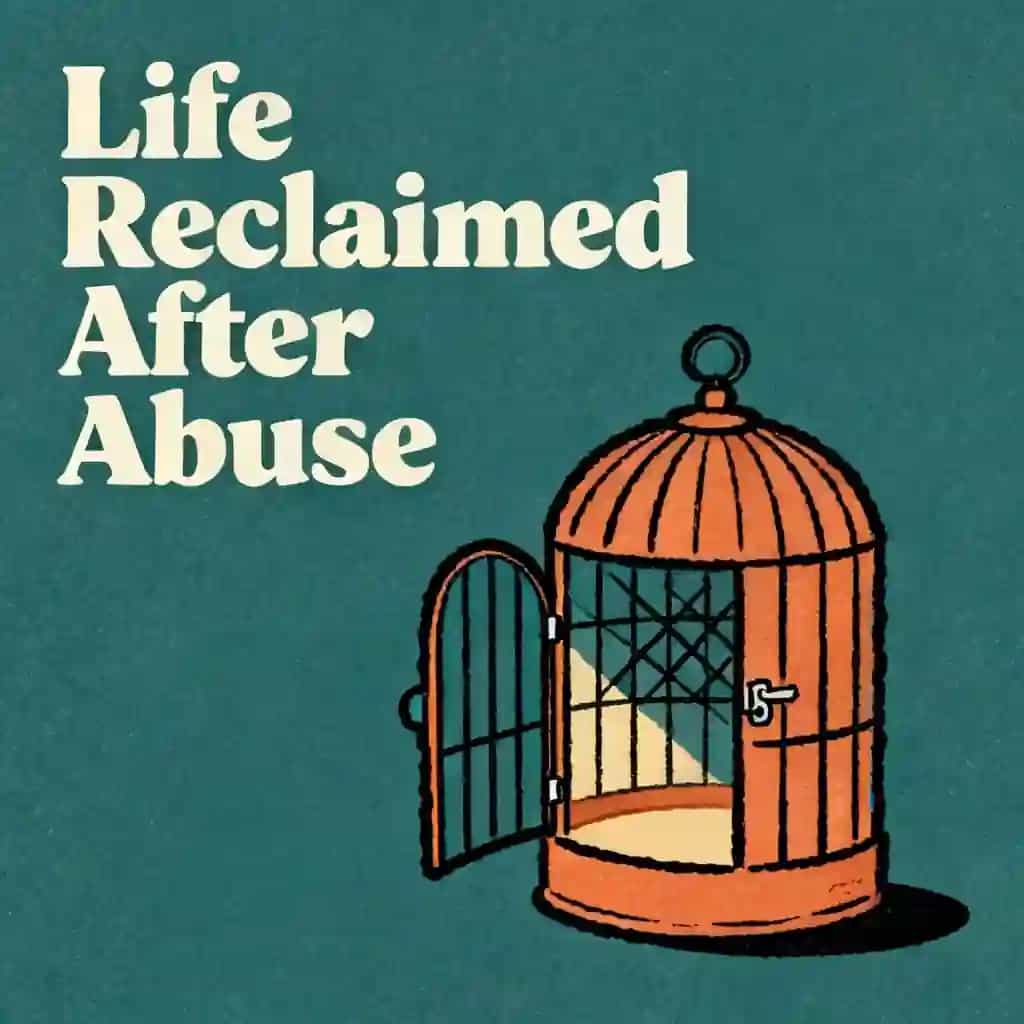
The Healing Journey: Reclaiming Your Life After Abuse
Healing from narcissistic abuse isn't linear-it's complex, convoluted and multifaceted, filled with ups and downs, breakdowns and breakthroughs. Like breaking through a cocoon, healing requires shattering from within before rebirth. It's messy, cruel, painful and heartbreaking, yet also inspiring, life-changing and extraordinary.
What society often considers healing-quickly covering wounds and forcing forgiveness-is actually desensitization and self-destruction. While there's no quick fix, survivors eventually see the world differently, recognizing both predators and nurturers, and discovering their own resilience and worthiness.
Cognitive Behavioral Therapy (CBT) helps dismantle cognitive distortions by finding healthier thinking patterns and pinpointing connections between unhealthy thoughts, feelings, beliefs and behaviors. After narcissistic abuse, survivors often ruminate over the narcissist's lies about their worth and value.
Research shows meditation can reverse trauma's effects on the brain by thickening frontal lobes and increasing gray matter. A Harvard neuroscientist found that eight weeks of regular meditation can shrink the amygdala (which controls "fight or flight") and thicken the hippocampus (which helps with emotional regulation).
Eye Movement Desensitization and Reprocessing (EMDR) uses eye movements to mitigate disturbing thoughts. This eight-step process desensitizes negative emotions associated with trauma through rapid eye movement, replacing them with positive feelings and beliefs.
Dr. Bessel van der Kolk's research confirms yoga as an effective complementary treatment for chronic PTSD. By increasing mindful awareness, yoga helps survivors experience safety and mastery over their bodies, providing resources to interpret intense physiological states.
Art therapy effectively treats PTSD by bypassing Broca's area-the language center often shut down by trauma-and reconnecting survivors to the somatic and limbic aspects where trauma is encoded. Whether through painting, pottery, sculpture, or sketching, creative expression opens dialogue with trauma when words fail.
Inner child work helps survivors reconnect with childhood wounds and develop a healing relationship between adult and child selves. When triggered by abuse in adulthood, we often regress to childhood states on a cellular level, reactivating old neural pathways. By visualizing, comforting, and "re-parenting" our inner child with compassion and unconditional positive regard, we can address subconscious wounding.
To heal from abuse, survivors must reprogram their subconscious minds from destructive automatic thoughts-often the internalized voices of abusers. These thoughts fuel self-sabotage and limit personal power. Daily positive affirmations tailored to specific wounds and insecurities can help rewrite the narrative abusers have written.
Trauma lives in our bodies as well as our minds. Finding physical outlets for intense emotions of grief, rage and hurt is crucial to combat the paralysis and numbness that accompanies trauma. Activities like kickboxing, yoga, dance cardio and running while listening to empowering music can be therapeutic.
Contrary to popular belief, asking for help demonstrates strength, not weakness. Sharing your story with other survivors can be incredibly healing. It's crucial to choose a trauma-informed counselor who can guide you with appropriate therapy addressing your specific symptoms and triggers.