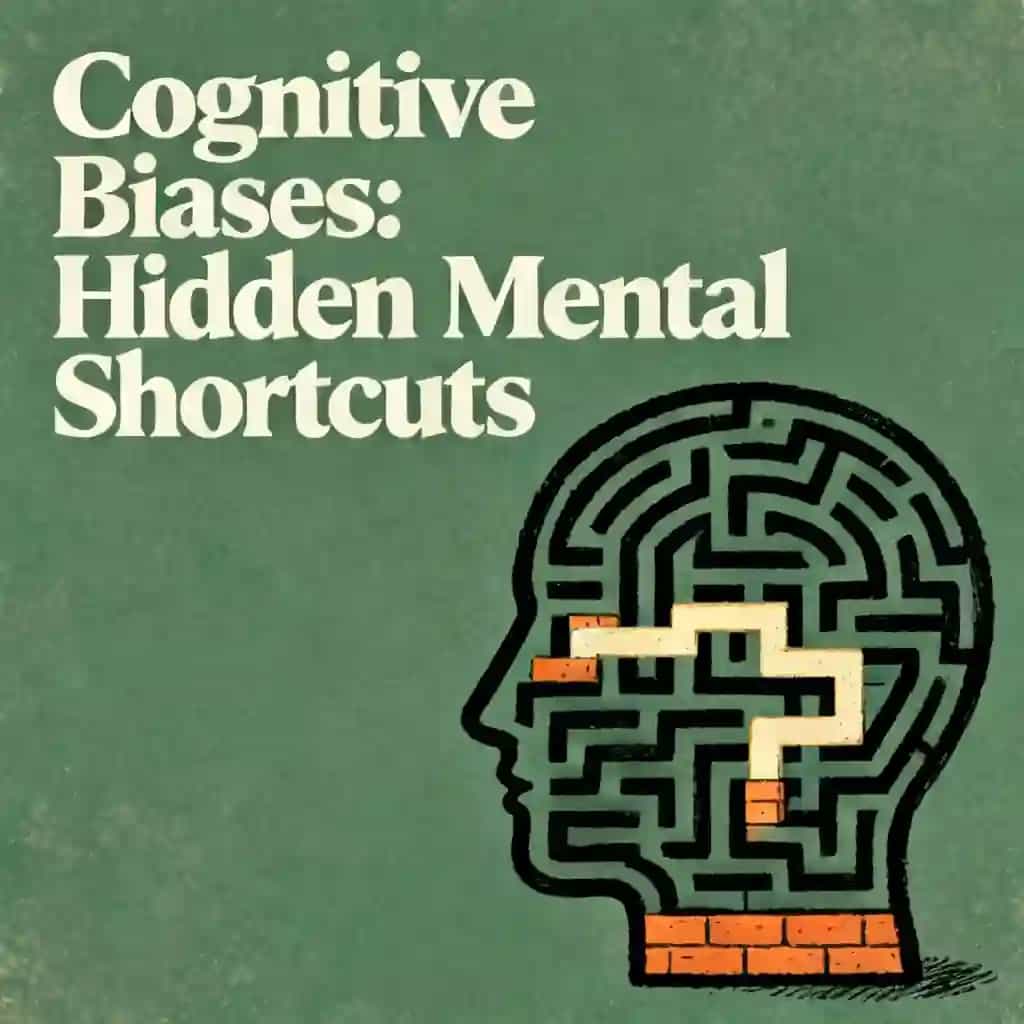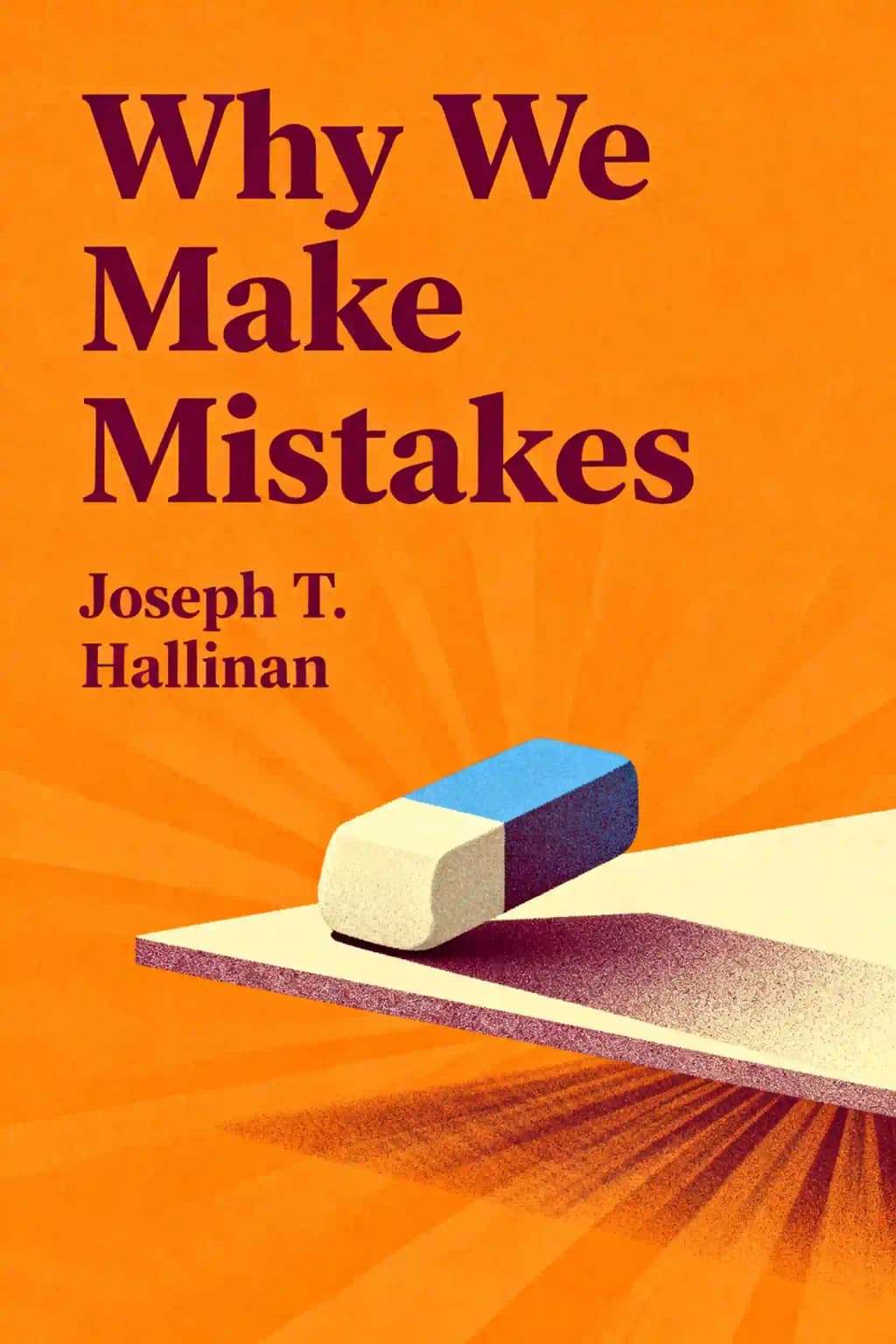
Ever wonder why you misplace keys or make bad decisions? "Why We Make Mistakes" reveals the science behind our flawed brains, showing how cognitive biases sabotage our daily choices. A must-read that transforms self-awareness into practical error-prevention strategies across industries.
Joseph T. Hallinan, Pulitzer Prize-winning journalist and bestselling author of Why We Make Mistakes, specializes in exploring human behavior through the lens of cognitive psychology and decision-making. A former reporter for The Wall Street Journal and The New York Times, Hallinan combines rigorous investigative skills with accessible storytelling to unpack why people overlook errors, misjudge risks, and cling to false confidence. His expertise stems from years analyzing systemic failures in medicine, criminal justice, and everyday life—including his Pulitzer-winning investigation into medical malpractice that revealed critical gaps in healthcare oversight.
Hallinan’s other works include Going Up the River: Travels in a Prison Nation, a groundbreaking exploration of mass incarceration named a New York Times Notable Book, and Kidding Ourselves: The Hidden Power of Self-Deception, which examines how biases shape reality.
As a visiting professor at Vanderbilt University and frequent commentator on NPR’s Fresh Air and CBS News, he bridges academic research with public understanding. Why We Make Mistakes has sold over 100,000 copies in the U.S. alone and been translated into 12 languages, cementing its status as a seminal work in behavioral science.
Why We Make Mistakes examines the science behind human error, revealing how cognitive biases, memory limitations, and environmental factors lead to predictable mistakes. Joseph T. Hallinan combines psychology research and real-world examples—from aviation errors to financial misjudgments—to explain why we overlook details, overestimate abilities, and repeat errors. The book offers actionable strategies to mitigate these pitfalls.
This book is ideal for:
Yes—it’s a bestselling work translated into over a dozen languages, praised for blending academic rigor with engaging storytelling. Hallinan’s insights into cognitive illusions and practical tips (like using checklists) make it valuable for personal and professional growth.
Joseph T. Hallinan is a Pulitzer Prize-winning journalist and author renowned for exploring human behavior. A former Wall Street Journal reporter, he’s written acclaimed books like Kidding Ourselves and Going Up the River. His expertise in investigative reporting lends credibility to his analysis of error mechanisms.
Key themes include:
Hallinan highlights reconstructive memory—how brains fill gaps with assumptions—leading to inaccuracies. For example, eyewitness testimony often misrembers events due to stress or suggestion. Context shifts (e.g., learning info in one room but recalling it elsewhere) exacerbate these errors.
Overconfidence blinds us to our limitations, causing preventable mistakes. The book cites examples like investors misjudging market risks or doctors dismissing second opinions, emphasizing that 70% of people rate themselves "above average" in skill—a statistical impossibility.
Strategies include:
Situational cues heavily impact choices: Hospital layouts affect nurse errors, while supermarket lighting alters purchasing habits. Hallinan argues that small environmental tweaks—like simplifying forms—can drastically reduce mistakes.
Yes, including:
Unlike Daniel Kahneman’s Thinking, Fast and Slow (focused on decision-making systems) or Charles Duhigg’s The Power of Habit, Hallinan’s work specifically dissects error mechanisms, offering a unique lens on prevention. It complements these works by addressing practical mitigation over theoretical models.
In an era of AI-driven decisions, the book reminds readers that human cognitive limits persist. Its lessons on mitigating bias and attention lapses remain critical for professionals navigating complex systems—from healthcare algorithms to financial AI tools.
Sinta o livro através da voz do autor
Transforme conhecimento em insights envolventes e ricos em exemplos
Capture ideias-chave em um instante para aprendizado rápido
Aproveite o livro de uma forma divertida e envolvente
Our confidence in our visual abilities is wildly misplaced.
Names, like penny features, are forgettable because they lack inherent meaning.
Our minds struggle with meaningless information.
We consistently overestimate our ability to remember meaningless information.
Our brains automatically make connections and form perceptions without our conscious awareness.
Divida as ideias-chave de Why We Make Mistakes em pontos fáceis de entender para compreender como equipes inovadoras criam, colaboram e crescem.
Destile Why We Make Mistakes em dicas de memória rápidas que destacam os princípios-chave de franqueza, trabalho em equipe e resiliência criativa.

Experimente Why We Make Mistakes através de narrativas vívidas que transformam lições de inovação em momentos que você lembrará e aplicará.
Pergunte qualquer coisa, escolha a voz e co-crie insights que realmente ressoem com você.

Criado por ex-alunos da Universidade de Columbia em San Francisco
"Instead of endless scrolling, I just hit play on BeFreed. It saves me so much time."
"I never knew where to start with nonfiction—BeFreed’s book lists turned into podcasts gave me a clear path."
"Perfect balance between learning and entertainment. Finished ‘Thinking, Fast and Slow’ on my commute this week."
"Crazy how much I learned while walking the dog. BeFreed = small habits → big gains."
"Reading used to feel like a chore. Now it’s just part of my lifestyle."
"Feels effortless compared to reading. I’ve finished 6 books this month already."
"BeFreed turned my guilty doomscrolling into something that feels productive and inspiring."
"BeFreed turned my commute into learning time. 20-min podcasts are perfect for finishing books I never had time for."
"BeFreed replaced my podcast queue. Imagine Spotify for books — that’s it. 🙌"
"It is great for me to learn something from the book without reading it."
"The themed book list podcasts help me connect ideas across authors—like a guided audio journey."
"Makes me feel smarter every time before going to work"
Criado por ex-alunos da Universidade de Columbia em San Francisco

Obtenha o resumo de Why We Make Mistakes como PDF ou EPUB gratuito. Imprima ou leia offline a qualquer momento.
A man spends hours showing friends his prized $139 million Picasso - then accidentally puts his elbow through it. Vigilantes storm a pediatrician's office, confusing the word with "pedophile." These aren't isolated incidents of stupidity. They're windows into how our brains actually work. We like to think we're rational creatures who occasionally slip up, but the truth is more unsettling: our minds come hardwired with systematic flaws that trip us up daily. We favor the number 7 without knowing why. We turn right when entering buildings. We refuse to change answers on tests even when we should. These aren't random quirks - they're predictable patterns woven into the fabric of human cognition, operating silently beneath our awareness.