Capítulo 1
The Diet Trap: Why Fighting Your Brain Makes You Gain Weight
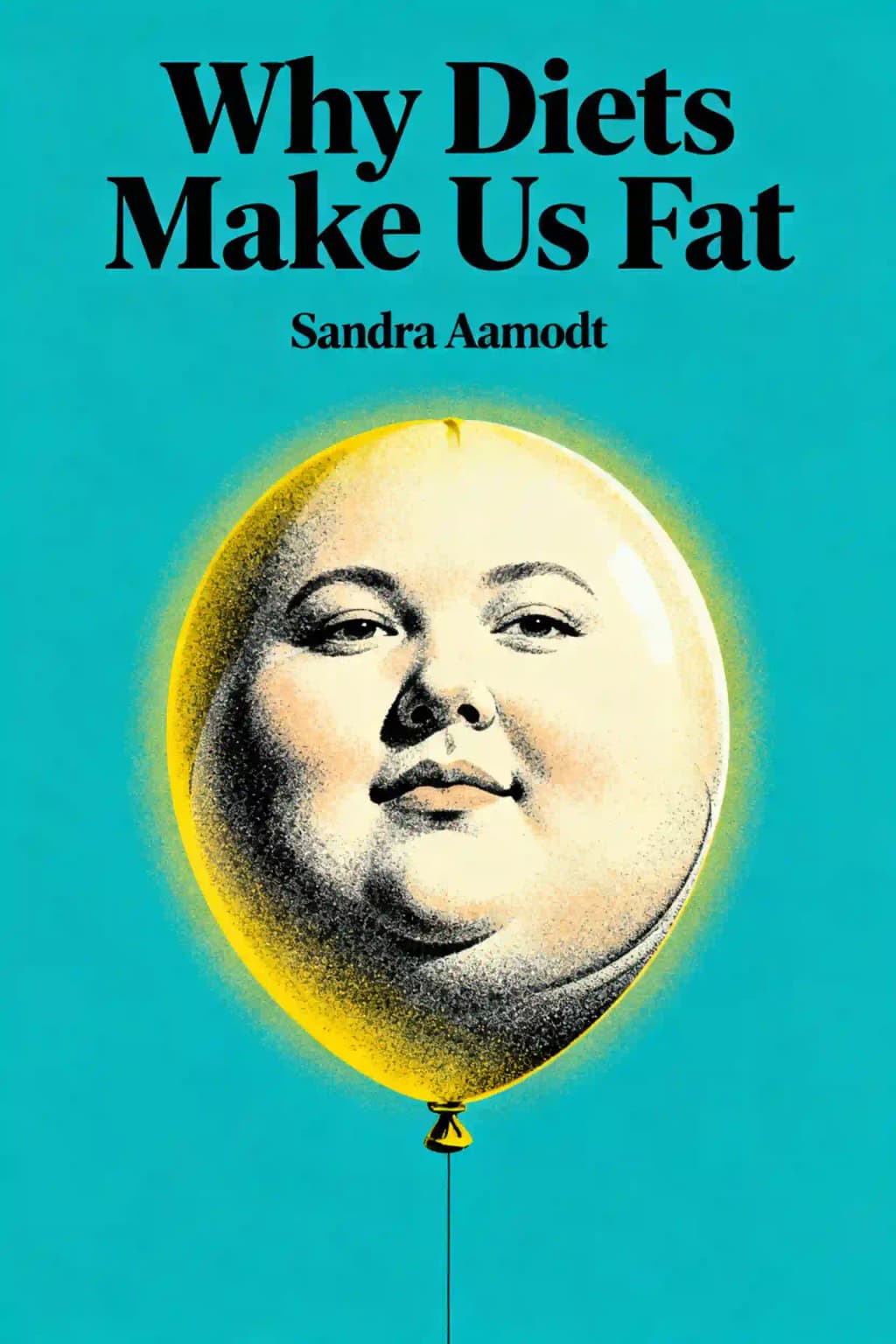
Have you ever wondered why the same 10-15 pounds keep returning no matter how disciplined your diet? You're not alone. Sandra Aamodt's groundbreaking work reveals a startling truth: dieting is making us fatter. As a neuroscientist who spent decades battling her own weight, Aamodt discovered that our brains actively fight weight loss, treating dieting as a form of starvation. This revelation transformed her relationship with food-she stopped dieting, stopped weighing herself, and started exercising daily. Her weight stabilized naturally. The book has become required reading in medical schools and nutrition programs, praised by healthcare professionals for challenging the harmful "calories in, calories out" oversimplification. Even celebrities like Oprah Winfrey have cited Aamodt's research when discussing their own weight struggles. In a culture obsessed with thinness yet facing rising obesity rates, this book offers something revolutionary: freedom from the diet cycle and a path to sustainable health that works with your brain instead of against it.
Capítulo 2
The Diet Roller Coaster: A One-Way Ticket to Weight Gain
Dennis Asbury's weight-loss journey began at 283 pounds when photos from his daughter's wedding forced him to confront reality. Through meticulous calorie counting and obsessive exercise-sometimes consuming just 600 calories daily-he dropped to 160 pounds in six months. But he'd beaten incredible odds. Men in his starting weight range have only a 1-in-1,290 chance per year of reaching normal weight. And keeping it off would prove even harder.
What Dennis didn't know was that his brain was working against him. Our brains defend a target weight range spanning about 10-15 pounds. Within this range, weight is relatively easy to modify, but staying below the brain's target is extraordinarily difficult. This defended range can change over time, but it increases much more easily than it decreases, making weight gain often irreversible.
The weight "thermostat" is located in the hypothalamus, which regulates energy balance by modifying hunger, activity, and metabolism based on signals about fat stores, blood sugar, and food intake. Being below your defended range typically makes you feel hungry, cold, and sluggish due to lower metabolism and reduced unconscious movement.
Modern life offers many opportunities for the defended weight range to inch upward. Puberty, staying above your current weight range for too long, pregnancy, and aging can all permanently increase the brain's defended weight. Diet quality matters too-processed foods, sugar, and fewer whole foods contribute to weight gain over time.
Critically, this process isn't reversible. Even years of keeping weight below the defended range doesn't reset the brain's target lower-it continues trying to push weight back up. This persistence explains why maintaining weight loss is so difficult and why temporary diet changes inevitably lead to yo-yo dieting.
Research consistently shows that most dieters regain their lost weight. After a year, the average dieter has lost 6% of starting weight, but then steadily regains it, typically reversing all weight loss within five and a half years. Only about 15% maintain significant weight loss for three years or more.
Most diet studies misleadingly track results for only six months to a year. The diet industry privately acknowledges these failures-one report stated that of 231 million Europeans who dieted in 2002, only 1% would achieve permanent weight loss. Yet this creates a profitable pool of repeat customers.
Despite popular beliefs, no particular diet type produces better long-term results than others. When calories are equal, weight outcomes are similar regardless of food composition. Nor does losing weight slowly versus quickly make any difference to long-term success. The problem isn't that we're dieting incorrectly-it's that dieting itself doesn't work.
Dieting has exploded in popularity-from 14% of women in the 1950s to 57% by the mid-2000s-yet evidence shows it often leads to weight gain, not loss. Within four years, two in five dieters end up heavier than before. The war on obesity has been a losing battle with extensive collateral damage. Understanding the psychology and neuroscience behind weight regulation helped me realize my brain's response to weight loss was normal, not a personal failure.
Capítulo 3
When Willpower Runs Out: Biology Trumps Determination
Dennis Asbury's experience illustrates how even extraordinary willpower eventually falters against biological drives. After his initial weight loss success, he maintained rigid discipline-exercising daily in his office basement and restricting himself to 1600-1700 calories. But by the second year, food thoughts became a constant distraction. He found himself envying heavier people who could eat freely, while his life narrowed to obsessive calorie counting and exercise.
Two and a half years after his diet, amid work stress, Dennis's weight began creeping up. By April 2001, he hit 200 pounds and abandoned calorie counting-feeling both relief and failure. He binged on everything he'd missed and regained all his weight within a year.
Dennis's story reveals that dieting involves multiple competing brain systems: the energy-balance system defending weight within a set range, the reward system pushing toward calorie-dense foods, and the executive system attempting self-control. While the executive system can effectively regulate behavior for months, it cannot sustain effort indefinitely against the always-active energy-balance and reward systems.
Our brains function like competing committees rather than unified systems. This explains why we reach for brownies we just decided not to eat. The energy-balance system achieves remarkable 99.5% accuracy in matching calories in to calories out, but gets modified by the reward system-which evolved to encourage overeating during rare food abundance to prepare for future scarcity.
Weight loss increases eating rewards as leptin levels drop, making food more attractive and causing the brain to show heightened activity in reward areas when viewing food images. Studies show calorie-restricted people and animals work harder for food rewards, with food sometimes providing even more intense rewards than drugs like cocaine.
Willpower, our main weapon against impulse eating, has serious limitations. It engages the brain's executive system, which handles unfamiliar or difficult tasks requiring deliberate effort. While humans have impressive executive function compared to other primates, it requires frequent breaks to recharge and is impaired by stress, sleep loss, loneliness, and lack of exercise-all factors that increase obesity risk. Dieting itself produces stress hormones that directly impair the willpower needed to resist temptation.
Research shows willpower depletes with use. In studies, participants forced to resist temptation showed significantly less persistence on subsequent unrelated tasks. This depletion affects all aspects of life-when willpower runs out from one activity, we're more likely to overeat, overspend, procrastinate on work projects, and handle stress poorly.
In real life, willpower always fails eventually. Relying on it to control weight puts our goal at risk whenever life goes wrong. The modern environment tilts control toward the reward system by making calorie-dense food cheap and accessible. Dieters try using willpower but soon face a vicious cycle: we fight against the energy-balance system to lose weight, temporarily succeed by ignoring hunger, then shift attention elsewhere. The energy-balance system, energized by weight loss, pushes hard for eating more and exercising less while suppressing metabolism.
Mindful eating offers a better alternative, using willpower temporarily to restore control to the energy-balance system. By attending to hunger and fullness signals, we develop lasting habits of eating only what our body commands. However, this requires accepting the weight our body defends, which may be higher than desired. The payoff is eating with relaxation and pleasure while avoiding further weight gain and reclaiming willpower for more important projects.
Capítulo 4
How Diets Trigger Binge Eating and Weight Gain
In 1945, conscientious objectors volunteered for a starvation experiment, losing 25% of their body weight over six months. The results were devastating-participants became ravenously hungry, physically weak with slowed metabolism and heart rates, and psychologically unstable. They developed food obsessions, irritability, and distorted body perceptions. After the experiment, they binged uncontrollably, consuming over 5,000 calories daily even when physically full. Most gained 27 pounds above their starting weight, and many suffered long-term psychological effects including persistent food anxiety.
Many dieters find themselves behaving exactly like starvation victims. The 1,500-calorie diet with daily exercise from the 1945 study resembles what most consider a "sensible weight-loss diet." Our brains don't distinguish between intentional dieting and actual starvation-someone losing 25% of their body weight experiences similar physiological changes regardless of starting size.
Fifteen long-term studies following dieters for up to fifteen years all found that dieters are more likely than non-dieters to become obese. This effect appears strongest in those who started dieting at normal weight, possibly because weight loss reduces muscle mass more significantly in these individuals. When dieters regain weight, they gain fat faster than muscle, effectively replacing muscle with fat.
A nine-year twin study helped separate genetic predisposition from dieting effects. Among identical twins starting at normal weight, the dieting twin was more likely to gain weight than the non-dieting twin over nine years. A single episode of deliberate weight loss increased overweight odds by a factor of two in men and three in women, while women with multiple dieting episodes were five times more likely to become overweight by age twenty-five.
When people lose significant weight, their brains declare a starvation emergency, driving them to regain the weight plus extra reserves for future famines. Dieting creates stress, and from the brain's perspective, dieting is starvation. Calorie restriction produces stress hormones in both humans and mice. Across species, stress leads to weight gain, particularly abdominal fat-the type most associated with health problems. This creates a vicious cycle where weight gain causes stress, which triggers more weight gain.
Binge eating appears to be a common mammalian response to starvation. Scientists can induce normal-weight rats to binge by alternating food deprivation with access to tasty foods. These animals eat more of the tasty food and work harder for it than animals with constant access. Even a small taste of previously restricted food can trigger deprived animals to binge on regular food.
Psychologists Janet Polivy and Peter Herman have studied two types of eaters for half a century. Controlled eaters constantly monitor their weight, count calories, and feel guilty about unplanned eating-exactly what most weight-control advice recommends. But this approach depletes willpower, reduces performance on other executive tasks, and teaches people to rely on external cues rather than internal signals.
In contrast, intuitive eaters respond to their bodies' hunger and fullness signals. This internal focus makes them less vulnerable to advertising, super-sizing, stress eating, and all-you-can-eat buffets. They're less likely to become overweight, maintain more stable weights, and spend less time thinking about food.
In experiments, intuitive eaters naturally eat fewer snacks after consuming a milkshake, while controlled eaters paradoxically eat more-believing they've already "blown their diet." Twin studies confirm that controlled eating leads to weight gain independent of genetics, with controlled-eating twins gaining three to six times more weight than their intuitive-eating identical twins.
Capítulo 5
The Weight of Beauty: How Shame Promotes Weight Gain
Fiji's cultural transformation after television's arrival in 1995 illustrates how media exposure can reshape body ideals. Previously, larger bodies were celebrated, but within years of TV's introduction, disordered eating doubled among teenage girls, with 74% reporting feeling "too big."
Modern culture has created widespread body dissatisfaction. Over 90% of American women dislike their shape, starting from childhood-58% of girls hear weight criticism by age ten. Weight discrimination remains socially acceptable, affecting education, employment, and healthcare. Obese women earn 9% less than average-weight peers, while 69% of overweight people report discrimination from medical professionals.
Body shame directly contributes to weight gain. Those experiencing weight discrimination are 2.5 times more likely to become obese and 3 times more likely to remain obese. This occurs through increased binge eating, emotional eating, and exercise avoidance. Paradoxically, even public health campaigns often use stigma to fight obesity, though research shows this approach backfires.
The shame-diet cycle typically begins in adolescence. Over half of teenage girls and a quarter of boys diet, with unhealthy behaviors like meal skipping common. Project EAT research revealed girls who dieted gained twice as much weight over ten years compared to non-dieters. Family teasing about weight doubled the risk of weight gain, even for girls at normal weights.
Eating disorders, often stemming from dieting, pose serious risks. Anorexia carries a sixfold higher death risk, bulimia twofold. Among bulimic adolescents, 53% contemplate suicide and 35% attempt it, compared to 3% of teenagers generally. Dieting progresses to pathological behavior in 35% of cases, with 20-25% developing eating disorders. The Body Project intervention helps reduce these risks by challenging thinness ideals through cognitive dissonance techniques.
Capítulo 6
Our Brains Fight Weight Loss: The Science of Metabolic Adaptation
When our bodies are deprived of food, our brains fight back by changing how we use energy. This was demonstrated when eight people entered Biosphere 2 in 1991, an enclosed three-acre compound designed to test self-sustaining ecosystems. When their half-acre garden produced only 1,780 calories per person daily-insufficient for their labor-intensive lifestyle-they lost 9-24% of their body weight (averaging 15%) within six months. Research on these participants showed suppressed metabolism, low thyroid hormones, and energy conservation through reduced spontaneous movement.
When we deprive our bodies of food, the brain fights back by changing energy usage. Rudy Leibel discovered that metabolism changes when people move outside their individual "defended weight range." People weighing 10% below their defended range burn 10-15% fewer calories daily than those at the same weight within their natural range. This metabolic suppression persists in dieters who've kept weight off for years, requiring them to eat less and exercise more just to maintain. The National Weight Control Registry confirms this-successful weight maintainers must consistently eat less while increasing physical activity substantially.
When metabolism decreases after weight loss, the major change occurs in the energy cost of mild physical activity. Skeletal muscles become 15-20% more efficient, meaning dieters get better "fuel efficiency" when moving but must exercise longer to burn the same calories. This metabolic adaptation lasts at least 6-7 years after weight loss-likely permanently.
The hypothalamus functions as the body's "weight thermostat," controlling hunger, physical activity, and metabolism based on information about the body's short and long-term energy needs. For individual meals, gut signals like ghrelin (which stimulates hunger) and cholecystokinin (which signals fullness) regulate how much we eat. These satiety signals partly work by making food less enjoyable as we become full.
Body weight regulation depends primarily on leptin, a hormone that signals the brain about fat stores. When leptin levels drop as people lose fat below their defended range, the brain's starvation alarm activates-reducing metabolism, decreasing activity, and increasing hunger. Experimental leptin injections can reverse these effects, tricking the brain into thinking weight has returned. Insulin plays a similar but weaker role in weight regulation.
Scientists understand how the energy-balance system works but remain puzzled about why some people's defended weight range increases over time. When blood sugar drops too low, stress responses reduce insulin and increase stress hormones to preserve glucose for the brain. During these emergencies, the drive to eat becomes intense regardless of recent food intake or leptin levels.
Leptin resistance-the weakening of neural responsiveness to leptin-is the cornerstone of how the defended range increases. People with leptin resistance have high leptin levels, but their brains don't respond normally to the hormone. Cellular inflammation in the hypothalamus may damage neurons that inhibit eating, permanently tilting the balance toward overeating.
Diet plans demand we follow rigid rules designed to make everyone's body look the same, while ignoring biological reality. The diet industry takes credit for weight loss while blaming predictable regain on lack of willpower, when it actually results from the brain's energy-balance system working correctly to reverse weight loss. They don't acknowledge that increased hunger, decreased metabolism, and psychological distress are normal responses to substantial weight loss.
Capítulo 7
Early Life Programming: How Childhood Shapes Adult Weight
The Dutch Hunger Winter of 1944-45 revealed crucial insights about early life nutrition's impact. Women who starved in late pregnancy had permanently thin babies, while those who starved early but later ate well had babies with normal birth weights who became heavier adults. Daughters of early-pregnancy-starved mothers showed increased weight and diabetes risk later in life. Similar patterns emerged during China's Great Leap Forward famine.
These patterns suggest pregnancy prepares babies for their expected environment. A smaller body aids survival in food scarcity, while a sensitive stress system helps in dangerous environments. Problems occur when adults face environments different from what their bodies anticipated, especially when those born into scarcity encounter abundance.
Early life development critically affects weight regulation. In mice, proper leptin levels are essential for hypothalamic neural development during a crucial post-birth period. Offspring of obese mothers experience exaggerated leptin surges, leading to leptin resistance by adolescence. Similar patterns appear in human babies born to diabetic or obese mothers.
Childhood stress significantly impacts adult weight. Early trauma permanently alters stress responses across species, increasing vulnerability to abdominal obesity. Studies show childhood physical abuse increases adult obesity rates by 71%, sexual abuse by 40%, and frequent fear by 34%. Children with minimal parental support face seven times higher risk of becoming overweight.
Maternal smoking during pregnancy increases offspring obesity risk by 50%, despite nicotine's appetite-suppressing effects. This connection persists after controlling for socioeconomic factors and is supported by laboratory studies showing increased body fat in animals exposed to prenatal nicotine.
The obesity epidemic extends beyond humans, affecting pets, laboratory animals, and wild rats, all showing significant weight increases over recent decades despite controlled conditions. Environmental factors play a role, with various chemicals linked to increased fat cell development and metabolic changes. Some prenatal exposures create lasting DNA modifications that persist for generations, as seen in Dutch Hunger Winter survivors.
This research demonstrates how early life experiences shape adult weight regulation by programming the brain's defended weight range, suggesting obesity prevention must consider developmental factors beyond individual choices.
Capítulo 8
Stress, Shame, and Stigma: The Toxic Cycle
Stress, shame, and stigma create a toxic cycle that promotes weight gain and poor health. When people face discrimination due to their weight, it triggers biological stress responses that actually make weight management harder. The chapter examines how social subordination and persistent stress directly contribute to metabolic syndrome, visceral fat accumulation, and inflammation-all independent of actual body size.
The body's stress response evolved for short-term threats, not chronic stressors like stigma or poverty. When cortisol remains elevated long-term, it redirects resources away from essential functions like immunity and repair while promoting visceral fat storage-the dangerous fat inside the abdomen linked to inflammation and disease. This explains why stress specifically increases "apple-shaped" obesity. Laboratory studies show that stress hormones alone can induce metabolic syndrome in animals, while human studies confirm that persistent stress predicts higher weight, blood pressure, and insulin resistance years later.
Social stigma creates powerful biological stress that may cause many health problems wrongly attributed to obesity itself. Research suggests over half of individual health outcomes stem from social environment, while lifestyle choices account for less than a quarter. The Whitehall studies found people experiencing workplace stress were two to five times more likely to develop metabolic syndrome. Weight discrimination triggers shame responses that elevate stress hormones-obese adults have nearly four times the cortisol in their hair compared to normal-weight people, with differences already visible in children ages 8-12. Even witnessing anti-fat bias raises cortisol levels in women regardless of their weight.
The stress of dieting or body dissatisfaction often causes weight gain, creating a vicious cycle. People at the higher end of the weight spectrum tend to gain when stressed, while underweight individuals lose. Dieting increases stress hormones, which promote eating by increasing hunger and reducing fullness signals. Controlled eaters show higher stress hormone levels than intuitive eaters, even when not actively dieting, and exhibit shortened telomeres indicating cellular aging from chronic stress.
Sleep deprivation leads to weight gain by increasing waking hours for eating and disrupting the brain's energy-balance system. Americans now sleep significantly less than in previous decades-dropping from 8-9 hours in 1960 to around 6 hours today-coinciding with rising obesity rates. Poor sleep in childhood strongly predicts future weight gain. Sleep loss reduces leptin and increases ghrelin, hormones that signal hunger and fullness, making sleep-deprived people feel hungrier and snack more. It also impairs willpower and insulin function, increasing diabetes risk regardless of weight.
While moderate, controllable stress builds resilience, chronic stress requires management. Jon Kabat-Zinn's Mindfulness-Based Stress Reduction program teaches meditation and yoga over 8-10 weekly sessions, helping people focus on the present moment without judgment and "befriend" their bodies. Research shows this approach significantly improves anxiety, depression, and quality of life. Dietary changes can help break inflammatory cycles that lead to disease-omega-3 fatty acids from salmon or walnuts may prevent inflammation from causing metabolic syndrome. Exercise is particularly powerful, reducing inflammation, decreasing visceral fat, and triggering muscles to produce anti-inflammatory compounds-making it "the best medicine" for stressed bodies.
Capítulo 9
Beyond Calories: The Complex Reality of Weight Regulation
Nutrition professor Susan Roberts discovered that even when carefully designing diet plans that worked at home, her weight increased when eating supposedly identical store-bought meals. Testing revealed frozen dinners contained 8% more calories than labels claimed-within FDA's 20% accuracy allowance. This undermines the simplistic "cut 100 calories daily to lose 10 pounds yearly" advice.
Weight regulation is far more complex: metabolic suppression fights calorie reduction, lighter bodies require fewer calories, and individual variations in physiology create huge differences in weight loss from identical calorie deficits. A more realistic model suggests cutting 100 calories might take three years to lose 10 pounds-and only if the reduction becomes permanent. The apparent precision of calorie counts is misleading, as measurement errors occur at every step from calculation to digestion.
Food labels are notoriously inaccurate. Filmmaker Casey Neistat discovered a "healthy" tofu sandwich contained almost twice its labeled calories. Restaurant items advertised as low-calorie averaged 18% more calories than claimed, sometimes double. Food producers have incentives to underreport calories to attract health-conscious consumers.
Food processing significantly affects calorie availability. Smaller food pieces yield more calories-a pureed carrot provides more energy than a whole one. Almonds labeled as 170 calories actually yield only 130 digestible calories. Cooking releases extra energy by breaking down cell walls that block digestion, which explains why cooking appears in every human culture. Raw potatoes have half the usable calories of cooked ones, and mashed potatoes yield even more. Cooking reduces digestion costs by 12-23% depending on preparation method.
The human gut contains trillions of bacteria that significantly impact calorie extraction. Without these microbes, we'd struggle to meet nutritional needs. "Germ-free mice" eat 29% more food but have 42% less body fat than normal mice. When fed high-fat diets, they gain much less weight. Transplanting normal gut bacteria into germ-free mice causes them to eat 27% less while increasing body fat by 60% in just two weeks.
Weight-loss surgery may work through changing gut bacteria, modifying signals of hunger and fullness that act on the brain's energy-regulation system. These bacterial changes occur before weight loss and independently of diet. When bacteria from post-surgery mice are transplanted into germ-free mice, the recipients lose weight despite being thin already.
The gut microbiome profoundly affects health beyond weight regulation. Diabetes correlates with microbiome shifts regardless of body weight-germ-free mice don't develop insulin resistance on poor diets until receiving bacterial transplants. Bacteria producing lipopolysaccharide trigger inflammation that contributes to both obesity and diabetes.
Lower bacterial diversity correlates with obesity and metabolic syndrome. Antibiotics, especially in early life, reduce diversity and promote weight gain-a principle long exploited in livestock farming. Children receiving antibiotics in their first year have significantly higher rates of obesity at age twelve. Parents should minimize antibiotic use in children, as the average American child receives 10-20 courses before age eighteen, increasing risks of metabolic and immune disorders.
Capítulo 10
Health at Every Size: A Better Approach
Emma Lewis, a fit weightlifter who can squat 220 pounds, dreads medical visits because doctors fixate on her weight rather than her symptoms. When she sought treatment for a sprained ankle after dancing for hours, her doctor dismissed her injury and advised more exercise to lose weight-never bothering to learn about her already-active lifestyle and excellent health markers. This common assumption that body size directly determines health leads to poor medical care, erodes patient trust, and fuels societal panic about obesity while promoting dieting, despite no evidence that dieting improves long-term health.
BMI categories don't accurately reflect mortality risks. Federal researchers found that people in the "overweight" range actually have the lowest mortality risk, while those at the low end of "normal" face similar risks as those considered obese. The obesity paradox shows overweight people are more likely to survive heart attacks and diabetes than normal-weight individuals.
Rather than pursuing weight loss, focusing on maintaining stable weight through healthy habits is more effective. No research has shown that lifestyle-based weight loss improves long-term health, primarily because substantial weight loss is rarely maintained. Even when weight directly affects health conditions like high blood pressure, alternative solutions like exercise or medication are more sustainable.
Weight cycling (yo-yo dieting) is common and leads to increased weight gain over time. Many studies show that people whose weight fluctuates have higher mortality rates than those with stable weight, regardless of their size. This pattern appears in diverse populations from Harvard alumni to representative U.S. samples. Weight cyclers typically end up heavier with more dangerous visceral fat and less muscle.
Why do doctors recommend diets despite their high failure rate and lack of evidence for long-term health benefits? Partly because diets often show short-term success, and because dieters typically do become healthier initially-not from weight loss itself, but from increasing exercise and vegetable consumption. Unfortunately, when dieters stop losing weight or start regaining, they often abandon these healthy habits, losing their health gains.
Exercise alone dramatically improves health outcomes. It reduces early death risk, heart disease, stroke, hypertension, diabetes, certain cancers, falls, depression, and cognitive decline. Highly fit people are 42% less likely to die prematurely than sedentary people, with each 1 mph increase in running speed associated with 22.6% reduced mortality risk.
The heavier someone is, the more they benefit from fitness. Obese people with good fitness have nearly the same mortality risk as fit normal-weight people, while unfit normal-weight people have twice the risk. Exercise helps break the link between stored fat and metabolic diseases by fighting inflammation.
Health improvements begin with just getting off the couch-walking 150 minutes weekly adds 3-5 years of life. Even 10 minutes daily helps, and interval training produces greater fitness gains. Prolonged sitting increases death risk by 34% regardless of exercise or weight, so taking brief standing breaks every 20 minutes improves metabolic health.
Eating better can improve health dramatically, though nutrition advice is often confusing. Most experts agree on two key recommendations: eat more vegetables (5-13 servings daily) and minimize added sugars and refined grains. Fiber-rich foods like oatmeal, nuts, beans, and whole grains improve cholesterol and blood sugar control. The Mediterranean diet offers heart health benefits while remaining satisfying. Cooking at home is crucial for healthy eating-processed foods save only 10-12 minutes compared to cooking from scratch, while introducing numerous health problems.
Capítulo 11
Mindful Eating: Reconnecting with Hunger and Satisfaction
Gordon Rosenberg, an 89-year-old walnut farmer attending a mindful eating workshop, struggled to tune into his body's hunger signals, instead eating whenever food appeared before him. Mindful eating means making conscious choices about food, aligning our bodies' needs with our values rather than following external rules or cues. By giving ourselves permission to savor food without guilt, we can be fully satisfied while eating exactly what we want, bringing the brain's reward and energy-balance systems into alignment.
Mindfulness combines deliberate attention to the present moment with acceptance of reality as it is. This doesn't mean believing the situation is ideal, but recognizing it's the only reality that exists right now. In formal meditation, practitioners focus on breathing while letting distracting thoughts come and go without reaction, remembering that thoughts aren't facts or judgments. Rather than "emptying the mind," meditation cultivates an open, curious attitude toward thoughts, making them seem less compelling.
The concept that eating in response to internal cues is healthier than counting calories originated in the anti-dieting movement of the 1970s-80s. From adolescence through middle age, intuitive eaters maintain lower weights, enjoy food more, eat more varied diets, exercise because it feels good, and show better health markers like lower triglycerides. They also demonstrate fewer eating disorder symptoms, less depression, higher self-esteem, and less preoccupation with thinness. Unlike dieting's temporary effectiveness, intuitive eating produces better outcomes over time.
Several tactics can help develop mindful eating habits. Begin meals moderately hungry rather than starving, as extreme hunger leads to eating too quickly to notice fullness cues. Create distraction-free eating spaces when possible, and eat slowly to maximize taste sensations. If a fully mindful meal seems overwhelming, start by carefully tasting just the first bite of each food, noting its appearance, smell, flavor, and texture.
Pay attention to how your body feels before, during, and after eating. Some find it helpful to rate hunger on a scale and record emotions and satisfaction levels, though tracking food quantities should be avoided as it can trigger diet mentality. Focus on taste and how it changes-the first bite typically tastes better than the fifth due to taste-specific satiety, which naturally encourages dietary diversity.
Learning mindful eating takes time-about a year for the author-but unlike perpetual calorie-counting, it's a temporary learning process that becomes habitual. Once established, mindful eaters develop a relaxed relationship with food, rarely thinking about it when not hungry. They trust their bodies rather than following rigid rules, and though some may fear losing control without restrictions, most discover that forbidden foods lose their power when regularly available.
Capítulo 12
Building Sustainable Habits for Lifelong Health
When sitting at my computer to write, I often found myself distracted by social media despite clear intentions to work. I realized sitting at the computer was the cue triggering my web surfing habit. Habits are where good intentions go to die-through repetition, actions that once led to rewards continue driving our behavior even when they no longer serve our goals. The stronger our habits become, the less our intentions determine our actions. Most behavior change programs fail because they focus on intentions rather than habit formation, expecting willpower to force long-term change when the unconscious mind is always on duty while willpower takes frequent vacations.
Habits form through repetition of a sequence where a cue leads to behavior that produces reward. They're established in different brain regions than goal-directed behavior and become so automatic they continue even when rewards disappear. Changing habits requires both willpower and mindfulness. Most daily actions (about 45 percent) occur in the same place and time every day, making eating and exercise particularly fertile ground for habit development. Forming new habits takes anywhere from 18 to 254 days (66 days on average), not the commonly cited 21 days.
For successful habit formation, choose one habit at a time that feels achievable. Use daily events as cues rather than specific times, maintain consistency, and make the new behavior as convenient as possible. Tracking progress and visualizing the process (not the outcome) improves success rates. Precommitment techniques like blocking software or public accountability can help maintain motivation when willpower falters.
Creating new habits is easier than breaking old ones. Major life transitions provide natural opportunities for habit change as old cues disappear. The most effective approach is replacing bad habits with better ones using the same cue but different behavior. Even after establishing new patterns, old habit pathways remain and may resurface during stress or distraction. Each successful habit change teaches us more about our own effective strategies, making future changes progressively easier.
Rather than struggling constantly between intentions and physiology, we should use willpower to automate healthy routines one step at a time. These small steps accumulate into significant progress over years. The author describes her five-year journey learning to eat according to hunger signals, exercise and meditate daily-habits that happen without thought, freeing attention for meaningful work and relationships. Dennis Asbury, introduced earlier in the book, no longer counts calories but maintains excellent health markers despite slight weight gain. He wishes society would appreciate people for accomplishments rather than judging bodies.
The author concludes with a hopeful vision of teenagers growing up without weight obsession, free to accomplish more meaningful things instead. By building healthy attitudes around food, stopping body criticism and "fat talk," and respecting hunger by working with it rather than fighting it, we can create a healthier relationship with our bodies and free our mental energy for more important pursuits than the endless diet cycle.