Capítulo 4
Small Gestures, Enormous Impact
The most profound acts of kindness often come disguised as small gestures that arrive precisely when needed. When a nervous 19-year-old Army recruit found himself starving at Atlanta airport after missing dinner, an elderly janitor offered his own lunch box, refusing both the initial rejection and payment. This simple sandwich and apple lifted the young soldier's spirits in ways that still resonate decades later.
For those struggling with health challenges, these small kindnesses can be transformative. When a woman with a half-inch haircut from cancer treatment visited a taco joint before her son's wedding, two women complimented her look, calling her "brave." Though she'd planned to wear a wig to avoid drawing attention, their genuine compliments gave her the confidence to attend the wedding without it-a moment she now cherishes in every wedding photo.
Sometimes these gestures create connections across generations. A four-year-old boy was devastated when his beloved broccoli plushie fell onto a busy road while his mother couldn't let go of the bike without risking it toppling over. Suddenly, a massive leather-clad biker with a Viking beard stopped traffic, marched over, and tenderly scooped up the toy, handing it to the sniffling child with a smile.
The power of these moments often lies in their unexpectedness. During the peak of the pandemic in San Francisco, one person combated the pervasive loneliness by throwing a citywide pancake party, papering the city with posters including their address and time. Despite concerns about the unusual invitation, more than 75 people showed up-kids, elderly couples, hungry teens, and everyone in between-creating a sense of community after months of isolation.
These small gestures can even bridge cultural divides. After emigrating from Bangladesh to France in the 1980s, one man struggled to find affordable housing as an overseas student in London. When his living situation became desperate, his former neighbors rallied to his cause, pressuring a charitable trust to allow him to return at his previous rent. Their solidarity and compassion touched his heart in a way he still can't explain.
The beauty of these small acts lies in their ripple effects. When a mother of a newborn was struggling on an international flight with two young children, a woman with a Texas drawl didn't ask permission before helping: "Let me hold your baby. You need your strength." Twenty years later, this experience still reminds the once-overwhelmed mother that it's okay to ask for help-and accept it when offered.
Capítulo 5
Finding Family in Unexpected Places
Sometimes the most profound family connections form outside biological relationships. For one man, his uncle George-who lives in a group home and calls him about ten times daily-provides consistent comfort through fantasy scenarios where they're either father and son, characters from M*A*S*H, or lifeguards planning a rescue. These calls arrive regardless of life's chaos, allowing brief escapes into childlike laughter. Because George can't comprehend adult complexities, he brings the same unconditional love every day-an incredible gift that provides daily salvation.
Children often create these family-like bonds naturally. When a six-year-old girl was preparing for her second performance as a snow angel in The Nutcracker after tripping twice during her debut, stage fright overwhelmed her. Her fellow young dancers surrounded her with simple, powerful encouragement: "We all fall down sometimes. All you need to do is get back up and keep trying. You're not alone." This solidarity helped her triumph over self-doubt more profoundly than mastering the routine itself.
These unexpected family connections can form in fleeting moments. During a dark winter evening in Poland, a seven-to-nine-year-old class became fascinated with their Sri Lankan teacher-they'd never met someone from that country before. Their unadulterated curiosity about coconut trees and McDonald's was refreshing, but what truly transformed the teacher was seeing how these Polish schools weren't segregated by religion and how teachers resolved conflicts through conversation rather than corporal punishment-a stark contrast to Sri Lanka's religious divisions.
Sometimes these connections form through shared vulnerability. After losing her father to terminal liver cancer, one woman was stunned when the new owner of his beloved 1967 plum-colored Camaro tracked down her mother's house fifteen years later to show them the car. He'd kept a small dimple in the hood as a "beauty mark," giving her the precious gift of imagining, if only for a few seconds, that her father was behind the wheel again.
These unexpected family bonds often provide exactly what traditional relationships might lack. For a woman who lost her grandmother, the empty front porch where she'd always waited to greet visitors became a symbol of unbearable loss. After the funeral, her grandmother's friend Fred stood in that exact spot with open arms, saying, "I didn't want you to come home from the cemetery to an empty porch"-filling her heart with the love she feared had disappeared.
Capítulo 6
Kindness That Crosses Borders
When we venture far from home, we become especially vulnerable to both hardship and unexpected compassion. After falling in love with Maya culture and moving to Merida, Mexico, Michele lost her bag containing important documents, credit cards, and cash. Don Eladio, an elderly man from a remote Maya village, found it and went to extraordinary lengths to return it. Despite being unable to read and having limited resources, he traveled two hours by multiple buses, asked strangers for directions, and waited hours outside her home-refusing any reward beyond bus fare home.
These cross-cultural connections often form during moments of distress. When a 21-year-old left Puerto Rico for a job in Pennsylvania, she arrived dressed for warm weather in a cute skirt and strappy heels, only to discover snow. A middle-aged gentleman she'd chatted with on the plane-originally from San Juan but now living in Pennsylvania-bought her a winter coat at the airport shop and gave her thermal wool socks from his bag. "I have two sons," he explained. "If either one were in this situation, I'd want someone to help them."
Sometimes these encounters completely reshape our understanding of humanity. As a 19-year-old Australian backpacker arriving in New York with almost no money, Sarah was accosted by an aggressive stranger at Port Authority. Audrey, a petite businesswoman returning from a night out, intervened and offered help-ultimately inviting Sarah to stay at her Hoboken apartment for a week. This unexpected kindness not only provided sanctuary but reshaped Sarah's view of humanity and herself, giving her lasting confidence that things would work out even in uncertain situations.
The language barrier often makes these connections even more meaningful. Working remotely in Ibiza with her Chihuahua mix Milo, one woman experienced profound community support when her dog dashed into traffic and fled into dense forest. Strangers formed an organized search party that continued until midnight, equipped with flashlights and provisions. Some locals even drove slowly on surrounding roads to protect the dog if he reappeared. After 20 hours, Milo was finally found-and for weeks after, people would stop them on the street because they recognized the dog and were happy to see him safe.
These international encounters often provide exactly what we need in moments of crisis. During a December trip to Iceland, ambitious travel plans went awry with lost luggage, delayed buses, and no taxis to reach a final flight home for Christmas. As one traveler paced in circles, panicking about missing Christmas with her family, a woman appeared and offered a ride to the airport-asking about the traveler's time in Iceland while sharing stories about her own daughter. This holiday angel saved Christmas with a simple act of kindness that left an overwhelming sense of gratitude.
Capítulo 7
When Life Hangs in the Balance
In life's most desperate moments, unexpected kindness can become literally lifesaving. When a father was suddenly hospitalized in critical condition, his child raced home through pouring Southern California rain to retrieve vital medical paperwork. A taxi driver, sensing the desperation, drove recklessly fast both ways and refused payment, simply saying, "Just go in there and save your dad." His selflessness allowed for a timely return with crucial information that enabled doctors to save the father's life.
Financial crises can similarly threaten survival. In ninth grade, after relocating from Miami to affluent Great Neck, New York with a mentally ill mother, one student became painfully aware of their poverty. During an eye exam at a rare Medicaid-accepting optical shop, they fell in love with gold-rimmed aviator glasses with light blue lenses-glasses that promised normalcy. When these weren't covered by insurance, the young optometrist intervened, claiming a "mistake" and personally covering the expensive glasses without making his generosity obvious.
Sometimes the life-or-death stakes involve our children. When a newborn was diagnosed with Tay-Sachs disease, a fatal neurodegenerative condition, the devastated parents were embraced by Blyth and Charlie-an extraordinary couple whose middle daughter had died of the same disease twenty years earlier. These experienced guides showed the new parents how to invite their daughter's presence into their lives rather than trying to "fix" devastating loss, creating rituals that allowed them to find moments of beauty embedded in their deepest pain.
Medical emergencies often reveal humanity at its best. During the 2022 U.S. baby formula shortage, adoptive parents desperately needed Enfamil Enspire Gentlease-the only formula their daughter could tolerate without getting sick. Through a regional Facebook group, they connected with Katie, who not only bought several cans but later drove to Michigan to get an entire two-month supply. She revealed her own daughter had needed the same formula due to medical issues, and she'd promised to help others once her baby was healthy.
Even in the face of terminal illness, kindness provides essential comfort. A woman diagnosed with melanoma walked into a grocery store attempting to focus on shopping while processing devastating news. When a stranger complimented her dress, she unexpectedly confessed her diagnosis. Instead of awkward retreat, the woman wrapped her arms around her-not a stranger's rigid hug, but a mother's warm, enveloping embrace. "It isn't an accident that we met today," she said. "I feel it deep in my bones. And you know what I think? You're going to be OK."
These moments of crisis often reveal our profound interconnectedness. A woman who nearly died when her mother attacked her for missing dinner grew up with a mother who called her "the ugliest of all my daughters." Years later, pregnant and determined to be the mother she never had, she received her cancer diagnosis. The stranger who held her in that grocery store became the mother she'd always needed-holding the weight of her world for just a little while.
Capítulo 8
The Magical World of Children
Children possess an extraordinary ability to cut through complexity and reveal simple truths. In Laramie, Wyoming-a town of contradictions where the first woman voted in a U.S. general election and where Matthew Shepard was murdered-a nanny worried about explaining a transgender person to her 10-year-old charge. After stammering through what she thought was an enlightened explanation about gender identity, the child stopped her with a withering look: "I know THAT. But why is she wearing that outfit?" This moment revealed how children often arrive at acceptance far more naturally than adults.
This clarity extends to their understanding of differences. As a PE teacher during summer school, one instructor had a student with a prosthetic leg who insisted on participating fully in running games despite being slower than peers. About a week in, the teacher noticed the student arriving to class chatting and joking with two new friends who cheered when he scored and made sure he had chances at the basketball. Their friendship demonstrated compounding happiness-they simply helped each other have better days without making a production of inclusion.
Children's honesty can be both hilarious and profound. Teaching math in a whimsical Los Angeles school building, one instructor told a student she was too old for racing upstairs. His cheerful response? "Oh, no you're not, you're hardly even balding!" The child was too young to understand the awkwardness of his well-intentioned compliment, demonstrating the unfiltered perspective that makes children's observations so refreshing.
This honesty sometimes manifests as unexpected wisdom. When a four-year-old invited her nanny into a Little Tikes plastic house during playtime, the adult explained she was too big for it. The child looked at her thoughtfully, put her hand on her shoulder, and said, "No, Holly. You aren't too big for this house. This house is too small for you"-a profound understanding from such a tiny human.
Children also demonstrate remarkable capacity for compassion. During a dark winter evening, a fourth-grader who wore blue jeans, a Knight Rider T-shirt, and medically necessary mirrored sunglasses with leather side protectors was confronted by a new teacher who didn't know about his condition. When she tried to yank off his glasses, they snapped back and hit his face. Instead of laughing at his embarrassment, his classmates immediately defended him: "He's color-blind!" "He has to wear those!" "The sun hurts his eyes!"
Perhaps most powerfully, children remind us of life's continuity. When a four-year-old became fascinated with death after learning about Martin Luther King Jr., her mother shared her grandfather's perspective that energy is never destroyed, only transformed: "After I'm gone, look for me in all the beautiful living things in the world." Months later, when the child discovered a dead fish at a pond and later spotted a rare butterfly, she exclaimed, "Mom, look! It's the dead fish!"-demonstrating an innocent understanding of life's transformative nature.
Capítulo 9
The Thread That Binds Us All
Throughout these 101 stories of human kindness, certain universal truths emerge. First, we are never truly as alone as we might feel. From the businessman who holds a grieving student's hand on an airplane to the stranger who returns a lost ID from Dubai, these stories reveal the invisible connections that bind us together even in our most isolated moments.
Second, timing matters profoundly. The kindness that transforms lives often arrives precisely when needed most-whether it's a woman offering a winter coat to a shivering newcomer or a janitor sharing his lunch with a hungry recruit. These interventions feel almost orchestrated, as if the universe conspires to provide exactly what we need when we need it most.
Third, small gestures can have enormous impact. The optometrist who quietly covers the cost of dream glasses, the teacher who allows a shy student to whisper answers after class, the stranger who simply stands beside someone in grief-these seemingly minor acts can alter the entire trajectory of a life. As one contributor notes after receiving a stone with "Resilient" painted on it during a difficult time: "Somehow he knew exactly what I needed."
Perhaps most importantly, these stories remind us that goodness isn't just an abstract ideal but a practical reality lived out in everyday moments. The mother who guides her daughter through understanding death, the classmates who defend their sunglasses-wearing peer, the neighbors who rally to help a struggling immigrant-these aren't extraordinary people performing heroic feats. They're ordinary individuals making choices to connect rather than disconnect, to help rather than harm, to see rather than ignore.
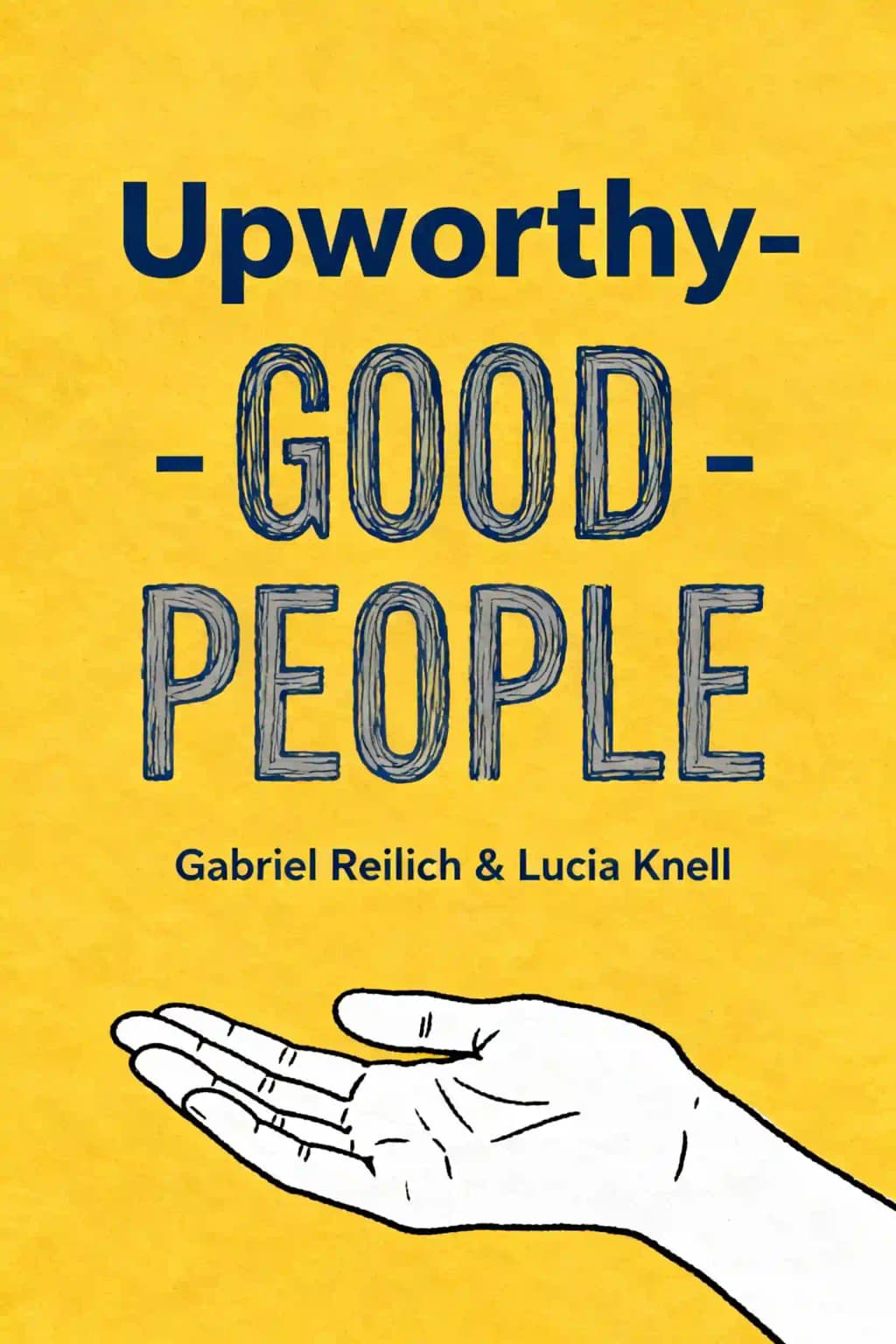
In a world that often emphasizes division and difference, these stories illuminate our fundamental sameness-our shared vulnerability, our universal need for connection, our capacity to transform each other's lives through simple acts of recognition and care. As the Upworthy team notes, "Goodness doesn't diminish with contact; it grows." These 101 stories aren't just heartwarming anecdotes-they're invitations to participate in this ongoing expansion of human kindness, to recognize that the book of human decency continues to be written daily, and that each of us holds the pen.