Capítulo 1
When Animals Become Our Greatest Teachers
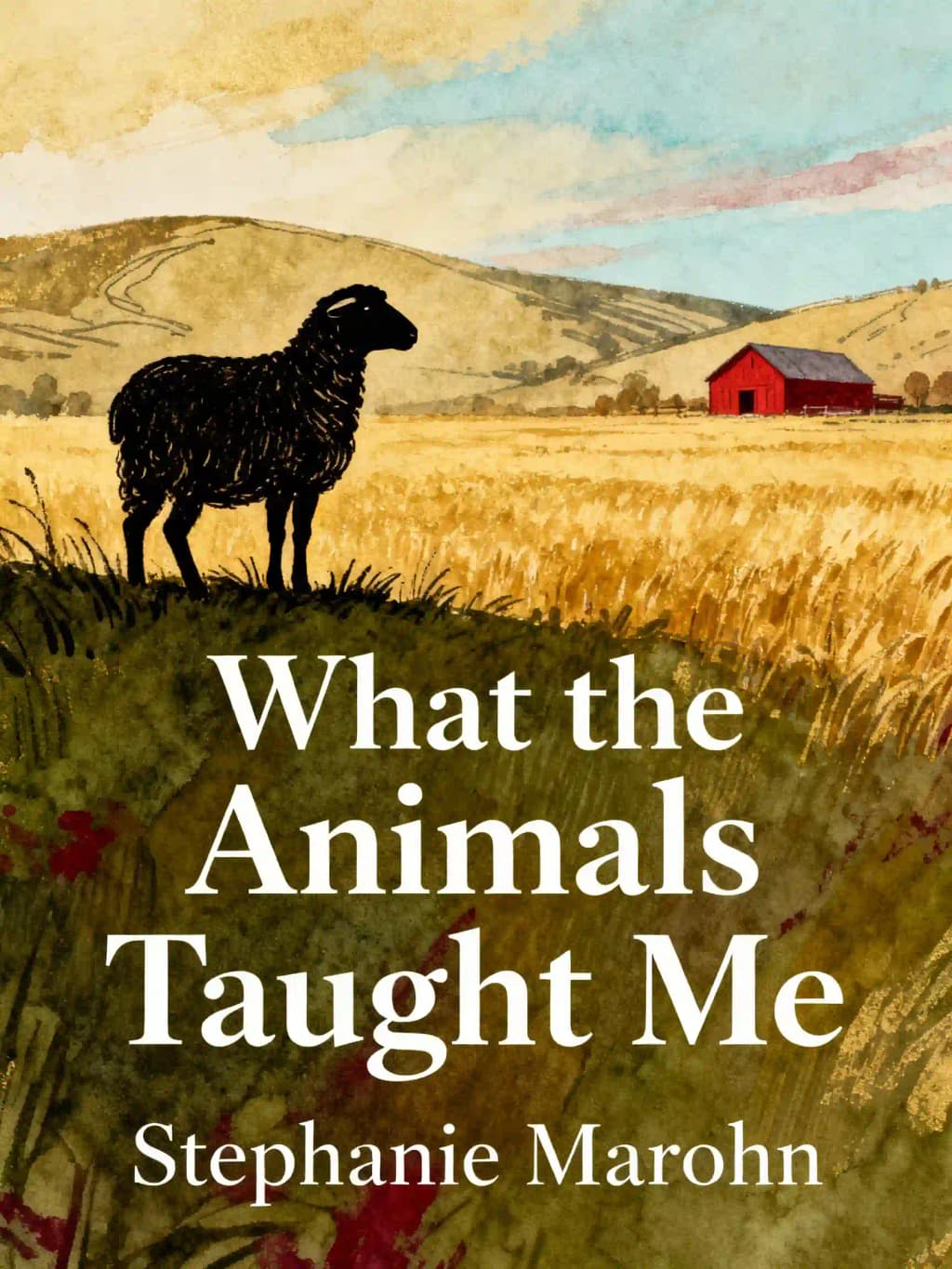
Imagine waking up one morning to discover a pure white miniature horse prancing into your life, looking like a unicorn without its horn. This magical moment was how Stephanie Marohn's journey began-not as a planned sanctuary founder, but as someone who simply opened her heart when animals in need appeared. "What the Animals Taught Me" has become a beloved classic in the animal-human connection genre, praised by Jane Goodall and featured in Oprah's reading list for its profound wisdom on interspecies relationships. The book stands apart from typical animal memoirs by revealing how farm animals-creatures often overlooked in our consideration of sentient beings-can become our most profound spiritual teachers. As our culture increasingly questions our relationship with animals and the natural world, Marohn's experiences provide a timely reminder that when we truly listen to animals, we discover lessons about love that transform not just our relationship with them, but with all of existence.
Capítulo 2
The Unexpected Arrival of Winged Teachers
The sanctuary began with a single white miniature horse who appeared like an apparition outside Marohn's kitchen window. This ethereal creature, soon named Pegasus, seemed to float rather than walk, moving with a grace that belied her previous life tethered without equine companions. After briefly returning to her original owners, Pegasus found her way back to Marohn when neighbors admitted they couldn't properly care for her. The moment Marohn removed her halter and watched her gallop toward freedom on the eight-acre property was the beginning of something magical-though Marohn didn't yet realize she was creating a sanctuary.
Pegasus quickly revealed Marohn's inexperience with horses, refusing to be haltered and running away whenever approached. The turning point came during a storm when, after a failed attempt to catch her that resulted in Marohn being kicked, she stood crying in the rain. Surprisingly, Pegasus approached, allowing herself to be haltered-showing remarkable compassion for the human who was trying so hard to care for her.
This relationship deepened when Marohn met Christine, an experienced horsewoman who taught her "liberty work"-establishing connection through companion walking without equipment. Christine observed their unusually strong bond but noted something crucial: Pegasus was in charge, which wasn't safe. Through patient guidance, Marohn learned the fundamentals of horse communication: leaders direct from behind, not in front, and no horse invades the lead mare's space, even when frightened.
When Christine offered Marohn a riding crop to use as a "tail" for communication, Marohn broke down crying, unable to use something carrying the energy of centuries of horse mistreatment. Instead, they temporarily used pampas grass before developing a more telepathic relationship that transcended physical tools.
This first lesson from Pegasus became foundational: the difference between domination and wise guidance. True leadership operates through cooperation and harmony, not control. This wisdom extended beyond the pasture when Marohn encountered a rider abusing her distressed horse. Rather than responding with judgment, she approached with compassion, helping the rider dismount and calm her horse-reinforcing what Pegasus had taught her: exerting control never leads to harmony.
Capítulo 3
The Wisdom in Woolly Packages
When Pegasus developed founder (laminitis), the veterinarian suggested getting sheep to keep the pasture grass trimmed, preventing the condition from worsening. This practical solution brought unexpected spiritual teachers: two Columbian ewes named Queenmere and Charlotte, along with Charlotte's lamb. The lamb's name came to Marohn in a moment of clarity: Wonder. His knock-kneed stance and tender trust perfectly embodied his name, becoming a living reminder that "Life is full of Wonder."
Living closely with sheep revealed how humans disparage what we don't understand. Our language betrays this-"a bunch of sheep," "stubborn as a mule," "dumb as an ox"-showing our unconscious judgments. Though we've cleaned up language about ethnic groups, it remains "open season on animals." People constantly asked Marohn if sheep were stupid, judging animal intelligence by how closely it resembles human behavior.
This experience taught Marohn a fundamental truth: animals always have their reasons. What appears as "hysterical overreaction" when sheep run together is actually perfect logic-they have no defense against predators except escape and safety in numbers. The flock isn't mindless but a powerful social unit with individuals as unique as humans.
Letting go of preconceived notions allowed Marohn to connect with each sheep on a soul level. Wonder developed a special low "baa" just for Marohn and Charlotte-his two mothers. The sheep embraced her in their fold, teaching her to move as one with them in peaceful kinship. This second profound lesson-letting go of judgment-opened a doorway to deeper connection not just with animals but with all beings.
The sheep taught Marohn that when judgment disappears, the other can "shine in the fullness of who she or he is." This principle extends to human relationships as well-how often do our preconceptions prevent us from truly seeing others? The sheep demonstrated that authentic connection begins when we approach each being with fresh eyes, free from the limitations of our mental categories.
Capítulo 4
The Donkey Who Healed Through Love
Gabriel, a wild desert donkey, became the sanctuary's founding messenger, though it took the arrival of Pegasus and the sheep for Marohn to realize they were creating a sacred space-a haven where farm animals could live peacefully and wildlife could seek refuge. When Marohn first met Gabriel, he wasn't called by that name but only identified by two initials. After three years in his new home, he remained terrified of people, carrying trauma from being captured from the desert and confined.
Two things transformed Gabriel: being renamed "Gabriel" for his trumpet-like bray and angelic sweetness, and Pegasus's arrival as his soul mate. They became inseparable companions, spending their days side by side and galloping joyfully across the fields. Gabriel's healing journey accelerated as he helped Pegasus recover from laminitis by leading their daily walks.
Though still wary, his trust grew through modified companion walking techniques where Marohn would back away when he faced her, giving him choice in their interaction. The breakthrough came during a hoof trimming with Claude, a gifted farrier who needed no tranquilizers. Instead of dissociating as he had in the past, Gabriel pressed his forehead against Marohn's chest-a profound gesture of trust.
They were healing together-Marohn recognized his dissociation because she'd done it herself in response to trauma. As they both let go of fear, love expanded exponentially. Gabriel's true self emerged-strong, wise, caring, and playful. He played tag with Angel the deer, kicked up his heels in joy, and sang duets with Marohn.
One morning, Marohn witnessed the perfect picture of peace: Charlotte the sheep leaning against Gabriel's front legs, with his head resting on her woolly back, both basking in the morning sun. This image encapsulated Gabriel's lesson: letting go of the past and fear creates space for love to flourish. His transformation from terrified wild donkey to gentle sanctuary leader demonstrated how releasing trauma allows our authentic selves to emerge.
Gabriel's journey parallels the human experience of healing-showing that with patience, respect for boundaries, and unconditional acceptance, even the deepest wounds can heal. His story reminds us that sometimes the beings who have been most hurt become the most powerful healers once they've found their way back to wholeness.
Capítulo 5
Wild Messengers at the Threshold
As spring turned to summer, a doe with a tattered right ear became a regular presence at the sanctuary. One morning, as sunlight bathed her in gold, Marohn heard her name clearly: Angel. She seemed to have joined the sanctuary family, playing with Gabriel and growing comfortable with human presence. As summer progressed and forage became scarce, Marohn discreetly left apples for her under the apple tree.
One June afternoon, Angel appeared unusually plump, and the next day clearly pregnant. When Marohn discovered a deer's body that had attracted vultures, she feared it was Angel. As she turned away with a heavy heart, two beautiful, tiny fawns bounded past. Marjorie from Fawn Rescue confirmed the dead deer was Angel by her tattered ear, and they tried unsuccessfully to catch the fawns, believing them orphaned.
Days later came the shock-Angel herself appeared with the fawns! The dead deer had been another doe who came to the sanctuary to die. Angel had adopted her orphaned fawns, now caring for four babies. This extraordinary act of compassion taught Marohn that deer are spiritual warriors with fierce determination and perfect balance.
Angel's story illuminated the lesson of trust-both trusting one's intuition and earning the trust of others. Trust allows us to show our fullest selves and helps us act for others' highest good, even when painful-as when Marohn eventually had to make the grown fawns leave the sanctuary when food grew scarce.
The deer, existing at the threshold between wild and domestic space, became messengers about boundaries and trust. Unlike the farm animals who depended entirely on human care, the deer chose to engage while maintaining their freedom. This delicate balance taught Marohn about respecting others' autonomy while creating space for connection.
Angel's adoption of orphaned fawns demonstrated that compassion transcends species boundaries. Her actions challenged the notion that altruism is uniquely human, revealing that the capacity for selfless care exists throughout the natural world. By trusting Marohn enough to bring her adopted fawns to the sanctuary, Angel created a bridge between worlds-showing that when trust replaces fear, unexpected relationships flourish.
Capítulo 6
The Forgotten Ones Find Their Voice
Late one night, trucks arrived at the sanctuary carrying hundreds of rescued hens from a commercial egg farm. The chickens, packed tightly in crates and boxes, had spent their entire lives in battery cages, never touching earth or stretching their wings. Working by truck headlights until dawn, Marohn and volunteers gently placed each hen in their new enclosure and trimmed their overgrown toenails while they huddled together, bewildered by unfamiliar freedom.
This experience crystallized another profound lesson: respect for all beings. Through her work interviewing African shaman Malidoma Some for her books on natural medicine treatments for mental health disorders, Marohn had learned that a society cannot be healthy if disconnected from ancestors. This wisdom led her to realize that society also cannot be healthy when disconnected from nature.
Our lack of respect for nature has enabled planetary destruction-we wouldn't clear-cut forests, pour toxic waste into waters, or confine chickens to tiny cages if we truly felt our connection to the natural world. The energy of suffering created by factory farming affects us all negatively. As Albert Schweitzer said, "Until he extends the circle of his compassion to all living things, man will not himself find peace."
Respect means recognizing the sovereignty of others-whether chicken, human, river or tree. It's their right to exist fully as themselves. A chicken cannot live its chickenhood in a cage. While Europe has banned battery cages, the United States has only begun addressing these issues.
Respect requires seeing beyond our disconnection from nature and questioning how we can respect ourselves while ingesting food infused with fear and pain. Every action we take either adds to the energy of fear or to the energy of love in the world. When struggling to respect difficult humans, connecting soul-to-soul helps negative feelings dissipate.
The rescued hens, initially unable to even walk properly after their confinement, gradually learned to dust bathe, forage, and express their natural behaviors. Their transformation from frightened, featherless creatures to vibrant, curious birds demonstrated the resilience that emerges when beings are finally respected for who they are. Their journey from commodities to individuals with distinct personalities embodied the principle that respect is not just an attitude but a practice that transforms both the respected and the one who offers respect.
Capítulo 7
Finding Home in Each Other's Hearts
On her daily drive to work at the sanctuary, Marohn noticed a neglected sheep standing alone at a small farm. After persistent efforts and the sudden death of the owner, she rescued this sheep-named Isabel-and other animals from what appeared to be an animal hoarding situation. Isabel had lived in isolation, her wool unshorn for years, her hooves painfully overgrown.
Isabel's journey taught Marohn about the courage required to be free. Without intervention, she might have remained trapped in her pattern of isolation indefinitely. Her bravery in stepping into the unknown led her to discover belonging and connection. This goes beyond merely letting go of fear-it requires taking action after releasing the past.
Opening our hearts to others and the world is risky and vulnerable, but it's the path to freedom and belonging. The constriction we feel when closing our hearts narrows our existence and disconnects us from the flow of oneness. Isabel's transformation from fearful isolation to comfortable belonging demonstrated the courage needed to discover who we truly are without emotional baggage.
Her muffled greeting while grazing-not even lifting her head when Marohn passed-became her special signature, showing how safe and happy she now felt in her world. This subtle sign of security spoke volumes about Isabel's transformation. Unlike humans who often feel compelled to make dramatic displays of affection, Isabel's quiet contentment revealed a deeper truth: true belonging doesn't need to announce itself loudly.
Isabel's story parallels the human experience of finding community after isolation. Many people live in emotional solitary confinement, afraid to risk connection. Isabel showed that even after years of loneliness, the capacity for belonging remains intact-it simply needs the right environment to flourish. Her integration into the flock demonstrated that healing happens in community, not in isolation. By finding her place among other sheep, Isabel found herself.
The sanctuary became not just a physical space but an emotional and spiritual one where beings could discover their true nature through relationship. Isabel's journey reminds us that home isn't necessarily a place but a feeling of connection-of being seen, accepted, and loved for exactly who you are.
Capítulo 8
Healing Beyond Conventional Boundaries
During a rainy winter, Charlotte developed a serious limp with a swollen left front fetlock. The vet diagnosed hoof breakdown due to congenital breeding weakness, predicting eventual constant pain and the need for euthanasia. Refusing to accept this prognosis, Marohn searched for solutions while confronting the consequences of selective breeding that created animals with physical vulnerabilities.
She learned to trim her Columbian sheep's hooves every eight weeks and developed individualized approaches for each animal's care-from Wonder's cooperative nature to Chloe's need for creative solutions like lying down with her during shearing. When Wonder also began limping, Marohn found herself praying for strength and turning anxiety into healing energy.
After finding a vet with extensive sheep experience from New Zealand, Charlotte's hoof improved dramatically with radical trimming. Marohn noticed the flock stayed in the nearest pasture during her recovery, with wise Queenmere keeping them together so Charlotte wouldn't strain herself trying to follow. As Charlotte healed, the flock gradually ventured farther, signaling her improvement.
Meanwhile, Pegasus battled recurring laminitis and was diagnosed with Cushing's syndrome and rotated coffin bones. Rather than using the conventional drug pergolide, Marohn developed a holistic approach: low-carb hay and pellets, an herbal formula containing milk thistle, burdock, licorice and kelp for detoxification, plus vitex to support pituitary function. After three years on this regimen, Pegasus returned to galloping joyfully across the fields.
When Charlotte later developed staph mastitis that resisted antibiotics, she stopped eating completely. In a moment of intuition, Marohn offered her blackberry leaves which she eagerly devoured-their medicinal properties perfectly suited to shrink her swollen udder. Following her own healing wisdom, Charlotte also sought mineral salts and watermelon, gradually recovering without surgery and rejoining her flock.
These healing journeys taught Marohn that animals possess innate wisdom about their own healing needs. By listening carefully and combining intuition with research, she discovered that healing happens best when we work with nature rather than against it. The conventional veterinary prognoses often proved too limited because they didn't account for the body's remarkable capacity for regeneration when given the right support.
This approach to healing-respecting the animal's own wisdom while offering supportive care-became a model for Marohn's understanding of true healing. Rather than imposing treatments, she learned to create conditions where healing could emerge naturally. This principle applies equally to human health, suggesting that our most effective role might be as facilitators rather than controllers of the healing process.
Capítulo 9
When Love Transcends Death
Gabriel, the beloved donkey who helped establish the sanctuary, hid his illness until his final week. Though he stopped eating regular food, he sought blackberry leaves which help heal mouth sores. During his final days, Gabriel fought rather than dissociating during treatments-a sign he had finally healed from his traumatic past.
When the vet could do nothing more, Marohn avoided euthanasia, inspired by BrightHaven's approach to animal hospice. The night before Gabriel died, he allowed her to stroke his head after she apologized and promised to rescue two donkeys in his name. After burying him by the blackberries, Wonder stood atop the grave while Pegasus performed a tender ritual, licking traces of Gabriel's blood from the earth.
Gabriel visited Marohn in dreams ever since, once showing her two donkeys joining Pegasus, followed by a third that curled in her lap. The animals grieved together, staying close and hardly grazing, even on beautiful days.
After Charlotte's death, Wonder, her nine-year-old son, stopped eating. Though perfectly healthy, he couldn't bear to live without his mother. Marohn honored his process when he firmly declined veterinary intervention. Nine days after Charlotte died, Wonder slowly made his way to the stall where she had died, lay down beside Pegasus, and passed away with his head in Marohn's lap.
During his burial beside Charlotte, Pegasus refused to leave his side, showing remarkable loyalty even as they worked around her to move his body. A mockingbird that had been singing fell silent the day Wonder died, resuming only the following dawn.
These deaths taught Marohn that providing sanctuary means honoring an animal's choice not just in life but also in death. The animals' grief processes-so visible and unashamed-offered a model for healthy mourning that many humans have forgotten. They didn't hide their sorrow or pretend everything was fine; they acknowledged their loss fully.
The animals' responses to death revealed that love transcends physical existence. Their rituals of mourning-standing at graves, performing ceremonies with the earth, staying close to one another-demonstrated that connection continues beyond the physical plane. This lesson about eternal connection reminds us that love doesn't end when bodies fail; it transforms into something that bridges worlds.
Capítulo 10
The Continuing Circle of Compassion
The Way of Change teaches us to flow with life's transitions while actively participating in their creation. When Marohn rescued two new donkeys named Sylphide and Raphael, fulfilling her promise to Gabriel, she participated in a cocreation involving herself, the universe, and Gabriel's spirit. This process required active choices-calling the number, arranging transport, establishing trust with the previous owner.
Animals demonstrate natural reactions to change that humans often suppress. Sylphide and Raphael brayed for two days after their relocation, expressing their feelings before adapting to new surroundings. They proceeded judiciously rather than rushing to embrace change. Similarly, Pegasus didn't immediately befriend the newcomers but observed and built relationships slowly based on reality, not wishful thinking.
Animals know how to flow with change while maintaining consistency and expressing their boundaries. When we love ourselves unconditionally, we allow ourselves proper time to adjust to changes without dramatizing our reactions. When loving others unconditionally, we respect their individual timelines for adaptation. The Way of Change reveals that within crisis lies an opportunity to love each other more deeply.
A transformative message arrived unexpectedly during a Mystical Activism conference in Shasta. After hearing devastating accounts of elephant abuse from sanctuary directors, Marohn was haunted by images of these noble beings beaten with two-by-fours. Seeking solace, she hiked up Mount Shasta, weeping and questioning how people could inflict such cruelty while claiming to "love" their animals.
As she climbed higher, she suddenly remembered how she had once hit her puppy with a newspaper during housetraining-a practice her animal-loving family followed unquestioningly. Though incomparable to the elephants' suffering, this memory revealed a profound truth: we exist on continuums of both violence and consciousness. The difference between her and those trainers was merely one of degree.
In our violent culture, we all participate somewhere on this spectrum until we consciously step away. Walking down the mountain, she felt simultaneously saddened by human ignorance yet uplifted by newfound clarity. She realized the continuum of consciousness is actually a continuum of love-expanding as our hearts open. We're all apprentices learning to open ourselves more completely to others, whether animal, person, or nature.
Capítulo 11
Creating Sanctuary in Every Moment
The heart of the healer must be four-chambered-not just open, but full, clear, and strong. Marohn's heart leaps with joy when greeting animals, creating a sanctuary within herself. This inner sanctuary allows her to welcome herself home in each moment and create sanctuary everywhere.
The Animal Messengers taught her that sanctuary means safety, authenticity, supported independence, peaceful living and dying, deep connection, and respect for all beings. With an open heart, we can extend sanctuary to everyone, even in passing interactions. Though it might seem exhausting to bring love to every moment, it's actually energizing-what truly drains us is the effort to ignore the world's pain and shut off our natural connections.
By meeting the world with love, acknowledging we are all connected, we return home stronger. In the Way of Welcome, we bring love to all relationships, recognizing as the Lakota prayer "Mitakuye Oyasin" teaches, that we are all related-every tree, rock, plant, animal and person.
This final lesson-that every moment can be a sanctuary-completes the circle of teachings from the animals. From Pegasus's lesson about leadership without domination to the sheep's wisdom about judgment, from Gabriel's healing journey to Angel's trust, from the chickens' need for respect to Isabel's discovery of belonging, from the healing journeys to the lessons about death and change-all culminate in this understanding that sanctuary isn't just a physical place but a state of being we can create anywhere.
The practical application of these teachings includes examining our relationships with animals and people, educating ourselves about environmental issues, practicing harm reduction in our diet choices, conserving resources, supporting environmental organizations, using nontoxic products, spending time in nature daily, acknowledging service people and others we encounter, loving all beings as neighbors, considering how we can better contribute to the world, and remembering that we too are Messengers who can create sanctuary everywhere.
Through these animal teachers, Marohn discovered that unconditional love isn't just a lofty ideal but a practical path-one that leads to healing, connection, and a profound sense of belonging in the world. Their wisdom reminds us that by opening our hearts to all beings, we don't diminish ourselves but rather expand into the fullness of who we truly are.