Capítulo 4
Medical Mentorship: Crafting Excellence in Neurosurgery
The path to mastery in medicine requires not just technical skill but also guidance from those who've walked the path before. Each mentor contributes unique perspectives that collectively shape a comprehensive approach to healing.
Dr. James Taren at the University of Michigan provided the initial inspiration for pursuing neurosurgery. His dynamic presentations revealed both the grandeur and responsibility of the field. Taren's emphasis on taking risks when the alternative is worse offered lasting moral guidance. His mastery and charisma not only inspired awe but cemented the decision to pursue neurosurgery, igniting determination to reach the pinnacle of medical excellence.
George Udvarhelyi, head of Johns Hopkins' neurosurgery training program, exemplified a holistic approach to patient care. He consistently reminded residents to see patients beyond their illnesses, persistently questioning them about patients' lives to ground his humanitarian teachings. His rigorous standards ensured the highest level of commitment to patient wellbeing, while his philosophical and historical discourse on medical practices enriched learning with timeless values of empathy and dedication.
Jim Anderson provided crucial guidance in laboratory techniques and connected researchers at Johns Hopkins, enabling significant advancements in research projects and achieving notable results in unprecedented timeframes. By fostering independence while offering steadfast support, Anderson illuminated pathways to academic medicine and emphasized the benefits of collaborative environments, setting a model for merging practice with research for comprehensive medical progress.
In Australia, Bryant Stokes and Richard Vaughan offered complementary learning experiences. Stokes insisted on precision and excellence while demonstrating trust by granting unparalleled surgical opportunities. Vaughan countered with incredible kindness and quiet determination when tackling difficult cases, providing an essential example of grace under pressure. Together, they crafted a unique blend of learning that honed surgical skills while underscoring the broad spectrum of mentorship dynamics.
At Johns Hopkins, Donlin Long's influence became apparent through his unwavering support and absence of prejudice. He insisted on sound reasoning in surgical decisions, empowering surgeons to innovate and think independently. His exceptional listening skills and generosity with time made him a model of leadership, particularly during the challenging case of the Siamese twins, where his trust and guidance enhanced capabilities to provide exemplary medical care.
Imagine how different medical breakthroughs might be if practitioners worked in isolation. Medical mentorship creates a living bridge between generations of healers, ensuring that knowledge accumulates rather than restarts with each new doctor. This continuous thread of shared wisdom accelerates progress and ultimately benefits countless patients whose lives depend on the collective expertise of the medical community.
Capítulo 5
Groundbreaking Surgeries: When Risk Meets Possibility
Medical advancement often requires venturing into uncharted territory, where the line between impossible and groundbreaking is determined by courage, skill, and teamwork.
The separation of the Binder twins represented an unprecedented surgical challenge-no one had successfully separated such Siamese twins before. This intricate and high-risk procedure demanded meticulous teamwork, strategic planning, and extraordinary skill. Collaboration with colleagues like Mark Rogers facilitated essential logistical preparations and practice sessions. The surgery itself became a testament to medical courage, aiming to give these twins a chance at normal lives. Despite success, criticism followed regarding experimental ethics. In retrospect, saving both lives validated the risks taken and upheld the philosophy of acting for the right reasons, regardless of external approval. Amber, one of the twins, continues to live as a healthy girl with only occasional minor medical needs-a living testament to the success of this pioneering procedure.
Similarly, Dusty Phillips' case in 1985 involved a high-stakes operation on an infant with a highly malignant brain tumor. After standard treatments failed, his parents sought help despite substantial risks. Detailed discussions emphasized the surgical dangers: severe bleeding, infection, paralysis, or sensory changes. Yet the family chose surgery as the only option over certain decline. A subtotal hemispherectomy removed substantial tumor-affected areas, and post-surgery chemotherapy yielded positive results. Five years later, Dusty was tumor-free and neurologically intact, exemplifying the profound impact of taking calculated risks for life-saving outcomes and offering hope for similar cases.
David Troutman's journey embodied resilience and the belief in radical intervention when there's potential for meaningful quality of life. Despite severe post-operative complications, his unwavering determination inspired his medical team. His confidence and courage drove doctors to attempt risky treatment, ultimately resulting in remarkable recovery. His case reinforced a powerful philosophy: when there's a chance, no matter how small, it's worth taking risks to improve life.
In the summer of 1986, another pioneering procedure saved twin girls when one was diagnosed with rapidly expanding hydrocephalus in utero. Despite the experimental nature of the surgery, a special shunt was inserted into the affected baby, successfully reducing the head size and leading to a triumphant outcome. After three weeks, both twins were delivered safely, with the affected twin, Amber, requiring further surgical interventions. The success validated the risks taken and upheld the principle of acting for the right reasons, without seeking approval or popularity.
What these cases reveal is that medical progress doesn't happen through cautious incrementalism alone. Sometimes, the greatest advances come when skilled practitioners are willing to step beyond established boundaries-not recklessly, but with calculated courage backed by expertise and compassion. These moments of medical bravery don't just save individual lives; they expand the boundaries of what's possible for countless future patients.
Capítulo 6
When Our Best Isn't Enough: The Role of Faith
Sometimes, despite giving our absolute best efforts, we encounter situations beyond human capability. These moments reveal the limitations of medical science and the potential for something more.
Rob's case exemplifies this reality. After a weekend away, I returned to find him still on a respirator, seemingly unchanged. But when I touched his chest, his hand shot up in response-a purposeful movement that signaled an unexpected recovery. His pupils reacted to light, and he continued responding to touch. The ICU staff had witnessed his awakening the previous night and waited to see my reaction. Within days, Rob was off the respirator, talking, walking, and joyfully playing with his children again.
A nurse later half-jokingly asked if I would "lay hands" on another critical patient. I clarified that I wasn't responsible for Rob's recovery-if God works miracles, He doesn't need me as an intermediary. This perspective challenges the medical community's tendency to seek scientific explanations for unexplainable outcomes. When a brilliant neurologist attempted to attribute Rob's recovery to mitochondrial function at the subcellular level, I posed a simple question: "Have you ever seen such a thing before?" His negative response highlighted the extraordinary nature of this case.
"This is a miracle," I told him. "Why not accept it for what it is? They don't come any more blatantly than this. Rob was gone and now he's back. This is the only time I've ever seen an adult sink to such a low neurological level and then recover."
The experience revealed an essential truth about giving our best: when human effort reaches its limits, acknowledging a higher power becomes necessary. We had done everything medically possible for Rob. Our best-no matter how good-was incomplete without divine intervention. Prayer became the bridge between human limitation and miraculous outcome.
Have you ever faced a situation where your best efforts weren't enough? These humbling moments often reveal that true excellence isn't just about personal achievement but also about recognizing when to surrender to something greater than ourselves. The integration of faith and science doesn't diminish either-it acknowledges the complexity of healing and the mystery that sometimes surrounds it.
Capítulo 7
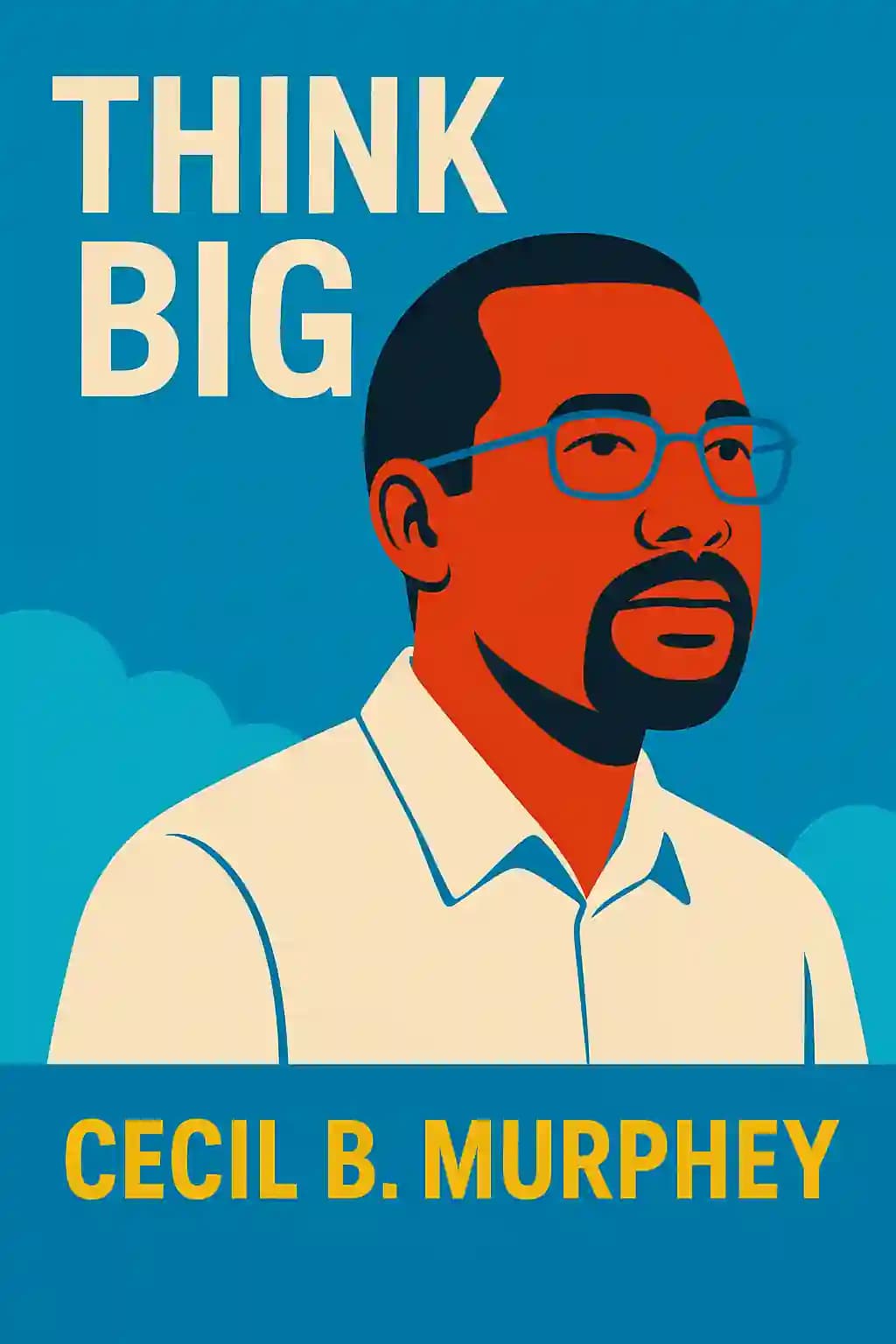
The THINK BIG Philosophy: A Framework for Excellence
Happiness emerges not from passive existence but through purposeful action-living a life of contribution and service. This philosophy aligns with Hans Christian Andersen's wisdom that true fulfillment comes from meaningful impact.
The THINK BIG framework provides a comprehensive approach to excellence, beginning with recognizing and utilizing our talents. When natural abilities align with fields that value them, success becomes inevitable. This foundation must be built upon honesty, which ensures freedom from the shackles of past deceit. True fulfillment comes from consistent truth-telling, eliminating the torment of covering dishonesty. Honest dealings grant dignity and solidify trust, shaping the foundation for both personal peace and professional success.
Insight-the ability to perceive clearly and deeply-transforms thinking and opens new avenues. Insights derive from both experts and self-study, with key moments often emerging from profound reflection. True achievers wield their minds to adapt, innovate, and learn from others' experiences, turning life's trials into triumphs. Following a structured method in all endeavors builds a solid foundation for future innovations.
Niceness challenges the adage that "nice guys finish last." Being thoughtful and considerate, valuing others regardless of status, creates connections that often lead to unexpected alliances and friendships. This perspective is supported by biblical wisdom about avoiding favoritism, underlining every individual's intrinsic worth.
Knowledge becomes transformative power, changing the fabric of lives and communities. Whether through serendipitous knowledge of classical music that impressed mentors or collective wisdom navigating complex surgeries, accumulated knowledge creates value. Informed individuals can transcend societal prejudices, proving indispensable regardless of background. Knowledge combats discrimination and empowers change, providing tools to navigate life's hurdles more effectively.
Books serve as gateways to this knowledge, activating minds and encouraging creative and critical thinking. Through exposure to diverse minds across time and space, readers gain profound insights. Notable figures like Kurt Schmoke demonstrate how reading can elevate individuals to positions of influence and impact.
In-depth learning emphasizes true mastery beyond superficial understanding. Through consistent reading and assimilation of diverse perspectives, genuine expertise develops. Success stories highlight how embracing diligent learning unlocks latent talents and opens expanded career opportunities.
Finally, acknowledging divine assistance provides support in life's endeavors, infusing actions with deeper purpose. Faith and medicine intertwine dramatically when facing challenging moments, as seen in Christine's surgery when prayer coincided with the resumption of her heart's rhythm after cardiac arrest. This narrative underscores the power of combining skill with faith, especially when human efforts reach their limits.
The THINK BIG philosophy isn't just about personal achievement-it's about becoming someone whose excellence serves others and contributes to a better world. When we align our talents with integrity, insight, kindness, knowledge, and faith, we create a foundation for meaningful success that extends far beyond ourselves.
Capítulo 8
Honesty and Knowledge: Twin Pillars of Lasting Success
Embracing honesty ensures freedom from the burden of past deceit, while knowledge provides the tools to transform circumstances and overcome barriers.
Living truthfully eliminates the torment of covering dishonesty. Famous figures across politics and culture demonstrate the harsh consequences of deception, while honest dealings grant dignity and solidify trust-the foundation for both personal peace and professional success. The transformative journey of individuals like Cliff Harris and his wife reveals how honesty liberates those trapped in hidden lives, encouraging others to emerge stronger and truly free.
Knowledge functions as the great equalizer, enabling individuals to change their lives and communities regardless of background. My journey through neurosurgery at Johns Hopkins exemplifies this transformation. Whether through unexpected knowledge of classical music that impressed mentors or collective wisdom navigating complex surgeries, each instance demonstrates how accumulated knowledge creates value.
A young executive's story perfectly illustrates this principle-her irreplaceable expertise outweighed barriers of race and gender, leading her company to offer remarkable concessions to retain her. Informed individuals can transcend societal prejudices, proving indispensable regardless of background. Knowledge combats the root of discrimination and empowers change, as evidenced by wisdom shared about facing ignorance with understanding.
Books serve as the primary gateway to this knowledge, activating minds and encouraging creative thinking. Through exposure to diverse minds across time and space, readers gain profound insights that shape their perspectives and possibilities. Notable figures like Kurt Schmoke demonstrate how reading can elevate individuals to positions of influence and impact, while people like Harvey Wachsman, who faced societal challenges, prove that expanding one's mind through books invites limitless accomplishment.
In-depth learning takes this further, emphasizing true mastery beyond superficial understanding. Through consistent reading and assimilation of diverse perspectives on subjects, genuine expertise develops. Success stories highlight how embracing diligent learning unlocks latent talents and opens expanded career opportunities. The broader message insists on unwavering commitment to lifelong learning as essential to achieving excellence in any field.
Consider how these principles might transform your own life. What would change if you committed to complete honesty in all your dealings? How might dedicated pursuit of knowledge in your field elevate your contributions and opportunities? These twin pillars-honesty and knowledge-create a foundation for achievement that withstands the tests of time and circumstance, allowing you to build a legacy of integrity and wisdom.
Capítulo 9
Faith at Work: The Intersection of Belief and Medicine
The integration of faith and medical practice creates a powerful synergy, particularly evident in moments when human capability reaches its limits.
During Christine's brain surgery, a sudden cardiac arrest prompted urgent medical intervention. Amid the flurry of professional actions, a heartfelt prayer was offered, coinciding with the unexpected resumption of her heart's rhythm. This narrative vividly illustrates reliance on both skill and faith, emphasizing belief in divine intervention when human efforts reach their boundaries. The experience underscores the importance of humility and wisdom, drawing on spiritual teachings that caution against pride and self-sufficiency.
Faith transcends medical challenges, as seen in the transformative recoveries of both Marian and Beth, whose journeys defied expectations through profound resilience and spirituality. These cases demonstrate how belief can sustain patients through seemingly impossible circumstances, providing strength when medical prognosis offers little hope.
The case of Christopher Pylant particularly exemplifies this principle. Described as a pale, bone-thin child, he arrived at Johns Hopkins with a diffuse brain stem tumor-typically inoperable and fatal. Despite grim prognoses, his parents displayed unwavering faith, confident that divine intervention would heal their son. After exploratory surgery revealed a malignant tumor, medical expectations anticipated his decline. Yet Christopher defied these expectations, recuperating against all odds. Additional surgery revealed the tumor's unexpected nature, and his extraordinary turnaround not only reinforced his family's faith but also sparked spiritual and professional introspection among the medical team, challenging conventional understanding of medicine and faith.
Rob's case, discussed earlier, provides another powerful example. When all medical interventions seemed insufficient, prayer became the bridge between human limitation and miraculous outcome. The neurologist's attempt to find a scientific explanation highlighted the tension between medical understanding and unexplainable outcomes. "We don't have to explain miracles," I told him. "All we have to do is accept them."
These experiences reveal an essential truth about excellence: our best-no matter how good-is incomplete if we leave God out of the picture. When we acknowledge divine need, we invite assistance in life's endeavors, infusing our actions with deeper purpose and opening possibilities beyond our human limitations.
What might this mean for your own pursuits of excellence? Perhaps true mastery involves not just developing skills and knowledge but also cultivating humility-recognizing that some outcomes lie beyond our control and require faith in something greater than ourselves. This perspective doesn't diminish human effort but rather places it within a larger context of purpose and possibility.
Capítulo 10
Reaching for Success: Defining Achievement on Your Terms
Success finds its roots in early life's determination and grows through channeling belief in boundless capacity. By embracing the American dream-the notion that anyone can rise from humble beginnings to impact the world significantly-individuals transform limitations into launching pads for achievement.
God's role in unfolding unexpected pathways, powered by our talents, joins gratitude to purpose in life's journey. This perspective shifts our focus from what we lack to what we've been given, allowing us to leverage our unique abilities for meaningful contribution.
Embracing responsibility over victimhood leads to empowerment. Rather than blaming circumstances or others for limitations, taking ownership of choices and actions creates agency and momentum. This mindset transforms obstacles from barriers into challenges to overcome.
Definitions of success should emphasize societal contributions over material gain. True achievement isn't measured by wealth accumulation or status symbols but by positive impact on others and the world. This perspective aligns personal accomplishment with broader purpose, creating fulfillment that transcends temporary satisfaction.
The family unit's influence is paramount, particularly through nurturing guidance and encouragement that challenges limitations. Sonya Carson exemplifies this principle, creating an environment that balanced nurturing with discipline while instilling in her sons the belief that they could achieve greatness despite societal biases. Her emphasis on accountability taught them they controlled their own destinies.
Faith transcends challenges, as seen in the transformative recoveries of patients whose journeys defied medical expectations through profound resilience and spirituality. These cases demonstrate how belief sustains individuals through seemingly impossible circumstances, providing strength when conventional wisdom offers little hope.
Ultimately, thinking big means expanding your vision beyond immediate circumstances to see possibilities others might miss. It involves recognizing your talents, embracing honesty, developing insight, practicing kindness, pursuing knowledge, engaging with books, developing in-depth understanding, and acknowledging divine assistance in your endeavors.
What would change if you applied these principles to your current challenges? How might redefining success in terms of contribution rather than acquisition transform your goals and satisfaction? The THINK BIG philosophy offers not just a path to personal achievement but an approach to life that creates meaning, purpose, and lasting impact-success measured not just by what you gain but by what you give.