Capítulo 4
The Yankee Way Takes Shape
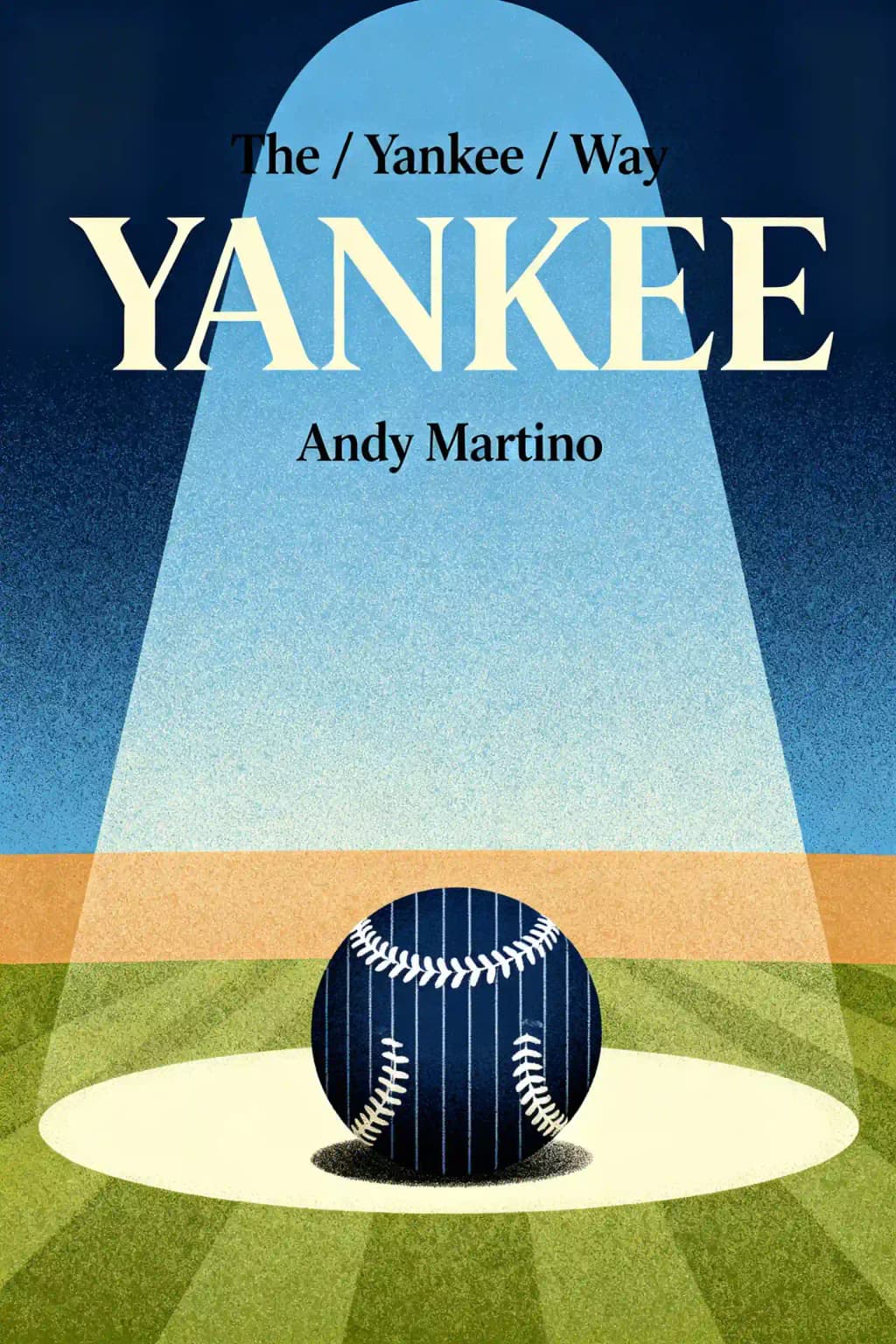
The Yankees' organizational philosophy crystallized through the development of what became known as "The Yankee Way"-a comprehensive player development system that would guide the franchise for decades. The origins trace back to Jack Butterfield, but Bill Livesey formalized the approach by developing an innovative "player profile" system that became the Yankees' secret sauce.
This system ranked the five traditional baseball tools (hitting for average, hitting for power, running speed, fielding ability, and arm strength) by importance for each position rather than valuing all tools equally. For example, catchers prioritized fielding and arm strength over running, while first basemen needed power and hitting ability above all. The system required a player's top two position-specific tools to add up to at least 110 to indicate championship-caliber talent.
This approach helped identify players overlooked by other teams, like Mickey Rivers, whose average tool score was only 54 but whose top two center field tools totaled 140. The profile system guided draft selections, free agent signings, and even position changes-like converting shortstop Jorge Posada into a catcher.
By 1989, Mark Newman joined the Yankees and collaborated with Livesey to create a comprehensive manual. Rather than simply documenting their own ideas, they convened extensive discussions with coaches, including organizational players transitioning to coaching roles. These sessions delved into extraordinary detail-coaches once spent hours debating whether outfielders should catch balls on the left or right side of their bodies.
The resulting document, officially titled "The Yankee System Developmental Manual," became a 500-page tome bound in a white spiral notebook with the Yankees' "top hat" logo and the recipient's name in calligraphy. Though formally named, it became known informally as "The Yankee Way," and its principles have remained embedded in the Yankees' organizational DNA for decades. The manual began with strict uniform regulations before diving into baseball techniques, containing detailed chapters on playing each position, pregame preparation, practice drills, and defensive strategies with diagrams showing player movements.
Capítulo 5
Cashman's Rise: From Intern to GM
Brian Cashman's unlikely journey to becoming the Yankees' general manager began with breaking a quarter horse named Nifty at his father's Castleton Farm-perfect preparation for eventually handling George Steinbrenner. This weeks-long process required gradually acclimating the bucking animal to blankets, straps, and eventually a saddle and rider, developing patience and persistence that would serve him well in baseball's most pressure-filled front office.
Despite initially hating the Yankees (even rooting for the Dodgers in the 1978 World Series), Cashman's course was set when his father's friend offered him a Yankees internship after Brian lost all his money in a card game during a college baseball trip. Beginning his internship in 1986, 19-year-old Cashman followed his father's terse advice: "Keep out of the way and do your job the best you can."
Renting a fifth-floor walk-up in the Bronx without air conditioning, Cashman experienced what he called "the belly of the beast" in 1980s New York. The Yankee offices felt like a battleground when Steinbrenner visited from Tampa, putting everyone "on edge" with his demanding presence. Working under assistant GM Peter Jameson, Cashman learned "everything about the administrative side of the game" while putting in grueling hours before modern intern laws existed. His responsibilities ranged from driving players to appointments to transcribing minor league game reports from answering machine messages each morning.
Despite being an intern, Cashman quickly earned a "seat at the table" during important discussions, with scouting director Brian Sabean noting his "look, listen, think, speak" approach that distinguished him as "very diligent and dependable." By 1992, Cashman had risen to assistant general manager, and in February 1998, at just 30 years old, he became the second-youngest general manager in baseball history.
When offered the Yankees GM position, Cashman displayed remarkable confidence despite being teasingly called "George Costanza" by some in the organization. Unlike the insecure Seinfeld character, Cashman insisted on just a one-year deal to prove himself before asking for a longer commitment. At his press conference, he acknowledged the challenge ahead: "I fully understand it's one of the most difficult jobs in sports, if not the most difficult."
Capítulo 6
The Dynasty Years: Building and Sustaining Excellence
Just four days after becoming GM, Cashman executed his first major transaction by acquiring Chuck Knoblauch from the Minnesota Twins. The Yankees had been pursuing the dynamic leadoff hitter since November 1997, and Cashman completed the deal by sending prospects Eric Milton, Brian Buchanan, Danny Mota, Cristian Guzman, and $3 million to Minnesota.
Cashman's next major acquisition was signing Cuban defector Orlando "El Duque" Hernandez for $6.6 million-an all-time free agent bargain. After escaping Cuba on a small boat and surviving four days stranded at sea, El Duque impressed Yankees scout Lin Garrett despite concerns about his age and velocity. Initially planned for Triple-A, Hernandez dominated minor league hitters and earned a quick promotion, going 12-4 with a 3.13 ERA for the Yankees in 1998.
The rest of the 1998 roster was already set through years of collaborative work. Tino Martinez had replaced Don Mattingly at first base in 1996, overcoming early struggles to become a productive cornerstone. The outfield featured Paul O'Neill in right, Bernie Williams in center, and Chad Curtis in left. The rotation was anchored by David Cone, David Wells, and Andy Pettitte, with Mariano Rivera closing games. Jorge Posada was ready to take over catching duties from Joe Girardi.
At third base, on the recommendation of scout Ron Brand, the Yankees acquired Scott Brosius from Oakland despite his .203 batting average in 1997. Brand saw beyond Brosius's poor statistics, noting his excellent work ethic and defense. He believed Brosius's struggles stemmed from the pressure of batting third in Oakland's lineup ahead of Mark McGwire. The Yankees acquired Brosius while also offloading struggling pitcher Kenny Rogers to Oakland, with New York absorbing $5 million of Rogers's contract.
The 1998 Yankees started the season 1-4, prompting Steinbrenner to tell Gene Michael, "Stick, you're going to have to go back in and take over. I don't know if Brian can do this." Michael counseled patience, and the team soon turned things around, finishing with 114 regular-season wins and an 11-2 postseason record, sweeping San Diego in the World Series with Scott Brosius earning MVP honors.
Capítulo 7
The A-Rod and Jeter Drama: A Dynasty Divided
In February 2004, Brian Cashman called Derek Jeter while driving on I-95 to deliver momentous news: "We got Alex Rodriguez." The Yankees had been chasing Steinbrenner's impossible standard after falling short in recent postseasons, and A-Rod represented a chance to inject new life into the roster.
Cashman, vaguely aware of tension between the former friends, reassured Jeter: "This won't affect you. He's moving to third." After a telling silence, Jeter simply replied, "Okay" in his characteristic flat monotone. Team officials noticed Jeter couldn't even muster a fake smile as A-Rod donned his pinstripes at the introductory press conference, though both players maintained publicly that their "relationship is fine."
This superstar feud wasn't unprecedented in Yankees history. Before Jeter and A-Rod came Reggie Jackson and Thurman Munson, and decades earlier, Babe Ruth and Lou Gehrig. Each case presented a similar dynamic: a larger-than-life celebrity clashing with a quieter team captain. Unlike Jeter and A-Rod, however, Munson and Jackson managed to capture a World Series title in their first year together and eventually reached a truce.
The roots of the Jeter-Rodriguez tension traced back to March 2001, when an Esquire profile quoted Rodriguez saying Jeter was "blessed with great talent around him" and "never had to lead." This was actually the second time Rodriguez had diminished Jeter publicly, following comments on ESPN radio questioning whether Jeter could command a contract comparable to his own record $252 million deal.
The two had once been friends, meeting in 1993 at a college baseball game. Even then, their personalities contrasted sharply-Rodriguez was more polished but needier, constantly seeking affirmation, while Jeter remained quiet and self-contained. Their backgrounds differed dramatically too: Jeter had stable, married parents, while Rodriguez's father abandoned the family when Alex was ten, sending him on a lifelong search for father figures.
The clubhouse had developed a clear class system-those who had won championships with Torre received preferential treatment. When Gary Sheffield and Kenny Lofton complained of racial bias, team officials believed it was actually favoritism based on championship rings. Meanwhile, Torre's office became increasingly inaccessible except to veteran stars, while Cashman was growing more data-driven and less trusting of Torre's judgment.
Capítulo 8
Into the Analytics Age: Modernizing the Yankees
In 2005, after threatening to leave, Brian Cashman convinced Steinbrenner to give him full control of baseball operations and permission to modernize the Yankees through analytics. Michael Fishman, a Yale mathematics graduate who had nearly been hired by Billy Beane's Oakland A's, became Cashman's first analytics hire despite being a lifelong Mets fan. This marked the beginning of the Yankees' two-decade journey into data-driven baseball.
In 2009, Fishman and Billy Eppler discovered that A.J. Burnett was losing strikes because catcher Jorge Posada's subtle flinching caused umpires to call borderline pitches as balls. Using PITCHf/x data-a revolutionary ball-tracking technology-they determined that backup catcher Jose Molina was exceptionally skilled at "framing" pitches to get more strike calls. After presenting their findings to manager Joe Girardi, the Yankees paired Molina with Burnett, including in the World Series. This discovery of "catcher framing" as a quantifiable skill represented a breakthrough in baseball analytics, allowing teams to measure the exact value catchers provided through ball/strike calls-years before it became a public statistic.
As the industry evolved from basic sabermetrics to sophisticated tracking systems measuring everything from exit velocity to spin rate, the Yankees built three separate data departments. By the 2020s, Sandy Alderson identified the next frontier as "empathy and implementation"-effectively communicating complex information to players and coaches.
Tim Naehring emerged as Cashman's most trusted talent evaluator-"He's my Gene Michael," Cashman would often say. After his playing career with Boston ended prematurely due to a shoulder injury in 1997, Naehring built his reputation throughout baseball for his keen eye and affable demeanor. The Yankees were deliberately breaking down the "jock/nerd silos" by hiring versatile thinkers like Naehring, Josh Paul, Pete Mackanin, and Kevin Reese.
Naehring's unique ability to blend traditional scouting with analytical perspectives made him invaluable when the Yankees faced their most daunting task in 2014: replacing Derek Jeter. As they considered both stopgap veterans and younger prospects, Naehring's Stick-like eye for off-ball behavior proved crucial-he evaluated shortstops not just on skills but leadership qualities, like who took charge giving signals with runners on base.
Capítulo 9
The Judge Era: New Leadership for a New Dynasty?
In spring 2013, Yankees VP of amateur scouting Damon Oppenheimer sent mental conditioning director Chad Bohling to evaluate Aaron Judge in Fresno. Bohling immediately recognized Judge's potential, impressed by both his imposing physical presence and earnest personality with a "hint of smart-aleck twinkle."
Bohling's department, created during Cashman's 2005 organizational overhaul alongside pro scouting and analytics, had grown from initial skepticism (Gary Sheffield: "It's for people who are weak-minded") to become integral to the Yankees' success. Judge embraced Bohling's mental conditioning approach, meeting before every game to watch positive highlight videos that kept him focused during his record-breaking 2022 season.
Unlike previous star dynamics like Jeter-Rodriguez, Judge fostered an inclusive leadership style, welcoming stars like Giancarlo Stanton without ego battles. Though Judge occasionally clashed with management by protecting teammates from cameras ("I'll be the bad guy"), his approach unified the clubhouse in ways previous captains hadn't.
As Judge's free agency negotiations unfolded in 2022, tensions emerged between him and the Yankees front office. When Cashman publicly announced the details of their $213.5 million offer on Opening Day, Judge was blindsided. "It was upsetting to us," Judge later explained. "We were discussing, 'If you guys want me here, let's just keep this between me and you.'"
Despite turning down the offer, Judge had a historic season, breaking Roger Maris's American League home run record with 62 homers. After the Yankees' ALCS sweep by the Astros, Judge's ambiguous comments left everyone guessing about his intentions.
Judge's free agency grew increasingly dramatic when he was spotted in San Francisco, appearing in a viral video that seemed staged to pressure the Yankees. The situation reached peak tension during the Winter Meetings in San Diego, where Yankees officials grew despondent after Jon Heyman erroneously tweeted "Arson Judge appears headed to the Giants." Meanwhile, Judge was secretly meeting with the Padres, who offered over $400 million.
In a late-night intervention, Yankees manager Aaron Boone called Judge directly, followed by Steinbrenner texting from Italy. Around 3:30 a.m., they closed a nine-year, $360 million deal, narrowly keeping their franchise icon in pinstripes and appointing him the first team captain since Jeter.
Capítulo 10
The Yankee Way: Enduring Legacy and Future Challenges
As the 2022 offseason continued, Cashman faced intense criticism from media and fans following another playoff exit. The New York Post's Joel Sherman wrote that "everything must be in play" rather than having "all the same people back to do all the same things," while Ian O'Connor stated fans were "sick and tired of Hal Steinbrenner's leadership." These critiques made Cashman briefly consider stepping away.
Inside the organization, Jean Afterman observed that Cashman was "very discouraged and disturbed at the fan and media reaction," questioning if continuing was "really worth it." Though Cashman was approached by executive search firms, his loyalty to Hal Steinbrenner kept him from pursuing other opportunities.
The 2023 season proved disastrous, with the Yankees finishing 82-80 and missing the playoffs, fueling criticism of Cashman's recent unsuccessful moves including Joey Gallo, Frankie Montas, and Carlos Rodon. At the November 2023 GM meetings in Arizona, a frustrated Cashman unleashed a passionate, profanity-laced defense of his staff, declaring "I think we're pretty fucking good, personally, and I'm proud of our people."
Though recognized by peers as a future Hall of Famer alongside executives like Sabean, Dombrowski, and Epstein, Cashman remained unsatisfied, driven by what Afterman described as his feeling that "he has more to accomplish as a Yankee." As baseball continues to evolve, the organization faces the challenge of balancing its storied traditions with the demands of modern analytics and player development.
The Yankees' story reveals how organizational culture transcends individuals-even as key architects like Gene Michael, Bill Livesey, and others departed, their philosophy remained embedded in the Yankees' DNA. The Yankee Way has proven remarkably resilient, adapting to changing times while maintaining core principles that have defined baseball's most successful franchise for generations.