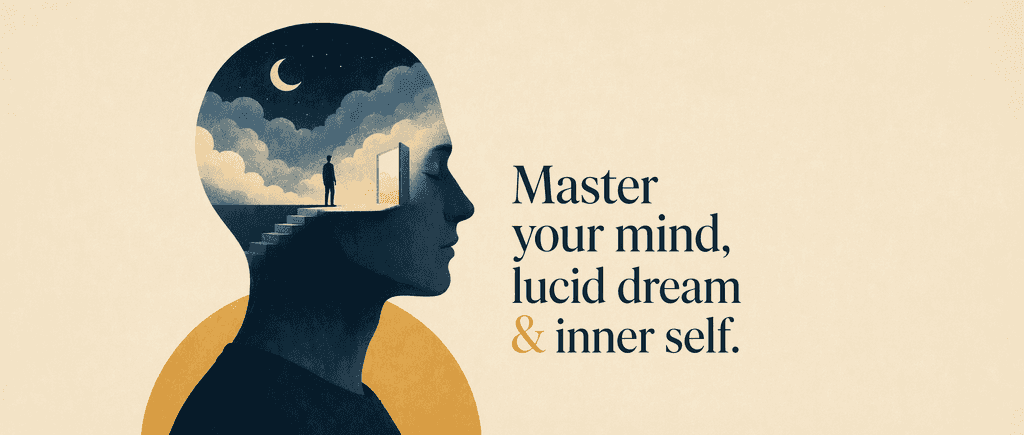
Dive into the mysterious realm where your mind never sleeps. Pioneering sleep researcher Rosalind Cartwright - the "Queen of Dreams" - reveals how our nighttime brain processes emotions and why some sleepwalkers commit crimes without remembering. Your mental health might depend on understanding this hidden 24-hour cycle.
Rosalind D. Cartwright is an acclaimed neuroscientist and pioneering sleep researcher, and the author of The Twenty-Four Hour Mind: The Role of Sleep and Dreaming in Our Emotional Lives, a seminal work bridging psychology, neuroscience, and sleep medicine.
A founding figure in dream science, Cartwright spent over five decades studying REM sleep’s role in emotional processing, and notably developed the "sleeping-on-it" theory of dream-driven problem-solving. Her career spanned leadership roles at Rush University Medical Center, where she established one of America’s first sleep disorder clinics, and groundbreaking collaborations with Carl Rogers on Psychotherapy and Personality Change (1954).
Cartwright’s other notable works include Crisis Dreaming: Using Your Dreams to Solve Your Problems and A Primer on Sleep and Dreaming, cementing her legacy as the "Queen of Dreams." Honored with the Sleep Research Society’s Distinguished Scientist Award (2004) and the American Psychological Association’s Award for Distinguished Contributions to Research (1988), her work remains foundational in sleep studies.
The Twenty-Four Hour Mind synthesizes her lifetime of research, offering readers actionable insights into harnessing sleep for emotional resilience.
The Twenty-Four Hour Mind explores how sleep and dreaming regulate emotions, process memories, and maintain mental health. Cartwright argues the brain remains active 24/7, using sleep to integrate daily experiences with stored memories, defuse emotional turmoil, and reinforce self-identity. The book examines parasomnias (like sleepwalking) to illustrate how disrupted sleep can lead to extreme behaviors, blending neuroscience with case studies.
This book is ideal for psychology students, sleep researchers, or anyone interested in brain health. It offers insights for those managing stress, insomnia, or mood disorders, as well as professionals exploring sleep’s role in emotional resilience. Cartwright’s accessible writing bridges academic research and real-world applications.
Yes—it provides a groundbreaking perspective on sleep’s role in emotional processing, supported by 50+ years of research. Cartwright’s analysis of sleep disorders (e.g., a sleepwalking homicide case) and her “24-hour mind” theory make it essential for understanding sleep’s impact on daily life. The blend of scientific rigor and narrative storytelling ensures broad appeal.
Cartwright posits that dreams during REM sleep match recent emotional events with past memories, reducing negative feelings that could disrupt waking life. This process updates self-schemas and stabilizes mood. For example, divorce-related depression studies show dreams help assimilate loss, preventing prolonged distress.
Cartwright examines a 1997 case where a sleepwalker committed homicide, illustrating how sleep disruption can disengage conscious control. She links such episodes to stress-induced activation of automatic behaviors, emphasizing sleep’s role in preventing emotional overload from spilling into wakefulness.
Some argue Cartwright overemphasizes sleep’s role in emotional regulation, underestimating wakeful coping mechanisms. Others note limited discussion of cultural or individual differences in dreaming. However, her clinical evidence and theory’s coherence are widely praised.
The book foundationalizes modern sleep medicine by connecting parasomnia research to neurocognitive frameworks. Cartwright’s work underpins today’s understanding of sleep apnea treatments and trauma-related dream analysis, influencing therapies for PTSD and depression.
These emphasize sleep’s role in efficient cognition and emotional balance.
Unlike Matthew Walker’s Why We Sleep, Cartwright focuses on dreams’ emotional function rather than sleep’s physiological benefits. Her case-study approach contrasts with broader pop-science narratives, offering deeper clinical insights.
Amid rising awareness of mental health and AI-driven sleep tech, Cartwright’s work reminds readers that sleep quality directly impacts emotional resilience. Her theories inform apps targeting stress reduction through sleep optimization.
Sinta o livro através da voz do autor
Transforme conhecimento em insights envolventes e ricos em exemplos
Capture ideias-chave em um instante para aprendizado rápido
Aproveite o livro de uma forma divertida e envolvente
Dreams reflect cognitive development rather than regulating basic drives.
Our minds never truly shut down.
Sleep enhances problem-solving and memory consolidation.
Those nighttime hours aren't wasted—they're essential.
The brain's emotional centers are having a conversation with memory networks.
Divida as ideias-chave de The Twenty-Four Hour Mind em pontos fáceis de entender para compreender como equipes inovadoras criam, colaboram e crescem.
Destile The Twenty-Four Hour Mind em dicas de memória rápidas que destacam os princípios-chave de franqueza, trabalho em equipe e resiliência criativa.

Experimente The Twenty-Four Hour Mind através de narrativas vívidas que transformam lições de inovação em momentos que você lembrará e aplicará.
Pergunte qualquer coisa, escolha a voz e co-crie insights que realmente ressoem com você.

Criado por ex-alunos da Universidade de Columbia em San Francisco
"Instead of endless scrolling, I just hit play on BeFreed. It saves me so much time."
"I never knew where to start with nonfiction—BeFreed’s book lists turned into podcasts gave me a clear path."
"Perfect balance between learning and entertainment. Finished ‘Thinking, Fast and Slow’ on my commute this week."
"Crazy how much I learned while walking the dog. BeFreed = small habits → big gains."
"Reading used to feel like a chore. Now it’s just part of my lifestyle."
"Feels effortless compared to reading. I’ve finished 6 books this month already."
"BeFreed turned my guilty doomscrolling into something that feels productive and inspiring."
"BeFreed turned my commute into learning time. 20-min podcasts are perfect for finishing books I never had time for."
"BeFreed replaced my podcast queue. Imagine Spotify for books — that’s it. 🙌"
"It is great for me to learn something from the book without reading it."
"The themed book list podcasts help me connect ideas across authors—like a guided audio journey."
"Makes me feel smarter every time before going to work"
Criado por ex-alunos da Universidade de Columbia em San Francisco

Obtenha o resumo de The Twenty-Four Hour Mind como PDF ou EPUB gratuito. Imprima ou leia offline a qualquer momento.
What if I told you that your mind doesn't shut down when you sleep-it just changes shifts? While you're unconscious, sprawled across your mattress, your brain is running a sophisticated emotional processing system that determines whether you'll wake up anxious or refreshed, foggy or clear-headed. For decades, we've treated sleep as downtime, a biological necessity we begrudgingly squeeze into our schedules. But groundbreaking research reveals something far more fascinating: sleep isn't rest for your mind. It's when your brain does some of its most important work-sorting memories, regulating emotions, and literally updating who you are as a person. The 1950s changed everything we thought we knew about sleep. Before then, scientists assumed sleep was a uniform state of unconsciousness-your brain essentially powering down like a computer. Then Nathaniel Kleitman's team at the University of Chicago discovered something extraordinary using electroencephalography: sleep wasn't one thing, but distinct cycles with wildly different brain activity. During REM sleep, while your body lies paralyzed, your brain buzzes with activity rivaling wakefulness, generating the vivid hallucinations we call dreams.