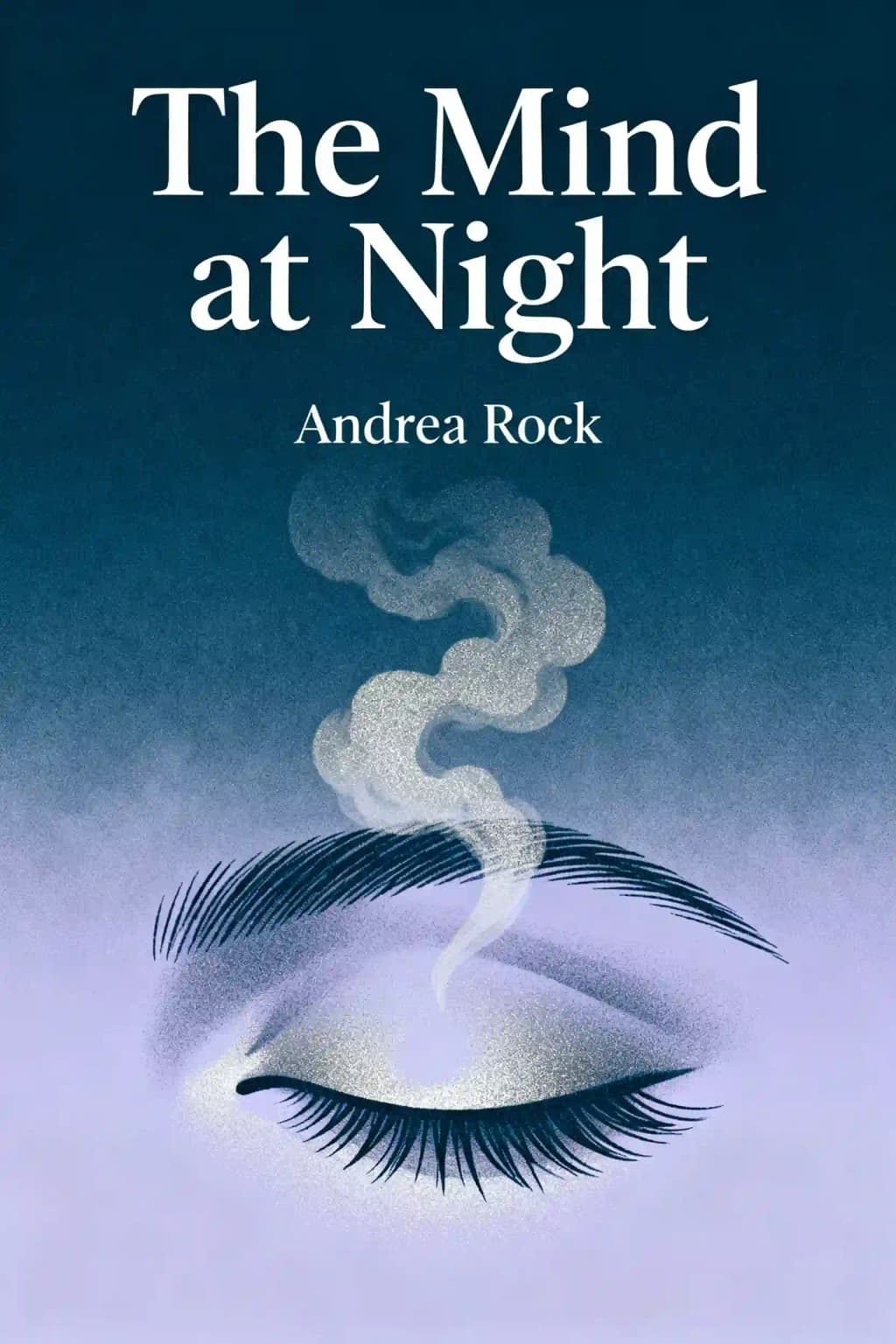
Unlock the enigma of your unconscious mind in Andrea Rock's scientific exploration of dreams. Award-winning science reporter reveals how nightly brain activity influences memory, emotions, and health - a vital resource for understanding why your sleeping hours might be more productive than waking ones.
Andrea Rock, an award-winning journalist and science writer, explores the mysteries of human consciousness in her acclaimed book The Mind at Night: The New Science of How and Why We Dream. A magna cum laude graduate of Bethany College and the Université Paris-Sorbonne, Rock built her career investigating complex scientific and health topics for outlets like Consumer Reports, Money Magazine, and O Magazine.
Her rigorous approach earned prestigious recognition including the National Magazine Award and Sigma Delta Chi Distinguished Service Award for investigative reporting.
The Mind at Night synthesizes decades of sleep research into an accessible dissection of dream science, reflecting Rock’s signature ability to translate technical subjects for general audiences. The work has been praised by Entertainment Weekly as a “damned compelling read” and hailed by Publishers Weekly for its “exceptionally lucid” scientific storytelling.
Rock’s expertise continues to shape public understanding of neuroscience through contributions to HealthCentral and other platforms. The book remains a trusted resource in sleep science discussions, frequently cited in academic and popular media for its groundbreaking examination of REM sleep’s role in emotional processing and problem-solving.
The Mind at Night explores the science of sleep and dreams, detailing the brain’s activity during sleep stages like REM and non-REM. Andrea Rock examines how dreams contribute to memory consolidation, emotional processing, and problem-solving, while debunking myths about dream interpretation. The book also addresses sleep deprivation’s health impacts and offers practical advice for improving sleep quality.
This book is ideal for readers curious about neuroscience, psychology, or sleep science. It’s valuable for insomnia sufferers, students studying brain function, and anyone interested in how dreams influence creativity and emotional well-being. Rock’s accessible writing makes complex research relatable to non-experts.
Yes—Andrea Rock combines decades of sleep research with engaging storytelling, offering insights into dream science and actionable sleep tips. Critics praise its clarity and depth, calling it a “thought-provoking look at consciousness” and “exceptionally lucid science writing.”
Rock details five sleep stages:
Dreams help process emotions, solve problems, and filter daily mental clutter. Rock highlights studies showing dreams’ role in trauma recovery and creative inspiration (e.g., artists often derive ideas from dreams). She challenges Freud’s sexual symbolism theory, emphasizing individualized dream meanings.
Chronic sleep loss impairs cognitive function, weakens immunity, and heightens depression risk. Rock cites research linking insufficient REM sleep to poor emotional regulation and memory lapses. Practical fixes include consistent sleep schedules and minimizing screen time before bed.
Yes—recurring dreams often reflect unresolved stress or fears, while nightmares may signal anxiety disorders. Rock explains how lucid dreaming techniques (awareness during dreams) can help reshape negative dream patterns.
Rock acknowledges Freud’s historical influence but critiques his focus on repressed sexual desires. Modern brain imaging, she argues, shows dreams are more about processing emotions than symbolic wish fulfillment. However, she validates Freud’s emphasis on dreams revealing subconscious concerns.
Yes. Rock describes how REM sleep fosters creative connections—for example, chemists dreaming of molecular structures. She recommends “incubating” solutions by focusing on problems before sleep, as dreams often provide novel perspectives.
Key recommendations include:
Non-REM sleep strengthens factual memory (e.g., textbook learning), while REM integrates emotional experiences. Students pulling all-nighters, Rock warns, retain less information than those who sleep, as the brain replays and stabilizes memories overnight.
Rock blends historical research (e.g., 1950s REM discoveries) with modern neuroscience, using humor and scientist anecdotes. Her critique of one-size-fits-all dream dictionaries and emphasis on individualized analysis set the book apart from pop psychology takes.
Some readers might want more actionable dream-control strategies, as Rock prioritizes explaining science over self-help. However, the book is widely praised for making complex topics accessible without oversimplifying.
Sinta o livro através da voz do autor
Transforme conhecimento em insights envolventes e ricos em exemplos
Capture ideias-chave em um instante para aprendizado rápido
Aproveite o livro de uma forma divertida e envolvente
Hobson insisted no symbolic decoding was necessary.
Dreams were found to be primarily visual experiences.
The brain regularly entered a supercharged condition remarkably similar to waking consciousness.
Dreams weren't hiding repressed wishes but were transparent products of this altered brain chemistry.
Divida as ideias-chave de The Mind At Night em pontos fáceis de entender para compreender como equipes inovadoras criam, colaboram e crescem.
Destile The Mind At Night em dicas de memória rápidas que destacam os princípios-chave de franqueza, trabalho em equipe e resiliência criativa.

Experimente The Mind At Night através de narrativas vívidas que transformam lições de inovação em momentos que você lembrará e aplicará.
Pergunte qualquer coisa, escolha a voz e co-crie insights que realmente ressoem com você.

Criado por ex-alunos da Universidade de Columbia em San Francisco
"Instead of endless scrolling, I just hit play on BeFreed. It saves me so much time."
"I never knew where to start with nonfiction—BeFreed’s book lists turned into podcasts gave me a clear path."
"Perfect balance between learning and entertainment. Finished ‘Thinking, Fast and Slow’ on my commute this week."
"Crazy how much I learned while walking the dog. BeFreed = small habits → big gains."
"Reading used to feel like a chore. Now it’s just part of my lifestyle."
"Feels effortless compared to reading. I’ve finished 6 books this month already."
"BeFreed turned my guilty doomscrolling into something that feels productive and inspiring."
"BeFreed turned my commute into learning time. 20-min podcasts are perfect for finishing books I never had time for."
"BeFreed replaced my podcast queue. Imagine Spotify for books — that’s it. 🙌"
"It is great for me to learn something from the book without reading it."
"The themed book list podcasts help me connect ideas across authors—like a guided audio journey."
"Makes me feel smarter every time before going to work"
Criado por ex-alunos da Universidade de Columbia em San Francisco

Obtenha o resumo de The Mind At Night como PDF ou EPUB gratuito. Imprima ou leia offline a qualquer momento.
What if I told you that every night, while you're completely unaware, your brain is running a parallel universe-complete with characters, plot twists, and emotional drama that would make Hollywood jealous? In 1951, a broke graduate student named Eugene Aserinsky wired his eight-year-old son with electrodes and stumbled upon one of the most profound discoveries in neuroscience: our sleeping brains aren't resting at all. They're throwing elaborate performances we call dreams. Using a rescued polygraph from a dusty basement, Aserinsky watched in astonishment as his son's brain waves suddenly shifted from the slow rhythm of sleep to sharp, frantic patterns that looked almost identical to waking consciousness. When he gently woke the boy during these episodes, his son vividly described dreams he was having. This wasn't just sleep-this was the brain on a secret mission. That discovery shattered everything scientists thought they knew about the sleeping mind and launched a scientific revolution that continues today. Think of sleep as a five-act play that repeats throughout the night. We drift from relaxed alpha waves into hypnagogic imagery-those strange, fleeting visions as we fall asleep. Then comes light sleep, followed by the deep delta waves where our bodies do their heaviest repair work. But the real magic happens in the fifth act: REM sleep, when our eyes dart frantically beneath closed lids and our brains light up like Times Square on New Year's Eve. This cycle repeats roughly every ninety minutes, with REM periods growing longer as morning approaches. By dawn, we're spending more time in vivid dreamland than in deep restoration. Here's what makes REM sleep so bizarre: your brain is essentially awake, but your body is paralyzed. Evolution built this safety mechanism so you don't act out your dreams-imagine the chaos if you physically ran from that dream tiger. Research across species reveals that REM sleep exists in mammals and some birds but not reptiles, suggesting it evolved relatively recently in evolutionary terms. A newborn spends half their sleep in REM, perhaps building the neural scaffolding they'll need for consciousness. By age four, this stabilizes to about 20-25% of sleep, where it remains for most of life.