Capítulo 4
The Birth of A Chorus Line: A Career-Defining Moment
On January 26, 1974, about thirty dancers gathered at the Nickolaus Exercise Center on East 23rd Street in Manhattan, forming what would become a historic circle. Michael Bennett - a brilliant but notoriously manipulative choreographer with whom Kelly had maintained a complex professional and personal relationship since their days in "Promises, Promises" - began the session with deceptive simplicity. He asked everyone to share their real names, birthplaces, and birth dates. When he suggested women didn't need to share their ages, Kelly immediately challenged his call for honesty, setting the tone for the raw authenticity that would define the project.
What followed was an extraordinary twelve-hour marathon session that stretched until dawn, with dancers sharing their most intimate stories. They revealed childhood traumas, professional disappointments, and deeply personal struggles that had never before been voiced in such a setting. Nicholas Dante's powerful account of his parents discovering him performing in drag at a Greenwich Village club moved everyone to tears, while other dancers spoke about broken homes, failed relationships, and the brutal realities of life in show business. The session was captured on Bennett's tape recorder, preserving every vulnerable moment that would later become theatrical gold.
After a less successful second session and several weeks of uncertainty that left many participants wondering if anything would come of their confessions, Bennett finally called with an unexpected proposition: a five-week workshop based on the recorded conversations. He had conceived a groundbreaking show about dancers' experiences and the grueling audition processes they endured, managing to convince Joseph Papp, the influential founder of the Public Theater, to provide both workshop space and institutional support. With Papp's prestigious backing, Bennett assembled an extraordinary creative team: Nicholas Dante and James Kirkwood Jr. to craft the book, Bob Avian as associate choreographer, and Marvin Hamlisch collaborating with lyricist Ed Kleban to create what would become an iconic score.
Kelly was cast as Sheila Bryant - her first substantial acting role that required more than just dancing. "I immersed myself in the transition from chorus dancer to playing Sheila, a character very much like me but with added sassiness and tough-girl attitude," she recalls. "It was like looking in a mirror, but with the volume turned up." When Bennett informed her they were cutting most of her spoken monologue and adding a song called "At the Ballet," she initially panicked about her limited singing experience until he assured her it would be a trio, allowing her to blend her voice with stronger singers.
The first time she heard the song, Kelly was mesmerized by how Hamlisch and Kleban had transformed her childhood memories into something transcendent. The lyrics captured perfectly how ballet had been her escape from a difficult home life, creating beauty where there was none. "My monologue hadn't been lost; it had evolved into something far more beautiful and memorable," she reflected. "They had taken my simple stories about seeking refuge in dance and turned them into poetry that spoke to everyone who had ever found salvation in art."
Capítulo 5
From Carole to Kelly: Reinvention and Recognition
"A Chorus Line" premiered at the Public Theater on April 15, 1975, to overwhelming acclaim. Three weeks later, they moved to Broadway's Shubert Theatre, opening on July 25, 1975, with months of advance sellouts. The show became "the show that saved Broadway," with celebrities lining up nightly to see them.
In spring 1976, Kelly received a Tony nomination for Best Performance by a Featured Actress in a Musical. During this period, she also faced a professional identity crisis. After joining various theater unions, she set her sights on Screen Actors Guild membership. When applying for her card, she discovered another Carole Bishop was already registered, forcing her to use a different name for film and TV work.
The solution came from a backstage joke during "On the Town" (1971) where she'd adopted the alter ego "Kelly Westbrook." The nickname "Kelly" had stuck through "A Chorus Line," with even Michael Bennett using it. She decided to officially become "Kelly Bishop," making the change public at the Tony Awards.
On April 18, 1976, at the Tony Awards, Jerry Lewis announced, "And the winner is... Kelly Bishop! A Chorus Line!" In complete shock, she approached the microphone unprepared. Looking around the Shubert Theatre, she simply said, "Welcome to my theater," acknowledging she was accepting on behalf of everyone involved, "but I'll keep it at my house." She may be the only person nominated under one name (Carole) and who won under another (Kelly).
After about a year and a half with "A Chorus Line," Kelly walked away when Bennett refused to give her a raise during contract renewal-punishment for her earlier refusal to tour with the show. Though sad to leave, she felt "exhilarated by my freedom. I envisioned stepping through a massive oak door into blinding sunshine, transformed from chorus dancer Carole Bishop to actor Kelly Bishop, with endless possibilities ahead."
Capítulo 6
Hollywood Calling: New Medium, New Challenges
Thanks to her Tony Award and established agent connections from Broadway, Kelly quickly signed with William Morris, one of LA's most prestigious agencies. Unlike many newcomers who spend years waiting tables between auditions, she landed her first TV acting job within weeks of arrival-an episode of "Hawaii Five-0" called "Oldest Profession," playing a complex character of a former brothel owner who becomes entangled in a murder investigation. The role, though brief, showcased her ability to bring depth to morally ambiguous characters.
Her first movie role arrived in Paul Mazursky's critically acclaimed "An Unmarried Woman," playing one of Jill Clayburgh's sophisticated Manhattan friends. The film provided invaluable on-the-job training in screen acting, which differed significantly from theater in numerous ways. "The biggest challenge was maintaining energy through multiple takes of the same scene from different camera angles," she notes. "In theater, you build momentum through the show. In film, you might shoot the ending first thing in the morning." However, her extensive dance background gave her a natural talent for "matching" actions between takes - a crucial skill that many stage actors struggle to master. Her years of choreographed precision made her popular with cinematographers and editors.
After this initial success, Kelly experienced a frustrating eighteen-month dry spell until she discovered the troubling truth: her previous agent had been turning down auditions without informing her, believing certain roles were "beneath" a Tony winner. Upon switching to ICM Partners, work opportunities flooded back. This led to substantial roles in regional theater productions at the Mark Taper Forum and Seattle Rep, recurring parts on daytime dramas like "Ryan's Hope" and "One Life to Live," and international film work including "Solarbabies," shot on location in Spain's Almeria desert. The diverse projects allowed her to develop her screen presence while maintaining her theater roots. Soon after, what seemed like another quick role appeared - a supporting part in a low-budget film called "Dirty Dancing," which would unexpectedly transform her career trajectory.
Throughout this transition period, Kelly maintained her connection to theater, often flying back to New York for stage readings and workshops, believing that keeping her theatrical skills sharp made her a more versatile screen actor. This dedication to craft across mediums became a hallmark of her professional approach.
Capítulo 7
Finding Love and Balance
A year after ending a tumultuous relationship with a possessive boyfriend who had attempted to control her career choices, Kelly found herself guest starring on "Midday Live" with veteran host Lee Leonard. The interview flowed naturally, with an easy chemistry that neither expected. Days after the broadcast, Lee, known for his charismatic personality and quick wit, called the show's producer to get Kelly's number and asked her to dinner. Despite hearing whispers about his reputation as a ladies' man in New York media circles, something about his direct approach intrigued her.
"Our first date was refreshingly different from any I'd experienced," she remembers. "Lee was honest, attentive, and genuinely interested in what I had to say - not just about acting, but about my dreams, fears, and family." For the first time in her dating life, Kelly broke her pattern of rushing headlong into relationships. She allowed their connection to develop organically, spending time getting to know each other through long walks in Central Park and quiet dinners at neighborhood restaurants.
After nine months of dating that included countless theater outings and weekend trips to the Berkshires, they married in an intimate ceremony at the Bronx courthouse. The celebration that followed was equally understated - lunch at the Green Kitchen, their favorite local diner, surrounded by close friends and family. This set the tone for their partnership, which would endure for decades, weathering everything from career upheavals and cross-country moves to serious health challenges and extended periods of bicoastal living.
Shortly after their wedding, they relocated to Los Angeles when Lee accepted a prestigious position hosting "People Tonight" on the newly-launched CNN. The move tested their adaptability as Kelly navigated the West Coast entertainment industry. When CNN unexpectedly terminated Lee's contract during network restructuring, they returned to New York, where Kelly took whatever summer stock and regional theater jobs she could find to keep them afloat. Their persistence paid off when, two years later, CNN rehired Lee as co-host of "Showbiz Today" in New York, bringing welcome financial stability.
Their relationship faced its most significant challenges when Lee battled multiple cancers over the years. During his aggressive prostate cancer treatment, Kelly maintained her role on "Gilmore Girls" thanks to the production team's extraordinary flexibility. They restructured shooting schedules to allow her two-week blocks at home with Lee between filming. "Even during the worst of his treatments, Lee remained my biggest champion," she writes. "He insisted I continue pursuing my passion, saying my success gave him strength in his recovery. We learned that true partnership means supporting each other's dreams while facing life's hardest moments together."
Capítulo 8
Becoming Emily Gilmore: A Role of a Lifetime
In late 1999, Kelly received another life-changing phone call-an audition for a new TV series called "The Gilmore Girls." When she walked into the audition room, creator Amy Sherman-Palladino knew immediately she had found her Emily Gilmore. "Three words in, I knew-this was Emily," Amy later wrote. "There were no second choices."
Kelly found Emily to be a wonderfully complex character-"not simply a cold, demanding mother, but a woman who deeply loved both her daughter and granddaughter while having no idea how to connect with Lorelai." Emily's icy disapproval stemmed from frustration and lingering resentment over Lorelai's teenage pregnancy, creating a classic self-fulfilling prophecy: "Emily made it difficult for Lorelai to be around her, then resented her daughter for keeping her distance."
The show premiered in October 2000, with reviews calling it "intelligent," "warm," and "quirky." Kelly's portrayal of Emily Gilmore would become one of television's most memorable matriarchs, earning her a dedicated fanbase who appreciated the character's complexity, wit, and growth over seven seasons.
When Warner Bros canceled "Gilmore Girls" in 2007, the series found new life on Netflix, becoming a phenomenon attracting original viewers and entirely new generations. This led to a fifteenth-year reunion at the ATX TV Festival in Austin and eventually a revival with four ninety-minute episodes called "Gilmore Girls: A Year in the Life."
In the revival, Emily was now a widow following the death of actor Edward Herrmann. Amy Sherman-Palladino drew from her own experience of losing her father to create Emily's grief journey, while Kelly enhanced the performance by drawing from her experience of losing her mother. "Emily's grief wasn't paralyzing but manic and aggressive, much like my own response to losing my mother," she explains. The character evolved dramatically-quitting the DAR, selling her Hartford mansion, moving to Nantucket, and finally working closer to Lorelai.
Capítulo 9
Loss, Resilience, and Continuing Forward
Throughout her career, Kelly faced numerous personal losses. The HIV/AIDS epidemic of the 1980s decimated the entertainment industry, taking many friends and colleagues. Michael Bennett's death in 1987 hit her particularly hard. "I couldn't imagine my career without his genius," she writes.
In January 1994, her mother suffered a fatal heart attack after shoveling snow. "Losing her devastated me-I'd lost my hero, my biggest fan, my fiercest protector," Kelly recalls. She threw herself into work to honor her mother's resilient spirit.
The most profound loss came when Lee's health declined in 2018 after battling his sixth cancer. Despite chemotherapy, his condition worsened with additional tumors discovered. When the oncologist finally recommended hospice care, Kelly insisted on bringing Lee home. He passed away on December 16, 2018-Kelly never says "he died," only that "Lee left."
After Lee's passing, Kelly realized no amount of mental preparation could have readied her for the loss. To cope with her grief, she returned to work, accepting roles in "Halston" opposite Ewan McGregor and guest appearances on "The Marvelous Mrs. Maisel." During the pandemic, she adopted a rescue dog named Dolly, who provided much-needed structure and companionship.
As Kelly approached her eightieth birthday, she contemplated aging gracefully, choosing to embrace her natural appearance rather than pursue extensive cosmetic procedures. A transformative moment came during the 40th anniversary of "A Chorus Line" at a Hamilton performance, where she shifted from mourning her dancing days to celebrating them, even encouraging a young dancer to "savor every moment."
Looking back on her remarkable journey from chorus dancer to acclaimed actress, Kelly feels blessed to have found her passion early, been loved deeply, and maintained resilience through life's challenges. With gratitude to her mother who started it all "at the ballet," she embraces her new decade with optimism and the same determination that has defined her extraordinary life.
Capítulo 10
Legacy of The Third Gilmore Girl
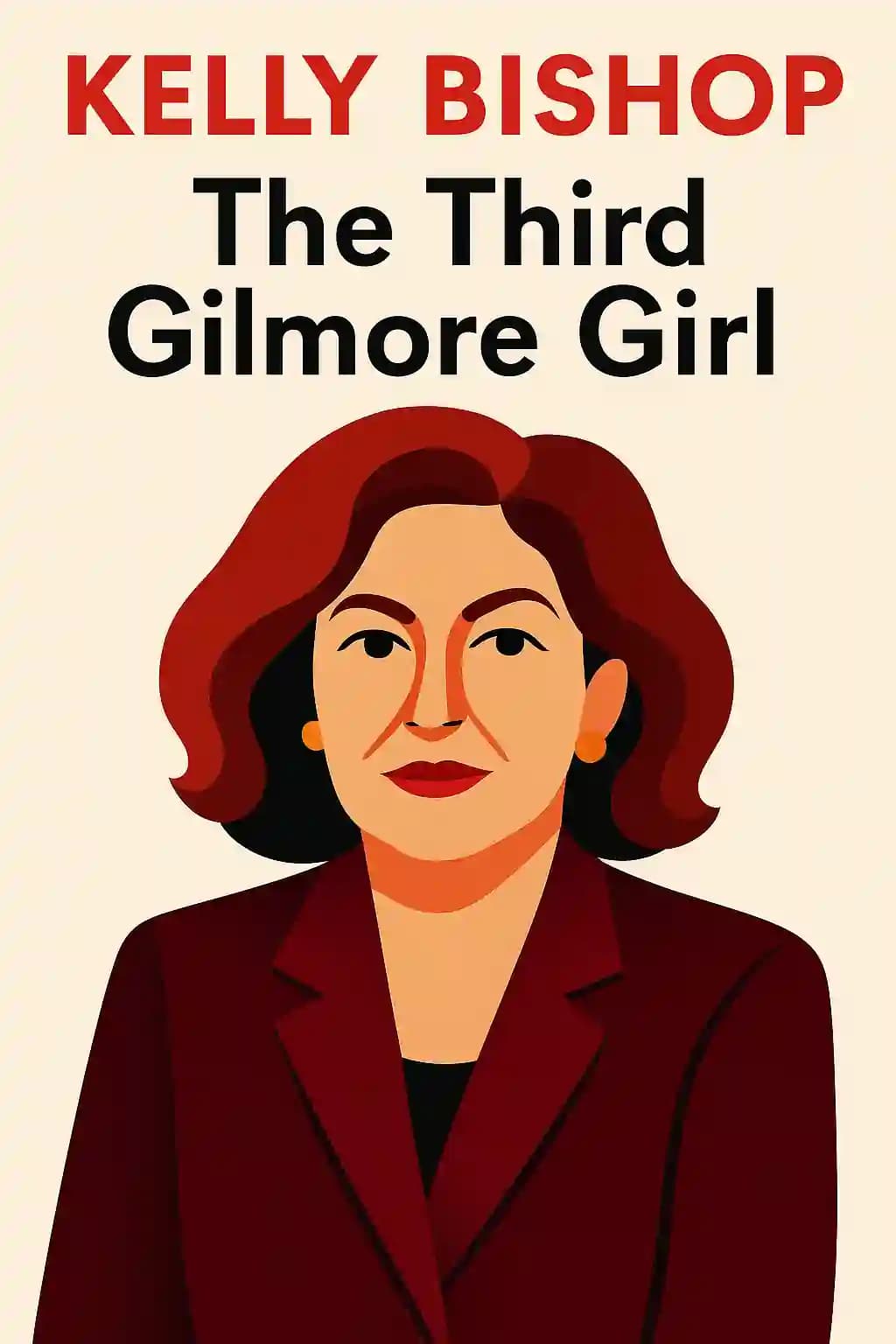
The title of Kelly's memoir came from a chance encounter with a teenage boy at her local gas station who told her Emily was his favorite character and that she was "the third Gilmore girl." This perfectly captures her impact on the show and its fans-though not technically a Gilmore by blood, Emily was essential to the series' emotional core. Her portrayal of Emily Gilmore brought depth and complexity to what could have been a one-dimensional character, transforming her into a formidable matriarch whose sharp wit and vulnerability resonated across generations.
Kelly's relationship with fans remains uniquely special, with people of all ages approaching her to share how "Gilmore Girls" touched their lives. She's met women who bonded with their daughters while watching the show, finding common ground in the complex mother-daughter relationships portrayed. Men have approached her to express appreciation for the decency of the male characters, particularly Richard Gilmore's portrayal of a devoted husband and father. Young viewers who discovered the show through streaming services continue to find relevance in Emily's character, proving the timeless nature of the series' themes of family, ambition, and personal growth.
Through all her success, Kelly has maintained her preference for being part of an ensemble rather than seeking individual stardom, tracing this back to childhood observations about how fame often leads to unwanted scrutiny and personal complications. She witnessed firsthand how the pressure of stardom affected many of her contemporaries in theater and television, reinforcing her decision to prioritize artistic fulfillment over celebrity. Her career choices consistently reflected this philosophy, allowing her to maintain privacy and integrity while still achieving remarkable success-a balancing act few performers manage with such grace.
From her first professional dance job at Radio City Music Hall to her iconic role as Emily Gilmore, Kelly Bishop's career spans six decades of American entertainment, encompassing the golden age of Broadway, the evolution of television, and the streaming era. Her journey represents the evolution of a true artist-one who continually reinvented herself while remaining true to her core values of hard work, honesty, and artistic integrity. She's moved seamlessly between mediums, from the physical demands of dance to the emotional complexity of dramatic roles, always bringing authenticity to her performances.
As she advises aspiring performers and young people in general: "Pursue your dreams without apology, follow your passions whether in performing arts or any honest profession, but never compromise your integrity for fame." It's advice she's lived by, creating an extraordinary life and career that serves as an inspiration to multiple generations of artists. Her legacy extends beyond her performances to encompass her role as a mentor and example of professional longevity achieved through talent, dedication, and unwavering principles.