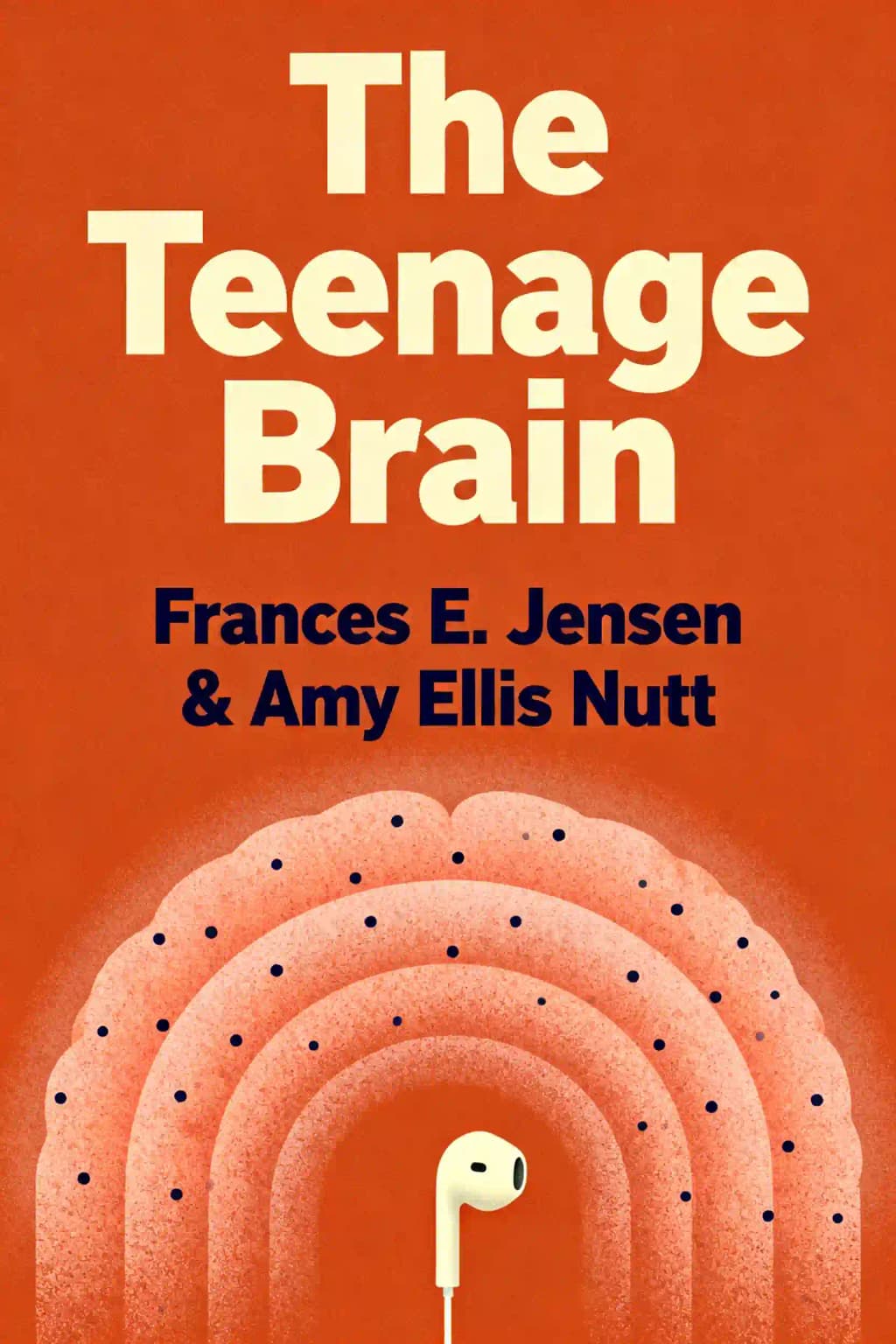
Why is your teenager's brain wired for risk? Dr. Jensen's bestselling neuroscience guide reveals the teenage brain isn't fully developed until 25, reshaping how parents and educators understand adolescent behavior. Discover why teens are uniquely vulnerable to addiction and how digital technology affects their developing minds.
Sinta o livro através da voz do autor
Transforme conhecimento em insights envolventes e ricos em exemplos
Capture ideias-chave em um instante para aprendizado rápido
Aproveite o livro de uma forma divertida e envolvente
Your sixteen-year-old walks past the overflowing trash can for the third time today without seeing it. Last night, she aced a calculus test. This morning, she left the stove on. Is she brilliant or oblivious? The answer: both. The teenage brain isn't a broken version of an adult brain-it's a fundamentally different organ altogether, operating under its own bewildering logic. Think of it as a Ferrari with racing-grade acceleration but brakes that won't be fully installed for another decade. This paradox explains why the same person who can master organic chemistry might also think driving 90 mph to impress friends sounds reasonable. Inside every teenage skull sits the most ambitious renovation project in human biology. The brain contains 100 billion neurons-enough to circle Earth four times if laid end-to-end-yet remains our most incomplete organ at birth. Development proceeds from back to front, with the frontal lobes maturing last. These frontal regions, housing judgment, planning, and impulse control, represent 40% of brain volume but won't finish developing until the mid-twenties. During adolescence, the brain creates two million synapses per second, generating a neural overgrowth that grants exceptional learning abilities but also creates cognitive confusion from competing signals. Imagine navigating a city where new streets appear daily while old ones vanish-that's the teenage experience of decision-making. Understanding this neurological reality transforms our entire approach to adolescence, shifting us from frustrated confusion to informed compassion.
Divida as ideias-chave de The Teenage Brain em pontos fáceis de entender para compreender como equipes inovadoras criam, colaboram e crescem.
Destile The Teenage Brain em dicas de memória rápidas que destacam os princípios-chave de franqueza, trabalho em equipe e resiliência criativa.

Experimente The Teenage Brain através de narrativas vívidas que transformam lições de inovação em momentos que você lembrará e aplicará.
Pergunte qualquer coisa, escolha a voz e co-crie insights que realmente ressoem com você.

Criado por ex-alunos da Universidade de Columbia em San Francisco
"Instead of endless scrolling, I just hit play on BeFreed. It saves me so much time."
"I never knew where to start with nonfiction—BeFreed’s book lists turned into podcasts gave me a clear path."
"Perfect balance between learning and entertainment. Finished ‘Thinking, Fast and Slow’ on my commute this week."
"Crazy how much I learned while walking the dog. BeFreed = small habits → big gains."
"Reading used to feel like a chore. Now it’s just part of my lifestyle."
"Feels effortless compared to reading. I’ve finished 6 books this month already."
"BeFreed turned my guilty doomscrolling into something that feels productive and inspiring."
"BeFreed turned my commute into learning time. 20-min podcasts are perfect for finishing books I never had time for."
"BeFreed replaced my podcast queue. Imagine Spotify for books — that’s it. 🙌"
"It is great for me to learn something from the book without reading it."
"The themed book list podcasts help me connect ideas across authors—like a guided audio journey."
"Makes me feel smarter every time before going to work"
Criado por ex-alunos da Universidade de Columbia em San Francisco

Obtenha o resumo de The Teenage Brain como PDF ou EPUB gratuito. Imprima ou leia offline a qualquer momento.