Capítulo 1
When Science Meets Spirituality: The Dance of Modern Physics and Eastern Mysticism
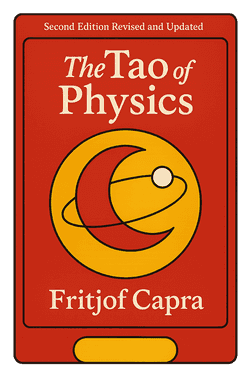
Five years ago, physicist Fritjof Capra experienced a profound moment while sitting by the ocean. Beyond merely understanding the scientific principles of vibrating molecules and atoms, he suddenly perceived his entire environment as part of a cosmic dance-cascades of energy, particles being created and destroyed in rhythmic pulses. In that transformative moment, he recognized this vision as the Dance of Shiva worshipped by Hindus. This epiphany became the genesis of "The Tao of Physics," a groundbreaking work that has since sold over a million copies worldwide and been translated into more than a dozen languages. The book's enduring popularity stems from its revolutionary premise: that modern physics and ancient Eastern mysticism, far from being contradictory worldviews, are converging on remarkably similar understandings of reality. Beloved by luminaries ranging from the Dalai Lama to numerous Nobel Prize-winning physicists, Capra's work continues to bridge what C.P. Snow once called "the two cultures" of science and spirituality, offering a unified vision of knowledge that transcends traditional boundaries.
Capítulo 2
The Crisis of Mechanistic Thinking
The mechanistic worldview that has dominated Western thought since Descartes and Newton is facing a profound crisis. This perspective, which divides the world into separate objects and reduces complex phenomena to basic building blocks, has led to remarkable technological achievements but also created a fragmented vision of reality that underlies our current social, ecological, and cultural problems.
The Cartesian division between mind and matter has caused people to identify with their rational minds rather than their whole organisms, creating an inner fragmentation that mirrors our fragmented view of the external world. This separation extends to how we view nature-as a mechanical system to be manipulated and controlled rather than a living organism of which we are an integral part.
This mechanistic worldview emerged gradually in Western thought, departing from the more unified vision of early Greek philosophers like Heraclitus, who saw perpetual change and the unity of opposites as fundamental principles-concepts remarkably similar to Eastern thought. The separation accelerated with Parmenides' concept of unchangeable Being and the atom theory of Leucippus and Democritus, which drew a clear line between spirit and matter. This dualism became firmly entrenched through Descartes' division between mind and matter, forming the foundation for Newton's mechanistic worldview that dominated science for centuries.
Modern physics has now come full circle, returning to a perspective that shares much with those early holistic philosophies. The exploration of the atomic and subatomic world has forced scientists to see the universe not as a collection of separate objects but as an interconnected web of relationships. As physicist Werner Heisenberg noted, "The foundations of physics have started moving," while Einstein described feeling as if "the ground had been pulled out from under one." These revolutionary experiences led both physicists and Eastern mystics to radically new ways of seeing the world-one that recognizes the essential unity and dynamic nature of all phenomena.
Capítulo 3
Two Paths to Knowledge: Rational and Intuitive
Before comparing modern physics with Eastern mysticism, we must address how to reconcile an exact science expressed in sophisticated mathematics with spiritual disciplines based on meditation that claim their insights cannot be verbally communicated. Throughout history, human knowledge has developed along two complementary paths: rational knowledge and intuitive knowledge, traditionally associated with science and religion respectively.
Rational knowledge comes from our everyday experience with objects and events. It belongs to the realm of the intellect, which discriminates, divides, compares, measures, and categorizes. Abstract thinking is crucial to rational knowledge, creating systems of concepts and symbols arranged in a linear, sequential structure. However, the natural world contains infinite varieties and complexities that abstract conceptual thinking can never completely capture, making all rational knowledge inherently limited.
Eastern mysticism aims to free us from confusing our mental concepts with reality itself. Eastern mystics seek direct experience of reality that transcends both intellectual thinking and sensory perception. While physicists primarily deal with rational knowledge and mystics with intuitive knowledge, both types of understanding appear in both disciplines.
Scientists experience intuitive breakthroughs during moments of relaxation after concentrated intellectual activity. These insights must then be formulated in consistent mathematical frameworks with plain language interpretations. Mathematics represents an extremely abstracted and compressed language, which Pythagoras believed was inherent in nature itself. Eastern mystics disagree, seeing mathematics as part of our conceptual map, not reality itself.
Eastern mystical traditions contain rational elements, though the emphasis varies between schools. Direct mystical experience remains central to all traditions, giving them a strong empirical character. Knowledge is firmly based on personal experience, not intellectual reasoning. This empirical attitude parallels science's experimental foundation.
Mystical experience involves direct insight through observation rather than thinking. In Taoism, temples (kuan) were originally "places of observation." Buddhism emphasizes seeing as the basis of knowing, with enlightenment often called "the vision of the Tao." Though mystical experiences require years of training like scientific experiments, both are repeatable and sophisticated. The complexity of a physicist's apparatus is matched by the mystic's consciousness in deep meditation.
Capítulo 4
Beyond the Limits of Language
Both modern physics and Eastern mysticism face a fundamental challenge: reality transcends ordinary linguistic capabilities. While Western philosophy has traditionally relied on logic and reasoning, Eastern traditions have long embraced the limitations of language in describing ultimate reality.
Zen Buddhists particularly excel at making a virtue out of verbal inconsistencies through their unique koan system-carefully devised nonsensical riddles designed to stop the thought process and prepare students for non-verbal experience of reality. Famous koans include "What is the sound of one hand clapping?" and "What was your original face before your parents gave birth to you?" These paradoxical questions create a mental impasse that can only be resolved through direct insight beyond logical reasoning.
This parallels the paradoxical situations physicists faced at the beginning of atomic physics. As Heisenberg described after discussions with Bohr: "Can nature possibly be so absurd as it seemed to us in these atomic experiments?" When scientists penetrated into the submicroscopic world, they encountered a realm beyond sensory perception where ordinary language and concepts proved inadequate. The step into the atomic world transcended the limits of sensory imagination, forcing physicists, like mystics, to face the paradoxical aspects of non-sensory experience.
Both physicists and mystics must adopt a special way of thinking that moves beyond rigid classical logic, switching between complementary viewpoints to comprehend a reality beyond opposites. As physicist Niels Bohr noted, when seeking harmony in life, we must never forget that in the drama of existence, we are both actors and spectators. This perspective aligns with the Eastern mystical view that truth lies beyond dualistic concepts, in what Buddhism calls "the world of acintya" or "no-thought."
Capítulo 5
Quantum Reality: The Dance of Probabilities
The exploration of the subatomic world has completely transformed our understanding of matter and reality. Classical physics, built on Newton's mechanics, viewed the universe as a huge mechanical system operating according to exact laws where particles moved with clearly defined positions and velocities. This perspective achieved tremendous success in the 18th and 19th centuries, explaining everything from planetary motions to fluid dynamics to heat theory.
However, the first three decades of the twentieth century radically transformed physics through two revolutionary developments: relativity theory and quantum physics. Einstein's special relativity completed classical physics while dramatically transforming traditional concepts of space and time. In relativity, space is not three-dimensional and time not separate-they form a four-dimensional "space-time" continuum where measurements lose absolute significance. Most importantly, Einstein showed that mass is simply a form of energy, expressed in the famous equation E=mc2.
Quantum theory emerged through international collaboration among physicists like Heisenberg, Bohr, and Dirac, who confronted the paradoxical nature of the subatomic world. The theory revealed that subatomic particles possess a bewildering dual nature, appearing sometimes as particles, sometimes as waves-a property also exhibited by light. This seemingly impossible contradiction led to quantum theory's formulation, which resolved the paradox by abandoning the very foundation of mechanistic thinking-matter's concrete reality.
At the subatomic level, matter doesn't exist with certainty at definite places but shows "tendencies to exist." These tendencies are expressed mathematically as probability waves-abstract quantities related to the likelihood of finding particles at particular points in space and time. Particles can simultaneously be waves because they are probability patterns rather than solid objects, demolishing classical concepts of determinism and material solidity.
This quantum reality extends to atomic structure, explaining why matter appears solid despite atoms being mostly empty space. Electrons exist as probability waves arranged in orbits that must form "standing wave" patterns, which can only take certain well-defined shapes. This explains why electrons can only occupy specific orbits with definite energy levels. The wave nature of electrons accounts for the perfect identity of atoms of the same element and their remarkable stability-features crucial to the physical world as we know it.
Capítulo 6
Eastern Wisdom: The Unity Behind Appearances
Eastern mystical traditions share a common worldview despite their diverse cultural expressions. Hinduism, Buddhism, Chinese thought, Taoism, and Zen all emphasize that the diverse phenomena we perceive are merely different manifestations of the same ultimate reality. This reality-called Brahman in Hinduism, Dharmakaya in Buddhism, and Tao in Chinese philosophy-is the essence of all things, both transcendent and immanent.
In Hinduism, the fundamental concept is that all phenomena are manifestations of Brahman, the infinite and beyond all concepts. The manifestation of Brahman in the human soul is called Atman, and the realization that Atman and Brahman are one constitutes the essential teaching of the Upanishads: "That which is the finest essence-this whole world has that as its soul. That is Reality. That is Atman. That art thou."
Buddhism, founded by Siddhartha Gautama in the sixth century B.C., offers a more psychological approach. Rather than focusing on metaphysical questions, the Buddha addressed human suffering and its causes. His Four Noble Truths teach that suffering stems from our resistance to impermanence, that this suffering is caused by clinging based on ignorance, that liberation (nirvana) is possible, and that the Eightfold Path leads to awakening. For Buddhists, the essence of awakening is transcending intellectual distinctions to experience reality as undivided "suchness."
Chinese thought, particularly through Confucianism and Taoism, developed a complementary approach to wisdom. Confucianism focused on social organization and ethics, while Taoism concentrated on observing nature and discovering its Way (Tao). Rather than opposing philosophies, these were seen as complementary aspects of human nature. The Chinese recognized discernible patterns within constant change, structured through the polar opposites yin and yang-complementary forces whose dynamic interplay generates all manifestations of the Tao.
Taoism emphasizes spontaneity and non-action (wu-wei), meaning "refraining from activity contrary to nature." The Taoist sage perceives the relativity of all opposites and maintains a dynamic balance between them, acting from intuitive wisdom rather than forcing outcomes. As Lao Tzu paradoxically states, "By non-action everything can be done."
Zen Buddhism represents a unique fusion of Chinese Taoism and Indian Buddhism, focusing exclusively on the direct experience of enlightenment (satori). Zen masters developed methods of "direct pointing" to transmit this experience, using minimal words and spontaneous actions to shift students from abstract thought to concrete reality. Distinctively, Zen emphasizes that enlightenment doesn't mean withdrawal but active participation in everyday life-"When hungry eat, when tired sleep."
Capítulo 7
Space-Time: Beyond Our Three-Dimensional World
In relativistic physics, space and time are unified into a four-dimensional continuum where traditional concepts of three-dimensional space and separate time are transcended. This higher-dimensional reality, though mathematically formulated by physicists, remains difficult to visualize due to our sensory limitations and language evolved in a three-dimensional world.
Eastern mystics appear capable of directly experiencing this higher-dimensional reality through deep meditation, transcending the everyday three-dimensional world to encounter a reality where opposites unify into an organic whole. As Lama Govinda explains, "An experience of higher dimensionality is achieved by integration of experiences of different centers and levels of consciousness," making such experiences indescribable within three-dimensional consciousness and conventional logic.
Einstein's relativity theory revealed that all space and time measurements are relative. While spatial relativity was already understood (positions depend on the observer's reference frame), Einstein showed that temporal specifications are equally relative. At high velocities, observers moving at different speeds will order events differently in time-two events seen as simultaneous by one observer may occur in different sequences for others. This relativity of time demolishes the concept of absolute space.
In relativistic physics, time joins the three space coordinates as a fourth dimension. When transforming between reference frames, a space coordinate in one frame appears as a mixture of space and time coordinates in another. As Hermann Minkowski famously declared, "Henceforth space by itself, and time by itself, are doomed to fade away into mere shadows, and only a kind of union of the two will preserve an independent reality."
In the general theory of relativity, Einstein extends this framework to include gravity, which makes space-time curved. Space is actually curved by the gravitational fields of massive bodies, with the curvature affecting not only spatial relationships but also the flow of time itself. The most extreme manifestation occurs in black holes, where at the event horizon, time appears to stop completely from an outside observer's perspective.
The relativistic world also reveals a complete symmetry regarding the direction of time. Space-time diagrams used in quantum field theory can be read in either direction, with particles moving forwards in time being mathematically equivalent to antiparticles moving backwards in time. Rather than seeing these diagrams as chronological records, physicists interpret them as four-dimensional maps in space-time where temporal sequence loses meaning. As Louis De Broglie explains, "In space-time, everything which for each of us constitutes the past, the present, and the future is given en bloc."
Capítulo 8
The Dynamic Universe: Patterns in Perpetual Flow
The central aim of Eastern mysticism is experiencing all phenomena as manifestations of one ultimate reality. In its phenomenal aspect, this cosmic One is inherently dynamic, constantly transforming through endless cycles of creation and dissolution. This dynamic nature of the universe is fundamental to Eastern traditions, from the Vedic concept of Rita ("the course of all things") to the Chinese concept of Tao ("The Way").
Modern physics, like Eastern mysticism, conceives the universe as an inseparable web of dynamic relationships. In quantum theory, the dynamic aspect of matter arises from the wave-nature of subatomic particles, while in relativity theory, the unification of space and time means matter's being cannot be separated from its activity. Einstein's famous equation E = mc2 expresses the equivalence of mass and energy, revealing that mass is nothing but a form of energy.
When particles collide with high velocities, they can be destroyed and their masses transformed into other energy forms. Conversely, kinetic energy can be used to create new particles. This has completely transformed our concept of particles from static objects to dynamic patterns in space-time. What we observe are dynamic patterns continually changing-a dance of energy where existence and activity cannot be separated.
In quantum field theory, the classical distinction between solid particles and surrounding space completely dissolves. The quantum field becomes the fundamental physical entity-a continuous medium present everywhere. Particles are merely local condensations of energy within this field, temporary concentrations that come and go without individual permanence. As Einstein stated, "We may therefore regard matter as being constituted by the regions of space in which the field is extremely intense... the field is the only reality."
This conception parallels Eastern mysticism's view of phenomena as transient manifestations of an underlying reality. In Eastern philosophy, ultimate reality is described as formless, empty, or void-not mere nothingness but the essence of all forms and source of all life. The Upanishads declare "Brahman is life. Brahman is joy. Brahman is the Void," while Buddhists call it Sunyata (Emptiness)-a living Void birthing all phenomenal forms.
The quantum vacuum is far from empty. Virtual particles continuously come into being and vanish again into the void, even without any real particles present. This "physical vacuum" parallels the Eastern mystical concept of Void-not mere nothingness but containing potentiality for all particle forms. These forms aren't independent entities but transient manifestations of the underlying Void, confirming the Heart Sutra's insight that "Form is emptiness, and emptiness is indeed form."
Capítulo 9
The Cosmic Dance: Creation and Destruction
The exploration of the subatomic world has revealed matter's intrinsically dynamic nature. Subatomic particles exist not as isolated entities but as integral parts of an inseparable interaction network, involving ceaseless energy flow through particle exchanges-a cosmic dance where particles are continually created and destroyed in varying energy patterns. These interactions create the stable structures of our material world, which themselves oscillate in rhythmic movements.
In high-energy collision processes, particles undergo intricate sequences of creation and destruction. Initial particles may be destroyed while new ones emerge, undergoing further collisions or decays in cascading energy transformations. Bubble chamber photographs capture these dramatic displays of matter's mutability-massless photons suddenly exploding into electron-positron pairs, or single collisions producing eight, sixteen or more new particles.
While such energetic events are artificially produced in laboratories on Earth, they occur naturally in stars and throughout the cosmos. Cosmic rays-mostly high-energy protons-continually strike Earth's atmosphere, creating cascades of secondary particles through multiple collisions. This perpetual flow of energy manifests as a rhythmic dance of creation and destruction.
The actual processes are even more complex than photographs reveal. Each interaction involves networks of virtual particle exchanges-particles that emit and reabsorb other particles incessantly. A proton might temporarily emit a pion and transform into a neutron before returning to its original state. These processes follow quantum laws, existing as probabilities rather than certainties, creating intricate webs of potential interactions.
The cosmic dance of Shiva symbolizes Brahman's myriad manifestations-the dancing universe itself, with ceaseless energy flowing through infinite patterns that melt into one another. According to quantum field theory, all particle interactions occur through emission and absorption of virtual particles. Every subatomic particle both performs an energy dance and is an energy dance-a pulsating process of creation and destruction.
These dance patterns determine each particle's nature and properties, including mass, which varies based on the energy required for their unique patterns. Even the vacuum participates in this cosmic dance, creating and destroying energy patterns endlessly. For modern physicists, Shiva's dance represents subatomic matter's continual creation and destruction-the basis of all existence and natural phenomena. The visual parallel is striking: ancient Indian bronze sculptures of dancing Shivas and modern bubble-chamber photographs of interacting particles both capture this profound cosmic rhythm.
Capítulo 10
The Bootstrap Universe: A Self-Creating Web
The exploration of modern physics has repeatedly challenged the idea of "basic building blocks" of matter. While this concept was historically successful in explaining the physical world through atoms, nuclei, and hadrons, none of these ultimately fulfilled the expectation of being truly elementary particles. Instead, atomic and subatomic theories revealed matter's basic interconnection, showing energy can transform into mass and suggesting particles are processes rather than objects.
A radically different approach has emerged in particle physics-the "bootstrap" hypothesis, originated by Geoffrey Chew-which proposes that nature cannot be reduced to fundamental entities but must be understood through its self-consistency, with components being consistent with one another and themselves. This philosophy represents the final rejection of the mechanistic worldview in physics. Unlike Newton's universe built from basic entities with fundamental properties created by God, the bootstrap hypothesis explicitly states that the world cannot be understood as an assemblage of entities that cannot be analyzed further.
The bootstrap philosophy envisions the universe as a dynamic web of interrelated events where no property of any part is fundamental-all properties follow from those of other parts, and their mutual interrelations' overall consistency determines the entire web's structure. This philosophy culminates a view of nature that began with quantum theory's recognition of universal interrelationship, acquired dynamic content through relativity theory, and was formulated as reaction probabilities in S-matrix theory.
The complete bootstrap view of nature closely parallels Eastern worldviews. In Taoism particularly, all phenomena belong to the cosmic Way (Tao), whose laws aren't imposed by a divine lawgiver but inherent in its nature. As Lao Tzu wrote, "Man follows the laws of earth; Earth follows the laws of heaven; Heaven follows the laws of Tao; Tao follows the laws of its intrinsic nature."
Eastern mysticism shares with bootstrap philosophy not only an emphasis on mutual interrelation and self-consistency of phenomena but also denies fundamental constituents of matter. The notion that "all is in each and each in all" finds its most elaborate expression in the Avatamsaka school of Mahayana Buddhism. The Gandavyuha section tells of the pilgrim Sudhana's mystical experience of the universe as a perfect network of mutual relations, illustrated by an ornate tower containing innumerable smaller towers, each containing all others in perfect harmony.
This experience of interpenetration represents a mystical vision of the complete bootstrap situation, where all phenomena harmoniously interrelate. In this enlightened state, the intellect is transcended and causal explanations become unnecessary, replaced by direct experience of universal interdependence.
Capítulo 11
Science and Mysticism: Complementary Paths to Truth
The parallels between physics and mysticism become more plausible when we consider their methodological similarities. Both are thoroughly empirical-physicists derive knowledge from experiments, mystics from meditative insights. Both rely on observation as their sole knowledge source, though their objects of observation differ fundamentally.
Mystics explore consciousness at various levels, including the body as mind's physical manifestation. When healthy, we experience our body as an integrated whole, generating wellbeing. Similarly, the mystic experiences the cosmos as an extension of the body-as Lama Govinda says, to the enlightened person, "the universe becomes his 'body'."
Physicists begin by studying the material world, penetrating into deeper realms of matter and discovering the essential unity of all things, including themselves and their consciousness. Thus mystic and physicist reach the same conclusion from opposite starting points, confirming the ancient Indian wisdom that Brahman (ultimate external reality) equals Atman (internal reality).
Despite these striking parallels, modern physics isn't merely rediscovering ancient wisdom, nor should physicists abandon scientific methods for meditation. Science and mysticism represent complementary manifestations of the human mind-rational and intuitive faculties. Physicists experience the world through specialized rational mind; mystics through specialized intuitive mind.
These approaches are complementary rather than reducible to each other. As an old Chinese saying suggests, mystics understand the Tao's roots but not its branches; scientists understand its branches but not roots. Both are necessary for a complete understanding-mystical experience for grasping the deepest nature of things, science for modern life. We need not synthesis but dynamic interplay between mystical intuition and scientific analysis.
Our society hasn't achieved this balance, remaining too yang-rational, male, aggressive. Most scientists haven't internalized the philosophical and spiritual implications of their theories, still supporting a mechanistic, fragmented worldview despite science pointing toward universal oneness. The worldview of modern physics contradicts our current society, which doesn't reflect nature's harmonious interrelatedness. Our civilization's survival may depend on adopting yin attitudes from Eastern mysticism-experiencing nature's wholeness and living harmoniously with it.
As Capra concludes in his epilogue, "The further we penetrate into the submicroscopic world, the more we shall realize how the modern physicist, like the Eastern mystic, has come to see the world as a system of inseparable, interacting and ever-moving components with the observer being an integral part of this system."