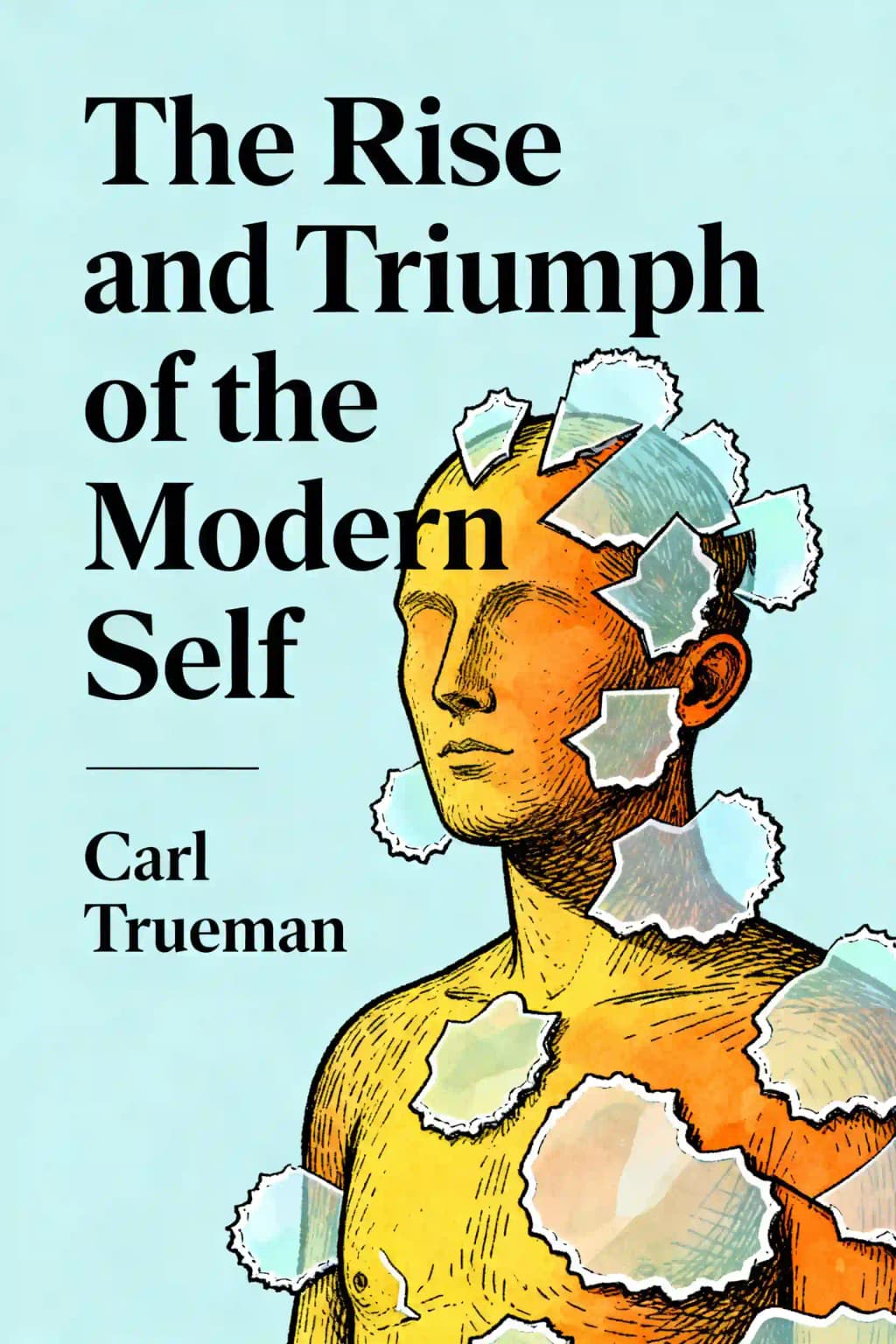
How did "I feel like a woman trapped in a man's body" become a culturally accepted statement? Trueman's masterful analysis traces our modern identity crisis through philosophical giants, revealing how expressive individualism revolutionized Western culture - a must-read for anyone navigating today's complex social landscape.
Carl R. Trueman, acclaimed Christian theologian and ecclesiastical historian, is the author of the bestselling cultural analysis The Rise and Triumph of the Modern Self, which examines the philosophical roots of identity politics and the sexual revolution.
A professor at Grove City College and former Westminster Theological Seminary faculty member, Trueman holds a PhD in church history from the University of Aberdeen, grounding his critique of modern selfhood in decades of research on Reformation theology and Western intellectual traditions. His related works, including the condensed Strange New World and The Creedal Imperative, further explore intersections of faith, history, and contemporary culture.
A frequent commentator for platforms like First Things and World Magazine, Trueman co-hosts the Mortification of Spin podcast and has appeared in documentaries such as What Is a Woman?. His 2020 book became a pivotal reference for understanding gender ideology debates, praised by academic and religious circles alike. Translated into multiple languages, The Rise and Triumph of the Modern Self has been adopted as required reading in university courses and theological seminars worldwide.
The Rise and Triumph of the Modern Self by Carl Trueman explores how Western culture redefined identity through philosophical shifts, tracing the evolution of expressive individualism from Rousseau to today’s LGBTQ+ rights movement. It argues that the modern self prioritizes inward feelings over external realities, leading to radical changes in sexuality, gender, and human rights.
This book is essential for pastors, scholars, and anyone seeking to understand today’s cultural conflicts over identity and sexuality. Trueman’s historical analysis appeals to readers interested in philosophy, theology, or sociology, offering tools to engage contemporary debates with nuance.
Yes. Praised as “timely” and “astute,” the book provides a rigorously researched framework for understanding rapid societal changes. Its blend of intellectual history and cultural criticism makes it a vital resource for navigating debates on gender, religion, and free speech.
Expressive individualism is the idea that true identity stems from internal feelings rather than external roles (e.g., family, religion). Trueman shows how this concept, rooted in Romanticism and psychoanalysis, fuels modern demands for self-expression, such as gender transitions.
Trueman links the sexual revolution to a broader redefinition of the self, where sexual autonomy became a hallmark of authenticity. He traces this shift through Marxist critiques of traditional institutions and Freudian emphasis on psychological desires.
Trueman builds on Philip Rieff’s “triumph of the therapeutic,” Charles Taylor’s “social imaginary,” and Alasdair MacIntyre’s critique of modernity. These frameworks help explain how identity became untethered from biological and communal norms.
The book argues that modernity’s focus on self-creation leads to societal fragmentation, as institutions like family and religion lose authority. Trueman warns this creates a vacuum filled by state power and corporate interests.
Strange New World is a condensed, more accessible version of The Rise and Triumph of the Modern Self. Both address the same themes, but the latter includes deeper historical analysis, while the former targets general audiences.
Trueman aims for rigorous fairness, avoiding polemics. Critics argue he oversimplifies LGBTQ+ advocacy or underestimates technology’s role, while some conservatives reject his focus on philosophy over biblical arguments.
Though not the primary focus, Trueman notes that social media accelerates expressive individualism by enabling curated online identities. This amplifies the demand for recognition of personal “truths”.
The book expands themes from Trueman’s earlier studies on Reformation theology (e.g., Luther and Owen) into modern cultural analysis. It mirrors his critique of moral relativism in The Creedal Imperative.
Trueman holds a PhD in church history, has taught at Westminster Seminary and Grove City College, and is an Orthodox Presbyterian pastor. His expertise in Reformation theology grounds his analysis of modernity’s moral shifts.
Sinta o livro através da voz do autor
Transforme conhecimento em insights envolventes e ricos em exemplos
Capture ideias-chave em um instante para aprendizado rápido
Aproveite o livro de uma forma divertida e envolvente
Questioning it marks you as ignorant or bigoted.
Psychology trumps biology.
Humans aren't naturally depraved but corrupted by society.
Poetry became the primary vehicle for reconnecting with authentic selfhood.
It is the history of my soul that I promised.
Divida as ideias-chave de The Rise and Triumph of the Modern Self em pontos fáceis de entender para compreender como equipes inovadoras criam, colaboram e crescem.
Destile The Rise and Triumph of the Modern Self em dicas de memória rápidas que destacam os princípios-chave de franqueza, trabalho em equipe e resiliência criativa.

Experimente The Rise and Triumph of the Modern Self através de narrativas vívidas que transformam lições de inovação em momentos que você lembrará e aplicará.
Pergunte qualquer coisa, escolha a voz e co-crie insights que realmente ressoem com você.

Criado por ex-alunos da Universidade de Columbia em San Francisco
"Instead of endless scrolling, I just hit play on BeFreed. It saves me so much time."
"I never knew where to start with nonfiction—BeFreed’s book lists turned into podcasts gave me a clear path."
"Perfect balance between learning and entertainment. Finished ‘Thinking, Fast and Slow’ on my commute this week."
"Crazy how much I learned while walking the dog. BeFreed = small habits → big gains."
"Reading used to feel like a chore. Now it’s just part of my lifestyle."
"Feels effortless compared to reading. I’ve finished 6 books this month already."
"BeFreed turned my guilty doomscrolling into something that feels productive and inspiring."
"BeFreed turned my commute into learning time. 20-min podcasts are perfect for finishing books I never had time for."
"BeFreed replaced my podcast queue. Imagine Spotify for books — that’s it. 🙌"
"It is great for me to learn something from the book without reading it."
"The themed book list podcasts help me connect ideas across authors—like a guided audio journey."
"Makes me feel smarter every time before going to work"
Criado por ex-alunos da Universidade de Columbia em San Francisco

Obtenha o resumo de The Rise and Triumph of the Modern Self como PDF ou EPUB gratuito. Imprima ou leia offline a qualquer momento.
Imagine your grandfather's reaction if someone told him they were "a woman trapped in a man's body." Just thirty years ago, such a statement would have seemed nonsensical. Today, questioning it marks you as ignorant or bigoted. This dramatic shift isn't merely about sexual politics - it represents a profound revolution in how we understand human identity itself. The sexual revolution sweeping Western society isn't simply about expanded freedoms; it's a complete reimagining of what it means to be human. What makes our era unique isn't the existence of sexual diversity, which has existed throughout history, but its normalization and celebration as valid expressions of authentic selfhood. This transformation reflects a deeper shift in how we conceptualize identity. Three crucial developments stand out: the prioritization of psychological inner life over physical reality, the affirmation of ordinary life over heroic or religious ideals, and the notion that nature provides an inner moral source. These changes have revolutionized how individuals understand themselves, moving from external social roles to internal psychological states as the primary source of identity.