Capítulo 1
The Mirror That Makes You: How Others Create Who You Are
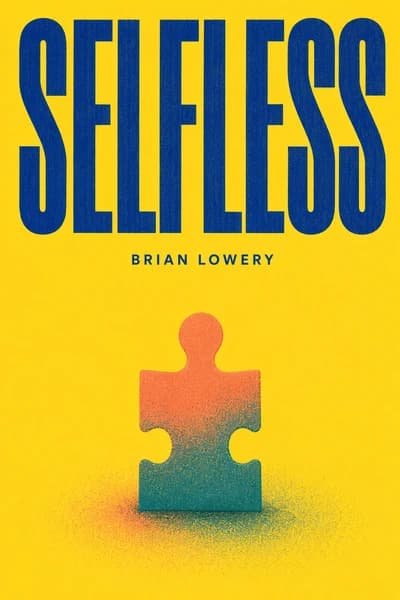
Have you ever felt that strange disconnect between who you think you are and how others see you? Perhaps you've wondered why you act differently around your parents than with your friends, or why your sense of self seems to shift depending on who's in the room. In his groundbreaking book "Selfless," Stanford professor Brian Lowery challenges our most fundamental assumptions about identity. Unlike traditional self-help that promises to uncover your "authentic self," Lowery presents a radical alternative: there is no true self waiting to be discovered because we are entirely created through our relationships with others.
This isn't just academic theory-it's a perspective that's reshaping how we understand human behavior. The book has garnered praise from leading psychologists and social scientists for its accessible approach to complex ideas. As we navigate an increasingly polarized world where identity politics dominates headlines, Lowery's insights offer a timely framework for understanding both personal identity and broader social conflicts. By examining how we're shaped by everything from intimate relationships to national identities, he reveals why the quest for complete individual freedom may be not only impossible but perhaps undesirable.
Capítulo 2
The Illusion of the Independent Self
We all experience ourselves as coherent, autonomous beings-a little "you" managing the controls of your life. This intuitive understanding feels unquestionable, yet it begins to crack under scrutiny. Our felt experience often contradicts what research reveals about human behavior. We consistently overestimate how good or bad future situations will make us feel. We lack direct access to how our minds actually work, engaging with the world through a simplified interface that masks incredibly complex underlying processes.
When you think "I love my partner," you're interpreting physical signals through cultural frameworks and personal history. Who we love, what we consider right or wrong, what foods we enjoy-all deeply reflect our social environment rather than some internal, independent essence. Despite popular self-help suggesting we should be "unapologetically ourselves," complete freedom from external influence is impossible. We need social engagement to survive and thrive, which inevitably shapes who we are.
Throughout history, thinkers have grappled with understanding the self's origins. Freud tied it to sexual development, Charles Cooley described the "looking glass self" formed by how we think others see us, and George Herbert Mead claimed the self develops through social interaction. Religious traditions have alternatively viewed the self as innate or divinely created. But regardless of theoretical framework, the evidence consistently points to our fundamentally social nature.
In every interaction, others reflect back their view of you-through their treatment, speech, and body language. This isn't a "true" representation but a construction filtered through their own self, which you simultaneously help create. We see ourselves reflected in the multitude of people surrounding us, making the question "which self?" crucial when considering what's best for you.
Capítulo 3
Multiple Selves in a Complex World
We all possess multiple selves-parent, child, employee, athlete, lover-each defined by relationships and attributes. Which emerges depends largely on context: physical location, company, nation, even time of day. You're literally a different person with college friends than in professional settings. These identities can conflict in ways that affect our behavior and performance without our awareness.
Consider how identity activation shapes performance. When Asian-American women were prompted to identify as Asian American before a math test, they performed better than when identifying as women first. This wasn't conscious strategy but automatic response to which identity was made salient. As a Black professor, I navigate contradictory social expectations daily. Should I emphasize my professor status to counteract racial stereotypes? Or would that reinforce problematic hierarchies?
The boundary between your self and others isn't as clear-cut as it seems. When I suggested wiggling your finger and you considered it, I shaped your self momentarily. Our interactions constantly remake us-from a partner's comment affecting your confidence at work to cultural norms determining what constitutes appropriate personal space. We need structure and predictability to function, yet also require freedom to feel alive. This tension between order and autonomy defines the human condition.
Your self is constructed through relationships and social identities that provide a perspective from which you experience the world. Unlike self-help books promising to uncover your "true self," there isn't someone inside waiting to be freed. You are the product of your social world-parents, friends, institutions, and cultural materials limit what you can conceive. Changing your circumstances requires collective effort because others create us as we create them.
Capítulo 4
The Search for Self in a Social Mirror
Our sense of self depends on shared social rules and expectations. When these rules change, we must adapt quickly-like navigating a four-way stop where drivers suddenly ignore traffic laws. Similarly, if you were to switch bodies with someone different from yourself, the changed social responses would eventually transform your sense of self.
This transformation happens naturally throughout our lives as social expectations shift with age. Children face strict rules about bedtimes and boundaries. Teenagers gain more independence. Adults operate under different social contracts. The elderly often return to childlike dependence, losing control over driving and banking, sometimes even needing to be fed. Though we never literally switch bodies with others, we become many new selves over our lifetime as our social context evolves.
We understand ourselves through others' responses to us. Consider a simple card game where people hold cards against their foreheads visible to everyone but themselves. Participants accurately guess their own "value" based solely on how others treat them. This game mirrors our everyday reality-we understand ourselves based on cultural rules and social treatment.
Despite knowing our self intimately, we often only vaguely understand it. We're frequently surprised by our own behavior, asking "Who am I?" while assuming we know what that "I" is. Selves are mysterious companions we can never escape, yet often surprise us when we expect them to be internal, stable essences.
A better metaphor for self is a nation-with changing government and citizens but maintaining continuity through interactions and shared history. Self isn't defined by physical boundaries but by shifting structures of social relationships and interactions. Our actions and identities are shaped by others in both significant relationships and fleeting interactions. My frequent childhood moves between Mississippi, Chicago, and California taught me to interact as an outsider and quickly form tight social circles in new situations-skills that help in some contexts but limit me in others.
Capítulo 5
The Construction of Reality and Self
We don't perceive reality objectively but construct it to help us navigate effectively. When faced with uncertainty or confusion, we actively seek structure. Gestalt psychology demonstrates this-we see meaningful wholes rather than discrete elements. We fill in blanks through reification, seeing collections of individual objects as coherent units.
Research shows we perceive what makes sense to us, not necessarily what's presented. In one study, people reported seeing blocks move according to expected physical laws, even when shown sequences violating those laws. We create coherence where it doesn't exist, seeing what we believe or need the world to be.
Humans constantly try to decipher others' behaviors and intentions, but people are complex and often contradictory. With limited time and information, we use shortcuts to create predictable structures. We categorize people into groups and extend assumptions about some members to all. These stereotypes provide navigational structure but often lead us astray-like assuming a young Black man is a valet or a woman pouring coffee is a secretary.
We cling to these stories not because they're statistically accurate, but because they create comfort and security. Our need for structure is profound; we are sense-seeking creatures who require coherent maps of the world with places for ourselves within them. Structure-including your self-is created and maintained through collective action. Science, religion, and philosophy all exist as communal practices with communities that establish boundaries and mint practitioners. The self, though seemingly numinous, is similarly constructed.
A person living in a purely personal world is considered insane, while shared beliefs-even outlandish ones-gain legitimacy through collective acceptance. Not believing your social group's accepted reality marks you as naive or mentally ill. Our self and sense of reality are collective constructions rather than reflections of objective truth.
People struggle to predict their own behavior because we lack access to an objective view of ourselves. Even after acting, our explanations for why we did something are often wrong. Experiments demonstrate this clearly-like the hotel towel reuse study where guests were most influenced by messages about previous occupants of their specific room, despite predicting they'd respond better to broader environmental appeals.
Capítulo 6
The Myth of Complete Freedom
What is freedom, and why does this concept inspire such profound actions as protests risking imprisonment or even national declarations of war? The word "freedom" seems to bestow magical properties on anything it touches-political freedom, academic freedom, freedom of speech-elevating ideas above reproach. Conversely, being denied freedom is often considered worse than death, as New Hampshire's motto "Live Free or Die" suggests.
This tension played out dramatically during the COVID-19 pandemic, when many rejected mask and vaccine mandates as encroachments on their freedom, potentially contributing to their own deaths or others'. But what does freedom truly mean? Is it possible? And do we actually want complete freedom?
Freedom is often understood as the absence of external constraints. When we think of freedom being taken away, we imagine someone preventing us from living as we wish-from small impositions like being forced to see a particular movie to systemic limitations based on race or other characteristics.
External constraints can be obvious, like police limiting physical movement through handcuffs or imprisonment. But freedom can also be impaired more subtly through disrespect, suspicion, or policies like stop-and-frisk that create fear and uncertainty. Between 2002 and 2019, over five million people were stopped and searched in New York City, with more than 90% being innocent-each stop taking away someone's freedom to walk without fear of harassment.
Even if we could sidestep external influences, determining "what you want" presents its own complications. Our wants aren't always straightforward-we may simultaneously want contradictory things, like eating when hungry while also wanting to diet. Some of our greatest impediments to living as we wish come from choices we make seemingly freely. The distinction between wants and needs blurs-we might say we "want" coffee when we actually need it due to dependence. Is satisfying a compulsion we'd rather not have truly freedom?
Which self are we considering when determining freedom? As a son, I might need to show deference to my mother, while as a man, I might need to stand up for myself. During my police encounter, my refusal to be searched could be seen as either not free (failing my mother's teaching to avoid confrontation) or perfectly free (asserting my rights as a man). The self we inhabit in any situation isn't necessarily chosen-social situations elicit particular selves, and we dance to the tune being played.
Capítulo 7
Relationships as Self-Creation
The ancient Epic of Gilgamesh illustrates how relationships constrain us. When the god-king Gilgamesh terrorizes his city, the gods create Enkidu as his equal. After their battle ends in friendship, Gilgamesh's behavior transforms-not through force but through relationship.
Our sense of self begins diffuse and undefined in childhood, gradually focusing through relationships that diminish possibilities. Even as adults, our social orbit shapes how we dress, speak, and view the world. Every relationship demands we play our part in co-constructing reality. My police interaction illustrates this-once they saw me as a potential lawbreaker and I saw them as unjust authorities, we each followed those scripts, eliminating other possible selves we could have been.
Social connection is fundamental to our humanity. Studies show that when excluded, we see both ourselves and those who excluded us as less human. After social rejection, we're more likely to conform to group opinion, even giving incorrect answers to fit in. We subtly adjust our interests, speech patterns, and body language to connect with others-taking submissive postures with dominant people and vice versa. Even brief interactions with someone wearing an "Eracism" t-shirt can temporarily shift our racial associations.
These adaptations create the shared reality necessary for relationships, but each represents a limitation on our freedom. While we might not notice these shifts or may believe we chose them, our interactions constantly shape and constrain our possible selves. Relationships create structure rather than constraint-like lines in a coloring book that both limit and create the picture of your self. Without relationships, without constraint, we'd be untethered, unable to know ourselves.
Sometimes we resist this structure, especially when relationships feel controlling. Duke University researchers found people perform worse on tasks when thinking about controlling people who want them to work harder. Yet structure remains unavoidable-we need it to navigate our complex world. In our best relationships, we like the version of ourselves we become, finding comfort in these constraints. What we truly seek isn't complete freedom but the feeling of being free.
Capítulo 8
The Social Construction of Identity
Close relationships ground us physically and viscerally. We know family and close friends directly, and their presence can trigger powerful emotions. These intimate connections shape our experience of the world and define who we are. However, our identity extends beyond these immediate relationships to include membership in social groups like ethnic groups, nations, and institutions.
Social groups help us navigate our complex world. When meeting someone new, we don't encounter a complete stranger but a member of multiple groups we already understand. These perceptions affect our interactions, determining whether we engage with someone at all. Social identities drive major societal issues like inequality, racism, and political polarization. While some suggest ignoring social identities would solve these problems, our need for social structure and desire to belong means we naturally gravitate toward similar others.
Social groups aren't discovered-they're created. Though physical differences exist naturally, the meaningful social categories attached to them are human inventions. We create these groups but treat them as eternal truths about their members, as if they possess some essential quality explaining the narratives we construct. Like stories of noble children hidden by circumstance who inevitably reveal their true nature, we tell tales that justify observed differences. The reality is that our stories create the groups, not vice versa.
Social identities function as time machines, connecting us to history before our birth and futures beyond our death. As Orlando Patterson noted in his work on slavery, being denied ancestral ties is to experience "social death." Our identities expand us-when we feel pride in our nation's founding or hope for our alma mater's success, we transcend our individual limitations. This expansion comes with costs: a group's pain, shame, or guilt becomes our own.
Race exemplifies the complexity of social identity construction. Physical characteristics associated with race exist on continuums rather than discrete categories. In America, the "one-drop rule" classified anyone with African ancestry as Black to maintain slavery and segregation, while other societies view race along a continuum. This difference means someone could be considered White in one country and Black in another, demonstrating race's social rather than biological nature.
Capítulo 9
The Power of Recognition in Identity Formation
When we present ourselves according to gender norms, we're asking to be treated based on socially agreed-upon identities with established parameters. These identities predate our claims to them-we learn what it feels like to be a man or woman through observation and socialization. For those whose appearance aligns with gender norms, this process feels invisible.
The 1968 Memphis sanitation workers' strike, where Black men carried signs reading "I Am a Man," demonstrated that manhood isn't just biological but includes social recognition and fair treatment. Conversely, transgender athletes like Lia Thomas face rejection despite their gender identity, with opponents citing biology to deny them recognition. These contrasting examples reveal the paradox of social identity: while we can assert our preferred identities, they ultimately depend on others' acceptance. We don't simply let people be-we actively participate in their being.
I distinguish between sex (biological features) and gender (social identity), examining their relationship through necessity and sufficiency. While some believe biological sex is necessary for gender identity, the Memphis sanitation workers demonstrated that biology alone isn't sufficient for full gender recognition. Being a "real" man or woman involves meeting social expectations that vary across time and place-from providing for family to exhibiting specific emotional traits. These definitions exist in shared community understanding, not just biology.
J.K. Rowling's 2020 tweets about "people who menstruate" sparked controversy when she insisted that denying biological sex erased women's lived experiences. She positioned womanhood as inherently tied to biology while claiming support for trans rights. I argue against this essentialist view-womanhood exists in relationships, not bodies. Research shows our gender judgments are relative and contextual rather than detecting some innate essence. What's necessary to be recognized as a woman is being engaged with as one, regardless of biology.
Many people have a strong internal sense of identity-Rachel Dolezal knows she's Black, Lia Thomas knows she's a woman-but others may not recognize these self-conceptions. This potential mismatch underlies the movement to state preferred pronouns, which attempts to separate gender appearance from identity recognition. However, stating pronouns doesn't challenge gender's importance; it requests inclusion in the "correct" category rather than abolishing gender concepts altogether.
Capítulo 10
Technology, Community, and the Future Self
Communication technology has transformed how we relate to each other and who we can be. The written word enabled thoughts to be transmitted without face-to-face interaction, creating national languages and speech hierarchies. Benedict Anderson argues the printing press enabled nation-states by allowing people to imagine themselves as communities sharing experiences. Nations exist when significant numbers consider themselves a nation-a profound shift in global consciousness from empires to nation-states.
The internet, rather than opening us to diverse ideas, often presents information confirming our biases through algorithms that predict what we want to see. We curate social media feeds reflecting people like ourselves, reinforcing tribal connections over the freedom and self-expansion early internet pioneers envisioned. These technologies haven't created our tendency to seek like-minded others, but they've supercharged our ability to indulge these tendencies, limiting our growth while giving us the mere feeling of freedom.
The bargain-basement cost of digital memory has profound implications for identity. Unlike our fallible human memories that allow flexibility and evolution of self, digital technologies provide a continuous stream of captured memories that follow us everywhere. These constant reminders of who we were might reduce who we can become. When algorithms curate our pasts for us through features like automated photo memories, they may limit what's possible in our present by constraining our ability to evolve beyond previous selves.
For life to feel meaningful, the world must make sense and we must locate ourselves within it. Complete freedom is likely unattainable and perhaps undesirable-our humanity requires social connections that both define us and constrain us. Without others, we would lack coherence, and without coherence, meaning is impossible. Research shows meaning correlates with purpose, which connects our choices to something beyond moment-to-moment existence.
Capítulo 11
Finding Meaning in a Socially Constructed Self
The author examines how death illuminates meaning through two contrasting examples of self-immolation: Buddhist monk Thich Quang Duc, who calmly sacrificed himself in protest, and Tunisian vendor Tarek Bouazizi, whose desperate act sparked the Arab Spring. While both deaths catalyzed political change, they represent different relationships with meaning-one a deliberate sacrifice from a position of spiritual coherence, the other born from feeling trapped and robbed of freedom. This distinction highlights the difference between meaning made of your life retrospectively versus experiencing life as meaningful while living it.
Meaning emerges from connections and transcends immediate time. Social connections provide coherence and identity, tying us to something larger than ourselves. We construct selves to give coherence to a chaotic world, creating meaning through our relationships with others. As Oliver Sacks observed with his memory-impaired patient who constantly fabricated explanations, humans desperately "throw bridges of meaning over abysses of meaninglessness." We need structure not just to survive but to understand what we're surviving for.
Two contrasting ideas connect meaning to consequence: "weight" suggests our actions reverberate into the future, while "light" proposes everything eventually fades away against an indifferent universe. Lightness offers freedom but risks draining life of meaning; weight requires a clear sense of self because decisions have lasting consequences in our relationships. The desire for our actions to matter reflects our longing for immortality-not necessarily physical immortality, but for our selves to persist indefinitely through legacies, children, or connection to enduring institutions.
If relationships define self, what constitutes death? When relationships end, group memberships shift, or loved ones die, parts of us die too. The self lives and dies over time. Physical death's definition isn't straightforward-is it when the heart stops, brain function ceases, or something else? If we could completely shut down your body then revive you later, would you have been dead? The line between life and death isn't bright. What you believe about death reveals what you believe about yourself.
Humans have always sought to conquer death. From ancient elixirs to modern cryonics, we've pursued immortality relentlessly. The Alcor Life Extension Foundation preserves bodies at subfreezing temperatures hoping for future reanimation. The 2045 Initiative aims to transfer human consciousness to non-biological carriers. But these quests misunderstand our nature-even if we could upload consciousness to the cloud, that entity wouldn't be you. You cannot exist without the social relationships that make you who you are.
While I don't believe my consciousness will persist after death, I do believe my socially constructed self can outlive my body. My relationships with others can continue through their memories and stories. My self exists as long as I'm remembered. This isn't mystical; it's about the persistence of relationships. When someone dies but you don't know it, your relationship doesn't immediately end. You might hear their voice for the rest of your life, shaping how you interact with others. Even those who never physically met someone can have meaningful relationships with them through stories and shared connections.
Capítulo 12
The Power and Responsibility of Co-Creation
I feel profound awe about the social nature of our existence. In graduate school, I glimpsed the hidden mechanisms of human connection-our need for others, their effect on our worldview, our collective creation of order. While I won't prescribe what to do with these insights, understanding your self as a social creation has profound implications. If we're created by others, we can only be so free-but this constraint is actually comforting, as unlimited choice is less satisfying than imagined.
We often think of power as controlling resources, but if we create each other, power exists in mundane interactions. You affirm or challenge others' selves, opening or denying possibilities of being. When we define categories like gender, race, or nationality, we affect who others can be. Even small interactions like denying someone a "Good morning!" affects both parties-denying recognition of their humanity while losing the opportunity to have yours affirmed.
Communities confer identities, giving them tremendous power, especially when they can enforce their view of reality. Politicians know that rallying people around shared identity against perceived enemies is effective because the fight for identity is existential. If your self is socially created, so are others'-perhaps making forgiveness easier since we all share responsibility for each other's flaws. Maybe this understanding leads to more kindness, patience, and generosity.
The harder truth is that your self isn't an unchanging essence imparted at birth. You're born with DNA, but this isn't destiny. We are all mirrors reflecting each other, collectively creating who we are and can become. This perspective doesn't diminish individual responsibility but expands it-we are responsible not just for ourselves but for the selves we help create in others. In recognizing this profound interconnection, we might find both humility about our own independence and wonder at our power to shape the world through our everyday interactions.