Capítulo 4
War Clouds: The Pope's Failed Peace Initiative
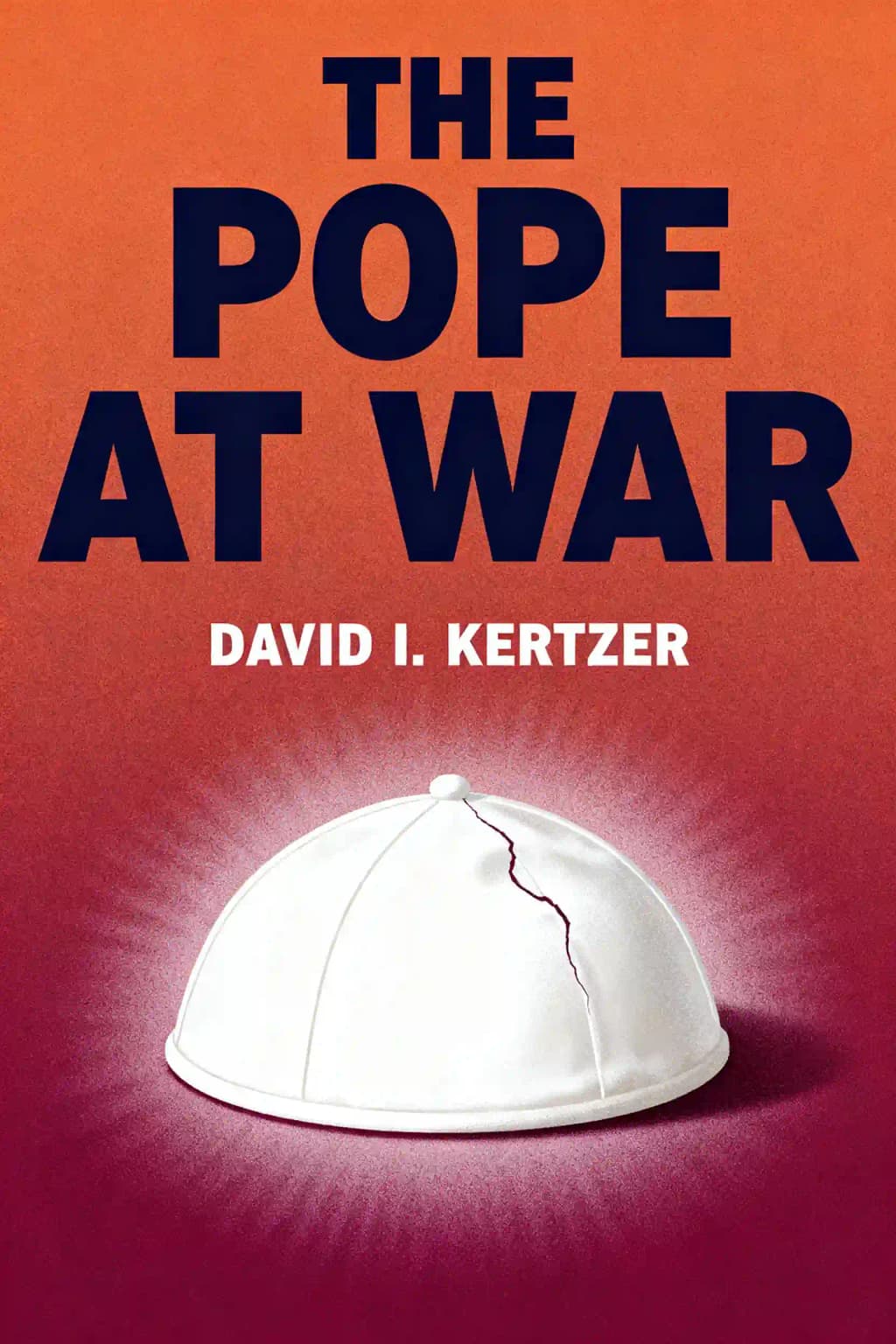
As Europe edged toward war in spring 1939, Pius XII attempted to position himself as a peacemaker. In May, he proposed a five-power peace conference involving Germany, Italy, France, Britain, and Poland. The pope's initiative triggered frantic diplomatic exchanges between London and Paris, with French ministers suspecting coordination between the pope and Mussolini to advance Italian territorial demands.
Despite what Mussolini had told the papal emissary, when German Foreign Minister von Ribbentrop met with Italian Foreign Minister Ciano in Milan, they agreed to thank the pope but ask him to abandon his peace conference effort. Germany's official rejection came days later, with State Secretary Ernst von Weizsacker telling the nuncio that prospects for success were insufficient.
Pius XII's eagerness for a visible role in world affairs made Mussolini uneasy. The Duce believed the pope should confine himself to supporting the Fascist regime rather than growing his own stature, as Italy had room for only one heroic figure. Mussolini's irritation grew when the pope announced plans to process formally to the Basilica of St. John in Lateran. Unlike his predecessor who had made the same journey in a closed car at speed, Pius XII traveled in a slow-moving open car to cheering crowds.
When Hitler invaded Poland on September 1, 1939, the pope was horrified by Poland's devastation but resisted mounting pressure to condemn the Nazi invasion. When the French ambassador asked Cardinal Maglione if the pope would speak out, the cardinal replied that it wasn't the pope's style, preferring to "let the facts speak for themselves." Poland's ambassador received only the promise that the pope would have Poland in his prayers.
The pope repeatedly declined to meet with Polish representatives or speak out against the invasion, explaining to the French ambassador that he feared reprisals against the forty million Catholics in the Reich. Cardinal Tisserant, the Curia's lone non-Italian and outspoken anti-Fascist, sent an impassioned plea when Soviet troops joined in dismembering Poland: "Will the Holy See not protest?" Still the pope remained silent, disappointing even Poland's cardinal primate during a meeting at Castel Gandolfo.
Capítulo 5
The Jewish Question: Selective Advocacy and Moral Compromise
For Italy's Jews, daily life had become an endless series of humiliations under Mussolini's racial laws, from being barred from beach resorts to having their children expelled from public schools. With many professionals fired from their jobs, families struggled to afford food. Some children sold cigarette papers on the streets to help support their families.
Mussolini had worried about Church opposition to his racial campaign, but found Pius XII much less troublesome than his predecessor. The Vatican newspaper reported increasingly oppressive racial laws without comment, while thousands of foreign Jews fleeing persecution were confined in concentration camps throughout Italy.
The Vatican's approach to antisemitism was deeply problematic. The April 1939 issue of the Jesuit journal La Civilta Cattolica, whose content required Vatican approval, described Jews as "faithful imitators of all the emissaries of the anti-Church" and branded them "avaricious, lust-filled traitors and cowards."
While Pius XII offered no public criticism of Mussolini's anti-Jewish campaign, he continued lobbying on behalf of Catholics who were formerly Jews or children of Jews. The Vatican argued these converts deserved the same rights as other Catholics, fearing they might otherwise regret their conversion. When the papal nuncio approached Guido Buffarini Guidi, Mussolini's ruthless undersecretary overseeing the anti-Jewish campaign, about relaxing restrictions on baptized Jews, Buffarini rebuffed him, claiming "the international Synagogue has stood against Italy."
Throughout early 1942, Pius XII received detailed reports of Hitler's campaign to exterminate Europe's Jews from trusted churchmen. In January, Father Scavizzi returned from the eastern front with eyewitness accounts of mass killings approaching "about a million" Jews. He described groups being machine-gunned and thrown into mass graves, including a German officer who boasted of killing mothers and children with single shots. The pope told Scavizzi he had considered excommunicating those committing such atrocities but decided against it, believing it wouldn't stop the slaughter and might increase anger against Jews.
When Scavizzi sent documentation requesting publication in L'Osservatore Romano, the pope judged it "inopportune," preferring not to alienate Mussolini or Hitler. The Vatican's primary concern remained focused on baptized Jews and children of mixed marriages rather than the broader Jewish persecution.
Capítulo 6
Mussolini's War: The Church Embraces the Fascist Cause
On June 10, 1940, Mussolini declared that the "hour marked by destiny" had arrived with "irrevocable decisions." Italy was entering "the battle against the plutocratic and reactionary democracies of the West" in a "struggle of the poor, numerous people against the exploiters." He promised victory would "finally give a long period of peace with justice to Italy, to Europe, to the world."
The pope had refused to allow Rome's church bells to ring in celebration of the war declaration, insisting they would only sound by force. A week earlier, he had given a highly publicized but carefully neutral address, avoiding offense to either side of the conflict while using the same "peace with justice" phrase that Mussolini employed.
Despite this initial restraint, Italy's Catholic hierarchy quickly rallied behind the war effort. Bishop Evasio Colli, national director of Italian Catholic Action, issued a patriotic message that received special attention: "In this grave, solemn hour in which the Fatherland calls upon all its children, the members of Italian Catholic Action respond with profound duty and generosity." The national president of Catholic Men similarly urged members to "leap to our feet and shout our 'Presente!'" Father Agostino Gemelli, founder of the Catholic University of Milan, called for all to "prepare for victory" and asked the Holy Virgin to guide Italy to triumph.
As the war progressed, the Vatican became increasingly aligned with the Fascist regime. In early September 1940, Pius XII addressed two thousand Catholic Action leaders, stressing citizens' duty to their country. Quoting Romans 13:1, he urged "loyal and conscientious obedience to civil Authorities" and called on Catholics to be "perfect citizens" and "lovers of the fatherland, and ready to give their life for it" when necessary.
When Hitler launched Operation Barbarossa against the Soviet Union in June 1941, the Vatican greeted this news with relief, seeing the attack on Communist Russia as transforming the war into a battle against Christianity's greatest foe. The Catholic press immediately framed the conflict as a crusade, with L'Avvenire d'Italia predicting "the Cross will once again appear atop the Kremlin's cupola." Italy's church hierarchy, encouraged by the Vatican, offered enthusiastic support, with Cardinal Piazza of Venice blessing troops departing for the Russian front and bishops throughout Italy characterizing the struggle as a "holy war."
Capítulo 7
Rome's Darkest Hour: The Roundup of Rome's Jews
On October 16, 1943, German SS troops surrounded Rome's Jewish ghetto in the early morning darkness. Families were dragged from their beds, given twenty minutes to pack, and loaded onto trucks. By day's end, 1,259 Jews had been seized. The raid occurred just a few hundred yards from Vatican City, with some Jews taken from apartments with direct views of the Apostolic Palace.
Pius XII learned of the roundup early that morning, including from Princess Enza Pignatelli who pushed past those trying to stop her to reach his private chapel. The pope, who had twice rushed to bombing sites to show solidarity with victims, now faced an excruciating test of his policy of not criticizing Nazi extermination of Jews. He summoned Cardinal Maglione to meet with German ambassador Weizsacker, who warned that papal protest might endanger the Vatican's carefully maintained neutrality. Maglione merely suggested the Holy See "would not want to be constrained to say a word of disapproval" and left it to the ambassador's judgment whether to even report their conversation.
As Jews huddled near the Vatican, pleas for papal intervention flooded in. The Vatican's response focused almost exclusively on securing the release of baptized Jews and those married to Christians. Monsignor Montini obtained permission to send a staff member to the imprisonment site, who confirmed the captives had received nothing to eat or drink since capture. The Vatican hastily compiled lists of those deemed Catholic and gave them to the German ambassador. On Sunday, Germans reviewed identity documents and released baptized Jews and those married to Christians, not wanting to unduly provoke the Vatican.
On Monday, October 18, the remaining 1,007 Jews, including 105 children under five, were loaded onto trucks and transported to Tiburtina station, where they were forced into eighteen windowless cattle cars. The train departed for Auschwitz, arriving October 23. There, Josef Mengele directed the elderly, children, and sick to the gas chambers, while 149 men and 47 women were sent to labor camps. Of more than one thousand Jews on the train, only sixteen would survive.
Meanwhile, Pius XII met with British envoy Osborne, discussing food shortages and potential unrest, remarking he "had no grounds for complaint against General von Stahel and the German police who had hitherto respected neutrality." He made similar comments to American envoy Tittmann the next day, with neither diplomat mentioning the Jewish roundup in their reports.
Capítulo 8
The Fall of Fascism: The Pope's Delicate Balance
As Allied forces invaded Sicily in July 1943, Mussolini's personal life unraveled alongside his political power. On July 24, nervous Fascist leaders gathered at Palazzo Venezia for a Grand Council meeting that would ultimately vote to remove Mussolini from power. The following day, the king summoned Mussolini and had him arrested as he left their meeting.
The Vatican newspaper announced Mussolini's "resignation" with minimal fanfare, also publishing Badoglio's disappointing message that "The war continues." The public response was jubilant-Fascist symbols were torn down, black shirts burned, and crowds celebrated in the streets.
The Vatican showed concern for Mussolini's family, with Cardinal Maglione sending detailed lists of his extended family members to the Italian embassy, recommending no harm come to them. Meanwhile, Badoglio's government secretly negotiated with the Allies, leading to Italy's surrender on September 8, 1943. The king and government fled Rome, leaving the city to German occupation.
The Vatican found itself in an increasingly precarious position. German troops occupied Rome, and the pope feared both Allied bombing and German reprisals. Despite these dangers, many Jews sought shelter in Catholic convents and monasteries after the October roundup. While some found refuge, others were turned away or told they must convert to be admitted. Though many Jews were hidden in religious buildings, there's no evidence the pope ever directed church institutions to take them in.
As war approached its end in spring 1945, desperate German and Italian Fascist officials sought the pope's intervention. In January, German ambassador Rudolf Rahn secretly met with Cardinal Schuster, Archbishop of Milan, hoping the pope might serve as a "bridge" to the Allies. Mussolini himself made two parallel attempts to reach the pope through intermediaries. Monsignor Tardini advised the pope against involvement, noting the Allies' insistence on "unconditional surrender" and the risk of appearing to save "Nazism and fascism."
The war in Italy ended in late April 1945. As Allied forces broke through German defenses and popular revolts erupted across northern cities, Mussolini made a desperate final attempt at negotiation. Fleeing northward to Lake Como with his mistress Clara, Mussolini was captured by partisans despite wearing a German uniform as disguise. After debate about his fate, partisan leader "Colonel Valerio" executed both Mussolini and Clara on April 28. Their bodies were taken to Milan's Piazzale Loreto and hung by their feet from a gas station scaffolding.
Capítulo 9
Rewriting History: The Vatican's Postwar Narrative
The revisionist narrative began immediately after liberation. In June 1945, Italy's ambassador to Belgium claimed that Italy's racial laws "found scarce application" and were "sabotaged" by the people and administration, insisting persecution came "exclusively" from Germans while "the Italian people in all strata and the Italian clergy did all they could to hide and save the Jews."
The Vatican's primary concern was preserving the 1929 concordat, recasting it as an agreement with "the Italian government" rather than the Fascist regime. When scholar Arturo Jemolo published a history in 1955 documenting the "cordial" church-Fascist relations, the Vatican quickly rejected his account, claiming the Church had always maintained a "correct, clear, and consistent" position, "steadfast in eternal principles."
When Rolf Hochhuth's play "The Deputy" portrayed Pius XII turning a blind eye to the Holocaust in 1963, the Vatican pressured the Italian government to ban its performance. Giovanni Montini (soon to become Pope Paul VI) vigorously defended his former mentor, claiming Pius XII had spared "no effort" to prevent "horrors of mass deportation" and that history would vindicate his "vigilant, persistent, disinterested and courageous" conduct.
The Vatican's 1998 statement "We Remember" further sanitized history by distinguishing between Christian "anti-Judaism" and Nazi "anti-Semitism," ignoring the Church's defense of anti-Jewish laws across Europe and the popes' long history of warnings about Jewish influence. Pius XII was recast as a heroic champion of the oppressed while erasing his efforts to avoid antagonizing Hitler and Mussolini.
Fascist-supporting clergy largely escaped consequences. Archbishop Bartolomasi faced pressure only after months of papal foot-dragging. Hitler-friendly nuncio Cesare Orsenigo remained in his position until his death in 1946. Francesco Borgongini continued as ambassador to Italy until being elevated to cardinal in 1953. Mussolini's influential clerical supporters received honors-Father Agostino Gemelli returned to his post as Catholic University of Milan rector and now has Rome's major Catholic hospital named after him. Cardinal Schuster, long viewed as one of the Fascists' most important church supporters, was beatified in 1996.
Capítulo 10
The Moral Reckoning: Evaluating Pius XII's Wartime Leadership
Pius XII was not "Hitler's pope"-the Nazi regime was largely anathema to him and the Vatican. His relationship with Italian Fascism was much closer, with Italy functioning as a "clerico-Fascist" state. Mussolini occasionally interceded with Hitler on the Vatican's behalf. Many Italians prefer to remember Pius as heroic, part of a broader effort to recast Italy's Fascist past.
The controversy over Pius XII's silence began almost immediately after the war. In October 1945, a Swiss newspaper condemned the Vatican's failure to speak out against Nazi atrocities. When the Vatican sought evidence to defend papal nuncio Orsenigo, Monsignor Tardini noted that Orsenigo's reports were "too optimistic" and "rather timid" toward Germans, while Vatican dispatches were too "bureaucratic" to satisfy critics.
Pius XII distinguished between "bad" and "good" Fascists based on their attitude toward the Church. Those who respected Church prerogatives and offered state resources to strengthen it were "good," while those threatening Church influence were "bad." The pope was clearly intimidated by both Mussolini and Hitler. While his influence in Germany might have been limited, his influence in overwhelmingly Catholic Italy was enormous, as demonstrated by how quickly Fascism collapsed after Mussolini's deposition in 1943. This raises the question of what might have happened had the pope denounced Italy's entry into the war or the Fascist demonization of Jews.
Rome's Jewish community sees things differently than the Vatican's defenders-the pope remained silent as over a thousand Jews were rounded up near the Apostolic Palace in October 1943 and sent to Auschwitz. Despite claims of behind-the-scenes intervention, "the action of the capture of the Jews did not suffer any pause" but "continued by the Germans in an undisturbed manner."
On June 2, 1945, less than a month after Germany's surrender, Pius XII used his name day gathering to address National Socialism directly for the first time. He defensively justified his 1933 concordat with Germany, claiming it "procured some advantages, or at least prevented greater harm." The pope chronicled what he described as Nazi persecution of the Catholic Church, highlighting Catholic priests sent to concentration camps. Notably, he made no mention whatsoever of the extermination of Europe's Jews, portraying Catholics as the primary victims of Nazi oppression. He also avoided any reference to Italy's role in the Axis cause.
The pope died on October 9, 1958, aged 82, having "killed himself with over-work." His successor, John XXIII, would soon convene the Second Vatican Council that would modernize the Church and end its demonization of Jews. But the debate over Pius XII's wartime leadership continues to this day, raising profound questions about moral courage, institutional survival, and the responsibilities of spiritual leadership in humanity's darkest hours.