Capítulo 4
War's Devastation: Art and Artists in Conflict
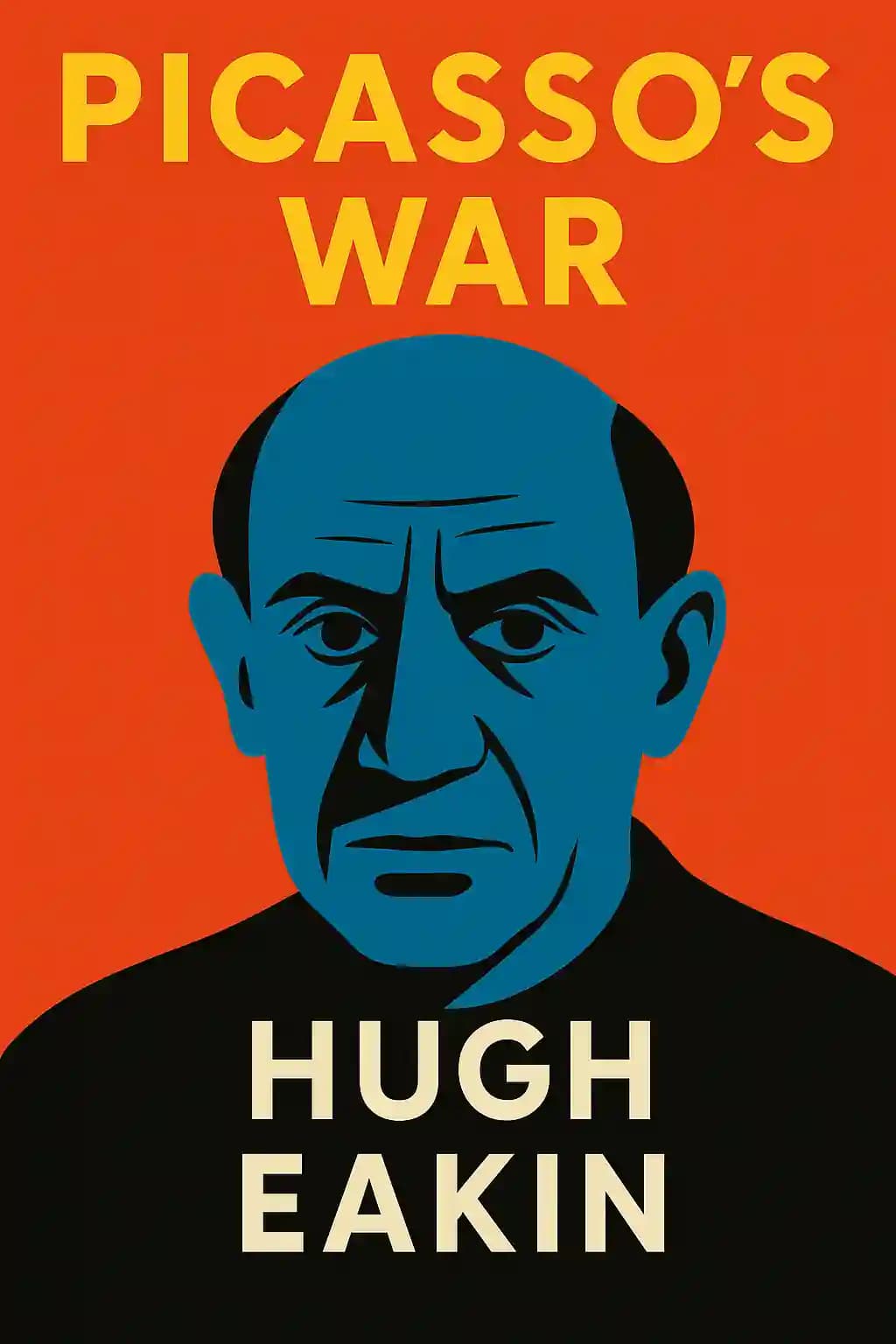
Hours after France announced general mobilization in 1914, news of the war reached Picasso and his circle, shattering their idyllic summer in Provence. As French citizens, Braque and Derain had to report for military duty, while Picasso, a foreigner, needed to secure his residency and finances. After a quick trip to Paris to empty his bank account, Picasso and his lover Eva returned to Avignon in time to see Braque and Derain off at the train station. It marked a decisive parting-though their friendships would endure, their carefree days of collaborative creation were over.
Daniel-Henry Kahnweiler had left Paris for his annual summer break in Bavaria, dismissing friends' warnings about potential war as alarmism. When hostilities erupted, he fled with his family to Switzerland just hours before Germany's declaration of war, then continued to Italy. In Rome, he initially tried to pretend nothing had changed, but as Germany and France officially went to war, he faced an impossible situation. As a German national, he couldn't return to Paris where he'd left behind an extraordinary collection-over 700 paintings including more than 100 works each by Braque, Derain, Vlaminck, Gris, and Picasso. This trove represented the entire Cubist movement and much of Fauvism.
As the war intensified, Picasso found Paris transformed-streets empty after 8 PM, museums evacuated, galleries shuttered, and most artists at the front. The Louvre had removed 770 masterpieces to safety, while the German army destroyed cultural treasures like Reims Cathedral. For Picasso, the situation was dire: Kahnweiler had disappeared, owing him money, while Eva's health deteriorated from cancer. Most devastating was the French government's seizure of Kahnweiler's entire inventory-132 Picassos among hundreds of avant-garde works-under wartime enemy property laws. This remarkable collection, which would later be worth billions, disappeared from circulation for nearly a decade.
In America, John Quinn followed these developments with horror, viewing his art collecting as part of preserving the culture being destroyed in Europe. As the war began, New York experienced a sudden boom in modern art galleries and exhibitions, creating what appeared to be a vibrant market for European avant-garde work. Yet behind the apparent market success lay Quinn's extraordinary personal patronage. At the Montross Gallery's Matisse exhibition, Quinn purchased the two most important paintings. At Washington Square Gallery, he bought Derain and Picasso prints, Cubist still lifes by Braque, and Gris's "Man in a Cafe." As Marius de Zayas later admitted about his own Modern Gallery: "In the three years of its existence, there were only two buyers, Arthur B. Davies... and John Quinn, who just bought and bought."
Capítulo 5
The Birth of a Museum: Alfred Barr's Vision
In January 1926, Alfred Barr visited the Art Center in New York to view "The Memorial Exhibition of Representative Works Selected from the John Quinn Collection." Though containing only a fraction of Quinn's holdings, the exhibition revealed his audacious collecting vision. Critics were equally impressed-Murdock Pemberton praised Rousseau's "great lion with mane of rope," while Forbes Watson noted that Quinn "ate, drank, argued, played and lived with artists actively engaged in promoting the cause of modern art." Yet the exhibition was bittersweet, running just three weeks before the collection's dispersal.
Quinn's estate faced numerous challenges after his death. His collection lacked proper cataloging, his executors had little interest in modern art, and his longtime secretary Thomas Curtin died six months after Quinn. The National Bank of Commerce, serving as executor, was uncomfortable with radical paintings and eager to dispose of them, with one officer stating, "We don't want Wall Street laughing at us as the Cubist bank."
Henri-Pierre Roche, visiting New York after Quinn's death, spent days evaluating the collection in Quinn's apartment, growing even more impressed with its "concision and punch." Knowing American markets weren't ready for Picasso's work, Roche engineered a private deal with Paul Rosenberg, who had been eyeing Quinn's collection since learning of his death. Rosenberg acquired nearly all Quinn's Picassos at a significant discount, along with several important Seurats and other paintings. Quinn's friends were furious-Henry McBride grumbled about "the immense loot from the Quinn Collection that Mr. Rosenberg is taking back to Paris," while Frederick James Gregg lamented that the loss would "put us back by a quarter of a century."
For Alfred Barr, Quinn's memorial exhibition was not an end but a beginning. Struck by Quinn's "astonishing prowess" for finding interesting new art and his "emancipated" approach to collecting, Barr was inspired by Quinn's comprehensive vision of French modern art-a story utterly absent from American museums that Barr himself desperately wanted to tell.
At twenty-three, Alfred Barr seemed an unlikely candidate to transform the American art world. Physically slight with boyish features and large round glasses, he was reserved, scholarly, and prone to long silences. Unlike his wealthy Harvard classmates, Barr was a scholarship student raised in a Presbyterian parsonage. Despite his "woefully superficial" knowledge of modern painting and limited exposure to actual avant-garde works, Barr sensed an extraordinary cultural upheaval was underway and felt compelled to champion it.
The Museum of Modern Art's founding story is often romanticized as a chance meeting between wealthy patrons in exotic Egypt, but the truth centers on the legacy of John Quinn. The museum's three founding women-Lillie Bliss, Abby Aldrich Rockefeller, and Mary Sullivan-were deeply influenced by the dispersal of Quinn's collection and the subsequent death of his ally Arthur Davies. Bliss and Sullivan had connections to Quinn, while Rockefeller had purchased drawings from Quinn's estate. Davies's unexpected death in 1928 spurred them to action, realizing they needed to create the museum Quinn and Davies had envisioned but failed to establish.
Capítulo 6
Picasso in America: The Struggle for Recognition
Three months after starting his job, Barr's Museum of Modern Art opened to enormous public interest, with crowds lining up outside the Heckscher Building in Midtown Manhattan. Unlike traditional museums housed in neoclassical temples, MoMA occupied the twelfth floor of a commercial high-rise, accessible only by elevator. Inside, visitors discovered another innovation-the "white cube" gallery with neutral pale walls that would later become standard throughout the art world.
Despite critical acclaim and crowds so dense that special hours were added for art students, Barr knew the museum's success was precarious. The works on display were by already-established late-nineteenth-century artists, not the challenging twentieth-century art he hoped to champion. More troublingly, the Museum of Modern Art had opened just ten days after the devastating 1929 stock market crash.
Barr's European journey in 1930 was fraught with challenges. With no permanent collection and having exhausted the best works from his trustees' holdings, he needed to secure a year's worth of loans despite being virtually unknown in Europe and speaking no French. The museum's name "seemed to work no magic at all," Marga observed. Yet Barr established his characteristic approach to exhibition-making: identifying only the most outstanding examples of each artist's work and pursuing them relentlessly, regardless of how formidable their owners might be.
Barr's carefully laid plans for a landmark Picasso exhibition quickly unraveled. First, Picasso proved unreachable, spending most of his time at his country estate. When collector G.F. Reber finally arranged a meeting around June 20, Picasso flatly refused to participate in any New York exhibition that year, claiming he needed to complete important new work. Barr realized Picasso's refusal likely stemmed from the massive Matisse exhibition at Georges Petit gallery, which seemed to crown his longtime rival as the presiding eminence of the art world-something Picasso couldn't let stand unanswered.
By mid-1932, Barr's health collapsed under the weight of his professional disappointments. Despite the museum's acclaim, little of his larger vision had been realized. The museum couldn't afford its current operations, let alone the $1 million endowment needed to access Lillie Bliss's valuable bequest. Above all, the Picasso exhibition's collapse represented the failure of his defining ambition. Barr had been played by dealers and defeated by the museum's financial weakness.
Capítulo 7
The Rise of Totalitarianism and the Fight for Modern Art
In February 1933, while recovering in Germany, Alfred and Margaret Barr witnessed the Nazi rise to power firsthand. Just days after their arrival in Stuttgart, Adolf Hitler was appointed to head a conservative coalition government in Berlin. The Barrs watched with growing alarm as the Nazi cultural program unfolded, with modern art quickly becoming a primary target of the new regime.
Barr furiously documented the Nazi cultural purge while worrying about modern art's future in America. He drafted an urgent internal memorandum for MoMA trustees highlighting the museum's failure to form a "representative collection of modern pictures." His most radical idea was the "torpedo report"-conceptualizing the permanent collection as a missile moving through time, with crucial ancestors of modernism in the engine compartment and the newest, most radical works by Picasso and Matisse in the warhead.
For Depression-era America, Van Gogh remained surprisingly obscure, his swirling landscapes and portraits still shocking to viewers accustomed to traditional art. Everything changed when Irving Stone's novelization "Lust for Life" became an overnight sensation in 1934, portraying Van Gogh as a tragic hero who sacrificed everything for art while remaining "one of them"-the common people. Sensing opportunity amid this cultural shift, Barr proposed a groundbreaking Van Gogh exhibition to MoMA's trustees in March 1935.
The exhibition traveled to museums across America, drawing unprecedented crowds-nearly 900,000 visitors over fourteen months. The show became the first "blockbuster" of the twentieth century, tapping into the national mood during America's worst economic crisis with Van Gogh's spiritual ardor and sun-drenched paintings. Meanwhile, just a month before the Van Goghs arrived in New York, Hitler had declared war on modern art, beginning the confiscation of works like Dr. Gachet from German museums.
Capítulo 8
Guernica: Picasso's Political Awakening
By winter 1936-37, Europe's first military confrontation with Fascism had darkened considerably. Franco's forces besieged Madrid, with German bombers pounding the city. Spanish officials began evacuating the Prado's treasures to Valencia before the museum was hit by incendiary bombs. Despite these developments and alarming reports from Spanish friends, Picasso remained emotionally detached from the war. He divided his time between Paris with photographer Dora Maar and weekends with Marie-Therese Walter and their young daughter Maya.
Everything changed in late April when Spanish poet Juan Larrea brought shocking news to Picasso at Cafe Flore: German planes had completely destroyed Guernica, a historic Basque town. Newspapers soon carried horrifying details of the meticulously planned attack, timed for market day when streets would be full. Waves of warplanes had blanketed the town with incendiary bombs and strafed fleeing civilians, reducing everything to rubble that burned for three days.
This particular atrocity broke through Picasso's emotional defenses. Abandoning his usual weekend with Marie-Therese, he stayed in his studio and began sketching furiously. Friends were struck by his unprecedented rage-what Dora called his "indignation" and Bergamin described as "Spanish fury." The emotional dam protecting him from the war had suddenly broken.
Picasso's response to the Guernica bombing represented a complete artistic departure. He had never made a political painting or public mural, and the scale alone was formidable-twenty-five feet long and eleven feet high. "I know I am going to have terrible problems with this painting," he told Dora, "But I am determined to do it."
Working at breakneck speed, Picasso drew his first full design after ten days of nonstop sketching. He restricted the palette to the same gray-black-and-white colors of newspaper photographs, creating an immense, dark tableau of human suffering. To convey the horror, he synthesized his entire artistic vocabulary-Goya, Greek tragedy, medieval Catalan art, bullfighting imagery, Crucifixion iconography, Cubism, and Surrealism.
Despite its artistic significance, Guernica was met with indifference at the Paris Expo. Most visitors passed by without understanding it, Spanish officials were unenthusiastic, and even the French press largely ignored it. When the Expo closed, the painting returned to Picasso's studio, seemingly destined for obscurity.
Capítulo 9
America's Embrace: MoMA and Picasso's Legacy
While Guernica languished in relative obscurity, another monumental Picasso painting was making a secretive transatlantic journey. Les Demoiselles d'Avignon-the nearly eight-foot-tall brothel scene that had revolutionized painting thirty years earlier-was being shipped to New York for sale. Alfred Barr considered it the first Cubist picture and "the arrogance of genius" made manifest-a work that could define MoMA's collection. But the $30,000 price tag exceeded the museum's entire historical art market expenditure, and its provocative brothel scene posed additional challenges for trustees already wary of European modernism.
Despite these challenges, Barr developed a brilliant strategy to acquire Les Demoiselles. First, he convinced the Advisory Committee to endorse the purchase, emphasizing the painting's revolutionary importance as the birthplace of Cubism. Then, with Conger Goodyear's crucial support, he persuaded the reluctant trustees that this "epoch-making work" was essential to the museum's purpose. Finally, he devised an ingenious funding solution: trading a dispensable Degas from Lillie Bliss's bequest for $18,000 credit, with Seligmann "donating" the remaining $10,000.
As Europe plunged into war in September 1939, Alfred Barr faced dual battles: an internal power struggle at MoMA where Nelson Rockefeller had reorganized administration during Barr's absence, and the increasingly desperate race to secure artworks for his Picasso retrospective. Despite these challenges, Barr had remarkably managed to get seventy European loans safely to New York, including crucial pieces from Picasso himself and Paul Rosenberg-all without war insurance.
As German U-boats began sinking civilian ships in the Atlantic, Barr faced increasingly reluctant lenders. Paris was emptying as men mobilized and families fled to the countryside. Christian Zervos wrote plaintively that Cahiers d'Art was nearly bankrupt, begging Barr to sell their small Picasso and send money directly to his wife. "Keep working for the cause of modern art," Zervos urged. "It is more necessary than ever, for here it is going to be stopped for a long time."
Barr now approached collectors with dual appeals: the show's importance and the safety of their artworks in America. "The war has come making picture exhibitions seem unimportant," he wrote Rosenberg, "yet in a way we must believe that painting is more important than war."
Capítulo 10
The Lasting Impact: How Picasso Transformed American Culture
As Picasso's exhibition at MoMA continued, it deeply influenced American culture. Critics noted how his work reflected "the most profoundly characteristic urge of our time" and demonstrated "how the accelerated tempo of today has compressed a whole cultural cycle into a single life-time." Even The New York Times acknowledged Picasso's significance to twentieth-century culture, despite some "grotesque phases" in his work.
The exhibition proved transformative for American artists. Future Abstract Expressionists were profoundly affected: Willem de Kooning called it "staggering," Louise Bourgeois experienced a "complete shut down" in her own work for a month afterward, and Jackson Pollock would later throw his dog-eared exhibition catalog across his studio in frustration, shouting "God damn it! That guy missed nothing!" The show presented a challenge that would shape the direction of American art for decades to come.
By war's end, Picasso had become a household name in America despite never visiting the country. The Museum of Modern Art's exhibition had transformed into one of the longest-running modern art shows in history, drawing record crowds nationwide. Museums across America competed to host it, with cities forming special committees and raising funds to bring Picasso's work to their communities.
Perhaps most significantly, many Picassos that crossed the ocean in 1939 never returned to Europe. Some were purchased directly from the exhibition walls, while others found permanent homes in American museums and private collections. Picasso himself didn't reclaim his loaned works until the 1950s, and Guernica became one of the longest "war loans" ever, remaining at MoMA until the early 1980s. The museum's collection of premier Picassos grew rapidly, eventually occupying an estimated 20% of its wall space by the early 1950s.
The Picasso phenomenon that transformed American culture was driven by a remarkably small group of determined individuals. John Quinn, the Irish American attorney who had championed modernism decades earlier, had been largely forgotten by 1939. Paul Rosenberg, after his harrowing escape from Bordeaux in 1940, quickly reestablished himself in Manhattan near MoMA. Alfred Barr, despite being fired as MoMA's director in 1943, continued his scholarly work on Picasso, publishing the definitive midcentury book on the artist in 1946.
Together, these passionate advocates had accomplished what once seemed impossible: transforming Picasso from a reviled foreign radical into America's most celebrated modern artist, and creating in the Museum of Modern Art an institution that would permanently change how Americans experienced and understood visual culture. The museum that began in cramped rented rooms without endowment, budget, or a single Picasso had become, through their fanatical determination, the hegemonic empire of art that dominates Midtown Manhattan today.