Discover why some children wither while others flourish in identical environments. Dr. Boyce's revolutionary "orchid-dandelion" theory has transformed parenting approaches worldwide, though sparking debate about labeling sensitivity. What if your child's greatest vulnerability is actually their superpower waiting to be unlocked?
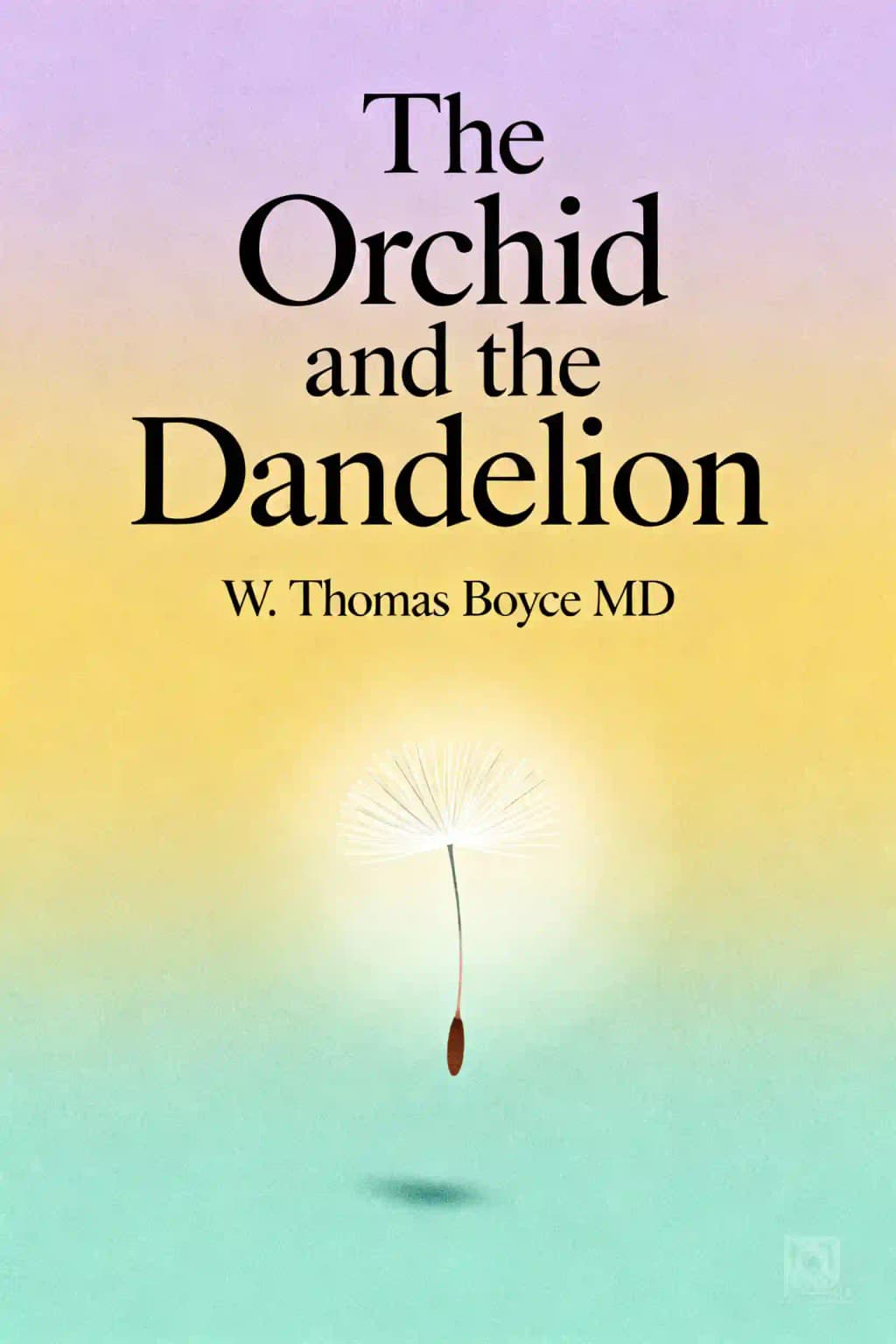
W. Thomas Boyce, MD is a pediatrician and professor emeritus at the University of California, San Francisco. He is also the author of The Orchid and the Dandelion: Why Some Children Struggle and How All Can Thrive, a groundbreaking exploration of child development and neurobiological susceptibility.
Drawing on decades of research spanning over 200 scientific publications, Boyce introduces the concept of "orchid children"—highly sensitive individuals who thrive in supportive environments but struggle under adversity—contrasted with resilient "dandelion children." His work blends developmental psychology, pediatrics, and social epidemiology.
Boyce's work is informed by his roles as co-director of the Canadian Institute for Advanced Research’s Child and Brain Development Program and member of the National Academy of Medicine. A sought-after speaker featured in TEDx talks and academic circles, Boyce bridges rigorous science with practical insights for parents and educators.
His book distills findings from leadership roles at UC Berkeley and the University of British Columbia into an accessible narrative, cementing his reputation as a pioneer in understanding how early environments shape lifelong health. Elected to the Institute of Medicine in 2011, Boyce’s research continues to influence global conversations on childhood resilience and individualized care.
The Orchid and the Dandelion explores why 15-20% of children (orchids) are highly sensitive to their environments, thriving in supportive settings but struggling in adversity, while others (dandelions) remain resilient. Dr. Boyce combines 30+ years of pediatric research with personal stories to explain gene-environment interactions, epigenetics, and how tailored care helps all children flourish.
Parents, educators, and mental health professionals will benefit from this book, especially those seeking to understand how genetic sensitivity and environmental factors shape child development. It’s also valuable for readers interested in neuroscience, parenting strategies for sensitive children, or epigenetics.
Yes. The book blends rigorous science with relatable anecdotes, offering actionable insights for nurturing sensitive children. Critics praise its poetic storytelling and balanced approach to nature-nurture debates, though some note dense medical terminology.
Orchids represent children with heightened biological sensitivity to stress, making them vulnerable in adversity but exceptional in supportive environments. Dandelions symbolize resilience, thriving across varied conditions. The metaphor emphasizes that orchid traits are not flaws but unique strengths requiring tailored care.
Epigenetics—how environmental factors modify gene expression—explains why orchid children’s sensitivity emerges. Stressors like trauma or poverty can activate genetic vulnerabilities, but nurturing environments may lead to remarkable resilience and creativity, showcasing the dynamic interplay between genes and upbringing.
Boyce cites longitudinal studies, including a 30-year follow-up of 137 Berkeley kindergartners. Highly reactive children (orchids) showed higher illness rates under stress but excelled in supportive settings. Neurobiological tests revealed distinct cortisol and autonomic nervous system responses to stressors.
Some reviewers note the science-heavy sections may overwhelm general readers. Others argue the orchid-dandelion binary oversimplifies human behavior, though Boyce acknowledges it’s a spectrum.
While both address sensitivity, Boyce’s work focuses more on neurobiological mechanisms and epigenetics, whereas Elaine Aron’s The Highly Sensitive Child emphasizes psychological traits and daily parenting strategies. Both advocate for environment-tailored nurturing.
These highlight the duality of sensitivity as both vulnerability and potential.
Boyce reflects on his sister Mary, who struggled with schizophrenia, to illustrate how genetic sensitivity interacts with life experiences. This memoir-like narrative adds emotional depth to the scientific content.
Yes. While focused on childhood, Boyce explains that orchid traits persist into adulthood. Adults may recognize their sensitivity and seek environments aligning with their biological needs for well-being.
Educators can use this framework to design inclusive classrooms: offering quiet spaces for orchids, resilience-building activities for dandelions, and personalized approaches to reduce stress-induced learning barriers.
Absolutely. Boyce emphasizes that orchid children often excel in art, leadership, and innovation when supported, proving sensitivity can be a lifelong asset rather than a limitation.
Sinta o livro através da voz do autor
Transforme conhecimento em insights envolventes e ricos em exemplos
Capture ideias-chave em um instante para aprendizado rápido
Aproveite o livro de uma forma divertida e envolvente
They are all my children.
Sensitivity to social conditions of whatever character.
Discovering the Music in the Noise.
Divida as ideias-chave de The Orchid and the Dandelion em pontos fáceis de entender para compreender como equipes inovadoras criam, colaboram e crescem.
Destile The Orchid and the Dandelion em dicas de memória rápidas que destacam os princípios-chave de franqueza, trabalho em equipe e resiliência criativa.

Experimente The Orchid and the Dandelion através de narrativas vívidas que transformam lições de inovação em momentos que você lembrará e aplicará.
Pergunte qualquer coisa, escolha a voz e co-crie insights que realmente ressoem com você.

Criado por ex-alunos da Universidade de Columbia em San Francisco
"Instead of endless scrolling, I just hit play on BeFreed. It saves me so much time."
"I never knew where to start with nonfiction—BeFreed’s book lists turned into podcasts gave me a clear path."
"Perfect balance between learning and entertainment. Finished ‘Thinking, Fast and Slow’ on my commute this week."
"Crazy how much I learned while walking the dog. BeFreed = small habits → big gains."
"Reading used to feel like a chore. Now it’s just part of my lifestyle."
"Feels effortless compared to reading. I’ve finished 6 books this month already."
"BeFreed turned my guilty doomscrolling into something that feels productive and inspiring."
"BeFreed turned my commute into learning time. 20-min podcasts are perfect for finishing books I never had time for."
"BeFreed replaced my podcast queue. Imagine Spotify for books — that’s it. 🙌"
"It is great for me to learn something from the book without reading it."
"The themed book list podcasts help me connect ideas across authors—like a guided audio journey."
"Makes me feel smarter every time before going to work"
Criado por ex-alunos da Universidade de Columbia em San Francisco

Obtenha o resumo de The Orchid and the Dandelion como PDF ou EPUB gratuito. Imprima ou leia offline a qualquer momento.
Have you ever wondered why two children from the same family can turn out so differently? Why one sibling sails through childhood while another struggles at every turn? This isn't just a parenting puzzle-it's a profound scientific mystery that reveals something essential about human nature itself. Roughly one in five children experiences the majority of health problems and psychological difficulties in any population, consuming over half of all healthcare resources. Yet these same sensitive children, when given the right conditions, often become our most creative, empathetic, and successful adults. The key lies not in fixing what's "wrong" with them, but in understanding that they're wired differently-like orchids among dandelions, requiring different care to flourish. This isn't about weakness or strength; it's about sensitivity to the world around us, and it changes everything we thought we knew about raising children.