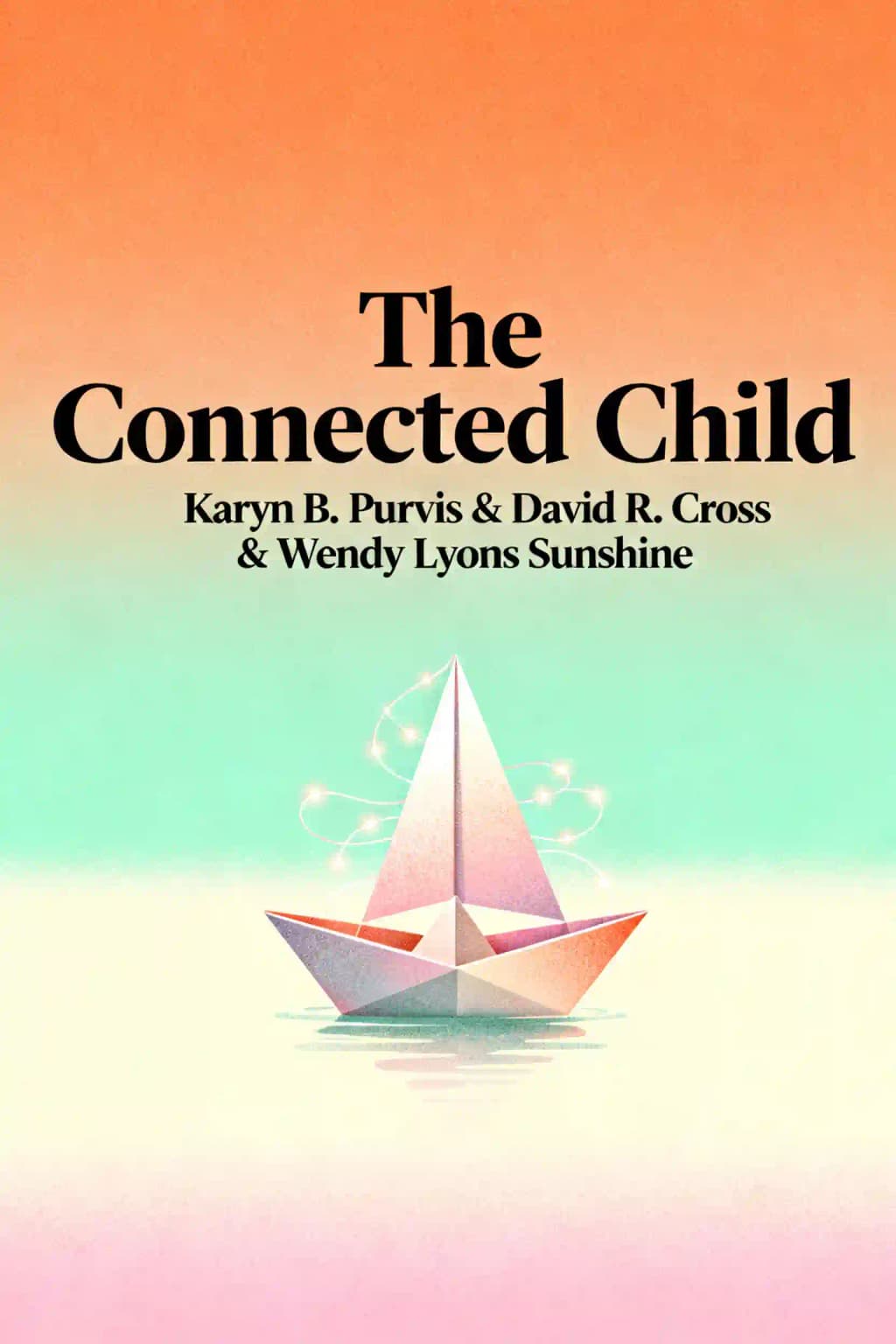
Discover how to heal wounded hearts in "The Connected Child," the groundbreaking guide transforming adoption and foster care. Dr. Purvis's trauma-informed approach has revolutionized parenting practices worldwide, challenging traditional discipline methods while offering practical strategies that build genuine emotional connections where fear once ruled.
Karyn B. Purvis, David R. Cross, and Wendy Lyons Sunshine, authors of The Connected Child: Bring Hope and Healing to Your Adoptive Family, are renowned experts in child development, trauma recovery, and attachment-focused parenting.
Purvis, a developmental psychologist and former director of Texas Christian University’s Institute of Child Development, pioneered research on trust-based relational interventions for children from hard places. Cross, a psychology professor and associate director at the same institute, contributed decades of clinical expertise in behavioral neuroscience. Sunshine, an award-winning journalist, translates their research into accessible strategies.
Their collaborative work blends scientific rigor with practical guidance, addressing themes of sensory processing, emotional bonding, and trauma-informed care. Purvis also led the Adoption Project and Hope Connection camp, programs aiding adoptive families.
The book, a cornerstone in adoption literature, is widely endorsed by child welfare professionals and recommended by organizations like the Evan B. Donaldson Adoption Institute. It has become essential reading for foster and adoptive parents globally, praised for its compassionate, evidence-based approach to healing developmental gaps.
The Connected Child provides evidence-based strategies to help children recover from trauma, neglect, or abuse through trust-building and attachment-focused parenting. Dr. Karyn Purvis emphasizes creating sensory-rich environments, disarming fear responses, and teaching social skills using methods like compromise and “re-dos.” The book’s Trust-Based Relational Intervention (TBRI) framework prioritizes emotional safety and connection to heal “children from hard places.”
This book is essential for adoptive/foster parents, caregivers, and professionals supporting children with traumatic histories. It’s also valuable for educators, therapists, or anyone seeking trauma-informed tools to address behavioral challenges, rebuild trust, and nurture healthy emotional development.
Key concepts include:
The book explains how early trauma rewires brain development, leading to hypervigilance and survival-mode behaviors. Purvis advocates calming fear through nurturing routines, attuned communication (“matching”), and predictable environments to rebuild neural pathways for trust and security.
Unlike punitive methods, Purvis rejects shame-based discipline. Instead, TBRI focuses on identifying unmet needs behind behaviors, using playful engagement to strengthen bonds, and modeling respectful communication to teach self-regulation.
Some note the strategies require significant caregiver consistency and patience, which may challenge families in crisis. Critics also highlight the lack of immediate behavioral fixes, as TBRI’s relationship-focused approach demands long-term commitment.
It introduces TBRI, which is expanded in The Connected Parent (posthumously co-authored). Both books blend scientific research with practical examples, though the latter adds more parent testimonials and modern case studies.
With rising awareness of childhood trauma’s lifelong impacts, Purvis’ methods remain critical for foster/adoptive systems, schools, and mental health professionals. Its focus on neuroplasticity and attachment aligns with contemporary trauma-informed care trends.
TBRI is a holistic model combining:
Teachers can apply TBRI to de-escalate classroom meltdowns, foster peer connections, and support students with adverse childhood experiences. Techniques like “time-in” (staying present during distress) replace isolation-based discipline.
Sinta o livro através da voz do autor
Transforme conhecimento em insights envolventes e ricos em exemplos
Capture ideias-chave em um instante para aprendizado rápido
Aproveite o livro de uma forma divertida e envolvente
Children from hard places need connection even before they need correction.
Behavior is communication.
Children who act out appear strong but are surprisingly fragile inside.
Compassion must be our guide.
Play is a safe route to a harmed child's heart.
Divida as ideias-chave de The Connected Child em pontos fáceis de entender para compreender como equipes inovadoras criam, colaboram e crescem.
Destile The Connected Child em dicas de memória rápidas que destacam os princípios-chave de franqueza, trabalho em equipe e resiliência criativa.

Experimente The Connected Child através de narrativas vívidas que transformam lições de inovação em momentos que você lembrará e aplicará.
Pergunte qualquer coisa, escolha a voz e co-crie insights que realmente ressoem com você.

Criado por ex-alunos da Universidade de Columbia em San Francisco
"Instead of endless scrolling, I just hit play on BeFreed. It saves me so much time."
"I never knew where to start with nonfiction—BeFreed’s book lists turned into podcasts gave me a clear path."
"Perfect balance between learning and entertainment. Finished ‘Thinking, Fast and Slow’ on my commute this week."
"Crazy how much I learned while walking the dog. BeFreed = small habits → big gains."
"Reading used to feel like a chore. Now it’s just part of my lifestyle."
"Feels effortless compared to reading. I’ve finished 6 books this month already."
"BeFreed turned my guilty doomscrolling into something that feels productive and inspiring."
"BeFreed turned my commute into learning time. 20-min podcasts are perfect for finishing books I never had time for."
"BeFreed replaced my podcast queue. Imagine Spotify for books — that’s it. 🙌"
"It is great for me to learn something from the book without reading it."
"The themed book list podcasts help me connect ideas across authors—like a guided audio journey."
"Makes me feel smarter every time before going to work"
Criado por ex-alunos da Universidade de Columbia em San Francisco

Obtenha o resumo de The Connected Child como PDF ou EPUB gratuito. Imprima ou leia offline a qualquer momento.
A mother watches her newly adopted eight-year-old son deliberately smash every new toy she's given him. A father can't understand why his daughter hoards crackers under her bed despite three meals a day. These aren't acts of defiance-they're desperate attempts at communication from children whose early worlds taught them that adults can't be trusted. What looks like willful destruction or bizarre behavior is actually a complex language of fear, and most parents don't have the decoder ring. Here's what makes parenting children from "hard places" so different: traditional discipline assumes kids started life in safety. It assumes babies were held when they cried, fed when hungry, and comforted when scared. But children who spent their earliest months in orphanages, abusive homes, or revolving foster placements learned something else entirely-that adults are unpredictable at best and dangerous at worst. Their brains literally wired differently in response to chaos and neglect. Telling these children to "just behave" is like asking someone to speak French when they only learned Mandarin. The foundation isn't there. The revolutionary insight here is that these children need something entirely different from conventional parenting. They need what they missed-the sensory bath of nurturing that typically happens in infancy, the hundreds of small moments that teach a baby the world is safe. And they need it now, whether they're five or fifteen.