Capítulo 1
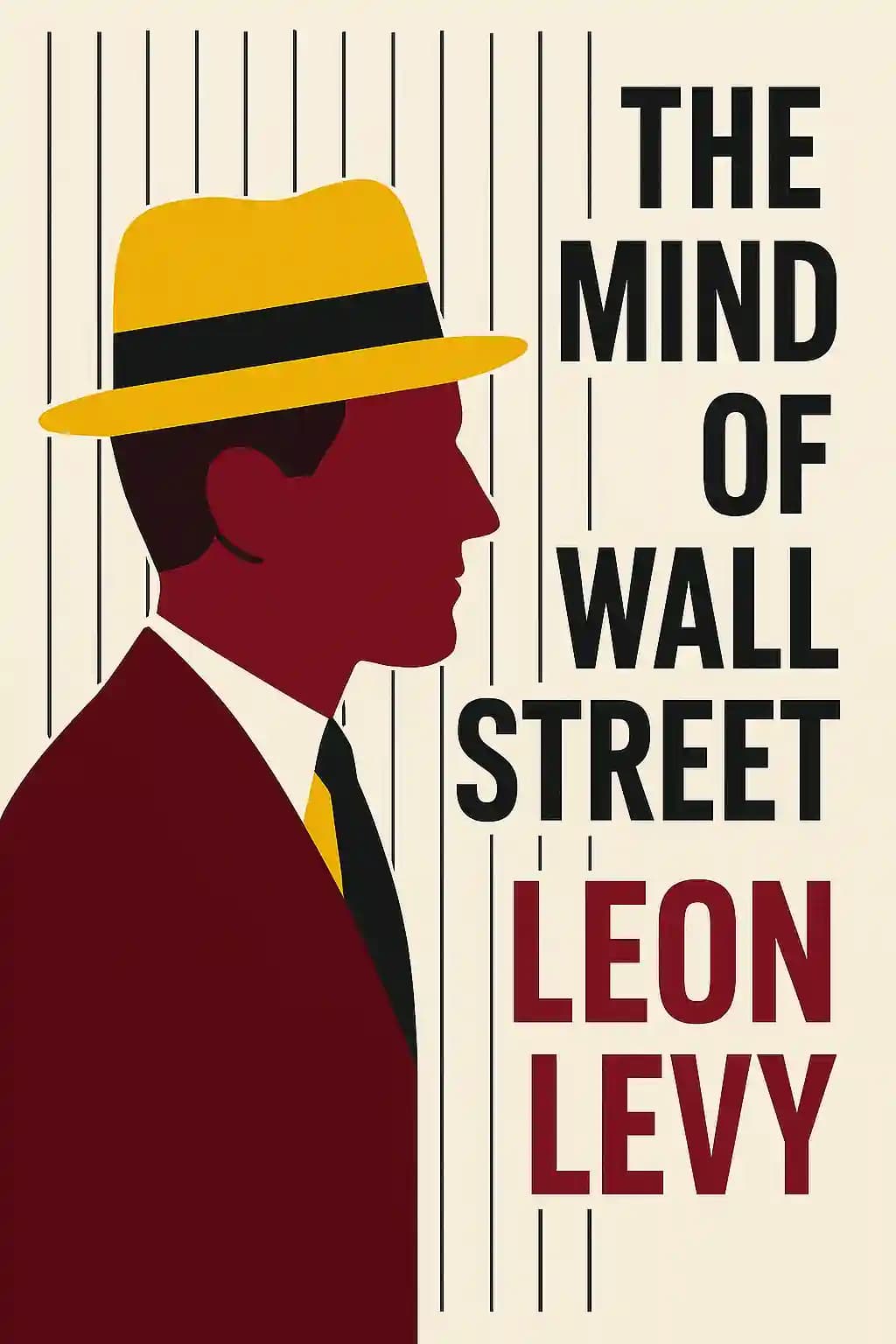
The Mind of Wall Street: A Legendary Financier's Lessons for Thriving in an Unpredictable Market
In the late 1990s, Leon Levy witnessed a market bubble firsthand-an experience that would confirm what he had learned over five decades on Wall Street: psychology drives markets as much as information does. This insight wasn't just academic for Levy; it formed the foundation of his extraordinary career. Warren Buffett called this book "a rare combination of great storytelling and profound investment wisdom," while The New York Times praised it as "one of the most entertaining and intelligent investment books to appear in years." The book's cultural impact extends beyond finance-it's frequently cited in discussions of market psychology and behavioral economics, influencing how we understand the relationship between human nature and market movements. What makes Levy's perspective so valuable is that he wasn't just a successful investor but also a profound thinker who drew connections between archaeology (his passion), history, and the patterns of human behavior in financial markets. His approach challenges us to consider: what if the most important factor in market success isn't data or algorithms, but understanding the human mind?
Capítulo 2
The Unpredictable Dance of Markets
Markets resist reduction to neat theories because they're governed by psychology and imperfect knowledge. Leon Levy called this "the caribou factor," referring to how environmental concerns about caribou migration unexpectedly delayed the Alaska pipeline. This unpredictability creates both risk and opportunity.
When Levy entered Wall Street in 1948, stocks were significantly undervalued. Companies like Montgomery Ward hoarded cash expecting another depression, while Sears invested in suburban shopping centers and thrived. These contrasting approaches created ideal opportunities for diligent analysts willing to look beyond conventional wisdom.
Despite his extraordinary success, Levy maintained that no system consistently beats the market because the future never simply replays the past. Markets function like popularity contests in the short term but weighing machines long-term, as Benjamin Graham famously noted. The recent bull market had been built on illusions-bookkeeping tricks and new economy fantasies that eventually succumbed to old-economy realities.
Levy's approach wasn't about finding secret formulas but developing fresh perspectives by thinking things through independently. He often appeared absent-minded when actually imagining present events from different historical contexts. This detachment helped him recognize market manias like the 1990s tech bubble when others were caught up in euphoria.
"I've learned that markets are driven by both economic factors and psychology-the elephant in the room that many economists ignore," Levy explained. His understanding came from diverse sources: his father's economic theories, his passion for archaeology, and perhaps his outsider perspective that one partner described as being "in charge of interplanetary affairs."
Capítulo 3
Jerome's Economic Legacy: A Foundation for Market Wisdom
Much of Levy's investment knowledge came from his father, Jerome Levy, born in 1882 in Pennsylvania. Though a staunch capitalist running a wholesale hosiery business, Jerome disapproved of Wall Street's excesses, believing financial players reaped disproportionate rewards compared to their risks and contributions to society.
Jerome developed his own economic theories that proved remarkably prescient. His equations measuring profit sources helped predict economic trends by considering factors like capital spending, consumer credit, and government deficits. These ideas continue influencing generations of Levys, including Leon's brother Jay and his son David.
Jerome's timely market exit before the 1929 crash demonstrated his willingness to act on his convictions. His economic approach essentially described gross national product before such measures were common. Unlike Polish economist Michal Kalecki who independently developed similar theories but believed unemployment inevitable under capitalism, Jerome thought capitalism offered workers freedom and that proper government could ensure full employment.
Though Leon never finished his father's dense book "Economics Is an Exact Science," he absorbed this economic worldview through dinner conversations. Even as a teenager at camp, Leon wrote home about investments rather than scenery. Despite mediocre grades at Townsend Harris High School and City College, he later taught securities analysis at the same college that had once denied him admission to an advanced course.
"Dad viewed economics not as a way to make money but as a means to improve society," Levy reflected. "Nearly a century after his work, we still struggle with the same economic problems."
Capítulo 4
Building Oppenheimer: A Galaxy of Financial Talent
In 1951, at age twenty-six, Levy joined Oppenheimer and Company as a partner and research director, investing $12,500 of his own money. The firm operated on a shoestring budget with a distinctly German character. Despite limited resources, Levy established high research standards, insisting on visiting companies and interviewing executives before publishing reports.
When assembling his research department, Levy deliberately avoided hiring anyone who remembered the Depression, reasoning that memories of market devastation would breed caution where boldness was needed. His first interview question was always whether a candidate owned stocks-if not, the interview ended immediately.
Oppenheimer broke barriers, becoming one of the first investment companies to hire a woman securities analyst when Frances Heidt joined in 1956. Other memorable hires included Rodney White, a Yale Law dropout and Navy underwater demolition expert who played jazz piano, and Sanford Bernstein, who worked in T-shirts and summoned his secretary with a London taxi horn before eventually founding his own successful firm.
Jack Nash, who joined shortly after Levy, possessed every ability Levy lacked-solid administration, trading acumen, and ethical vigilance. Nash kept the firm from crossing ethical lines even as pressures mounted, ensuring, as Levy put it, "our mothers never read anything untoward about us in The New York Times."
Eugene Fenton profoundly influenced Levy's thinking about markets. Fenton viewed the market as a football game with 22 players on the field and 80,000 in the stands-all with stakes in the action, with mood in the stands affecting players and vice versa. His most valuable insight was that at major turning points, market prognosticators are generally wrong-times of universal pessimism represent buying opportunities, while buoyant optimism signals time to sell.
Levy's colleagues at Oppenheimer were aggressive and driven, assembled into a team that would bring unprecedented growth to the firm. To inject humor into the intense environment, Levy purchased a portrait of a nineteenth-century sea captain, added a plaque reading "Captain Horatio Oppenheimer: 1775-1842," and hung it in his office as their fictitious founder. When declining deals, he would gaze at the portrait and solemnly declare, "I don't think the captain would have wanted us to be in this deal."
Capítulo 5
Revolutionizing the Mutual Fund Industry
Most investors fear the unconventional, preferring the comfort of consensus despite the opportunities that lie in challenging conventional wisdom. This psychological reality became clear when Levy launched the Oppenheimer Fund in the late 1950s, introducing innovations to the staid mutual fund industry.
Entering what others considered a "mature" industry dominated by Boston firms, Levy saw opportunities others missed. Mutual funds eliminated the broker-client conflict of interest, retained customers when brokers left, and collected fees as a percentage of growing assets. His Depression-era caution led him to insist on two key innovations: the ability to sell stocks short as protection in down markets, and taking large enough positions to gain control of undervalued companies.
Though these were prudent, conservative measures designed to protect capital, the press labeled them "speculative"-revealing how skepticism about the unfamiliar can blind people to good ideas. With attorney Edmund Delaney, Levy spent two years convincing the SEC to approve what was essentially the first mutual hedge fund open to small investors.
The early Oppenheimer Fund years taught Levy how investor psychology intrudes on markets. Fear of the unknown blinded people to opportunities, and past market traumas made conservative strategies seem speculative. Even their bold promise to "invest anywhere in the free world where opportunity exceeded risk" scared potential customers.
When developing their fund symbol, they initially tried a discus thrower (Levy's suggestion) but market research demolished it. Board member Benjamin Lipstein suggested they first determine what customers wanted-strength, unity, organization, purpose, familiarity-then create a symbol. They eventually chose four linked hands grasping wrists, suggesting both strength and security, a symbol Benjamin Franklin had used for his fire insurance company.
Their marketing emphasized financial security while their spectacular performance record spoke for itself-over its first ten years, the Oppenheimer Fund had the best performance of any mutual fund according to The New York Times.
Capítulo 6
Beware the Brilliant Overreachers
Markets offer the greatest rewards to those willing to take the most risk. When you can leverage investments 100 times through borrowing, a modest 0.3 percent return becomes an enticing 30 percent on capital-but you'd better be right. This environment naturally attracts highly competitive risk-takers, then puts them in situations where their aggressive qualities first bring success, then later destruction.
"The market first rewards overreachers, then punishes them," Levy observed. His Oppenheimer colleague Gene Fenton exemplified the brilliant overreacher. Despite his astute analysis of S&Ls, Fenton's fatal flaws-greed and overreaching-undermined his potential success. His brilliant idea for variable-rate mortgages had one critical flaw: rates could only go up, not down. This shortsightedness prevented market acceptance.
Meanwhile, Marion Sandler, whom Fenton had recruited, recognized the potential of truly adjustable-rate mortgages that could vary both up and down. She left Oppenheimer with her husband Herb to found Golden West Financial, which became one of America's largest S&Ls. Fenton never fulfilled his dream of Caribbean tax exile, dying of cancer in 1976.
Bernie Cornfeld exemplified the investor who crosses from legitimate business into outright fraud. Born in Istanbul and raised in Brooklyn, this brilliant polyglot founded Investors Overseas Services and later The Fund of Funds, an offshore mutual fund investing in American mutual funds. When his Fund bought $20 million in Oppenheimer Fund shares, Levy protected himself by making Cornfeld sign a letter acknowledging he couldn't dictate their investments.
Cornfeld's scheme involved giving inducements to those he invested with to reinvest in his other deals-essentially a Ponzi scheme. IOS eventually collapsed and was purchased by an even bigger crook, Robert Vesco, who completed the looting before fleeing to Cuba.
William Zeckendorf represented a different type of overreacher-one driven more by ideals than greed. This rotund developer with an igloo-shaped office kept photographs of the world's great buildings on his walls. His two weaknesses were building beautiful buildings and addiction to deals. His financial architecture never matched his physical architecture, and he consistently paid above-market interest rates. Despite his financial misadventures, Levy admired Zeckendorf's zeal for beautiful buildings, which improved skylines across America.
Capítulo 7
The Deceptive Allure of Market Romance
As investors, we deceive ourselves in countless ways. We attribute gains to skill when they come from luck, and blame losses on misfortune when they result from stupidity or inattention. We believe the market remembers what we paid for stocks, or that our investments will rise when others fall. But our most common self-deception is falling in love with unworthy companies.
In 1957, Oppenheimer took a position in Underwood, a poorly managed typewriter manufacturer being trounced by IBM. When Olivetti bought a majority position, Levy was seduced by Italian style and panache. Olivetti made beautiful machines, treated workers well, and had polished managers. Levy enthusiastically bought Underwood stock until they controlled about 20% of it. His colleague Archer Scherl restrained him, pointing out Underwood was losing money. Then IBM introduced the revolutionary Selectric typewriter, and Underwood went under, nearly taking Olivetti with it.
Levy didn't always succumb to charm. In 1962, noticing Cinerama's CEO Nicholas Reisini buying his own stock, he arranged to meet him. Reisini's beautiful Park Avenue office and charismatic presence dazzled Levy as he described grand plans for three-dimensional films. Walking out into a snowstorm, Levy suddenly realized no one could be as good as he thought Reisini was. He resolved to sell when Cinerama's first movie hit screens-one of the few times he sold near a stock's all-time high.
The mid-1970s were unproductive for markets, which stagnated between 1964 and 1982-the Dow gained just one point in seventeen years. During this time, Oppenheimer sought opportunities outside stocks. The 1974 decline put the final bullet into the "go-go years" that began in the late 1960s. Levy noticed that many companies carried divisions whose real value wasn't reflected in share prices. As conglomerates began selling properties they'd acquired years earlier, he wondered if America was entering a period of disaggregation, creating opportunities for broad-based arbitrage.
In 1977, during an energy crisis, Levy attended a speech by Energy Czar James Schlesinger about using coal to offset oil shortages. Recalling that transporting coal was more profitable than mining it, Levy asked if America had sufficient railroad capacity. Schlesinger's qualified "maybe" led to one of his most complicated and profitable investments-the bankrupt Chicago, Milwaukee, St. Paul & Pacific Railroad. Despite losing $500,000 daily with thousands of miles of dilapidated track, this land-grant railroad owned millions of acres and provided access to major coal-producing regions.
Capítulo 8
Unlocking Hidden Value in Unexpected Places
The Milwaukee Road experience taught crucial lessons about investment timeframes. For years the position dragged on returns, creating pressure to bail prematurely-what Levy called "investor fatigue." When the stock finally tripled, they faced the classic dilemma of whether to lock in gains or hold for more upside.
While Andre Meyer of Lazard Freres famously said "Nobody ever went broke doubling his money," Levy believed the proper perspective isn't what you've made so far, but the current risk-reward ratio. At Oppenheimer, they held positions long after they doubled if they believed potential returns outweighed risks, regardless of psychological pressures to sell.
In the 1970s, extraordinarily high taxes and a flat stock market discouraged business owners from selling their companies. When Ira Heckler, a brilliant Harvard graduate and CPA, introduced Levy to leveraged buyouts-where buyers purchase companies by borrowing against their assets-he recognized immense potential. The LBO offered benefits for everyone involved: shareholders got above-market prices with tax shelters, management received 20% of future profits and partnership positions, and investors achieved extraordinary returns through high leverage. Their first acquisition, Big Bear Stores, netted them a 100-to-1 return over fourteen years.
By 1977, with over 1,000 employees and rapidly expanding brokerage and fund businesses, they needed to restructure Oppenheimer to pursue LBOs more effectively. The partnership structure exposed general partners to unlimited liability, and they risked potential conflicts between dealmaking and brokerage operations. They found a European partner in Electra Trust, restructured the company, and gained flexibility to bring in limited partners for larger deals.
As foreign interest in American markets increased, they decided to sell Oppenheimer in 1981. After approaching Jacob Rothschild unsuccessfully, they found a match with London's Mercantile House, selling for $162 million (3.4 times book value). The sale allowed Jack Nash and Levy to start fresh while keeping their corporate finance operations.
Jack and Levy formed Odyssey Partners, a hedge fund with no restrictions on investment style. Unlike most funds, they combined both private equity and hedge fund trading under one roof, averaging 28 percent annual returns during its fourteen-year life. They continued exploring opportunities in disaggregating conglomerates, but instead of hostile takeovers, they used "precatory proposals"-shareholder recommendations that companies had to put before all shareholders.
Capítulo 9
When Markets Lose Their Minds
The American market bubble of the late 1990s rivaled history's greatest manias, occurring in the world's most sophisticated market despite clear warnings in the mainstream press. As the bubble deflated, investors discovered the myths and outright lies they'd embraced. By August 2001, Nasdaq companies' losses had essentially erased all profits from the previous five years.
The celebrated productivity gains of 2.5% annually proved illusory-computers were the only industry showing real growth, and even those gains were possibly from creative accounting. Companies artificially inflated earnings through numerous accounting tricks: treating ordinary expenses as extraordinary events, booking revenues prematurely, including investment gains as earnings, buying back stocks, and omitting the cost of employee stock options.
After the 1987 crash, markets quickly recovered with help from the Federal Reserve's liquidity injection. This intervention left investors believing markets were less risky than they truly were, while the crash itself was dismissed as a one-time computer-driven anomaly. The success of post-crash buyers cemented "buy the dips" as the 1990s market mantra. Whenever markets faltered, television pundits would reassure viewers that stocks always outperform long-term, while the Fed and Treasury had learned to prevent panics from becoming depressions.
The Internet's arrival in the mid-1990s seemingly banished risk entirely, promising a "new paradigm" with global market access, consumer price control, and fantastic business productivity improvements. Traditional valuation methods were abandoned. Books like "Dow 36,000" argued markets were undervalued despite record highs, claiming equities carried no more risk than corporate bonds. Internet companies were exempt from profit expectations-indeed, profitability indicated insufficient growth focus.
Even Enron remained "on target" to meet earnings predictions in November 2001 while collapsing into bankruptcy, managing "to go broke without ever reporting a bad quarter." Executives perpetrated these frauds for bonuses while ordinary investors believed they too were getting rich.
By summer 2002, markets remained significantly overpriced compared to capitalized profits, suggesting the bubble continued. History indicated a protracted bear market was likely, potentially returning to 1995 levels before stocks would become truly undervalued again.
Capítulo 10
The Psychology of Investment Decisions
Investors develop unhealthy attachments to specific price points. Someone who bought Intel at $40, watched it rise to $76, then fall dramatically often refuses to sell, mentally anchoring to the high price as the "new base." Brokers reinforce this thinking with nonsensical statements like "Who thought you'd ever get another chance to buy Intel at $30?"
People view the same price differently depending on history-$100 feels triumphant if you bought at $1, but catastrophic if the stock previously hit $300. This "anchoring" assigns special significance to prices unrelated to actual value.
Americans typically sell winners and keep losers because selling at a loss feels like admitting error. Levy tended to do the opposite-he disliked watching losers week after week, and selling captures tax benefits. Our aversion to losses makes us dramatically distort probabilities-if a stock declines, the odds of recovery are only one in four, yet most investors believe it will return to their purchase price.
When Levy decided to sell a troubled position, he learned to sell at least a third or half, not just a small portion-the psychological energy required to change your conviction demands meaningful action.
Despite recent declines, there remained unwarranted optimism in markets given weakened economies burdened by debt from the 1990s spending spree. We were witnessing a profound shift from reward-focus to risk-preoccupation. Even if numbers match historical patterns, changed perceptions will disrupt forecasts based on past behaviors.
Surprisingly, professional investors proved just as susceptible to these psychological traps as individuals, taken in by inflated numbers and outright lies in corporate press releases. One hedge fund manager Levy knew lost 97% of investors' money yet remained enthusiastic about failing companies like Allegiance Telecom, which dropped from $110 to 92 cents while he still couldn't let go.
Fund managers face unique pressures-they're judged against peers and markets on short timeframes, making it psychologically easier to stick with existing portfolios than make bold moves. The corporate earnings game compounds this problem, with companies providing "guidance" that analysts follow, typically setting expectations they can beat by a penny or two.
Capítulo 11
The Art of Investing in an Unpredictable World
Investing requires both intuition and analysis working together. Levy's intuition helped him spot underpriced assets in the 1970s, but hard analytical work was needed to assess the gap between underlying value and market prices. Investment ideas can come from anywhere-historians, economists, or even vacation experiences.
For those seeking a secret formula for wealth, Levy offered both good and bad news. The bad news: there is no secret formula accessible only to the privileged few. The information guiding his investments was almost always public. Rather than being like Sherlock Holmes digging for hidden clues, he was more like Holmes's brother Mycroft, contemplating the obvious ones from his armchair.
The good news: investing remains an art that can be mastered through practice and learning from mistakes. Taking small positions in stocks you want to follow is the best approach-practitioners always outperform professors. You must put yourself on the line to truly understand investing.
Americans' consumption binge of the late 1990s was fueled by stock market and real estate bubbles, leaving them with significant debt. As financial reality sets in, the savings rate will likely rise. Each percentage point increase carves about $75 billion from corporate profits, with a 3% rise potentially reducing profits by $225 billion-devastating for businesses and jobs. This would trigger less investment, fewer jobs, and depressed stock prices that could finally reverse real estate appreciation, severely impacting household wealth.
Following a period of deregulation that led to the excesses of the great bubble, we must remember government's essential role through tax policy, regulation, and interest rate monitoring. Until we solve the problems of maintaining full employment and favorable trade balances, we'll continue experiencing wide economic and market swings-and perhaps even more bubbles.
Despite his wealth, Levy only recently became debt-free. The wealthy must either invest money or give it away. He took a long view in philanthropy, preferring to fund concepts or ideas-from archaeological research on climate's impact on ancient civilizations to mathematical modeling of epidemics. In philanthropy as in business, he backed people over institutions. The Levy Economics Institute at Bard College supports both his father's economic ideas and President Leon Botstein's vision. He committed roughly $100 million to Bard because liberal arts education is both important and imperiled.
"I give with few strings attached," Levy explained. "If you don't trust recipients to spend wisely, you shouldn't donate."