Capítulo 1
The Face Behind Russia's Transformation
Vladimir Putin's rise from obscure KGB officer to Russia's most powerful leader in decades reads like a political thriller, yet the consequences of his ascent have been all too real. In 1998, when journalist Masha Gessen was awakened by her partner with news of politician Galina Starovoitova's murder, she couldn't have known this marked the beginning of a dark new chapter in Russian history. This assassination was an early warning sign of what would become Putin's Russia - a state where political murders, media suppression, and authoritarian control would become normalized. Gessen's book has become essential reading for understanding modern Russia, with figures from Hillary Clinton to Garry Kasparov citing it as crucial to comprehending Putin's psychology and methods. As Russia's actions on the world stage continue to dominate headlines, this unflinching portrait of the man without a face has only grown more relevant and urgent.
Capítulo 2
From Street Thug to KGB Agent
Vladimir Putin's origin story begins in post-siege Leningrad, a city still traumatized by the 872-day Nazi blockade that had ended just eight years before his birth in 1952. His parents, Maria and Vladimir, had survived unimaginable hardships - his father severely wounded in battle with permanent leg injuries, his mother nearly starving to death, and their only son dying in a children's home during the siege. When young Vladimir arrived as their "miracle child," the family lived in a communal apartment with a shared hallway kitchen, though they enjoyed relative prosperity with their own twenty-square-meter room.
Putin's childhood played out in a "well courtyard" - an enclosed space surrounded by tall apartment buildings where neighborhood thugs ruled. Despite his small stature, Putin established himself through sheer aggression: "If anyone ever insulted him in any way, Volodya would immediately jump on the guy, scratch him, bite him, rip his hair out by the clump-do anything at all never to allow anyone to humiliate him in any way." This fighting spirit followed him to school, where behavioral problems excluded him from the Young Pioneers organization for three years - a rare punishment that left him as the only child without the symbolic red kerchief.
At thirteen, Putin underwent a transformation, applying himself academically while maintaining his fighting reputation. Friends recounted numerous stories of Putin defending others or responding to the slightest provocation with swift violence. He channeled this aggression into martial arts, first attempting boxing (which left him with a broken nose), then finding Sambo - a Soviet combat sport combining judo, karate and folk wrestling. This discipline became part of his evolution from aimless thug to goal-oriented young man with a singular ambition: joining the KGB.
Putin's KGB obsession began early - "When I was in ninth grade, I was influenced by films and books, and I developed a desire to work for the KGB." Soviet cultural authorities had invested heavily in creating a romantic image of secret police work, but deeper inspiration likely came from his father's wartime experience in NKVD "subversive troops" - small detachments operating behind enemy lines with devastating casualty rates. This heritage explains why young Putin studied German despite being a poor student, and why he kept a portrait of Yan Berzin, the obscure founder of Soviet military intelligence, on his desk.
At sixteen, Putin boldly walked into KGB headquarters seeking to enlist. Despite being a mediocre student with mostly "satisfactory" grades, he somehow gained admission to prestigious Leningrad University - possibly through KGB intervention. At university, he remained isolated from social activities while maintaining adequate grades and enjoying the extraordinary luxury of a car his parents had won in a lottery. In his fourth year, the KGB finally contacted him, fulfilling his childhood dream.
Putin's KGB career proved disappointingly mundane - six months of paperwork in Leningrad, six months at officer school, then assignment to counterintelligence in a city with no foreign embassies to monitor. After brief training in Moscow, he returned to Leningrad's intelligence unit, where he languished for four and a half years before finally attending spy school at age thirty-two. His long-awaited foreign assignment fell disappointingly short - not West Germany but Dresden, an industrial backwater in East Germany, where his work in "illegal intelligence" proved tedious and futile.
As Gorbachev's reforms unfolded back home, Putin watched helplessly from Dresden as everything he'd worked for collapsed. When protesters stormed the KGB building, Putin burned documents until the stove split from heat. When he called for help, he received the devastating response: "Moscow is silent." This moment crystallized his sense of betrayal - his country had abandoned him when he needed protection, a sentiment that would shape his future leadership philosophy.
Capítulo 3
The Democratic Moment and Putin's Opportunity
When Putin returned to Leningrad in 1990, the city had transformed dramatically during his four-year absence. The very dissidents he had once monitored now acted as if they owned the city. The "Battle of the Angleterre" in 1987 had marked a turning point when hundreds gathered to protest the demolition of a historic hotel, discovering "the full humiliation of the authorities' utter disregard" while feeling "a sense of personal dignity" and "a desire to affirm our right to be heard."
As Gorbachev introduced perestroika and glasnost, "informals" - mostly born during Khrushchev's thaw - began discussing politics outside Communist Party structures. These loose alliances shared distaste for the Soviet state and passion for preserving their historic city. By spring 1988, Leningrad residents created "Hyde Park" in Mikhailov Gardens - a weekly open-mike forum where anyone could speak for five minutes on any non-violent topic. The People's Front emerged as a democratic experiment that somehow worked despite seeming chaotic.
Marina Salye emerged as the trusted de facto leader of the Leningrad People's Front - a geology PhD in her fifties who had deliberately avoided Communist Party membership. With impeccable St. Petersburg credentials, this unmarried, cigarette-smoking woman commanded instant trust and could "lead a crowd up and down Nevsky, stopping traffic." Her brilliance and unminced words made her an unbeatable political force in the emerging democratic movement.
On December 1, 1988, a new election law effectively ended the Communist Party's monopoly on state power. Despite the convoluted system, Leningrad voters trounced Party functionaries in the 1989 elections. About 300 representatives, including anthropologist Galina Starovoitova, formed a pro-democracy faction led by Sakharov, who made ending Communist Party rule his goal.
During this brief election campaign, law professor Anatoly Sobchak made his name as an outstanding public speaker. His handsome appearance and oratorical skills quickly established him as a rising star in the democratic movement. In March 1990, pro-democracy candidates trounced the Communist Party in Leningrad's first democratic city council elections, taking about two-thirds of the four hundred seats.
The city council's radical democratic structure without a formal leader proved impractical. With Marina Salye inexplicably deciding not to run for chairman, the council activists reached out to Anatoly Sobchak. Unlike the unassuming, sweater-wearing informals, Sobchak was an ostentatious dresser with a forceful speaking style who "could mesmerize listeners while saying nothing of substance."
As the political landscape shifted, Putin's KGB colleagues sought ways to adapt rather than fight the new reality. Putin took a position at Leningrad State University as assistant chancellor for foreign relations - a perfect posting for a KGB officer as the university began establishing international connections. The story of how Putin came to work for Sobchak contains contradictory accounts, but Sobchak certainly knew Putin was a KGB officer - that was precisely why he sought him out.
Capítulo 4
The Coup and Putin's Rise
The coup plotters, who called themselves the State Committee for the State of Emergency (GKChP), included the KGB chairman, prime minister, interior minister and other top officials. They announced Gorbachev was "ill" (he was actually under house arrest) and declared a state of emergency. In Leningrad, the city council quickly opposed the coup, with Marina Salye calling it a "military coup." Mayor Sobchak was out of town, initially telling councillors not to go to television stations as it would "cause panic." After three days, the coup collapsed when troops refused to storm the Russian White House in Moscow.
Throughout the crisis, Putin remained nearly invisible, staying constantly by Sobchak's side, even as Sobchak hid in a bunker beneath Leningrad's largest industrial plant. When interviewed later, Putin claimed he and Sobchak were "active" during the coup, visiting factories and speaking to workers, but eyewitnesses contradict this, placing them in hiding. Putin also claimed he resigned from the KGB during the coup, but his story contains numerous inconsistencies. Most likely, Putin remained on the fence during the coup and only resigned afterward, if at all.
Marina Salye continued investigating a mysterious meat contract that Putin had negotiated. She discovered the meat had been delivered to Moscow rather than Leningrad - apparently stockpiled by coup plotters to distribute after seizing power. Her full investigation revealed Putin had entered dozens of legally questionable contracts as head of the Committee for Foreign Relations. She documented twelve export contracts worth $92 million where Putin's office arranged to trade natural resources for food imports. Every contract contained flaws making them legally invalid, and the promised food never arrived in Leningrad, though the commodities were shipped abroad.
Salye believed the entire operation was deliberately rigged: create flawed contracts with trusted parties, issue export licenses, ship goods abroad, sell them, and pocket the money. The city council forwarded her report to Mayor Sobchak with recommendations to dismiss Putin and submit the findings to prosecutors. Sobchak ignored both recommendations.
In post-Soviet Russia, where property rights were newly formed and Communist elites had enjoyed royal status, Sobchak saw nothing wrong with distributing city property as he pleased. Despite evidence of Putin's wrongdoing, Sobchak refused to act - why draw a line between his own habits of distributing city property and Putin's pocketing profits from public resources?
By fall 1993, Yeltsin had grown frustrated with the Russian legislature that blocked his initiatives. On September 21, he issued a decree dissolving the Supreme Soviet, which refused to disband. Troops eventually shelled the building, forcing members out on October 4. Weeks later, Sobchak convinced Yeltsin to dissolve the St. Petersburg council, leaving Russia's second-largest city under one-man rule for a year.
Capítulo 5
The End of a Reformer
By 1996, St. Petersburg despised Sobchak. The city's economy had collapsed with military-industrial plants shutting down. While some Russians grew wealthy through privatization, most became poorer, with three-quarters of St. Petersburg's population below the poverty line. Infrastructure crumbled - streets turned to mud, public transport stalled, elevators broke down, and electricity flickered. Despite this, Sobchak maintained his sophisticated persona, always impeccably dressed with his blonde wife, surrounded by bodyguards and traveling in limousines, hosting expensive banquets while the city suffered.
As Sobchak's deputy mayor, Putin performed traditional KGB "active reserve" functions - managing foreign trade while controlling information flow in and out of government. Critics like Senator Yuri Boldyrev were systematically denied live television access. Anna Sharogradskaya, who ran the Independent Press Center, reported that Putin organized office bugging operations targeting journalists and politicians, including Sobchak's own employees. Information reaching Sobchak was heavily filtered, leaving him unaware of his plummeting popularity.
Realizing too late he was about to lose the election, Sobchak made desperate moves. His campaign manager, Alexander Yuriev, survived a brutal assassination attempt involving sulfuric acid and gunshots. Sobchak tried buying media loyalty through loans and grants, driving the city deeper into debt, but it was too late - the press, politicians and ordinary citizens all despised him. St. Petersburg elected Vladimir Yakovlev, Sobchak's public works deputy, as its next mayor. Putin, showing rare loyalty, declined a position in the new administration and soon left for Moscow.
Losing the election cost Sobchak his immunity from prosecution just as a 40-person team from the prosecutor general's office was investigating corruption in his administration. Putin, now working in the Kremlin's presidential property management office, proved valuable to his former boss. When Sobchak finally appeared for questioning in October 1997, he claimed illness and was hospitalized. A month later, he was transferred to the Military Academy Hospital under the care of Yuri Shevchenko, a Putin family friend. During a national holiday, with Putin's help, Sobchak was secretly evacuated to Paris on a Finnish medevac plane, escaping prosecution.
Encouraged by Putin's rise, Sobchak ended his Paris exile in summer 1999, returning with grand ambitions. After failing in a parliamentary election bid, he became Putin's campaign representative, calling him "the new Stalin" and praising his iron hand as "the only way to make the Russian people work." However, Sobchak began contradicting Putin's carefully crafted official biography in interviews. On February 17, Putin urgently sent Sobchak to Kaliningrad to campaign. Three days later, Sobchak died in a hotel outside the city. Though a murder investigation was briefly opened then closed, journalist Arkady Vaksberg later discovered Sobchak's bodyguards had symptoms of poisoning - a hallmark of contract killings.
Capítulo 6
The Accidental President
Imagine you have a country and no one to run it. This was Boris Yeltsin's predicament in 1999. After multiple heart attacks and surgery, with single-digit approval ratings, Yeltsin had become a shadow of his former self - a blind boxer flailing at imaginary targets while missing real ones.
In his second term's latter half, Yeltsin frantically reshuffled his administration, firing a six-year prime minister for a 36-year-old unknown, only to bring back the old prime minister and replace him again weeks later. His inner circle had shrunk to what the press called the "Family" - his daughter Tatyana, chief of staff Alexander Voloshin, former staffers Valentin Yumashev and Anatoly Chubais, and oligarch Boris Berezovsky.
Russia was traumatized. After experiencing hope in the late 1980s and placing faith in their first freely elected leader, Russians got hyperinflation, blatant corruption, and unprecedented inequality. Most devastatingly, they lost certainty in their future and the unity that had carried them through the early 1990s.
As Berezovsky tells it, the "Family" was desperately seeking a successor as Yeltsin's term neared its end. The irony was stark: a tiny, isolated group was selecting someone to govern the world's largest country with all its nuclear warheads and tragic history, yet their candidate pool was minuscule and their requirements minimal. Anyone with real political capital had already abandoned Yeltsin.
Berezovsky claims Putin was his protege, having met him in 1990 when Putin, then Anatoly Sobchak's deputy in Leningrad, helped him arrange to open a service station and notably declined a bribe. "He was the first bureaucrat who did not take bribes," Berezovsky told me. "Seriously. It made a huge impression on me."
No one is easier to manipulate than someone who overestimates their own importance. As the Family sought Russia's next leader, Berezovsky claims he suggested Putin to Yumashev: "We've got Putin, who used to be in the secret services... he is a friend, after all." The Family saw Russia's situation as desperate, with Communists potentially gaining power, and viewed Putin as their savior despite knowing remarkably little about him.
Capítulo 7
The Election War
In September 1999, a series of apartment bombings terrorized Russia, killing hundreds. The first explosion hit a Moscow shopping mall, followed by devastating blasts in apartment buildings across multiple cities. Panic swept the nation as civilians formed neighborhood patrols and police were overwhelmed with reports of suspicious activities.
The bombings occurred just as Vladimir Putin had been named prime minister. Despite having no evidence, most Russians, including journalists covering the tragedy, instinctively blamed Chechens. Police rounded up Chechen men while civilians faced discrimination. The bombings provided perfect justification for Putin to resume military operations in Chechnya, despite lacking legal authority over the military.
Putin seized the moment with harsh rhetoric, promising to "hunt down" terrorists and "rub them out in the outhouse" - vulgar language signaling his intention to rule with an iron fist. His popularity soared as Berezovsky's media empire worked to discredit opponents like former prime minister Primakov while crafting Putin's image as a young, energetic reformer - a welcome contrast to the exhausted Yeltsin.
The Foundation for Effective Politics, housed in a beautiful historic building near the Kremlin, was tasked with creating Putin's image. Marina Litvinovich, a bright but politically naive recent university graduate, became a key figure in this effort. Despite Putin's KGB background, even former dissidents like Alexander Goldfarb were nearly convinced by this manufactured image.
To cement Putin's advantage, the "Family" orchestrated Yeltsin's early resignation on December 31, 1999. This brilliant move made Putin acting president and an instant incumbent while catching opponents off-guard. The timing - on New Year's Eve, Russia's biggest holiday, and before the traditional two-week holiday period - further limited opponents' preparation time.
By January 2000, Putin's campaign was essentially a non-campaign for a non-election. His popularity was so high that he simply needed to remain a blank canvas onto which voters could project their hopes. At the World Economic Forum in Davos, when asked "Who is Mr. Putin?", even Chubais and other Russian elites were unable to answer, causing uncomfortable laughter as the world realized Russia's nuclear-armed superpower had a completely unknown new leader.
Two days before the presidential election, NTV aired an investigation into a suspicious incident in Ryazan from September 1999. Residents of an apartment building had discovered sacks of what appeared to be explosives in their cellar, planted by three individuals. The bomb squad identified the substance as hexogen - the same explosive used in the Moscow bombings. Yet the next day, FSB head Patrushev contradicted the interior minister by claiming it was merely a "training exercise" with sugar-filled sacks. The explanation was riddled with inconsistencies, suggesting the FSB had orchestrated the apartment bombings that helped propel Putin to power.
Capítulo 8
The Dismantling of Democracy
On May 7, 2000, Putin was inaugurated as Russia's president in the Kremlin's historic Great Palace where the czars once lived. He walked with his distinctive gait - left arm swinging, right arm oddly immobile - projecting both extreme guard and aggression with every step. Among the 1,500 guests was Vladimir Kryuchkov, former KGB head and organizer of the 1991 coup, whose presence signaled not just a change of leader but a change of regime.
Between December and his inauguration, Putin's most significant actions revealed his priorities. He appointed Mikhail Kasyanov as prime minister while retaining control of uniformed services. His first decree as acting president granted Yeltsin immunity from prosecution. His second established a new military doctrine abandoning Russia's no-first-strike nuclear weapons policy. Six of his eleven initial decrees concerned the military, with Kasyanov announcing a 50% increase in defense spending despite Russia's poverty and debt obligations.
Returning from Chechnya during Putin's inauguration, Gessen arrived at her office to find police special forces raiding the headquarters of Vladimir Gusinsky's Media-Most, her employer. Scores of masked men with automatic rifles stormed their newly renovated building, roughed up staff, and seized documents. This was clearly a threat, unusual in its scale, location, timing, and high-profile target. Putin, meeting with Ted Turner during the raid, denied knowledge of it.
On June 13, Vladimir Gusinsky was arrested on charges related to Russkoye Video. The charges made no sense to Media-Most's lawyers: "There are no charges. I can't even understand what the crime is supposed to be." The case was clearly fabricated, full of contradictions and references to irrelevant laws. This was Putin's personal vendetta against Gusinsky, who hadn't supported Putin in the election, had business dealings with opposition leader Luzhkov, and whose channel aired the program questioning the apartment bombings.
Just as Gessen started her new job at U.S. News & World Report, the Kursk nuclear submarine disaster unfolded. For nine days, the country maintained hope that some of the 118 sailors might still be alive while the navy and government bungled rescue efforts. Norwegian and British teams offering help were initially turned away due to "security concerns." Most devastating was Putin's silence - he remained on vacation at the Black Sea.
The Kursk perfectly symbolized Russia's post-Soviet condition. Construction began in 1990 as the Soviet Union collapsed and was commissioned in 1994 during Russia's military nadir. Barely maintained since launch, it undertook its first significant training exercise in August 2000 with an unpracticed crew cobbled together from different vessels. When one torpedo caught fire and exploded, most of the crew died instantly. Twenty-three survivors moved to an unaffected section to await rescue, but rescue crews lacked proper training and never managed to dock with the sub.
Within three months of his inauguration, Putin had stripped two of Russia's wealthiest men - Berezovsky and Gusinsky - of their influence and effectively forced them into exile. Less than a year after coming to power, all three federal television networks were under state control. Former dissident Yuri Samodurov lamented, "We once lived in a totalitarian state that had two main features: totalizing terror and a totalizing lie. I hope that totalizing terror is no longer possible in our country, but we have now entered a new era of a totalizing lie."
Capítulo 9
Rule of Terror
On November 23, 2006, Alexander Litvinenko, a 41-year-old former FSB officer, died in a London hospital after being poisoned with polonium, a rare radioactive substance. His agonizing final days were broadcast by British and some Russian media, showing his transformation from a healthy man who regularly jogged five miles to a gaunt, bald figure barely able to speak.
Litvinenko had been a whistleblower who in 1998 appeared at a televised press conference with four colleagues, declaring they had received illegal orders from the FSB, including instructions to kill Boris Berezovsky. In London, Litvinenko collaborated with historian Yuri Felshtinsky to investigate the 1999 apartment bombings. They analyzed evidence from Novaya Gazeta journalists who discovered conscripts had found hexogen explosive in sacks labeled "sugar" at an FSB-used warehouse in Ryazan.
On October 23, 2002, terrorists seized a Moscow theater during a musical performance, taking nearly 800 people hostage. For 58 hours, hostages endured deteriorating conditions while terrorists negotiated with various intermediaries. Despite relatives' desperate pleas for a peaceful resolution, Russian special forces pumped gas into the theater to render everyone unconscious before storming it. The rescue plan was brilliantly conceived but catastrophically executed - 129 hostages died, many choking on their own vomit after being improperly positioned during evacuation or denied proper medical care because authorities wouldn't identify the gas used.
In September 2004, terrorists seized a school in Beslan. Marina Litvinovich, Putin's former image-maker, investigated and documented the tragedy. Her findings revealed two competing rescue operations: one local and one FSB-directed. The hostage-takers had shown willingness to negotiate and named specific people to talk with, including North Ossetian governor Dzasokhov. Though Chechen leader Maskhadov agreed to negotiate, Russian forces prevented this by launching an attack with grenade launchers fired directly at the gymnasium packed with hostages. In total, 312 people died.
On October 7, 2006 - Putin's birthday - Anna Politkovskaya was shot dead in her apartment building elevator. Though she could be unpleasant and took dangerous sides in clan wars, her criticism of Putin made her vulnerable. Alexander Litvinenko immediately blamed Putin, writing that they shared the belief that Putin was a war criminal guilty of Chechen genocide. Putin remained silent for days, even while sending birthday wishes to celebrities, until German journalists forced him to comment. His statement revealed his contempt: he emphasized Politkovskaya's "extremely insignificant" political influence in Russia while acknowledging her murder did more damage to his government than her articles ever had.
Three weeks after Politkovskaya's murder, Alexander Litvinenko fell violently ill. Despite immediate suspicions of poisoning, doctors initially dismissed his theory of Russian government involvement. Before slipping into his final coma, Litvinenko dictated a statement directly accusing Putin, saying "You have shown that you do not deserve your post, and you do not deserve the trust of civilized people." Hours before his death, doctors identified polonium-210 as the actual poison - a substance manufactured exclusively in Russia under tight federal control, requiring top-level authorization to extract.
Capítulo 10
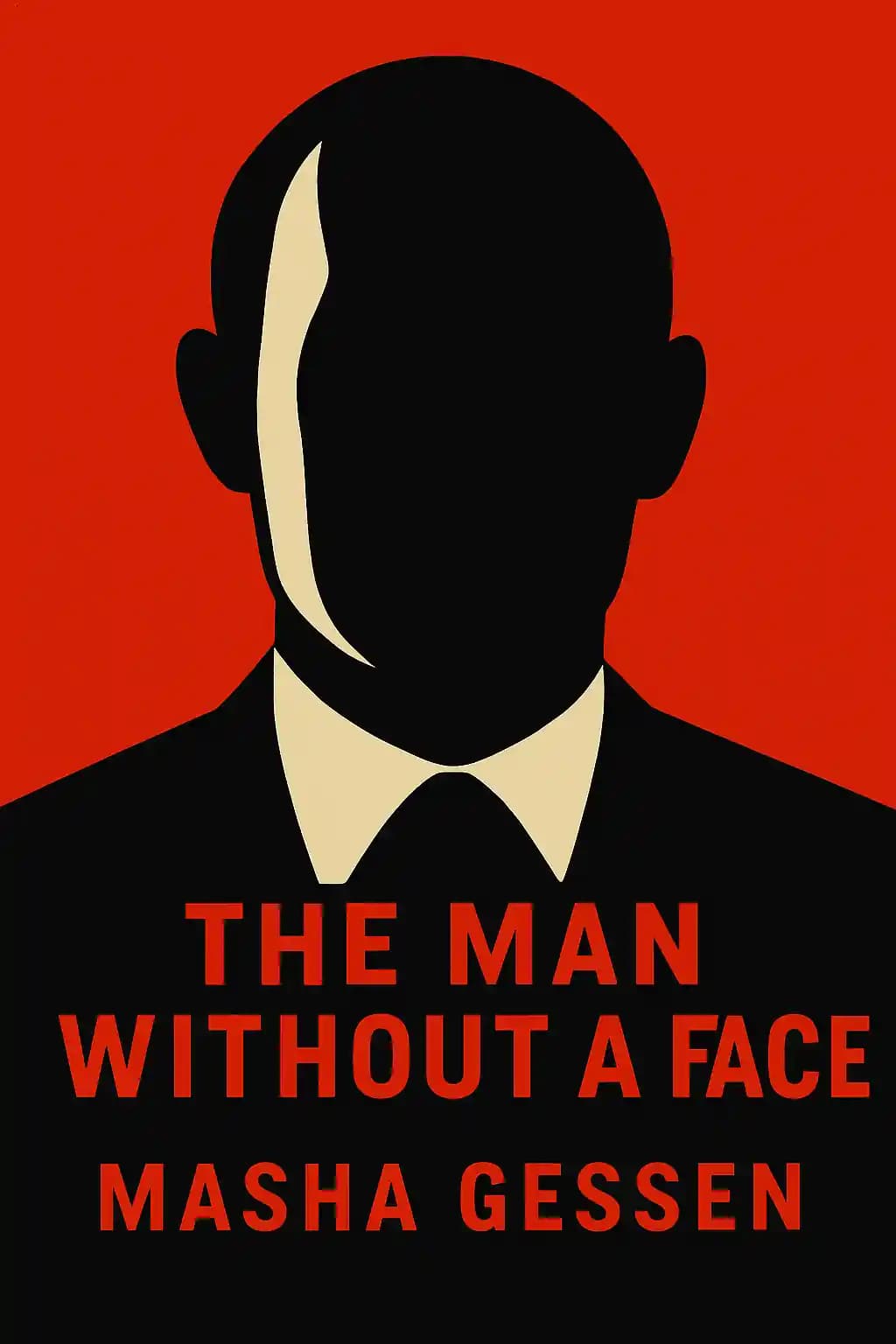
The Legacy of the Man Without a Face
On October 2, 2011, Boris Berezovsky shared his analysis of Russia: "The Russian regime has no ideology, no party, no politics - it is nothing but the power of a single man." Though Berezovsky's continued kingmaker ambitions seemed amusing, his analysis was correct - the entire Russian authoritarian regime rested on one man, making it fundamentally vulnerable. Without an ingrained ideology to overcome, the regime could potentially collapse quickly once Putin's vulnerability became evident, though the tipping point remained unpredictable.
When Putin's second term ended in 2008, he orchestrated the election of Dmitry Medvedev, a diminutive, robotic lawyer who had never led anything. Despite garnering 70% of the vote, Medvedev served a purely ceremonial role while Putin, as prime minister, continued running the country. Early in Medvedev's term, they extended presidential terms to six years, clearly planning for Putin's return in 2012.
By 2011, Russia had slid to 154th out of 178 countries on Transparency International's corruption index, with an estimated 15% of prisoners being entrepreneurs jailed by well-connected competitors who seized their businesses. Alexey Navalny gained prominence through his blog exposing government corruption, dubbing Putin's regime "The Party of Crooks and Thieves." When Navalny launched an anticorruption organization in February 2011, he raised $30,000 in just 24 hours - a clear sign Russians were fed up.
On September 24, 2011, at United Russia's party congress, Medvedev announced his support for Putin's presidential candidacy, revealing they had arranged this years earlier when Medvedev first took office. Putin would return as president, with Medvedev becoming prime minister. Russian bloggers immediately circulated images of Putin doctored to look like the aging Soviet leader Leonid Brezhnev, noting Putin would be seventy-one when his second six-year term ended.
In December 2011, an unexpected groundswell of civic engagement emerged around the parliamentary elections. Despite years of meaningless elections under Putin's regime, something had shifted in Russia's political atmosphere. Election observers from diverse backgrounds volunteered, people rescued protesters from police vans, and a sense of solidarity spread through Moscow despite the regime's attempts at suppression. White ribbons became the symbol of this "Snow Revolution" as citizens overcame their fear.
On December 10, 2011, between 35,000 and 150,000 protesters gathered at Bolotnaya Square, wearing white ribbons, scarves, hats and carrying white balloons. Creative homemade banners abounded, including one comparing election results to statistical norms: "We Don't Trust You, We Trust Gauss." The protesters chanted "New Elections!" "Freedom!" and "Russia Without Putin!" Protests were held in ninety-nine Russian cities and in front of Russian consulates in over forty cities worldwide.
Despite this hopeful moment, Putin's regime would only become more repressive in the years that followed. His return to the presidency in 2012 marked the beginning of a new era of cultural warfare, with anti-gay legislation, increased persecution of dissidents, and a growing emphasis on "traditional values" against Western liberalism. The 2014 annexation of Crimea further consolidated Putin's power through nationalist sentiment, while his warnings about "fifth columns" and "national-traitors" signaled an intensification of authoritarian control.
The man without a face had transformed from an accidental bureaucrat into a megalomaniacal dictator on a civilizational mission. The West would be slow to recognize the danger, while Russia itself would become the ultimate victim of Putin's insatiable greed for power and wealth. The path from street thug to KGB officer to world leader reveals not just one man's remarkable journey, but the tragedy of a nation that surrendered its brief democratic experiment to the very forces it had once overthrown.