Capítulo 1
The Shadow of History's Darkest Path
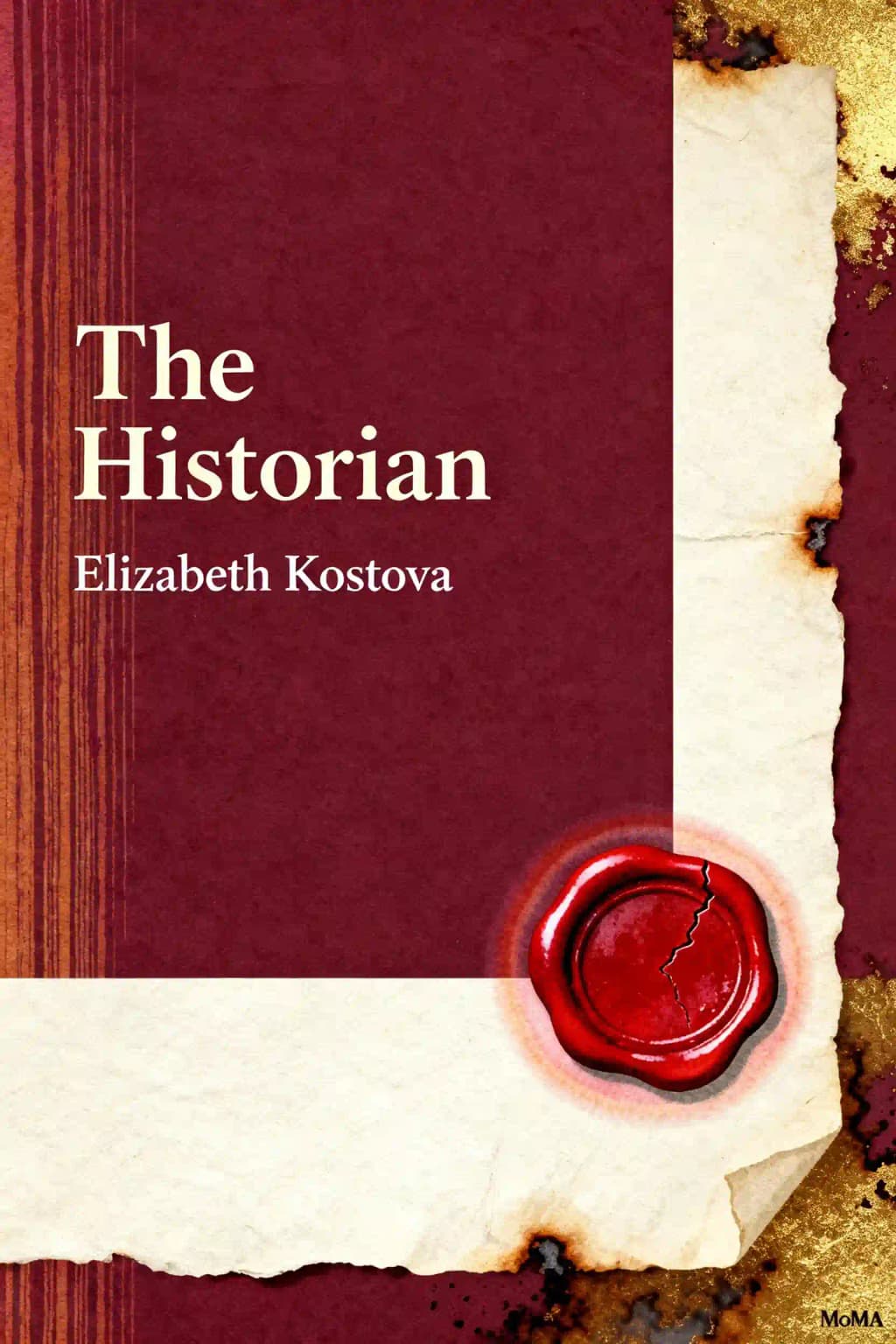
Elizabeth Kostova's "The Historian" has captivated readers worldwide since its 2005 publication, selling millions of copies and spending weeks atop the New York Times bestseller list. This literary thriller masterfully blends historical fact with supernatural fiction, earning comparisons to Umberto Eco's intellectual mysteries and Dan Brown's page-turning adventures. Celebrities from Emma Watson to Stephen King have praised its atmospheric blend of scholarship and suspense. What makes this novel particularly compelling is how it transforms the familiar vampire mythology through meticulous historical research, creating a Dracula who feels terrifyingly plausible. As we follow three generations of historians through their dangerous quest, we're reminded that sometimes the most frightening monsters are those with one foot firmly planted in reality.
Capítulo 2
A Legacy of Darkness: Three Generations Entangled
The novel unfolds through multiple timelines and narrators, creating a Russian doll structure of stories within stories - each layer revealing deeper mysteries and darker truths. Our primary narrator is a sixteen-year-old girl in 1972 who discovers a mysterious book in her father's library - an ancient tome with a woodcut dragon at its center and the word "DRAKULYA" emblazoned across its weathered leather binding. The book's pages are filled with cryptic letters and medieval illustrations that seem to pulse with their own dark energy. This discovery prompts her father to gradually reveal his own harrowing quest to find his missing mentor, Professor Bartholomew Rossi, who vanished without a trace after receiving an identical book decades earlier.
The narrative masterfully weaves between three primary timelines: the unnamed teenage narrator's journey of discovery in 1972-73, her father Paul's desperate search for Rossi in the 1950s amid the tensions of Cold War Eastern Europe, and Rossi's own groundbreaking research in the 1930s as fascism cast its shadow across the continent. All three become unwittingly entangled in the centuries-long history of Vlad Tepes, the historical Dracula. Through their interconnected stories, we learn that Dracula is not merely a historical figure or literary invention but an undead creature still walking the earth - a being who has shaped European history from the shadows for centuries.
What makes this multigenerational structure so effective is how it creates a sense of inescapable destiny, with each timeline echoing and informing the others. Each character is drawn into the same dangerous pursuit, finding the mysterious dragon book in different circumstances - in forgotten library corners, dusty academic offices, and ancient monastery archives. Each follows similar clues through a landscape of historical documents, medieval manuscripts, and remote Eastern European monasteries. The pattern suggests something deliberately orchestrated - that Dracula himself selects his scholarly pursuers, placing books in their paths like bait, drawing them toward him with the irresistible lure of historical discovery and academic recognition.
The three generations of scholars represent our enduring fascination with history's darkest chapters, and the dangers that come with looking too deeply into the abyss. As the teenage narrator observes, "Sometimes history itself reaches forward with its shadowy claw" - a sentiment that perfectly encapsulates how the past refuses to remain buried in this novel. The characters discover that historical research is not merely academic pursuit but a dangerous excavation of living evil. Their scholarly dedication becomes both their greatest strength and their greatest vulnerability, as each generation's quest for knowledge draws them deeper into Dracula's centuries-old web of power and manipulation.
Through letters, journals, and historical documents, we see how each character's research builds upon the previous generation's discoveries, creating a cumulative understanding of the horror they face. Yet this very accumulation of knowledge makes them increasingly vulnerable to the dark forces they study, suggesting that some historical truths might be better left in darkness.
Capítulo 3
The Scholar's Quest: Knowledge as Both Weapon and Trap
At its heart, "The Historian" is a novel about the pursuit of knowledge and the dangers that accompany it. Each protagonist is an academic whose scholarly curiosity leads them into mortal peril. Their research skills become both their greatest weapon and their greatest vulnerability - a duality that drives the narrative forward through libraries, archives, and ancient monasteries across Europe.
The novel's academic protagonists approach their supernatural encounters with the methodical tools of historical research. They pore over ancient manuscripts, decipher medieval maps, translate obscure texts, and follow bibliographic trails through dusty archives. When confronted with evidence of vampires, they respond not with blind terror but with scholarly skepticism, demanding documentary evidence and cross-referencing sources. Their methodology mirrors that of real historical research: careful annotation, thorough source verification, and meticulous attention to chronological consistency. This academic rigor lends credibility to the supernatural elements of the story while simultaneously heightening the tension between rational inquiry and inexplicable events.
This scholarly approach creates a fascinating tension within the novel. On one hand, the historians' academic training provides them with the tools to track Dracula through historical records. They can recognize the significance of an Ottoman tax scroll or identify a monastery from a medieval woodcut. Their expertise in multiple languages - Latin, Old Church Slavonic, Turkish, Greek - becomes crucial to unraveling centuries-old mysteries. Yet this same scholarly curiosity is what puts them in danger, as Dracula deliberately targets historians who might uncover his secrets. The archives become battlegrounds, and bibliography becomes a matter of life and death.
The novel presents a paradox: knowledge is both protection and peril. As Professor Rossi warns, "Not everyone who reaches into history survives it." The historians' research skills help them understand the vampire they face, yet their academic curiosity is precisely what draws them into his orbit. Each discovered document, each translated text, pulls them deeper into danger. Dracula himself is portrayed as a dark mirror of the scholarly protagonists - he too is a collector of books, a preserver of knowledge, a student of history. His vast library serves as both treasure trove and trap, containing invaluable historical documents alongside deadly secrets. But his scholarship has been twisted to serve power rather than truth, representing the corruption of intellectual pursuit when divorced from ethical considerations.
This portrayal of scholarship as a double-edged sword reflects our ambivalent relationship with knowledge in the modern world. We pursue information relentlessly, yet sometimes discover truths we might have been safer not knowing. The novel asks us to consider: When does the pursuit of knowledge become dangerous? Are there some historical secrets better left buried? Through its academic protagonists, the story explores the moral responsibilities that come with scholarship and the price of uncovering hidden truths. The characters must constantly weigh their scholarly obligation to preserve and understand the past against the very real dangers of awakening dormant evils.
Capítulo 4
Eastern Europe Unveiled: A Landscape of History and Myth
Kostova's novel takes readers on a breathtaking journey through Eastern Europe, transforming real historical locations into a gothic landscape where the boundaries between myth and reality blur. From Istanbul's labyrinthine archives to remote Bulgarian monasteries, from Budapest's grand boulevards to the mist-shrouded Carpathian Mountains, the setting becomes a character in its own right.
The novel's Eastern European landscape is depicted with remarkable authenticity, informed by Kostova's extensive travels in the region. We experience the sensory details of each location: the smell of Turkish coffee in Istanbul, the echoing silence of medieval monastery crypts, the taste of Hungarian paprika, the vertigo-inducing heights of mountain fortresses. These vivid details ground the supernatural elements in tangible reality.
What makes the novel's treatment of Eastern Europe particularly compelling is how it challenges Western stereotypes of the region. Rather than portraying Eastern Europe as simply a backward, superstitious land (as many vampire tales do), Kostova reveals its rich intellectual traditions, complex political history, and cultural sophistication. The region's complicated relationship with both Western Europe and the Ottoman Empire creates layers of historical tension that the novel explores with nuance.
The Cold War setting adds another dimension to this exploration. As the characters navigate Communist bureaucracies and evade secret police, the novel draws parallels between the historical tyranny of Vlad Tepes and the modern authoritarian regimes controlling Eastern Europe. Both represent forms of power that suppress freedom and truth, that demand absolute loyalty, that treat human lives as expendable.
Through this richly realized setting, the novel suggests that landscapes themselves can hold memory. The places where atrocities occurred - Dracula's torture chambers, Ottoman battlefields, Communist prison cells - retain traces of their violent histories. The historians must learn to read not just documents but the land itself, finding in geographic features and architectural details the clues to historical truths that official records have suppressed.
Capítulo 5
The Undead Past: History as Horror
"The Historian" transforms historical research into a form of supernatural detective work, suggesting that the past is never truly dead but continues to exert its influence on the present. The novel's brilliant conceit is that vampirism serves as a metaphor for how history feeds on the present, how past atrocities continue to drain the life from contemporary society.
Vlad Tepes, the historical Dracula, was known in his lifetime for extraordinary cruelty - impaling thousands of victims, burning villages, and terrorizing both enemies and subjects. The novel suggests that such extreme violence creates a kind of tear in the fabric of history, allowing evil to persist beyond its natural lifespan. Dracula's undead existence represents the way historical trauma refuses to remain safely in the past.
What makes this metaphor particularly effective is how it connects to the 20th century context of the novel. The characters' research takes place against the backdrop of World War II and the Cold War - periods when historical forces once again unleashed unprecedented violence and suffering. The parallel is clear: just as Dracula's medieval atrocities allow him to transcend death, the horrors of modern warfare and totalitarianism continue to haunt Europe long after the immediate violence has ended.
The historians in the novel discover that official history - the sanitized narratives found in textbooks and museums - often conceals darker truths. They must look beyond approved sources to folk tales, suppressed church records, and oral histories to find the reality behind the myths. This approach reflects a post-modern understanding of history as multiple competing narratives rather than a single authoritative account.
Perhaps most disturbingly, the novel suggests that confronting historical horrors can contaminate the researcher. Those who study Dracula risk becoming like him - Professor Rossi is transformed into a vampire, Helen bears Dracula's hereditary mark, and even the teenage narrator finds herself drawn into the same dangerous pursuit that claimed her parents. This represents the moral hazard of studying atrocity: how do we examine evil without being changed by what we witness?
Capítulo 6
Blood Ties: Family Secrets and Inherited Destinies
While "The Historian" operates as a supernatural thriller, it's equally powerful as a family drama exploring how secrets, both spoken and unspoken, shape relationships across generations. The novel reveals that blood ties can be both literal and metaphorical bonds, connecting people across time and space.
The central family secret - that Helen is both Rossi's daughter and a direct descendant of Dracula himself - creates a powerful dramatic irony. Helen initially seeks Rossi to exact revenge for abandoning her mother, unaware that he never knew of her existence. This misunderstanding drives her academic career and her hunt for Dracula, ultimately bringing her face-to-face with both her father and her ancient ancestor.
This complex family dynamic reflects how historical traumas cascade through generations. Helen carries Dracula's mark on her shoulder - a tiny dragon birthmark that represents both her noble lineage and her connection to historical atrocity. This physical manifestation of inherited history symbolizes how we all carry the marks of our ancestors' actions, whether we acknowledge them or not.
The teenage narrator's relationship with her father follows a similar pattern of secrets and revelations. His reluctance to share his past creates the central tension of their relationship. As she gradually uncovers his history, she comes to understand him not just as a father but as a person shaped by love, loss, and terror. Their relationship evolves from the simple parent-child dynamic of her childhood to a more complex partnership as they face Dracula together.
The novel also explores chosen family through the scholarly communities that form around historical research. Academics from different countries and backgrounds - Turgut in Turkey, Stoichev in Bulgaria, Hugh James in England - form a kind of extended family united by their shared pursuit of knowledge. These connections across national and cultural boundaries suggest that intellectual kinship can be as powerful as biological relationship.
Through these intertwined family narratives, the novel suggests that understanding our personal histories is inseparable from understanding broader historical forces. We cannot know ourselves without knowing where we come from - both our immediate family stories and the larger historical contexts that shaped them.
Capítulo 7
The Vampire's Library: Books as Portals and Prisons
In "The Historian," books are far more than passive repositories of information - they are active agents in the narrative, objects with almost supernatural power to transform those who encounter them. The mysterious dragon book that appears to each protagonist serves as both invitation and warning, drawing them into Dracula's orbit while hinting at the dangers ahead.
Dracula's massive underground library represents the dark side of knowledge preservation. As a collector of rare manuscripts and forbidden texts, Dracula perverts the scholarly mission of preservation into something sinister. He captures and transforms historians not to kill them but to force them to catalog his collection - making them servants to knowledge rather than its masters. This represents a perversion of the academic calling, where the pursuit of knowledge becomes an end in itself, divorced from human values.
The contrast between Dracula's hidden library and the public archives and university libraries the protagonists visit highlights different approaches to knowledge. Public institutions preserve information to make it accessible, to ensure its benefits are widely shared. Dracula hoards knowledge as a form of power, keeping it hidden and using it for personal advantage. This tension reflects ongoing debates about who controls information and who has access to it.
Books in the novel also serve as connections between characters separated by time and space. When the teenage narrator reads her father's letters or Rossi's research notes, she forms a kind of relationship with them across time. Similarly, medieval manuscripts allow the historians to communicate with long-dead monks and scribes, creating conversations that span centuries.
The physical properties of books - their smells, textures, bindings - are described in sensuous detail throughout the novel. This emphasis on materiality reminds us that books are not just abstract containers of information but physical artifacts with histories of their own. The dragon book's ancient parchment, mysterious woodcut, and strange smell all contribute to its uncanny power. In an increasingly digital world, the novel celebrates books as tangible connections to the past.
Capítulo 8
Between Worlds: Thresholds and Transformations
"The Historian" is filled with liminal spaces - physical and metaphorical thresholds where boundaries blur and transformations occur. From border crossings between countries to the threshold between life and death, these in-between spaces create the novel's atmosphere of uncertainty and possibility.
The characters repeatedly cross national borders, navigating the complex politics of Cold War Europe. Each border crossing represents a movement between different political systems, languages, and cultural contexts. These journeys highlight how arbitrary yet consequential such boundaries can be - lines on maps that nevertheless determine who has power over whom.
Religious spaces serve as another form of threshold in the novel. Churches, monasteries, and crypts function as portals between the mundane and spiritual worlds. In these sacred spaces, characters confront evidence of the supernatural and find protection from it. The novel treats religious faith with respect, suggesting that traditional protections against evil - crucifixes, holy water, prayers - retain power even in the modern world.
The most significant threshold is that between life and death, which Dracula has transgressed through his vampire existence. His undead state represents a perversion of natural order, a refusal to accept mortality. The historians' quest ultimately involves restoring proper boundaries - ensuring that the dead remain dead, that history stays in the past where it belongs.
Transformations abound throughout the narrative: Helen's mother transforms from village girl to refugee; Rossi transforms from scholar to vampire; the teenage narrator transforms from obedient daughter to active participant in the hunt for Dracula. These personal metamorphoses parallel the historical transformations occurring in Eastern Europe - from medieval principalities to modern nations, from independence to Soviet control.
Through these thresholds and transformations, the novel explores how identity itself is fluid and contextual. Characters adapt to new circumstances, speak different languages in different settings, and present different versions of themselves depending on who's watching. This multiplicity of identity reflects the novel's broader themes about the complexity of historical truth and the stories we tell about ourselves.
Capítulo 9
Love Against Darkness: Relationships as Redemption
Amid the novel's scholarly pursuits and supernatural terrors, human relationships provide moments of warmth and connection. Love - romantic, familial, and platonic - serves as a counterforce to the cold immortality that Dracula represents.
The romance between Paul and Helen develops gradually against the backdrop of their search for Rossi. Their relationship begins with mutual suspicion - Helen initially sees Paul as an obstacle to her revenge against Rossi, while Paul questions Helen's motives. As they face dangers together, share knowledge, and reveal vulnerabilities, their connection deepens into genuine partnership. Their love story suggests that authentic human connection requires honesty and reciprocity.
Similarly, the teenage narrator's budding romance with Barley offers moments of tenderness amid terror. Their relationship develops through shared danger and discovery, as they gradually reveal themselves to each other. Their innocent physical exploration contrasts sharply with the predatory sexuality associated with vampirism, offering a healthy alternative to Dracula's parasitic relationships.
The parent-child relationships in the novel are equally important sources of meaning and connection. The narrator's relationship with her father evolves from childish obedience to mature partnership as she becomes involved in his quest. Helen's complex feelings toward Rossi - hatred transforming to respect and finally to grief - show how family relationships can contain contradictory emotions simultaneously.
Friendship also provides essential support throughout the dangerous journey. Turgut's generous assistance to Paul and Helen, Stoichev's willingness to share his knowledge despite personal risk, and the network of librarians and scholars who help the protagonists all demonstrate how intellectual community can provide protection against isolation and danger.
These varied relationships suggest that human connection - imperfect and temporary though it may be - offers the only meaningful response to the emptiness of immortality that Dracula represents. While the vampire exists forever, he exists alone, separated from authentic human contact. The novel ultimately affirms that it is better to love and lose than to survive without ever having truly connected.
Capítulo 10
The Persistence of Evil: Dracula's Eternal Return
Despite the apparent victory at the novel's climax, "The Historian" offers no simple resolution or complete closure. Dracula may be temporarily defeated, but the novel suggests that evil of his magnitude cannot be permanently destroyed - it merely retreats, waiting for another opportunity to emerge.
This cyclical view of evil is embedded in the novel's structure. The three generations of historians each confront the same threat, suggesting that each victory is temporary. The dragon books continue to appear, Dracula's agents continue to hunt for information, and the search for his tomb continues across decades. This pattern implies that each generation must fight its own battle against recurring evil rather than relying on the victories of their predecessors.
The novel's epilogue reinforces this unsettling message. Years after Dracula's apparent destruction, the narrator visits a museum and discovers another ancient dragon book - suggesting the cycle may be beginning again. The final vision of Dracula standing on the monastery tower, surveying his domain "as if all the world is before him," leaves readers with the disturbing sense that he may still exist, waiting for his next opportunity.
This refusal of closure reflects a mature understanding of how evil operates in history. Totalitarian regimes fall but their ideologies persist; genocides end but ethnic hatreds continue; individual tyrants die but the systems that enabled them often survive. By denying readers the satisfaction of a definitive victory over Dracula, the novel reminds us that vigilance against evil must be constant rather than occasional.
Yet the novel is not ultimately pessimistic. By showing how each generation finds the courage and resources to confront the darkness in their time, it suggests that human resilience and the pursuit of truth are themselves forms of victory, even if they cannot permanently eradicate evil. The historians may not destroy Dracula forever, but their willingness to face him, to name him, to study him, and to resist him represents a form of triumph.
In this way, "The Historian" transforms the traditional vampire story into a profound meditation on how we confront historical evil. We may not be able to destroy it completely, but through scholarship, courage, and human connection, we can resist its power and limit its reach - at least until the next generation must take up the struggle anew.