Capítulo 4
Memories and Mysteries
As Eva's presence continues to unsettle her, Isabel finds herself immersed in an increasingly complex web of memories. She vividly recalls the bitter winter of 1944, when Uncle Karel discovered their house during the hongerwinter - the Dutch famine that claimed thousands of lives. The memory of that time remains sharp: the gnawing hunger, the tulip bulb soup, the endless search for fuel to keep warm. After her mother's death when Isabel was twenty-two, she discovered a cache of wartime letters tucked away in an old dresser drawer - correspondence between her siblings that painted a different picture of their shared past than the one she remembered.
Her wartime memories emerge in disjointed fragments, like pieces of a shattered mirror reflecting different moments: her father's sudden death in 1939 from a heart attack while reading his morning newspaper; the relentless bullying at school where classmates mocked her secondhand clothes and quiet demeanor; the terrifying nights when bombs rained down on Rotterdam and Amsterdam, the sky lighting up in apocalyptic oranges and reds. Each memory carries its own weight of trauma and loss.
The decision to remain in Uncle Karel's countryside house after the war marked a pivotal shift in their family dynamics. Louis, always the most vocal, bitterly resented abandoning their Amsterdam life, claiming their mother had sacrificed their future for safety. Hendrik, caught in his own internal struggles, carried his unhappiness like a shadow regardless of where they lived. Isabel, however, found solace in the isolation, spending hours wandering through meadows and forests, losing herself in books borrowed from the village library. The countryside's quiet became her refuge, even as it drove her brothers further away.
When her mother died, Isabel's solitude transformed into a crushing loneliness that seemed to echo through the empty rooms. Desperate to secure her future, she approached Uncle Karel about the house - a conversation that haunts her still. His response was cutting in its precision: "Be your own guardian, Isabel. Your brothers have their own lives; don't become another burden they must carry." The words landed like slaps, each syllable reinforcing her isolation.
Isabel's relationship with Hendrik remains particularly fraught, marked by a pivotal incident during their teenage years. She can still picture the scene with devastating clarity: finding fifteen-year-old Hendrik with Edwin, his thirty-year-old piano teacher, in an intimate embrace in the music room. Their mother's swift reaction - terminating the lessons and forbidding any contact - triggered a chain of events that reverberated through their lives. Hendrik fled, finding refuge in an apartment that Uncle Karel quietly arranged, creating a rift that never fully healed. Years later, when their mother lay dying, Hendrik returned with Gerard, his partner of several years. Isabel's refusal to allow Gerard into the house - citing their mother's fragile condition - created another wound. The day their mother died, Hendrik was in Scheveningen, and Isabel's failure to contact him immediately became yet another point of contention between them.
Now, as Isabel observes Eva moving through the house with an unnervingly natural ease, these memories surface with renewed intensity. There's something in Eva's presence that acts like a key, unlocking doors in Isabel's mind she'd preferred to keep closed. The woman triggers both deep suspicion and an inexplicable fascination in Isabel - a complicated emotion that sits in her chest like a stone, both familiar and foreign, much like Eva herself.
Capítulo 5
Unexpected Desires
Isabel's carefully ordered life includes occasional dates with Johan, a successful architect who began pursuing her after a chance encounter during a rainstorm. Seeing her usually pristine hair disheveled and wet sparked his interest, though Isabel remains unmoved by his persistent attention. Their relationship maintains a formal distance - dinner dates at respectable restaurants where Isabel sits straight-backed and responds with practiced politeness to his monologues about building designs and city planning.
After an especially strained evening where Johan repeatedly attempts to hold her hand and suggests they "move things forward," Isabel returns home feeling suffocated by his expectations. She finds Eva in the kitchen, barefoot and cross-legged on a chair, absorbed in one of Isabel's art history books. The sight both irritates and intrigues her - Eva's casual comfort in her space representing everything that disrupts Isabel's carefully maintained boundaries.
Their initial exchange crackles with tension, Eva's direct gaze making Isabel unnecessarily defensive about her date. But as Eva gently probes about Johan, showing genuine curiosity rather than judgment, Isabel finds herself relaxing. When she challenges Eva about her earlier deception regarding the living arrangements, Eva's response - that she finds Isabel "admirable" - carries an unexpected weight that makes Isabel's chest tighten.
The conversation meanders into deeper waters as they discuss desire and permission. Eva's suggestion about letting Johan kiss her comes with a knowing look that makes Isabel uncomfortable. Her confession about wanting to allow it but being unable to leads to Eva's impulsive demonstration - a quick, soft kiss meant to prove kisses are "nothing, really, a small thing." Instead, it ignites something neither woman expects.
Isabel finds herself drawn forward by an unfamiliar gravity, their second kiss deeper and electric with meaning. Eva's whispered words about Isabel's resemblance to Louis shatter the moment, prompting Isabel's fierce denial - "I'm nothing like my brother." But the denial gets lost in what follows: Eva's fingers tangling in Isabel's hair, Isabel's hands gripping Eva's waist, their bodies pressing against the kitchen wall in an urgent, gasping embrace that overwhelms Isabel's senses with its intensity.
The abrupt way Isabel tears herself away and flees to her room speaks to her terror at this unprecedented loss of control. She has never experienced such raw desire - the fact that it's directed at a woman, specifically her brother's girlfriend, leaves her reeling with shame and confusion. The arrival of Hendrik and Sebastian the next morning only intensifies her disorientation. Hearing Hendrik casually introduce Eva as "Louis's girlfriend" makes Isabel physically flinch. Her attempted confrontation with Eva in the hallway later - met with Eva's sharp "Not now" - leaves her with the sickening realization that this moment of weakness could unravel everything she's built her life around.
Capítulo 6
A Deepening Connection
Despite the initial confusion and shame, Isabel and Eva are drawn inexorably toward each other in the days that follow. After Hendrik and Sebastian's hasty departure leaves them alone in the house, Eva and Isabel cautiously navigate their growing attraction, each moment charged with unspoken tension. When Isabel returns from another uncomfortable encounter with Johan - during which she could barely focus on their conversation - she finds Eva waiting in the kitchen, nervously polishing already-clean glasses.
Eva makes the first attempt to address their situation, suggesting they forget about their kisses, dismissing them as silly indiscretions while fidgeting with her apron strings. She mentions Louis's imminent return with forced casualness, though her trembling hands betray her emotional state. But when Isabel, voice barely above a whisper, admits she's never experienced anything like this before - this overwhelming pull toward another person - Eva moves closer, creating a moment of electric tension that neither can resist. The air between them grows thick with possibility.
That night, Isabel wakes to the sound of desperate gasping. She finds Eva choking and thrashing in her bed, trapped in what appears to be a violent nightmare. When Isabel attempts to wake her, Eva's hands instinctively fly to Isabel's throat, gripping with surprising strength before recognition dawns in her terror-filled eyes. The moment passes like a flash of lightning, leaving them both shaken. Isabel, rather than retreating, climbs into Eva's bed and wraps her arms around the trembling woman. Their faces draw close in the darkness - not quite kissing, but sharing breath in an intimacy that feels more profound than any physical act. Eva whispers that "it's bad," a warning that seems to encompass more than just her nightmares, but eventually falls asleep in Isabel's arms while Isabel remains awake, acutely aware of Eva's warmth against her and the weight of what's developing between them.
Days pass in a haze of desire as Isabel and Eva settle into a domestic routine that feels both natural and dangerously temporary. Eva cooks elaborate meals for Isabel, experimenting with local ingredients and family recipes. They make love in hidden corners of the garden, learning each other's bodies with increasing familiarity. During quiet moments, Eva shares fragments of her past, including a passionate relationship with another woman during a particularly cold winter in a Copenhagen boardinghouse - a confession that helps Isabel understand she isn't alone in these feelings.
Eva's night terrors continue, occurring with unsettling regularity. She insists on sleeping in Isabel's childhood bedroom, claiming the familiar space brings her comfort. There, she examines Isabel's possessions with careful attention - old schoolbooks, childhood drawings, and most notably a worn stuffed hare that Isabel simply named "Haas." Each item she touches seems to forge another connection between them, building a bridge across their different backgrounds.
Their passionate idyll is interrupted by an urgent letter from Louis announcing unexpected delays in his business affairs. Eva responds with forced nonchalance, quickly changing the subject to the garden's needs, but Isabel notices how her hands shake while holding the letter. They spend Sunday in a fever of passionate embraces, Isabel laughing with genuine relief when Johan calls instead of Louis. In a moment of vulnerable honesty, Eva asks if Isabel remembers hating her, circling around the unspoken presence of Louis between them - a question that hangs in the air like storm clouds gathering on the horizon.
Capítulo 7
Secrets Revealed
The fragile happiness between Isabel and Eva shatters when Louis calls the house, frantically asking Isabel to get Eva out. He confesses he's met someone named Mary and wants Eva gone. Eva overhears and demands the phone, speaking sweetly to Louis while arranging his return. When Isabel reveals Louis's betrayal, Eva erupts in frustration, explaining she has "nothing" in life and needs the security Louis offers. Isabel offers her own money and home, but Eva dismisses it as temporary charity with no real certainty.
After storming out, Eva returns late at night to pack her belongings. Isabel finds her weeping and they share one final passionate night together. In the morning, Isabel discovers Eva's diary, which contains not personal entries but detailed lists of household items-revealing it to be an inventory of valuables in the house.
Isabel confronts Eva with the diary, accusing her of being a thief who came to steal from her. Eva initially denies it, then coldly admits the items are "gone" and Isabel "won't get them back." When Isabel threatens to call the police, Eva hastily packs her suitcase, which accidentally spills open revealing broken ceramic pieces from Isabel's home. Eva cryptically says, "You were never supposed to have it. It was never yours," before leaving.
Isabel falls ill with fever afterward. Louis returns with his new girlfriend Mary, who awkwardly tours the house while Isabel remains distant and unwell. That night, feverish Isabel examines Eva's diary again and discovers something shocking-the book's first page reveals Eva's full name is "Eva de Haas," suggesting a deeper connection to the house and its possessions than Isabel had realized.
The diary entries reveal Eva's history-she was born in Isabel's house, which her father (a school principal who died in the camps) had owned. The property was sold because he couldn't pay the mortgage after his death. Eva had been planning her return to the house for years, believing she had legitimate claim to it or its contents. The entries document her deliberate pursuit of Louis as a way to access the house and reclaim what she believed was rightfully hers.
Capítulo 8
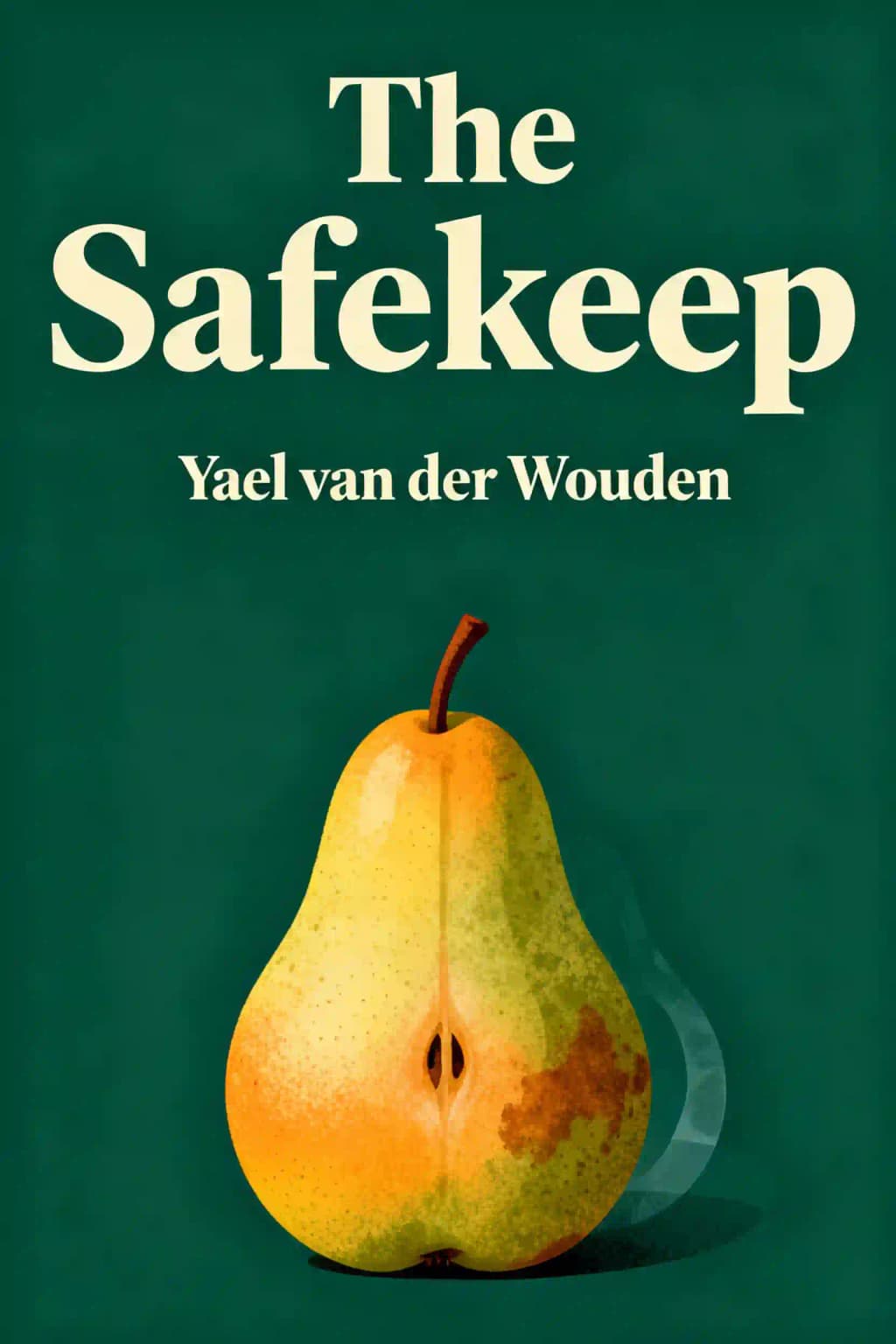
The Safekeep
After discovering the devastating truth about Eva's identity, Isabel embarks on her own painful journey of reckoning with her family's past. She visits her mother's old friend, Tante Rian, in her small house on the outskirts of Amsterdam, where the elderly woman speaks in cryptic circles about a precious dish she safeguarded during the war years - her words heavy with unspoken meaning. Upon returning home, Isabel methodically wraps exactly half of her household possessions in newspaper - from her mother's delicate teacups to the heavy silver candlesticks. This meticulous division becomes a ritual of acknowledgment, a physical manifestation of the understanding that half of what she owns was never truly hers to inherit.
The tension reaches its peak during her visit to Hendrik and Sebastian before their departure to Paris. In their father's old study, now stripped bare for the move, Isabel finally confronts Hendrik about his decades-long absence after their mother's death. The pain of abandonment surfaces in her trembling voice as she demands answers. Hendrik, his face tight with old grief, defends himself by revealing their mother's rejection of him - how she turned away from his choices, his life, his truth. Sebastian, ever the mediator, later pulls Isabel aside in the garden. Among the winter-bare rosebushes, he delivers a harsh truth: "You have so much more than most" - words that cut deeper because of their accuracy.
On a bitter January morning, Isabel crosses the busy Herengracht, her breath visible in the cold air, to reach a basement apartment where she's finally tracked down Eva. The younger woman's previously platinum hair has returned to its natural brown, the change making her seem more vulnerable, more real. Eva meets her at the door with defensive hostility, immediately asking if Isabel has come to alert authorities. Inside the cramped apartment, with its single window letting in weak winter light, Isabel carefully places two items on Eva's worn kitchen table: the diary, its pages now dog-eared from Isabel's repeated readings, and a broken piece of china bearing blue flowers and the partial image of a hare's leg - a fragment that connects directly to Eva's childhood memories.
Their confrontation builds like a gathering storm. Eva's accusations cut deep, calling out Isabel and the entire country's willing blindness to wartime atrocities. When Isabel attempts to justify her approach through Louis rather than direct contact, Eva's response is brutal in its honesty, reminding Isabel of their first meeting "as family" - how Isabel's cold dismissal had confirmed every fear Eva carried about claiming her heritage.
The emotional dam finally breaks when Isabel steps forward to embrace Eva. The younger woman's initial resistance is physical, her body rigid with years of hurt, before slowly yielding to the contact. Isabel's apologies pour forth, raw and desperate, as she declares she would "die at the thought of anything hurting" Eva. But Eva, though softening, remains clear-eyed about the complexities of their situation. Her questions strike at the heart of their shared dilemma: "What if that's you? The thing that hurts? What if it's who you are? What if it's where you come from?" - questions that echo the fundamental challenge of reconciling past with present, inheritance with justice.
Capítulo 9
A House of Devotion
After their confrontation, Isabel returns to her empty house, which feels ashamed and unwelcoming. She spends her days in solitude after Neelke leaves to marry Bas, attempting to manage household tasks alone. During a walk into town, Isabel stops at the synagogue, noticing its Hebrew inscription which she later discovers translates to "For my house will be called a house of devotion for all."
One evening as Isabel sits by the fire, someone knocks. It's Eva, freezing from walking from the station. Isabel invites her in, careful not to touch her. In the kitchen, Eva notices boxes containing the items Isabel has packed away-the contents of the glass vitrine. Their confrontation resumes as Eva bitterly recalls how she and her mother once stood outside begging for their house back.
In a moment of emotional surrender, Isabel kneels before Eva, pressing Eva's hand to her chest, and reveals she has arranged for the house to go to her. "It's mine. And it's yours. If you want it," Isabel says. Eva questions whether this means she must take Isabel too, to which Isabel responds that while she has nowhere else to go, Eva can have anything. "Have me," Isabel pleads repeatedly, promising never to send Eva away again.
Eva asks if Isabel's heart-"this fleeting thing, this changeable thing"-is the only guarantee she has. When Isabel confirms it is, Eva kisses her hard, then softly, still weeping. "I'll never leave," Eva promises. "If you are mine then I am yours... if I stay, if I'm yours then you must keep me." They both fall to their knees, holding each other as Isabel murmurs Eva's name and calls her "my love," begging, "Let me try."
Morning arrives with winter's pink light and silencing snow. Isabel stands by the window, viewing the scene she knows from childhood-now seeing it through Eva's eyes too, "an echo of the same story." Eva approaches with a gentle touch to Isabel's spine. Isabel turns to her, and Eva rises on her toes to kiss her jaw. Isabel turns fully into her arms, bending toward Eva's upturned face-"a gift."
In this final moment, the novel completes its exploration of what it truly means to safekeep-not just objects, but histories, traumas, and ultimately, each other. The house becomes not just a repository of stolen things but a place where two women, connected by history's cruelty, might begin to heal together, transforming it into what the synagogue inscription promised: a house of devotion for all.