Capítulo 1
The Unraveling of Illusion: A Modern Greek Tragedy
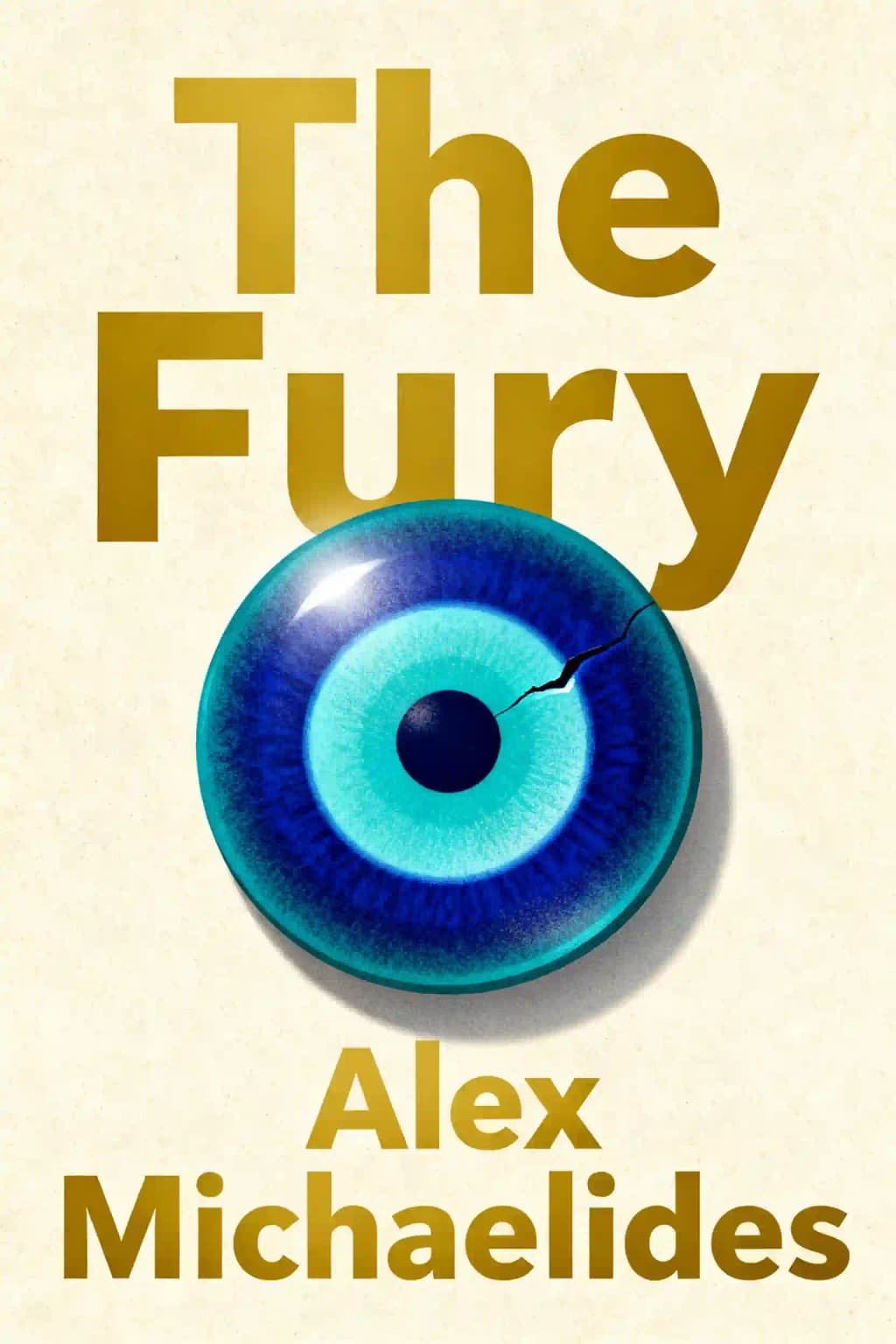
In the literary world, few recent psychological thrillers have captivated readers quite like Alex Michaelides' "The Fury." This New York Times bestseller follows the success of Michaelides' debut "The Silent Patient," which sold over 6.5 million copies worldwide. The author's background in screenwriting shines through his cinematic storytelling, creating vivid scenes that unfold like a film in readers' minds. Hollywood has taken notice - while "The Silent Patient" was optioned by Plan B, Michaelides' growing reputation as the master of the modern psychological thriller has made "The Fury" a sensation among celebrities like Nicole Kidman and Reese Witherspoon, who have featured it in their book clubs. Set against the backdrop of a private Greek island, this tale of betrayal, manipulation, and murder explores how our pasts shape who we become and the dangerous consequences of living behind masks.
Capítulo 2
A Murder on Aura Island: Setting the Stage
The story begins with a haunting scene - three gunshots shattering the peace of a private Greek island, followed by a young man's scream as he discovers a body lying in blood among ancient marble ruins. This is our introduction to Aura, a small but extravagant island in the Cyclades that serves as both paradise and prison for our characters. The island itself becomes a character - beautiful yet isolated, with its ancient ruins, olive groves, and a history locals consider cursed and unlucky.
Our narrator, Elliot Chase, introduces himself as one of seven people trapped on this island, one of whom is a murderer. He presents the story not as a whodunit but a "whydunit" - an exploration of human motivation and character. The cast includes Lana Farrar, a reclusive former movie star who owns the island; her teenage son Leo; her second husband Jason Miller; her longtime friend Kate Crosby; the island's caretaker Nikos; the family's loyal housekeeper Agathi; and Elliot himself, a playwright with a mysterious past.
The island's most striking feature is an ancient ruin - six weathered marble columns that once formed part of a Roman villa's private theater. This contemplative spot surrounded by olive trees becomes the stage for the central tragedy. As the Mediterranean wind grows stronger - what locals call "the fury" - it creates an atmosphere of impending doom, driving the characters to madness and ultimately murder.
Capítulo 3
The Star of the Show: Lana Farrar's Shattered World
At the center of this tragedy stands Lana Farrar, a former movie star whose Botticelli beauty and magnetic screen presence made her Hollywood royalty. Discovered at nineteen by producer Otto Krantz (whom she later married), Lana found her niche playing tragic heroines, earning an Oscar nomination for her portrayal of Ophelia. Yet at forty, at the height of her fame, she mysteriously retired and left Los Angeles for London with her son Leo.
The narrative reveals a woman struggling with the discrepancy between her strong screen persona and her more fragile private self. Without her career defining her, Lana feels lost, though she appreciates the English reserve that allows her anonymity in London. After marrying Englishman Jason Miller, she settles into a seemingly comfortable life, but the perpetual grayness of England begins to wear on her spirit.
What appears at first to be a simple case of midlife ennui masks a deeper turmoil. Lana is haunted by an inexplicable anxiety, a feeling of being pursued by something she can't identify. This sense of unease drives her decision to escape to her Greek island for Easter, inviting her friend Kate and the narrator Elliot to join her family. What should be a restorative holiday becomes instead the catalyst for tragedy as Lana discovers her husband Jason's affair with her closest friend Kate.
The revelation of this betrayal forces Lana to confront not just her failing marriage but her entire sense of self. Having survived an abusive first marriage to Otto Krantz (who controlled her diet, clothing, and choices), Lana had believed she'd finally found true love with Jason. The discovery that this too was an illusion shatters her carefully constructed world and sets in motion the events leading to murder.
Capítulo 4
The Supporting Cast: Masks and Motivations
Each character in this Greek tragedy wears a mask that conceals their true nature and motivations. Kate Crosby, Lana's closest friend for thirty years, presents herself as a talented but chaotic British theater actor. Currently struggling through rehearsals of Aeschylus's Agamemnon, Kate is described as Lana's opposite - dark where Lana is fair, heavily made-up where Lana is natural, dramatic where Lana is reserved. Despite their differences, they've maintained a close friendship since meeting on a film set when they were young.
Yet beneath Kate's larger-than-life persona lies a woman consumed by jealousy. Having met and briefly dated Jason before introducing him to Lana, Kate has never truly accepted losing him. Her betrayal of Lana through the affair reveals the darker aspects of her character - her willingness to hurt her closest friend for her own desires.
Jason Miller, Lana's second husband, initially appears to be merely rude and temperamental. His hostility toward Elliot and disrespect toward the staff hint at deeper character flaws. As the story unfolds, we learn he's not just unfaithful but potentially criminal - "juggling other people's money" and desperate to access Lana's wealth to avoid prison. His attempts to get Lana to sign documents without reading them reveal his true intentions.
Leo, Lana's seventeen-year-old son, resembles "a young Greek god" with his mother's blond hair and blue eyes. His desire to follow in his mother's footsteps as an actor creates tension between them, as Lana tries to dissuade him from the path that brought her both fame and misery. Leo's innocence makes him particularly vulnerable to the manipulations of the adults around him.
The island's staff - Nikos the caretaker and Agathi the housekeeper - have their own hidden depths. Nikos, who has lived in solitude on the island for 25 years, harbors a secret adoration for Lana and contempt for Jason. Agathi, who rose from waitress to become Lana's closest confidante, holds her own secrets and resentments beneath her loyal exterior.
Capítulo 5
The Unreliable Narrator: Elliot's Twisted Perspective
Perhaps the most complex character is our narrator, Elliot Chase, who initially presents himself as a successful playwright and Lana's loyal friend. His narrative voice guides us through the events on the island with apparent clarity and insight. Yet as the story progresses, cracks appear in his reliability as a narrator, hinting at darker motivations beneath his cultured exterior.
Elliot's past gradually comes into focus - an unhappy childhood with an abusive father and alcoholic mother, followed by homelessness in London before being taken in by famous novelist Barbara West. Their relationship was "transactional" rather than romantic, with Elliot describing himself as having lived with her until her death. When she excluded him from her book royalties, he wrote a play as revenge - the very play that brought him success.
What begins as sympathy for Elliot's difficult background transforms into unease as we discover his obsession with Lana. Having first encountered her on screen during his miserable adolescence, Elliot became enchanted by her beauty - "the face of a Greek goddess" that "cast a spell" from which he "never recovered." This childhood fascination evolved into adult fixation, with Elliot harboring romantic feelings for Lana despite her clear boundaries.
Most disturbing is the revelation that Elliot has been studying Lana, recording her words and ideas in his notebook as if they were his own. His detailed surveillance of Kate and Jason's affair reveals not just friendly concern but calculated manipulation. As his true nature emerges, we realize we've been viewing events through the lens of a deeply disturbed individual whose perception cannot be trusted.
Capítulo 6
The Affair: Betrayal Among Friends
The central betrayal driving the plot is the affair between Jason and Kate. What might have been a conventional tale of infidelity becomes something more complex through Michaelides' careful exploration of the participants' motivations. Jason's affair stems not from love but from a desire to assert power over Lana, whom he resents for her wealth and status. Kate, meanwhile, genuinely believes she loves Jason, having never fully relinquished her feelings for him despite stepping aside when he chose Lana.
The discovery of this betrayal unfolds gradually. First, Lana finds a distinctive silver crescent moon earring with three diamonds caught in Jason's suit lapel. Though she tries to dismiss it, her photographic memory for jewelry nags at her - she's seen this earring before. When she visits Kate at the theater and discovers the matching earring in Kate's makeup bag, the truth becomes undeniable.
Rather than confronting the betrayal immediately, Lana orchestrates an elaborate scheme. She invites both Kate and Elliot to her island for Easter, creating a pressure cooker environment where the truth will inevitably emerge. The island setting intensifies the emotional dynamics, trapping the betrayers with the betrayed in a confined space where there's no escape from confrontation.
What makes this betrayal particularly devastating is its layered nature. It's not just Jason's infidelity that wounds Lana but Kate's willingness to sacrifice their thirty-year friendship. The violation of trust extends beyond the marriage to corrupt the support system Lana relied upon. This double betrayal leaves her truly alone, forcing her to recognize that the relationships she believed defined her life were built on illusion.
Capítulo 7
The Perfect Crime: Deception and Manipulation
As the narrative progresses, it takes a shocking turn with the revelation that Lana's murder was staged - an elaborate hoax conceived by Elliot and agreed to by Lana as a test of Jason and Kate's relationship. Under intense pressure from a staged murder and suspicion cast on Jason, Elliot predicted their affair would crumble as they turned against each other. Lana agreed partly to end their affair but also to secretly test Jason's love for her.
The plan was meticulously crafted - choosing shooting over drowning, involving Leo as an actor but keeping Agathi in the dark, and using stage makeup and fake blood for realism. On the night of the "murder," Elliot fired three shots, Lana applied fake wounds and blood, and he wrapped Kate's red shawl around her before hiding to observe everyone's reactions.
This deception reveals the theatrical nature of all the characters' lives. Lana, the former actress, slips easily back into performance, while Leo embraces the opportunity to demonstrate his acting skills. Even Kate, currently struggling with her role as Clytemnestra in Agamemnon, delivers a convincing performance of grief and shock when confronted with Lana's "body."
Yet the staged murder spirals out of control when Agathi discovers Lana is alive and refuses to participate in the deception. From her hidden vantage point, Lana witnesses Jason's reaction to her death - angry and afraid but not grief-stricken or heartbroken. This revelation sends her back to childhood trauma, feeling like the unwanted little girl she once was. All her carefully constructed safety and respect crumbles as she realizes Jason doesn't truly love her.
Meanwhile, Elliot's plan extends beyond testing Jason's love. He hopes to manipulate Kate into actually killing Jason, giving Kate a loaded gun and sending her to confront Jason with lies about his criminal activities and intentions to kill her. Elliot's ultimate goal is to eliminate Jason and claim Lana for himself - a plan that reveals the true depth of his disturbed psyche.
Capítulo 8
The Tables Turn: Victims Become Victimizers
Just when it seems Elliot's manipulation has reached its zenith, Michaelides delivers another twist - Lana and Kate were aware of his scheme all along. After discovering Elliot's notebook containing detailed plans to manipulate them, Lana confronted Kate about the affair. Their honest conversation led to reconciliation and a new alliance against their common enemy: Elliot.
Rather than going to the police with an unbelievable story, the women decided to beat Elliot at his own game - following his script initially, then turning the tables with an ending he never anticipated. They enlisted Leo and eventually Nikos in their counter-scheme, keeping Jason in the dark to punish him for his infidelity.
This reversal transforms the victims into victimizers, as Lana and Kate use Elliot's own methods against him. When Kate meets Elliot in the summerhouse, she performs brilliantly, convincing him she's terrified. After receiving the gun from Elliot, she exchanges it with Lana for one loaded with blanks. The group then subjects Elliot to humiliation on the jetty, forcing him to his knees at gunpoint and beating him before firing the blank to complete their revenge.
The morning after this false execution, Elliot awakens to discover he wasn't killed but thoroughly defeated. Lana throws his notebook at him, declaring her hatred and ordering him to stay away forever or face jail. The group walks away laughing at his humiliation, leaving him alone and broken on the jetty.
This turn of events reveals the capacity for darkness in all the characters. Even Lana, previously portrayed as a victim, demonstrates a ruthless streak in her revenge against Elliot. The line between victim and perpetrator blurs as each character embraces their capacity for cruelty when sufficiently provoked.
Capítulo 9
The True Tragedy: When Fiction Becomes Reality
The final devastating twist comes when fiction becomes reality. Humiliated and enraged by his defeat, Elliot retrieves the hidden gun and experiences what he believes is a supernatural encounter with the island's namesake goddess Aura - the wind entering his body until he becomes "the fury" itself.
As Lana stands in the kitchen with the others, experiencing a profound realization that she's always been alone and that's no longer frightening, she decides to release everyone from her life and return to California to embrace her destiny in Hollywood. In this moment of clarity and potential rebirth, Elliot enters silently with a shotgun and fires three times, murdering her for real.
This shocking conclusion transforms what began as a staged murder into an actual tragedy. The theatrical game becomes deadly reality, fulfilling the island's reputation for being cursed and unlucky. Elliot's fantasy of eliminating Jason to claim Lana for himself warps into a destructive rage that destroys the object of his obsession rather than allowing her to live without him.
The epilogue reveals Elliot in prison, writing his story at the suggestion of his former therapist Mariana. In a final confession, he admits to stealing Barbara West's play after her death and passing it off as his own work. His only real talent, he acknowledges, is lying. Yet even in confinement, Lana lives on in his mind - he can close his eyes and return to being that little boy in the movie theater, gazing at her in the dark, forever trapped in his obsession.
Capítulo 10
The Masks We Wear: Identity and Self-Deception
Throughout "The Fury," characters construct elaborate personas that hide their true selves. Elliot's entire identity as "Elliot Chase" is stolen from a Noel Coward play, effectively killing his former self to be reborn. He meticulously practiced the mannerisms and speech patterns of Barbara West's literary salon guests until he'd created a convincing performance of sophistication.
Lana too lives behind a mask, maintaining the illusion of the contented wife while harboring doubts about her marriage and longing for her abandoned career. Kate projects confidence and drama while concealing her jealousy and insecurity. Jason presents himself as a successful businessman while secretly facing financial ruin.
These performances extend beyond social masks to self-deception. Lana convinces herself she's happy with Jason despite subconsciously recognizing his infidelity. Elliot believes his manipulation of others is justified by his love for Lana. Kate tells herself her affair with Jason is true love rather than revenge against Lana for surpassing her.
Michaelides explores how these layers of deception eventually collapse under pressure. The island setting, cut off from the mainland by the raging wind, creates a crucible where pretense becomes impossible to maintain. As masks fall away, the characters must confront their authentic selves - often with devastating consequences.
The novel suggests that true tragedy lies not in murder but in our inability to know ourselves and others authentically. Each character's downfall stems from their commitment to illusion over reality, their preference for comforting lies over painful truths. By the time they recognize their self-deception, it's too late to prevent disaster.
Capítulo 11
The Lingering Ghosts of Childhood Trauma
A recurring theme in "The Fury" is how childhood trauma shapes adult behavior. Elliot explicitly addresses this, citing his therapist Mariana's insight that traumatized children develop hypervigilance, constantly scanning for danger. The "frightened child" remains trapped in the adult mind, frozen in time - "a strong adult body" grown to protect the vulnerable child within.
This concept illuminates each character's motivations. Elliot's unhappy childhood with abusive parents left him desperate for love and validation, explaining his obsession with Lana. Lana's own difficult childhood, briefly referenced but not detailed, created her romantic idealism and need for security. Kate's insecurities stem from always feeling second-best, driving her competitive relationship with Lana.
Even secondary characters like Agathi, with her connection to her grandmother's spirit, and Nikos, with his solitary existence, hint at formative experiences that shaped their current behaviors. Leo, still technically a child himself, struggles with his mother's expectations and his own ambitions, potentially setting the stage for future conflicts.
The novel suggests that understanding these childhood wounds is essential to comprehending adult actions. Yet knowledge alone doesn't prevent tragedy - even Elliot, who intellectually understands his psychological damage, remains unable to break free from his destructive patterns. The past doesn't just influence the present; it actively haunts it, turning adults into unwitting vessels for childhood ghosts.
Capítulo 12
When the Wind Rises: The Fury Unleashed
The titular "fury" operates on multiple levels throughout the novel. Most literally, it refers to the wild Greek wind that locals believe drives people to madness. This wind intensifies throughout the narrative, reaching its peak on the night of the murder. Its howling presence creates both practical obstacles (preventing boats from reaching the island) and a psychological atmosphere of impending doom.
On a deeper level, "the fury" represents the unleashed emotions the characters normally suppress. When Elliot finally embraces his rage after being humiliated, he experiences the wind entering his body until he becomes the fury itself. This transformation from controlled manipulation to violent impulse marks the boundary between civilization and primal instinct.
The concept also evokes the Furies of Greek mythology - female chthonic deities of vengeance who punished those who had sworn false oaths or violated moral law. In this light, the murder can be seen as divine retribution for the characters' various betrayals and deceptions. The ancient ruins on the island connect the modern drama to classical tragedy, suggesting that human nature remains unchanged across millennia.
Finally, "the fury" represents the uncontrollable consequences of our actions. Despite elaborate planning by both Elliot and later Lana and Kate, events spiral beyond anyone's control. The carefully orchestrated deceptions give way to chaos, revealing the futility of attempting to script real life as if it were a play. In the end, the fury consumes them all, leaving only destruction in its wake.
Capítulo 13
The Final Curtain: Art Imitating Life
"The Fury" ultimately reveals itself as a meditation on the relationship between art and life. Elliot approaches his manipulation of others as if writing a play, with motivation, intention, and goal carefully mapped out for each "character." Lana, the former actress, stages her own murder as a performance. Kate struggles with her role as Clytemnestra in Agamemnon while unknowingly playing a similar role in real life.
The ancient ruin on the island - once a Roman villa's private theater - serves as both the murder scene and a symbol of this theme. Theater and reality blur as the characters perform for each other, sometimes knowingly, sometimes unconsciously. Leo, aspiring to become an actor like his mother, finds himself cast in a real-life drama more intense than any stage production.
Yet the novel suggests that life resists such neat theatrical structure. Despite Elliot's careful planning, his "play" goes disastrously off-script when the other characters reveal their own agency. His failure stems from forgetting his fundamental rule that "character is plot" - that people will act according to their true natures regardless of how he tries to manipulate them.
In the epilogue, Elliot's final confession that he stole Barbara West's play completes this theme. His entire identity as a playwright was yet another performance, his supposed talent merely theft. The only story he can truly claim as his own is the tragedy he created on the island - a production that ended not with applause but with imprisonment and death.
As the curtain falls on this modern Greek tragedy, we're left to contemplate the dangerous consequences of confusing art with life, of treating real people as characters to be manipulated. The true horror lies not in the murder itself but in the recognition that we are all, to some extent, performing versions of ourselves - and that the line between performance and authenticity can fatally blur when the fury rises.