Capítulo 1
The Garden's Desire: How Plants and People Shape Each Other
The Botany of Desire takes us on a remarkable journey through the evolutionary dance between humans and plants. Michael Pollan's groundbreaking work has influenced everyone from celebrity chefs like Alice Waters to tech moguls seeking sustainable agriculture solutions. When published in 2001, it revolutionized how we understand our relationship with nature by flipping the traditional narrative-what if plants have been using us as much as we've been using them? This question resonated so deeply that the book remained on bestseller lists for months and was later adapted into a PBS documentary. Pollan's elegant prose and revolutionary perspective invite us to reconsider our place in the natural world not as masters, but as willing participants in a sophisticated coevolutionary tango that has been unfolding for thousands of years.
Capítulo 2
Nature's Seductive Strategy
For millennia, plants have been nature's master chemists, transforming sunlight, soil, and water into an astonishing array of compounds that nourish, heal, intoxicate, and delight us. While humans evolved consciousness and bipedalism, plants perfected photosynthesis and organic chemistry, developing over 100,000 known chemical compounds. Their chemical complexity serves two fundamental purposes: defense against predators through bitter alkaloids, thorns, and toxins, and attraction of allies through sweet nectars, vibrant colors, and intoxicating fragrances to overcome their most significant limitation-immobility.
About 100 million years ago, flowering plants developed ingenious strategies to enlist animals as transportation agents. From burrs that cling to fur to sweet fruits that reward consumption, plants found ways to move their genes across landscapes. Some plants evolved explosive seed pods, while others created lightweight seeds that could drift on wind currents. The most sophisticated strategies involved co-opting animals: berries that birds would eat and disperse, nuts that squirrels would cache and forget, and flowers that would seduce insects into becoming unwitting pollinators. Then, approximately 10,000 years ago, evolution itself evolved when plants refined their strategy to exploit one particular animal capable of both free movement and complex thought-humans.
This relationship has been spectacularly successful for both parties. Edible grasses like wheat and corn convinced humans to clear forests and create vast agricultural landscapes. Flowers like roses and orchids transfixed entire cultures, leading to phenomena like the Dutch tulip mania. Useful plants inspired us to transport, protect, and propagate them across continents, creating global networks of trade and cultivation. Our conventional grammar divides the world into active subjects and passive objects, but in coevolutionary relationships, every subject is also an object. Agriculture could just as easily be seen as something grasses did to people to conquer trees, transforming human societies from nomadic hunter-gatherers to settled farmers.
Domestication has fundamentally blurred Darwin's line between artificial and natural selection. Human desire now shapes evolutionary "fitness" for countless species, creating a nature that is increasingly domesticated. Modern corn bears little resemblance to its wild ancestor teosinte; domestic dogs have evolved from wolves to fit human households; even wilderness depends on civilization for survival through conservation efforts and protected areas. The four plants explored in this book-the apple, tulip, cannabis, and potato-represent four fundamental human desires: sweetness, beauty, intoxication, and control. Each plant has figured out how to gratify these desires so effectively that humans have helped them conquer vast territories and multiply beyond imagination, from the apple orchards of Washington to the tulip fields of Holland.
After ten thousand years of coevolution, these plants' genes contain detailed instructions on human desires and cultural values, like a botanical archive of our species' hopes and needs. We've remade these species through artificial selection, breeding sweeter apples, more colorful tulips, more potent cannabis, and more productive potatoes, but these plants have simultaneously been remaking us. They've shaped our agriculture, our economics, our aesthetics, and our consciousness. The offspring of this ancient marriage between plants and people are stranger and more marvelous than we realize, playing crucial roles in the natural history of human imagination, beauty, religion, and philosophy, fundamentally altering the course of human civilization through their seductive strategies.
Capítulo 3
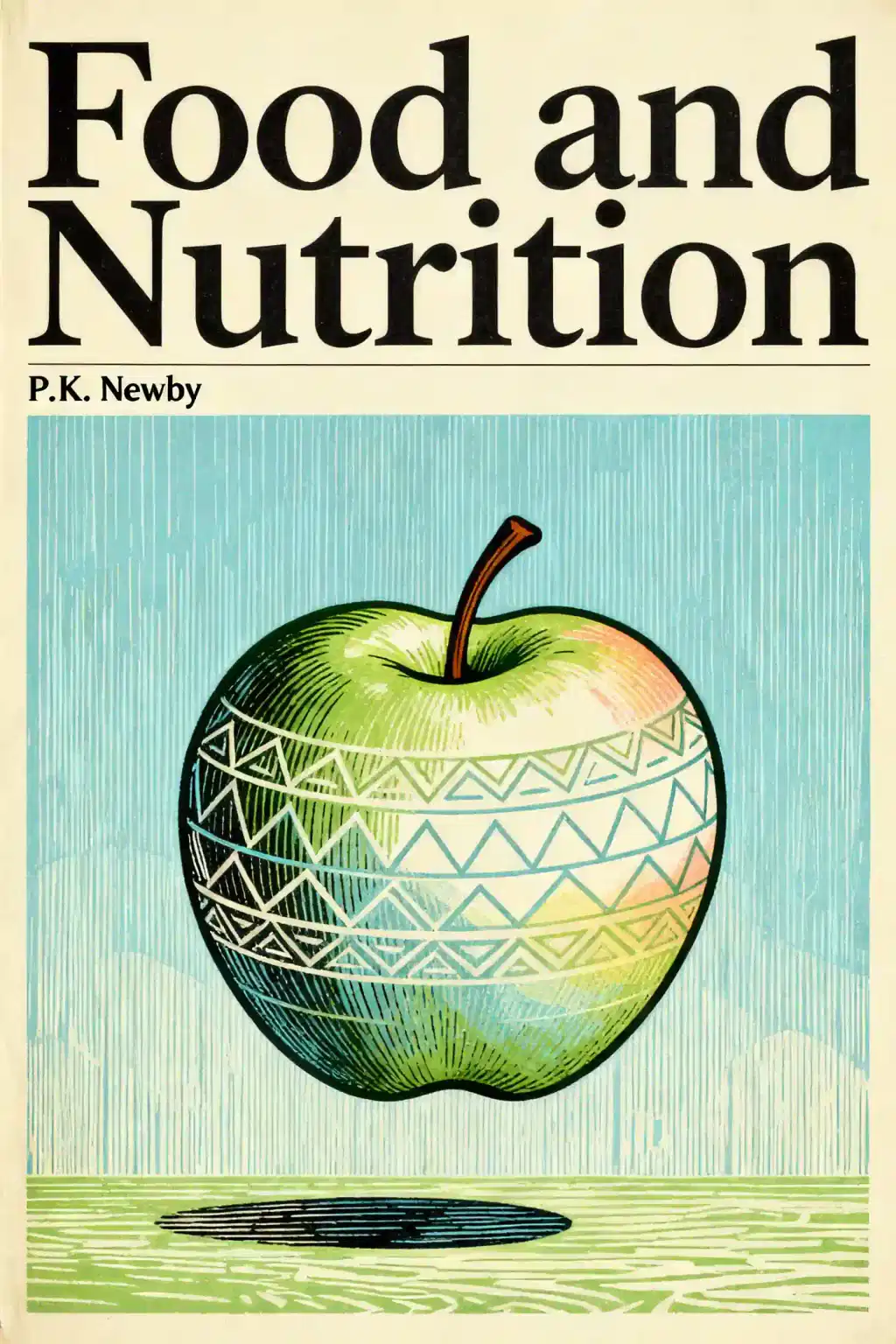
The Apple's Sweet Seduction
The modern apple's journey begins with an unlikely hero-John Chapman, better known as Johnny Appleseed. Far from the Disney caricature with a pot on his head scattering seeds, the real Chapman was a shrewd frontier businessman who stayed ahead of settlers, establishing nurseries of apple trees grown from seed rather than grafts. This distinction is crucial-apples grown from seed are genetic wildcards, producing fruit nothing like their parents due to extreme heterozygosity. While one in ten might produce edible fruit, most yielded sour "spitters" perfect for hard cider-the frontier's primary intoxicant and currency.
Chapman's apples weren't for eating but for drinking. He provided the raw genetic material for alcoholic refreshment on the frontier, where clean water was scarce and sobriety optional. His nurseries helped transform the frontier's wilderness into a semicivilized place where settlers could drink something besides water. Chapman himself was a fascinating contradiction-a shrewd capitalist who lived like a beggar, a Christian mystic who preached a unique form of Swedenborgian spirituality, and a vegetarian who wouldn't harm even insects yet facilitated the westward expansion that displaced native peoples.
The apple's evolutionary genius lies in its genetic variability. Unlike most domesticated plants that sacrifice genetic diversity for reliable traits, the apple refused this bargain. By making its seeds produce unpredictable offspring, it forced humans to propagate it through grafting while maintaining a vast reservoir of genetic possibilities through sexual reproduction. This strategy has allowed the apple to adapt to environments from Kazakhstan to Kentucky.
The sweet apple represents one of nature's most brilliant evolutionary strategies. By gratifying our desire for sweetness-a rare and precious taste in nature that usually signals nutritional value-the apple convinced humans to carry it across continents. In the process, it transformed itself from a small, sour crab apple in Kazakhstan's forests to one of the world's most successful fruits. The sweetness that evolved to attract mammals to disperse seeds now attracts humans with grocery carts and global distribution networks.
Yet this success has come at a cost. Modern commercial apple production increasingly relies on a handful of varieties grown through cloning, sacrificing the genetic diversity that made the apple so adaptable. The Red Delicious, once America's favorite apple, exemplifies how human selection can go awry-bred for appearance rather than flavor until it became a tough, tasteless commodity that consumers eventually rejected. This cautionary tale reminds us that our desires can sometimes lead domestication down problematic paths.
Capítulo 4
The Tulip's Beautiful Deception
In 17th century Holland, a single tulip bulb could cost as much as a fine Amsterdam house. This phenomenon, known as "tulipomania," represents perhaps the first speculative economic bubble in modern history. But why tulips? What power did these flowers hold over human imagination to inspire such madness?
The tulip's journey to European gardens began in the Ottoman Empire, where sultans had long cultivated them. When tulips arrived in Holland around 1593, they encountered a unique cultural and economic environment. The Dutch Republic was Europe's first middle-class society, newly prosperous from global trade and eager for status symbols. The tulip-exotic, mysterious, and displaying colors unseen in European flowers-perfectly satisfied this emerging consumer class's desire for novelty and distinction.
But the true mania centered on "broken" tulips-flowers whose solid colors were dramatically streaked with contrasting flames and feathers. These rare variants commanded astronomical prices, with bulbs trading for the equivalent of luxury homes. What the Dutch didn't realize was that these spectacular patterns resulted from a virus transmitted by aphids. The very beauty they prized was actually a disease that weakened the plants.
This reveals something profound about beauty itself. The tulip's strategy exploits a universal aesthetic response-our attraction to patterns that balance order and surprise, symmetry and novelty. The broken tulip's appeal lies precisely in how it introduces controlled chaos into perfect form-Dionysian wildness disrupting Apollonian order. This balance between opposing forces creates what we recognize as beauty, not just in flowers but in all art forms.
The tulip teaches us that beauty is not merely subjective but has evolutionary foundations. When the first flowers appeared 200 million years ago, they transformed Earth's biosphere by inventing beauty as a reproductive strategy. Before flowers, plant reproduction relied on wind and water-blind, wasteful processes. Flowers created a revolutionary alternative by recruiting animals as pollinators through color, pattern, fragrance, and reward.
This innovation accelerated evolution itself. Plants now responded to the desires of other creatures, creating a feedback loop of increasing complexity. Flowers begot fruits and seeds, multiplying the world's food energy and making possible the rise of large mammals-including, eventually, humans. Without flowers, reptiles might still rule Earth, and we would not exist.
So when we gaze into a tulip, we're looking into the crucible of beauty itself-nature's double nature of creation and dissolution, the striving toward complex form and the tidal pull away from it. There we find both the achievement of order against odds and its blithe abandonment, the perfection of art and the blind flux of nature-perhaps even a glimpse of life's meaning.
Capítulo 5
Cannabis: The Plant of Forgetting and Wonder
The forbidden plant and its temptations predate Eden. Living creatures have always navigated a wild garden containing both nourishment and deadly poisons. Some plants do more curious things than simply sustain or extinguish life-they heal, calm, rouse, or quiet pain. Most remarkably, certain plants manufacture molecules that can alter consciousness itself.
Why would evolution produce plants with such "magic"? Plants mastered biochemistry while animals evolved locomotion and consciousness. The most notable plant compounds, from our perspective, are those designed to act on animal brains-sometimes to attract attention but more often to repel or destroy predators. Different plant toxins work through various mechanisms: nicotine paralyzes insect muscles; caffeine disrupts nervous systems; compounds in datura induce disorienting visions that distract predators from feeding.
Interestingly, animals often deliberately experiment with plant toxins, returning repeatedly to intoxicants even when dangerous. Goats likely discovered coffee, pigeons may have revealed cannabis properties, and Peruvian legend credits pumas with discovering quinine. This suggests the desire for altered consciousness extends beyond humans to the animal kingdom.
Cannabis has coevolved with humans for over ten thousand years, following two divergent paths-one selected for fiber (hemp) and another for psychoactive properties (marijuana). The American drug war represents one of the most important chapters in cannabis's natural history. Ironically, the powerful taboo against marijuana led directly to the creation of a powerful new plant.
When the government's eradication campaign pushed growers indoors in the 1980s, cannabis underwent a remarkable transformation. Under artificial conditions, breeders crossed Cannabis sativa with frost-tolerant Cannabis indica from Afghanistan, creating hybrids combining the best traits of each plant. By manipulating water, nutrients, light, carbon dioxide, and heat-while selecting for desirable genetic traits-growers coaxed remarkable performance from this obliging weed. THC concentrations rose dramatically from pre-crackdown levels of 2-3% to 15-20%.
Why are humans so drawn to this plant? In the 1990s, scientists discovered specific cannabinoid receptors clustered throughout the brain, particularly in regions governing higher-order thought, memory, movement, and emotions. In 1992, researchers identified "anandamide," the brain's own endogenous cannabinoid, named from Sanskrit for "inner bliss." This cannabinoid network appears to modulate other neurotransmitters and may have evolved to help humans cope with pain, selectively forget trauma, and regulate the biochemical translation of objective reality into subjective emotions.
When asked what it means biologically to be "high," scientists offer surprisingly limited answers. The most consistent neurological effect appears to be short-term memory disruption-a curious thing for the brain to manufacture naturally. Yet forgetting is vastly underrated as a mental operation. Our consciousness would be overwhelmed without the ability to filter the blizzard of sensory information bombarding us every moment.
By disrupting short-term memory, cannabis creates a space for direct experience and wonder, freeing us from the constant mapping of present onto past. Time slows as we examine each perception from every angle, creating a still point where time itself seems to pause. This wonder-inducing state may not be "artificial" at all-the neurochemistry of transcendence might be identical whether induced by drugs, meditation, or prayer.
Our discomfort with plant-induced transcendence may stem from our work ethic or our need to maintain boundaries between matter and spirit. The notion that spiritual experience might arise from plant matter threatens Western civilization's sense of separateness from nature. Christianity and capitalism both detest cannabis because immersing us in the present moment short-circuits their metaphysics of desire, which depend on future fulfillment rather than present satisfaction.
Capítulo 6
The Potato's Promise and Peril of Control
There's something sublimely stirring about fresh rows of vegetable seedlings-what might be called the Agricultural Sublime, the satisfaction of seeing our intelligence reflected in ordered land. Unlike wilderness's power over us, this represents our power over nature, though the farmer understands this control is partly fiction. Nature repeatedly reminds us of our imperfect mastery through pests, storms, and blights.
The potato's story begins in the Andean altiplano, where Solanum tuberosum was first domesticated over seven thousand years ago. The Incas developed an astonishing diversity-some three thousand varieties spanning every color, shape, and growing condition imaginable. Unlike modern monoculture, Andean farmers developed different potatoes for every microclimate in their vertical habitat. Wild potatoes regularly crossed with cultivated varieties, refreshing the gene pool. This genetic diversity represents an extraordinary cultural achievement and incalculable gift to the world.
When the potato arrived in Europe in the late sixteenth century, it struggled to find acceptance despite its remarkable productivity. Europeans rejected it for numerous reasons: it was unfamiliar, belonged to the nightshade family, was thought to cause leprosy, and wasn't mentioned in the Bible. The fundamental objection was that the potato seemed to contain too little human culture and too much raw nature.
Ireland proved the exception, embracing the potato wholeheartedly. It thrived in Ireland's rain-soaked soil where cereal grains struggled, allowing Irish peasants to feed themselves from marginal land seized by English colonizers. The "lazy bed" cultivation method required minimal tools or labor, yet produced enough to feed families and livestock. This success ultimately led to catastrophe when the potato blight arrived in 1845, decimating fields across Ireland. Within days, fields turned from green to black, tubers to evil-smelling slime.
While the blight visited all of Europe, only in Ireland did it create catastrophe. The poor, subsisting entirely on potatoes, had no alternatives when the crop failed. One in eight Irish died of starvation within three years, and millions emigrated to America. While the causes were complex, involving land distribution and English exploitation, the disaster fundamentally rested on potato monoculture-specifically, dependence on a single variety, the Lumper.
Today's industrial potato farming represents the apotheosis of our desire for control. Conventional fields are doused with so much pesticide that the leaves wear a "white chemical bloom" and the soil becomes "lifeless gray powder." Farmers call this a "clean field," one purged of all life except potato plants. The economics are equally brutal: farmers spend nearly $1,950 per acre to earn perhaps $2,000 in a good year.
Genetic engineering promises to solve these problems by creating potatoes that produce their own insecticides, like Monsanto's "NewLeaf" varieties. Yet this technology raises new concerns about gene flow, ecological impacts, and corporate control of agriculture. The "Terminator" technology-plants genetically modified to produce sterile seeds-represents the culmination of corporate efforts to control agriculture's means of production. This would "enclose" what has traditionally been a commons-the genetics of crop plants developed over ten thousand years of civilization.
The alternative approach is exemplified by organic farmers who use complex crop rotations, companion planting, beneficial insects, and diverse potato varieties to manage pests naturally. Their soil isn't sterile gray powder but rich, dark, and alive. The problem isn't just agricultural but cultural-our collective desire for perfect french fries has locked farmers into a system where biotechnology becomes the latest "silver bullet" to save monoculture rather than questioning the paradigm itself.
Capítulo 7
The Wisdom of Wildness
Our gardens have always been places where human desires meet plant strategies-experimental spaces where both species coevolve. Yet modern gardening often sacrifices the full range of plant powers to a cult of prettiness that obscures darker truths about nature and ourselves. Historically, gardens concerned themselves more with plants' powers than their beauty-their ability to change us for good or ill.
Ancient peoples worldwide cultivated sacred plants that inspired visions or journeys to other worlds. Medieval apothecary gardens focused on species that healed, intoxicated, or poisoned. Even later ornamental gardens honored nature's darker mysteries. Only in modern times, after industrial civilization prematurely concluded it had conquered nature, did our gardens become benign, sunny places purged of horticultural dangers and temptations.
The four plants explored in this book-apple, tulip, cannabis, and potato-reveal how human desires have shaped plant evolution, and how plants have simultaneously shaped human culture. The apple's sweetness helped settle a continent; the tulip's beauty created and destroyed fortunes; cannabis's consciousness-altering properties influenced art, music, and spirituality; and the potato's nutritional power enabled population growth and industrial revolution while demonstrating the dangers of monoculture.
What connects figures like Johnny Appleseed, tulip fanciers, pot growers, and Monsanto scientists? All are practitioners of the "botany of desire" who marry human drives to plant drives, moving between wild and cultivated realms. They participate in the eternal dialogue between Dionysian energy and Apollonian order that produces beauty, sweetness, and altered perception.
While most view domestication as something humans do to plants, the relationship is reciprocal-plants have changed us as we've changed them in this coevolutionary dance. Like Chapman floating down the Ohio with his apple seeds, we're in this boat together, and would be wise to preserve wildness and multiplicity rather than risk unstringing the world through monoculture.
The garden teaches us that we cannot fully separate ourselves from nature. Even our most sophisticated technologies remain embedded in biological systems with their own logic and momentum. The plants we've domesticated continue to evolve, sometimes in ways we neither expect nor control. Our desires-for sweetness, beauty, transcendence, and control-connect us to these plants in ways both ancient and immediate.
Perhaps the greatest wisdom these plants offer is that wildness remains essential, even within our most cultivated spaces. The apple needs genetic diversity from its wild ancestors; the tulip's beauty emerges from the tension between order and surprise; cannabis reminds us that consciousness itself is wilder than we imagine; and the potato demonstrates how monoculture creates vulnerability. In our increasingly engineered world, preserving these elements of wildness may be not just aesthetically pleasing but essential for survival.
Capítulo 8
The Garden's Lessons
Gardens remain places of many sacraments-common yet sacred spaces where we enact our abiding ties to nature. From the simple act of planting seeds to the harvest celebration, these rituals connect us to ancient agricultural traditions spanning millennia. While we readily accept benign sacraments like eating from vegetable patches or using healing plants for medicine - from chamomile tea to aloe vera - we're less comfortable with plants that alter consciousness. Yet such sacraments may occasionally be worthwhile as checks on human hubris, challenging our notion that consciousness stands apart from nature.
These plants suggest that transcendence itself flows through molecules shared between our brains and garden plants, revealing that spirit may be part of nature-perhaps the oldest idea in the world. The same neurotransmitters found in human brains - serotonin, dopamine, and others - exist in plants, pointing to our deep biological kinship. They remind us that our most profound experiences, from aesthetic appreciation to spiritual revelation, have biological foundations shaped by millions of years of coevolution. The vibrant colors we find beautiful in flowers evolved to attract pollinators; our ability to perceive sweetness developed alongside fruits' sugar content.
The botany of desire ultimately teaches us humility. For all our technological prowess, from genetic engineering to vertical farming, we remain biological creatures embedded in ecological relationships. The plants we've domesticated have domesticated us in return, shaping our diets, our settlements, our economies, and even our consciousness. Our desires-what we want from nature-have always been part of nature themselves. The development of agriculture led to permanent settlements, complex societies, and the very civilization we know today.
As we face unprecedented environmental challenges, from climate change to biodiversity loss, this perspective offers valuable guidance. Rather than seeing ourselves as separate from or above nature, we might recognize our place within the web of mutual influence and dependence. The apple, tulip, cannabis, and potato have all found ingenious ways to gratify human desires while advancing their own evolutionary interests. Their success suggests that the most sustainable path forward lies not in domination but in partnership-finding ways to align human flourishing with the flourishing of the countless other species with whom we share this planet.
In the end, the garden stands as both metaphor and reality-a place where human desires meet plant ingenuity, where culture and nature intertwine, and where we might glimpse a more harmonious way of being in the world. Gardens demonstrate sustainable cycles of growth, decay, and renewal. They show us how diversity creates resilience and how small changes can yield significant results over time. By listening to what these plants have to teach us, we might cultivate not just better gardens, but a better relationship with the living world that sustains us. From companion planting to natural pest control, gardens offer practical lessons in working with rather than against nature's processes.