Capítulo 4
The Economics of Happiness and Risk
Would you work half as much for the same pay, or work just as hard but earn twice as much? This seemingly simple question reveals profound truths about our relationship with work and money. Most people instinctively choose less work for the same pay, suggesting that time might be more valuable than additional wealth once basic needs are met.
Our financial decisions often reflect deeper values and risk tolerance. Consider this scenario: you meet someone at a party and absolutely know that if you talk to them, they'll make you tens of millions of dollars, but after two years you'll go bankrupt. Would you start the conversation? This forces us to weigh immediate gains against long-term security and reveals our attitude toward financial volatility.
Risk assessment appears throughout our economic choices. Would you play Russian roulette with ten pistols (one loaded) for $5 million? The 10% chance of death versus guaranteed wealth exposes how we value our lives in monetary terms. Similarly, would you accept a 50-50 bet paying ten times your wager? Your answer reveals your risk tolerance with more modest stakes.
Our relationship with wealth extends beyond risk to questions of meaning and purpose. Would you accept an inflation-adjusted lifetime stipend of $150,000 per year if it meant you couldn't earn or inherit additional money? This question forces us to consider whether we value financial security over potential growth and achievement.
The economics of happiness appears in questions about material possessions. If what you owned had no bearing on what people thought of you, would you spend your money differently? Many would, suggesting our purchases often serve social signaling rather than personal satisfaction. Similarly, would you accept $2 million to leave your country permanently? This reveals how we weigh financial opportunity against community and belonging.
Even our moral values have economic dimensions. For $30,000, would you go two months without washing or using deodorant? Would you accept $20,000 to shave your head? These questions reveal our "price points" for temporary discomfort or social embarrassment. Similarly, would you rather have success and everything material you want but few friends, or little success but lots of friends? This forces us to evaluate the relative worth of achievement versus connection.
Perhaps most revealing are questions about generosity. Would you rather be given $25,000 for your own use or $250,000 to give anonymously to strangers? Your choice reveals whether you value personal gain or broader impact. If given $1 million to donate anonymously, how would you dispose of it? This exposes your values and priorities when money is plentiful.
These economic questions reveal that our relationship with money is never just about numbers. It's about security, freedom, status, impact, and ultimately, what kind of life we want to lead. By examining our financial choices through these hypothetical scenarios, we gain insight into our deepest values and what truly constitutes wealth in our personal economies of happiness.
Capítulo 5
Love, Intimacy, and Relationship Boundaries
If you were locked in a time machine for a one-way trip to the past or future and had ten minutes to choose your destination, where would you go? While seemingly unrelated to relationships, this question reveals much about how we value connection. Most people hesitate to leave loved ones behind permanently, showing how central relationships are to our sense of meaning.
The boundaries of commitment are tested in numerous scenarios. If the person you were engaged to became a paraplegic in a car crash, would you back out of the marriage? What if they became a quadriplegic? These questions force us to examine whether our love is conditional on physical ability and how much caregiving we're willing to undertake.
Sexual boundaries reveal equally complex terrain. Would you accept $30,000 for one night of sex with a stranger? At what price point would your answer change? Our responses reveal not just our relationship with money but our views on intimacy and fidelity. Similarly, while walking in the park, if you saw a stranger and knew with certainty that introducing yourself would lead to profound love but they'd die in six months, would you approach them? This forces us to weigh intensity against permanence in relationships.
Trust and transparency present their own dilemmas. If your spouse spent a night with a stranger while on a trip and you'd never find out, would you want them to tell you? Would you confess if roles were reversed? These questions reveal whether we value honesty over emotional comfort and how we define betrayal.
Family relationships carry their own complexities. If your parents told you they never really loved you, how would it affect your life? If your teenage child died in a freak accident, would you rather clone an identical twin or try to have another child naturally? These scenarios probe the depths of family bonds and how we process loss.
Perhaps most revealing are questions about sacrifice. You and someone you love are in separate rooms with buttons. You'll both die unless one presses their button within 60 minutes, but the first to press saves the other while dying immediately. What would you do? This question distills love to its essence-the willingness to sacrifice for another's wellbeing.
Even everyday relationship dynamics reveal important truths. If a close friend hangs up on you during an argument, would you call them back? How long would you wait? Your answer reveals your pride versus your desire for reconciliation. Similarly, do you enjoy sleeping in physical contact with your lover? This simple question exposes intimacy preferences that partners often assume rather than discuss.
These relationship questions show that love isn't just about attraction or compatibility but about boundaries, sacrifice, honesty, and how we balance our needs against those we care about. By exploring these scenarios, we gain insight into what we truly value in our closest connections and how we might nurture them more intentionally.
Capítulo 6
Identity and Self-Discovery Through Hypothetical Scenarios
If you could be obsessed with money, sex, sports, religion, or food, which would you choose? This question immediately reveals your values hierarchy and what drives you. Your answer reflects not just preference but identity-which obsession you believe would best align with your authentic self.
Our sense of identity often emerges through contrast with alternatives. Would you rather be very brilliant but humorless, or less intelligent with a robust sense of humor? Would you prefer a wild, turbulent life filled with passion and setbacks, or a happy, secure, predictable existence? These forced choices reveal what aspects of yourself you value most.
Physical transformation scenarios provide particularly revealing insights. Would you rather spend a week as someone of the opposite sex, someone very old, very beautiful, very ugly, or severely handicapped? Your choice reveals curiosity about experiences fundamentally different from your own. Similarly, would you become physically ugly if it meant living 100 more years at your current age? This forces you to weigh appearance against longevity in your self-concept.
Our relationship with our bodies emerges in questions about modification. Would you have one finger removed surgically if it guaranteed immunity from all major diseases? Would you become brilliant by accepting a visible scar from mouth to ear? These scenarios reveal how much physical integrity matters to your identity versus other benefits.
Career and achievement form another dimension of identity. If you could earn the same pay regardless of profession, would you pursue another career? This reveals whether your work aligns with your authentic interests or merely serves financial needs. Similarly, would you give up half of what you own for a pill that would let you sleep just one hour a day without side effects? This exposes how you prioritize time versus possessions.
Perhaps most profound are questions about changing your past. If you could return to any previous point in your life, change a decision, and continue from there (erasing everything since), would you? Your answer reveals whether you embrace your life journey with its mistakes or harbor deep regrets that define you. Similarly, what is your greatest accomplishment, and has it meant as much as you thought it would? This question exposes the gap between anticipated and actual satisfaction in achievement.
Even our relationship with death reveals identity. Would you rather die peacefully among friends at 50 or painfully and alone at 80? This forces us to consider whether quality of connection matters more than longevity. If you knew you would die of a heart attack in a year, how would you alter your life? Your answer reveals what you truly value when time becomes finite.
These hypothetical scenarios strip away social expectations and practical constraints, allowing us to glimpse our authentic selves. By exploring these questions, we discover not just who we are but who we might become if freed from limitations. This process of self-discovery through imagination is perhaps the most valuable gift these questions offer-the chance to know ourselves more deeply through the paths not taken.
Capítulo 7
Ethical Dilemmas in a Complex World
If a new medicine would cure arthritis but kill 1 out of 100 people who took it, would you want it to be legal? What about a vaccine that would kill 1 in 20 but keep others from getting cancer? These questions force us to confront how we weigh individual risk against collective benefit-a fundamental ethical dilemma in public health.
Transportation technology presents similar challenges. Would you support a transportation breakthrough enabling cheap, quick global travel but causing 500,000 deaths annually? Would you have halted car development in 1900 knowing they'd cause 20 million deaths over a century? Our answers reveal our tolerance for innovation's human cost and whether we believe progress justifies casualties.
Medical ethics presents particularly thorny dilemmas. If your mother were bedridden, in pain, and weeks from death, would you give her poison if she begged for it? Should it be illegal to help a terminally ill person die? These questions expose the tension between compassion and moral prohibitions against taking life. Similarly, would you abort an unborn child you knew would be severely disabled and die by age five? This forces us to confront where we draw lines around quality of life and parental choice.
Justice and revenge present another ethical dimension. If someone you loved was brutally murdered and their killer acquitted on a technicality, would you seek revenge? This question reveals whether we ultimately trust institutional justice or feel personal vengeance is sometimes justified. Similarly, would you use a voodoo doll to hurt someone if you could? This strips away social constraints to reveal our capacity for vindictiveness.
Environmental ethics emerges in questions about species extinction. If you could release engineered viruses to extinguish any three species, which would you eliminate? Would you end cigarette smoking by killing every tobacco plant worldwide? These questions reveal how we weigh human benefit against biodiversity and whether we believe we have the right to permanently alter nature.
Perhaps the most challenging ethical dilemmas involve impossible choices between loved ones. While hiking near a remote lake, if your closest friend and father were bitten by poisonous snakes and you had only one dose of antivenom, who would you save? This forces us to confront how we prioritize different relationships when both options involve profound loss.
Political ethics appears in questions about governance. Would you expose the president for committing serious crimes to achieve positive goals you both believed in? What if your reputation would be destroyed in the process? This reveals how we weigh whistleblowing against loyalty and personal cost against public good.
These ethical dilemmas reveal that morality isn't black and white but involves complex tradeoffs between competing values. By exploring these scenarios, we develop ethical muscles that help us navigate real-world challenges with greater nuance and integrity. We learn that ethical decisions aren't just about right versus wrong but about prioritizing different goods when they come into conflict-a skill increasingly essential in our complex world.
Capítulo 8
The Human Experience Across Boundaries of Time and Space
If you could live to 100 with either the body or mind of a 25-year-old, which would you choose? This question immediately highlights our relationship with aging and whether we value physical vitality or mental acuity more. Most people choose mental youth, suggesting that our identity resides more in our thoughts than our bodies.
Our relationship with time extends beyond aging to mortality itself. Would you want your physical aging slowed so much that, barring accidents, you'd live for 1,000 years? The prospect of outliving everyone we love reveals how much our sense of meaning depends on shared experience with contemporaries. Similarly, would you escape death by having your brain removed from your dying body, suspended in nutrients, and wired to sensors? This question exposes whether we see ourselves as primarily physical beings or information patterns that could exist in different substrates.
Time travel scenarios reveal our relationship with history and future. If you could travel to the past but never return, would you go? Where would you try to change history? Our answers reveal whether we see ourselves as products of our time or believe we could thrive in different eras. Similarly, how would knowing humanity would thrive 500 years from now affect your life? What if you knew civilization would be destroyed? These questions show how much our present actions depend on faith in human continuity.
Space and place also shape our identity. Ignoring financial considerations, would you rather spend five years confined to New York City or a beautiful, isolated town on the California coast? Your preference reveals whether you draw energy from human density and diversity or natural beauty and solitude. Would you accept $20 million to leave your country permanently? This forces us to quantify the value of cultural belonging and familiar surroundings.
Our relationship with memory forms another dimension of temporal identity. Amnesia comes in two forms: losing past memories or inability to form new ones. Which would be worse? Most choose the latter, suggesting our identity depends more on accumulating new experiences than preserving old ones. Would you replace unpleasant memories with more palatable ones if you could? This reveals whether we see our memories as constitutive of identity or malleable stories we tell ourselves.
Perhaps most profound are questions about how we'd live differently with foreknowledge of death. If you were handed an envelope with the date of your death inside, would you look? If you learned you would die in a few days, what regrets would you have? These questions force us to confront whether we're living according to our deepest values or postponing authentic life for a future that may never come.
These temporal and spatial questions reveal that human experience isn't confined to the present moment but extends across time and place. Our sense of self encompasses not just who we are now but who we've been, who we might become, and how we relate to broader human continuity. By exploring these boundaries, we gain perspective on our brief moment in the vast human story and how we might make it meaningful despite its brevity.
Capítulo 9
The Power of Questions as Mirrors to the Soul
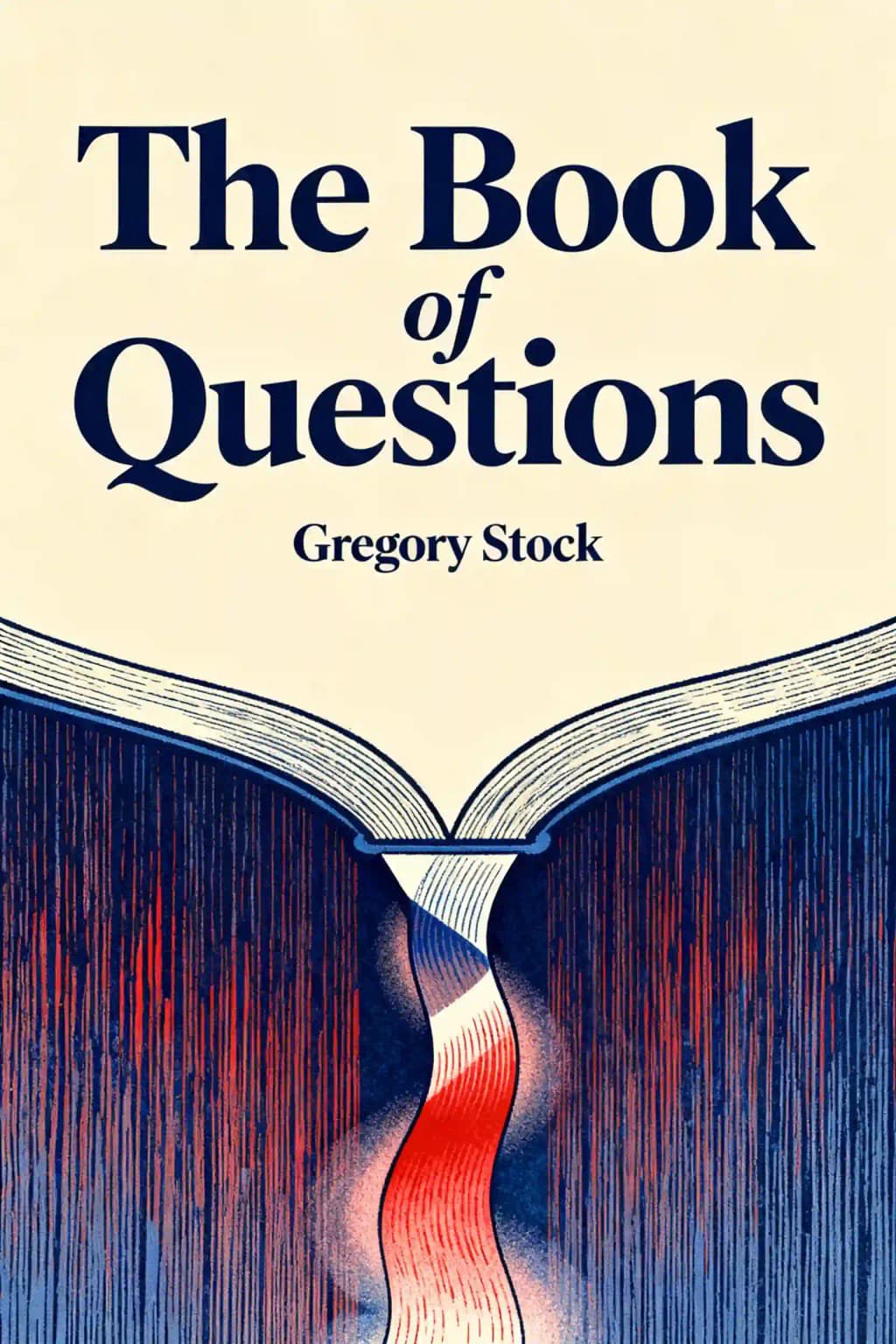
The true magic of "The Book of Questions" lies not in the answers but in the questioning itself. Each question serves as a mirror, reflecting aspects of ourselves we rarely examine. When asked what you would save from your burning house after family and pets, your instinctive response reveals what you truly value beyond the obvious. These aren't mere thought experiments but windows into our authentic selves.
Questions bypass our practiced social personas to reveal deeper truths. When asked if you judge others by higher or lower standards than yourself, your honest answer exposes biases you might not acknowledge in everyday life. Similarly, asking whether you work harder to earn praise or avoid criticism reveals motivational patterns that drive your behavior beneath conscious awareness.
The most powerful questions create discomfort precisely because they force us to confront contradictions in our values. Would you rather be happy but slow-witted, or unhappy yet bright and creative? This question reveals whether we value contentment over intellectual capacity-a tradeoff we rarely consider explicitly. Would you perform alone before a thousand people if someone promised a large charity donation? This exposes the tension between personal discomfort and social good.
Relationship questions serve as particularly revealing mirrors. Who is the most important person in your life, and what could you do to improve the relationship? This simple inquiry often reveals gaps between our stated priorities and actual behavior. If you could have anyone as a dinner guest, who would you choose? Your answer reveals intellectual curiosities and emotional connections that shape your inner landscape.
Questions about death provide perhaps the clearest reflections. What would your funeral be like if you died tomorrow? Who would speak, and what would they honestly say? This forces us to confront the legacy we're creating and whether our lives align with our values. If you learned you were going to die in a few days, what regrets would you have? This question strips away pretense to reveal what truly matters.
The book's genius lies in its recognition that questions create spaces for authentic connection. When we ask each other these questions, we move beyond small talk to meaningful exchange. We discover commonalities in unexpected places and differences that enrich rather than divide. The questioning process itself becomes a form of intimacy-a way of saying "I want to know who you really are."
Perhaps most valuable is how these questions teach us to question ourselves. They develop our capacity for self-reflection and moral reasoning. By regularly engaging with such inquiries, we become more thoughtful about our choices and more intentional about our lives. We learn to examine our assumptions and consider alternatives to our habitual patterns.
In a world of easy answers and algorithmic certainties, "The Book of Questions" reminds us of the power of inquiry itself. It shows us that the most important answers aren't found externally but through honest self-examination. By embracing questioning as a way of life, we develop not just better answers but better questions-and ultimately, more examined and meaningful lives.