Capítulo 1
The Deadly Trap Hiding in Plain Sight
Have you ever wondered why some of the most devoted Christians suddenly abandon their faith? Why thriving churches split overnight? Or why marriages that seemed rock-solid crumble without warning? The answer might be simpler-and more insidious-than you think. In "The Bait of Satan," John Bevere exposes what may be the most dangerous spiritual trap of all: offense.
This isn't just another Christian living book. Since its publication, it has transformed countless lives and saved numerous churches from division. Oprah Winfrey once featured it on her "Super Soul Sunday" recommendations, and it's been translated into over 40 languages. What makes this message so powerful? Perhaps it's because Bevere doesn't just theorize-he writes from personal experience, having walked through the painful process of recognizing and overcoming offense in his own life. As Jesus himself warned that offenses would inevitably come, this book provides the spiritual roadmap to navigate them without becoming ensnared.
Capítulo 2
Satan's Most Effective Trap
Unlike the cartoonish devil with a pitchfork and obvious temptations, Satan operates through subtle deception. His most effective traps are both hidden and baited, designed to entice rather than frighten. One of his most insidious baits is offense-a trap so common yet so devastating that Jesus specifically warned his disciples about it.
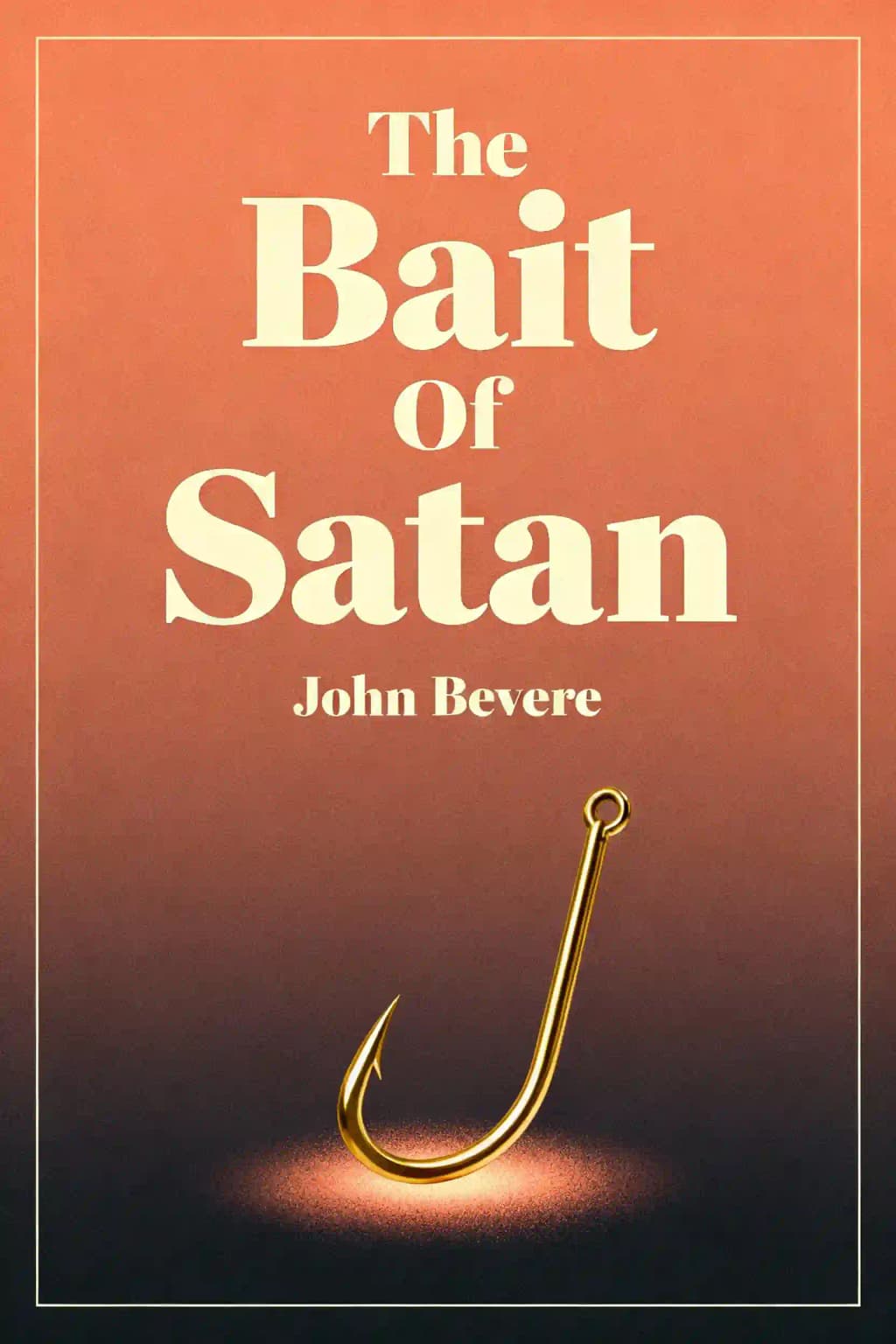
The Greek word for "offend" (skandalon) originally referred to the part of a trap where bait was attached-literally laying a trap in someone's way. When we take offense, we're literally taking Satan's bait. While the offense itself isn't deadly if left in the trap, consuming it produces toxic fruit: hurt, anger, jealousy, resentment, strife, bitterness, hatred, and envy. These emotions don't just simmer inside us-they manifest as broken relationships, division, betrayal, and spiritual backsliding.
What makes this trap particularly dangerous is that those caught in it rarely recognize their condition. They're so focused on the wrong done to them that they can't see how their response is poisoning their own spiritual life. They feel justified in their anger and resentment, convinced they're innocent victims rather than willing participants in Satan's scheme.
The enemy keeps a person in an offended state by keeping the offense hidden, cloaked with pride. Pride prevents us from admitting our true condition, distorts our vision, and hardens our heart. When we're hurt, we often deny it, convincing ourselves we're fine when we're not. Like the Laodicean church who thought they were "rich, wealthy, and in need of nothing," we become blind to our true spiritual poverty.
The cure? Jesus offered two solutions: buy gold refined in fire, and anoint your eyes to see clearly. Pure gold is soft and pliable, while alloys make it hard and less flexible. Similarly, a pure heart is tender, but sin hardens it through offense and bitterness. God refines us through afflictions and trials, separating impurities from godly character. When we blame others and defend ourselves, we're blind to our true condition. Only when we stop blaming others and recognize our own sin can we truly repent.
Capítulo 3
When Love Grows Cold
Jesus identified widespread offense as a sign of the end times, warning that "many will be offended" before His return. These offended ones are specifically Christians whose agape love has grown cold-not merely society in general. While phileo love (brotherly affection) is conditional and based on reciprocation, agape love is God's unconditional love that gives regardless of response.
Our expectations create the perfect breeding ground for offense. When we require certain behaviors from others, we set ourselves up for disappointment. The higher our expectations, the greater potential for offense. Instead, we must develop faith in God's spiritual law of sowing and reaping-understanding that when we sow love, we will reap love, even if not from the same field or as quickly as we'd like.
When hurt, we construct walls to protect ourselves, becoming selective about who we allow close. Scripture warns that "an offended brother is harder to win than a fortified city." These walls eventually become prisons, trapping us in fear and self-protection. Offended Christians become inward-focused, consumed with preventing future injuries rather than giving unconditional love.
Like the Dead Sea that only takes in water but gives none out, offended Christians take in life but cannot release it due to fear. The resulting stagnation creates strongholds-fixed patterns of reasoning that filter everything through past hurts. These strongholds war against truly knowing God, making it impossible to believe His goodness and faithfulness.
Jesus warned that many false prophets would arise and deceive the offended whose love has grown cold. These "wolves in sheep's clothing" target the wounded and tell people what they want to hear rather than what they need to hear. They have a form of godliness but deny its power-specifically the power to transform an unforgiving heart into a forgiving one.
Offense follows a clear progression: offense leads to betrayal, and betrayal leads to hatred. Offended people build protective walls focused on self-preservation, making them capable of betrayal-seeking their own protection at another believer's expense. The closer the relationship, the more severe the betrayal. This ultimate abandonment of covenant cannot be restored without genuine repentance.
Capítulo 4
Joseph's Choice: Bitterness or Trust
When we've been genuinely mistreated, do we have the right to be offended? Joseph's story provides a powerful answer.
As Jacob's favored eleventh son, Joseph was despised by his brothers for his special coat and prophetic dreams showing them bowing to him. Their jealousy led them to throw him in a pit and sell him as a slave to Ishmaelites for twenty shekels of silver. This betrayal was culturally devastating-they stripped away his inheritance, family connection, and identity. Sold into Egyptian slavery, Joseph faced a life where he and all his descendants would remain slaves forever-a fate crueler than death.
In his prison cell, Joseph faced a critical choice: become bitter toward his brothers and God, or maintain hope in God's promise despite his circumstances. He could have blamed everyone for his suffering-his brothers for betrayal, Potiphar's wife for false accusations, the cupbearer for forgetting him. Instead, Joseph chose to trust God's sovereignty even when he couldn't see the purpose.
His time in prison became a crucible that prepared him for leadership. When Pharaoh had disturbing dreams no one could interpret, Joseph was brought before him and not only interpreted the dreams but offered wise counsel about preparing for the coming famine. This led to his promotion to second-in-command over all Egypt.
When his brothers later came seeking food during the famine, Joseph chose mercy over revenge, recognizing that "what they meant for evil, God meant for good." Joseph's story demonstrates that no person can derail God's plan for your life-only you can do that through offense and bitterness.
Like the Israelites who missed their Promised Land through offense with Moses and God, we risk aborting God's purpose when we become offended by injustice. God has already seen every adverse circumstance we'll face and prepared "the way of escape." The question is whether we'll take that escape route or remain trapped in offense.
Capítulo 5
When Leaders Wound Us
While betrayal from siblings is painful, rejection from a father figure is even more devastating. The relationship between King Saul and David exemplifies paternal betrayal.
Their connection began when Samuel anointed David as Israel's future king while Saul was being tormented by an evil spirit. David was brought to play harp for Saul, likely seeing this as God beginning to fulfill the promise of kingship. After killing Goliath, David gained Saul's favor, married his daughter, befriended Jonathan, and lived in the palace.
Everything changed when women sang "Saul has slain his thousands, and David his ten thousands," causing Saul to become jealous and twice attempt to kill David. David fled to the wilderness, hunted by the very man who once favored him, questioning why God would allow this betrayal from his mentor.
Despite Saul's murderous pursuit, David twice spared Saul's life, refusing to harm "the Lord's anointed" even when given perfect opportunities for revenge. When David and Abishai sneaked into Saul's camp while the army slept, Abishai urged David to kill Saul, presenting compelling reasons: Saul had murdered innocent priests, was actively trying to kill David, and God seemed to have delivered Saul into David's hands. Yet David refused, saying, "Who can stretch out his hand against the LORD'S anointed, and be guiltless?"
Many in the body of Christ cry out for spiritual fathers-leaders who will disciple, love and encourage them. Our nation has been losing father figures since the 1940s and 1950s. Like Saul, many leaders today prioritize their goals over nurturing those under them, viewing people as resources for their vision rather than seeing the vision as a vehicle to serve people.
When mistreated by those in authority, we face a critical test: will we avenge ourselves or trust God's justice? God deliberately places us in circumstances where others encourage us to protect ourselves, but this is not His way. Unlike many today who use their tongues as weapons, David wouldn't avenge himself but left judgment to God. Churches split, families divide, and marriages shatter through words launched in bitterness, even when the information shared is factual but motivated by impure intentions.
Capítulo 6
The Birth of Spiritual Vagabonds
God sometimes deliberately places people under corrupt leadership, as He did with young Samuel who served under Eli and his wicked sons. Despite their corruption-taking offerings by manipulation, committing fornication, and being spiritually insensitive-Samuel "ministered to the LORD before Eli." He didn't expose their wickedness or form committees to remove them; he understood that he was there to serve, not judge.
Today, believers leave churches too readily when they see flaws in leadership-whether it's how offerings are taken, how money is spent, or the pastor's preaching style. Instead of facing difficulties, they run to where conflict seems absent. But Jesus is the only perfect pastor.
In America, we often flee conflict rather than working through it, going from church to church seeking flawless leadership. God doesn't want us choosing churches like cafeterias; He places members in the body as He pleases, not as we please. When we're where God wants us, the devil will try to offend us to uproot us from our place.
Those who are planted in God's house flourish, but constantly transplanting yourself from church to church will diminish your spiritual root system and eventually kill your growth. Many believers hop between ministries seeking recognition, easily offended when not immediately validated.
Like fruit trees that grow stronger by enduring harsh weather by sending roots deeper, we need spiritual resistance to mature. The psalmist connects delighting in God's law with being unshakable: "Great peace have they which love thy law: and nothing shall offend them."
When you leave where God has placed you, your spiritual roots begin to shrink, making it easier to flee from future difficulties. Like Cain, whose offense with God led him to murder Abel, offended Christians become spiritual vagabonds-wandering from church to church with persecution complexes, believing everyone is against them. Their hearts become barren soil, poisoned by bitterness.
Capítulo 7
The Self-Protection Deception
When faced with church or ministry difficulties, we should leave only when God releases us, not when offended. Mature Christians (huios) are led by the Spirit rather than reacting emotionally to circumstances, unlike spiritual babies (teknon). Character develops through facing difficulties with obedience, just as Jesus "learned obedience by the things which He suffered."
Harboring offense creates a false sense of self-protection by deferring blame to others, preventing personal growth by avoiding responsibility for one's own flaws. When we run from difficult situations, God may permit it even when it's not His perfect will, as illustrated by Elijah who fled from Jezebel rather than completing his assignment, and Balaam who persisted in going against God's initial instruction.
Refusing to deal with offense provides only temporary relief while the root problem remains untouched. It's impossible to establish healthy relationships with someone who remains bitter from previous relationships. True healing requires humility, self-denial, and making another's well-being more important than our own, even when they've caused us great sorrow.
A sure foundation in Christ prevents us from acting hastily or being unstable in the face of trials. This foundation comes not from others' opinions but from God's revealed truth in our hearts. True spiritual foundation comes not from memorized Scripture or head knowledge, but from God's Word revealed personally to our hearts.
When relationships are founded on God's revealed will, we gain determination to work through seemingly impossible conflicts. The author shares how only knowing God had ordained his marriage kept him and his wife together through five extremely difficult years. Their marriage not only healed but grew stronger through forgiveness and learning from conflicts. God used their relationship to expose hidden flaws in both of them.
Capítulo 8
When God Allows the Shaking
When the enemy shakes, his purpose is destruction, but God shakes with a different purpose. Though Simon Peter received revelation of who Jesus was, he built his life on pride and self-confidence rather than Christ's character. Jesus didn't prevent Satan's sifting but prayed Peter's faith wouldn't fail, knowing this shaking would transform him.
Shaking serves five purposes: bringing us closer to our foundation, removing what's dead, harvesting what's ripe, awakening us, and unifying us with God. Peter's self-confidence was exposed when he denied Jesus three times after boldly declaring he'd die for Him.
Though both Peter and Judas rejected Jesus, their foundations differed dramatically. Judas never truly sought to know Jesus, serving with his own agenda. When shaken, Judas had no foundation to stand on-he was remorseful but only recognized Jesus as "innocent blood," not as Lord. His suicide was another act of independence from God's grace.
Satan attempts to distort God's character, portraying Him as withholding rather than generous. When Eve believed these lies, God's Word became law rather than life. The enemy still works this way today, projecting flaws of earthly authorities onto our perception of God. When we truly know God would never harm us and everything He does is in our best interest, we give ourselves freely to Him.
After his denial, Peter lost his natural confidence and saw the futility of his own will, making him a perfect candidate for God's grace. Though nearly shipwrecked in his faith, the foundation God laid remained. Jesus not only forgave Peter but restored him, transforming him into a central figure in the church who courageously proclaimed Christ before the very council responsible for His crucifixion.
Capítulo 9
The Offensive Christ
Peter explains that Christ is both a precious cornerstone to believers and a rock of offense to the disobedient. The modern understanding of "believe" has weakened to mere acknowledgment of facts rather than obedience. Scripture contrasts belief with disobedience, showing they're opposites.
Jesus wasn't just the gentle shepherd portrayed in Sunday school. He confronted and offended many during His ministry. He denounced Pharisees as "serpents" and "vipers," overturned money-changers' tables, and made hard demands of potential followers. His confrontational approach revealed people's true motives and often purged those not truly planted by God.
Jesus offended the Pharisees, His hometown, His own family members, His staff, and even some of His closest friends. When Lazarus became sick, the sisters sent word to Jesus, but He deliberately delayed two days before coming. By then, Lazarus had died. Both sisters expressed their disappointment: "Lord, if You had been here, my brother would not have died."
Even John the Baptist struggled with offense toward Jesus. After preparing the way for the Messiah and boldly declaring Jesus as "the Lamb of God," John found himself imprisoned while Jesus continued ministry without intervening. John sent disciples to ask, "Are You the Coming One, or do we look for another?" After demonstrating miraculous signs, Jesus responded with a gentle warning: "Blessed is he who is not offended because of Me."
When you obey the Spirit of God, people will inevitably be offended by you. Jesus said those born of the Spirit move like the wind-unpredictable and often misunderstood. Don't abort the flow of the Spirit to please men. When you live for God's will rather than fulfilling human desires, you'll suffer opposition, especially from religious people who believe God only operates within their parameters.
Capítulo 10
The Balance: Avoiding Unnecessary Offense
Jesus demonstrated a different approach to offense when confronted about paying temple tax. Though He was the Son of God and rightfully exempt from paying tax for His Father's temple, Jesus instructed Peter to catch a fish with a coin in its mouth to pay for both of them, saying "Nevertheless, lest we offend them..." This reveals Jesus's willingness to forgo His rights to avoid unnecessary offense.
We are called to liberty as God's children, but this freedom isn't for self-serving purposes. Paul clarifies that liberty is privilege to be used in serving others. The difference between slavery and servanthood is profound: slaves have to serve while servants live to serve. Slaves do minimum requirements while servants reach maximum potential. Slaves feel robbed while servants give freely. Slaves are bound while servants are free. Slaves fight for rights while servants lay them down.
Jesus warned strongly against causing others to stumble, saying it would be better to have a millstone hung around one's neck than to cause offense to "little ones." While Jesus did offend people, it was always through obeying the Father and serving others-never by demanding His own rights.
Paul provides a clear guideline for exercising Christian liberty: "Let us pursue the things which make for peace and the things by which one may edify another." The question isn't merely whether something is permissible but whether it builds others up. "All things are lawful for me, but not all things are helpful; all things are lawful for me, but not all things edify."
Capítulo 11
The Unforgiveness Trap
Jesus meant exactly what He said: "If you do not forgive, neither will your Father in heaven forgive your trespasses." Unlike our culture where people often don't mean what they say, Jesus speaks with absolute integrity. He emphasized this principle repeatedly throughout the Gospels-our forgiveness depends on how we forgive others.
In the parable of the unforgiving servant, a man who was forgiven an impossible debt of $14.5 billion refused to forgive a fellow servant who owed him about $4,000. When the king learned of this, he was furious and delivered the unforgiving servant to torturers until he could pay his original debt-an impossible task. Jesus concludes with the sobering warning that our heavenly Father will do the same to us if we don't forgive our brothers from the heart.
This parable reveals three critical lessons: First, the unforgiving servant is turned over to torture-which can manifest as physical or mental agony inflicted by demonic spirits. Medical science has linked unforgiveness to diseases like arthritis and cancer. Second, the servant must pay his original unpayable debt, suggesting believers who permanently refuse to forgive may forfeit salvation. Third, God will apply this judgment to any believer who refuses to forgive from the heart.
When we're wronged, human nature demands payment for the perceived debt. Our court system exists to avenge injured parties, but this isn't God's way for believers. Romans 12:19 instructs, "Beloved, do not avenge yourselves, but rather give place to wrath; for it is written, 'Vengeance is Mine, I will repay,' says the Lord."
Under the Old Testament covenant, legal rights existed to repay evil for evil, but Jesus established a radically different standard for believers, saying, "You have heard that it was said, 'An eye for an eye and a tooth for a tooth.' But I tell you not to resist an evil person." Christ eliminates any gray areas for grudges, commanding us not only to forgive but to be willing to open ourselves to being taken advantage of again.
Capítulo 12
Finding Freedom
Freedom from offense requires effort-Paul compares it to exercise. Just as physical exercise prevents injury, spiritual exercise conditions our hearts to handle offenses without permanent damage. Our maturity level determines how well we manage offenses, with some requiring more effort to resolve than others.
The first step toward healing is acknowledging we're hurt, often difficult due to pride. Fasting can help break "bonds of wickedness" and free us from oppression. Even after initial forgiveness, we must strengthen our hearts against potential relapses by actively praying for those who've hurt us-not with dry obligation but with genuine passion for their wellbeing.
To achieve higher freedom, the Lord instructs us to pray for those who've hurt us. At first, these prayers may feel dry and obligatory, but Psalm 35 provides the breakthrough pattern-David prayed for his enemies as if they were close brothers. The transformation happens when we shift from praying for them for our sake to praying for them for their sake, asking God to bless them with the very things we desire for ourselves.
Sometimes complete healing requires confrontation. Despite believing we're healed, the Holy Spirit may direct us to seek reconciliation. This involves humbling ourselves, confessing wrong attitudes, and asking forgiveness. The result is strengthened relationships and mature love-not the initial "honeymoon love" that sees no faults, but a deeper love that persists despite awareness of imperfections.
We grow most during difficult times, not easy ones. Hard places are unavoidable parts of our journey with the Lord and essential to our maturation process. Overcoming obstacles makes us stronger and more compassionate, deepening our love for Jesus. Recovery from offense is always a choice-some get hurt and never recover.
Capítulo 13
The Path to Reconciliation
Jesus teaches that what we are in our heart is how we truly are. Unaddressed anger can lead to hatred, putting us in danger of judgment. When someone is offended with us, we should urgently seek reconciliation-not to prove ourselves right but to help our stumbling brother. Whether the offense resulted from misunderstanding, miscommunication, or actual wrongdoing doesn't matter. Our priority must be reconciliation through humility, even if the offense isn't our fault.
When approaching someone we've offended, we must pursue peace through humility at the expense of our pride. If they lash out, our natural response is to defend ourselves, but this only fuels their fire of offense. Instead, we should listen without interruption, acknowledge their feelings, and sincerely apologize. Sometimes they're right in their assessment of us, and we must admit it. Godly wisdom is willing to yield and isn't afraid to defer to another's viewpoint as long as it doesn't violate truth.
When someone offends us, Jesus instructs us to go to them-not for condemnation but reconciliation. This parallels how God restores us to Himself-He reached out while we were still sinners, before we acknowledged our offense. The word of reconciliation begins with the understanding that we all have sinned against God. God's goodness, not condemnation, leads us to repentance.
If we keep God's love as our motivation, we will not fail. When we love others as Jesus loves us, we'll be free even if others refuse reconciliation. Romans 12:18 instructs us to live peaceably with all "if it is possible" and "as much as depends on you"-acknowledging that sometimes others refuse peace or reconciliation would require compromising truth.
Jesus called us to be peacemakers, not peacekeepers. Peacekeepers avoid confrontation to maintain superficial peace, while peacemakers lovingly confront with truth for lasting reconciliation. God's love never fails, never fades, and is not easily offended-this love is the key to freedom from Satan's trap of offense.