The Avoidable War
The Dangers of a Catastrophic Conflict Between the US and China
Visão geral de The Avoidable War
In "The Avoidable War," former Australian PM Kevin Rudd delivers the definitive roadmap for preventing US-China catastrophe. Praised as the best single-volume analysis on China relations, this 2022 geopolitical must-read reveals how "managed strategic competition" could save millions of lives.

Temas principais em The Avoidable War
- us-china strategic competition
- thucydides trap
- xi jinping's worldview
- managed strategic alignment
- indo-pacific security dynamics
Citações de The Avoidable War
Xi's understanding of America exceeds any American leader's understanding of China.
Washington no longer believes in China's peaceful rise.
The deepening chasm of distrust has grown over years, with each side viewing the other's diplomatic language as fiction.
The challenge for both nations lies in managing this rivalry without triggering the very conflict that historical precedent suggests is likely.
Personagens de The Avoidable War
- Kevin RuddAuthor, former diplomat, and expert on China
- Xi JinpingPresident of China and General Secretary of CCP
- Deng XiaopingFormer Chinese leader known for market reforms
- Joe BidenU.S. leader who hosted Xi during his vice presidency
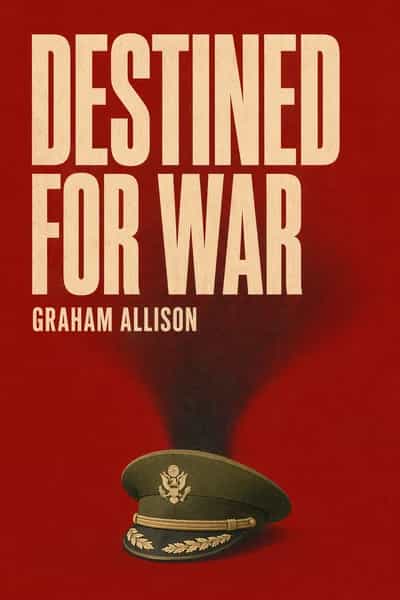
- Graham AllisonHarvard scholar who defined the Thucydides's Trap
Baixar resumo de The Avoidable War
Obtenha o resumo de The Avoidable War como PDF ou EPUB gratuito. Imprima ou leia offline a qualquer momento.
Perguntas Frequentes Sobre Este Livro
The Avoidable War analyzes escalating tensions between the U.S. and China, arguing that conflict is not inevitable despite deepening distrust. Kevin Rudd, a former Australian prime minister, explores Xi Jinping’s worldview, identifies 10 potential flashpoints (like Taiwan), and proposes a framework of “managed strategic competition” to prevent war. The book combines historical analysis, geopolitical forecasting, and policy recommendations aimed at fostering competitive coexistence.
This book is essential for policymakers, students of international relations, and readers interested in U.S.-China relations. It offers insights for professionals in defense, diplomacy, or global business seeking to understand systemic risks and strategies for de-escalation. Rudd’s blend of academic rigor and practical diplomacy makes it accessible to both experts and informed general audiences.
Rudd’s central concept advocates for structured rivalry where the U.S. and China compete economically and ideologically without military conflict. It involves mutual deterrence, diplomatic channels to manage crises, and agreements to avoid unintended escalation. Critics note the idea lacks detailed implementation steps but praise its focus on coexistence over confrontation.
Unlike Allison’s “Thucydides Trap” framing, which emphasizes historical inevitability, Rudd argues war is preventable through deliberate policy choices. While both analyze U.S.-China rivalry, Rudd prioritizes actionable solutions like transparency measures and crisis hotlines, whereas Allison focuses on historical precedents.
- Distrust drives conflict: Misperceptions about regime survival and hegemony fuel tensions.
- Taiwan as a flashpoint: 5 of 10 conflict scenarios involve Taiwan.
- Deterrence + diplomacy: Combines military preparedness with dialogue to avoid miscalculations.
- Xi’s ideological rigidity: China’s leader views U.S. containment as an existential threat.
Some experts argue Rudd’s “managed competition” framework is underdeveloped, lacking specifics on enforcement or balancing trade disputes. Others note his analysis of U.S. policymaking oversimplifies partisan dynamics. However, the book is widely praised for its nuanced exploration of Xi’s mindset and accessible synthesis of complex issues.
Rudd identifies 10 “concentric circles” shaping Xi’s ideology, including CCP legitimacy, nationalism, and the belief that the U.S. seeks to block China’s rise. He emphasizes Xi’s focus on total control, historical grievances, and China’s “rightful” global role, arguing these drivers make compromise difficult but not impossible.
The book details 10 scenarios, ranked by likelihood:
- Accidental naval clash in the South China Sea.
- Crisis over Taiwan’s formal independence declaration.
- Escalation from cyberattacks or economic coercion.
Rudd stresses that none are predestined but require proactive mitigation.
- On coexistence: “A principled peace… reinforced by mutual deterrence”
- On misjudgment: “The danger lies not in intent but in the mechanics of escalation”
- On solutions: “Verification through intelligence, effective deterrence—and mutual respect”
With U.S.-China tensions persisting over Taiwan, trade, and AI dominance, Rudd’s warnings about unmanaged rivalry remain urgent. The book provides a baseline for evaluating current policies, offering a structured lens to assess diplomatic developments or military posturing.
Rudd frames economic rivalry (e.g., semiconductor bans, Belt and Road Initiative) as inevitable but manageable. He advocates for “guardrails” to prevent disputes from spilling into military domains, stressing the need for bilateral crisis communication frameworks.
Taiwan is identified as the most likely trigger for conflict, with Rudd outlining scenarios ranging from blockade to invasion. He argues both sides must clarify redlines—for example, defining “strategic ambiguity” thresholds—to avoid misinterpretations during a crisis.