Capítulo 1
The Journey to Meaningful Work: Finding Your Life's Calling
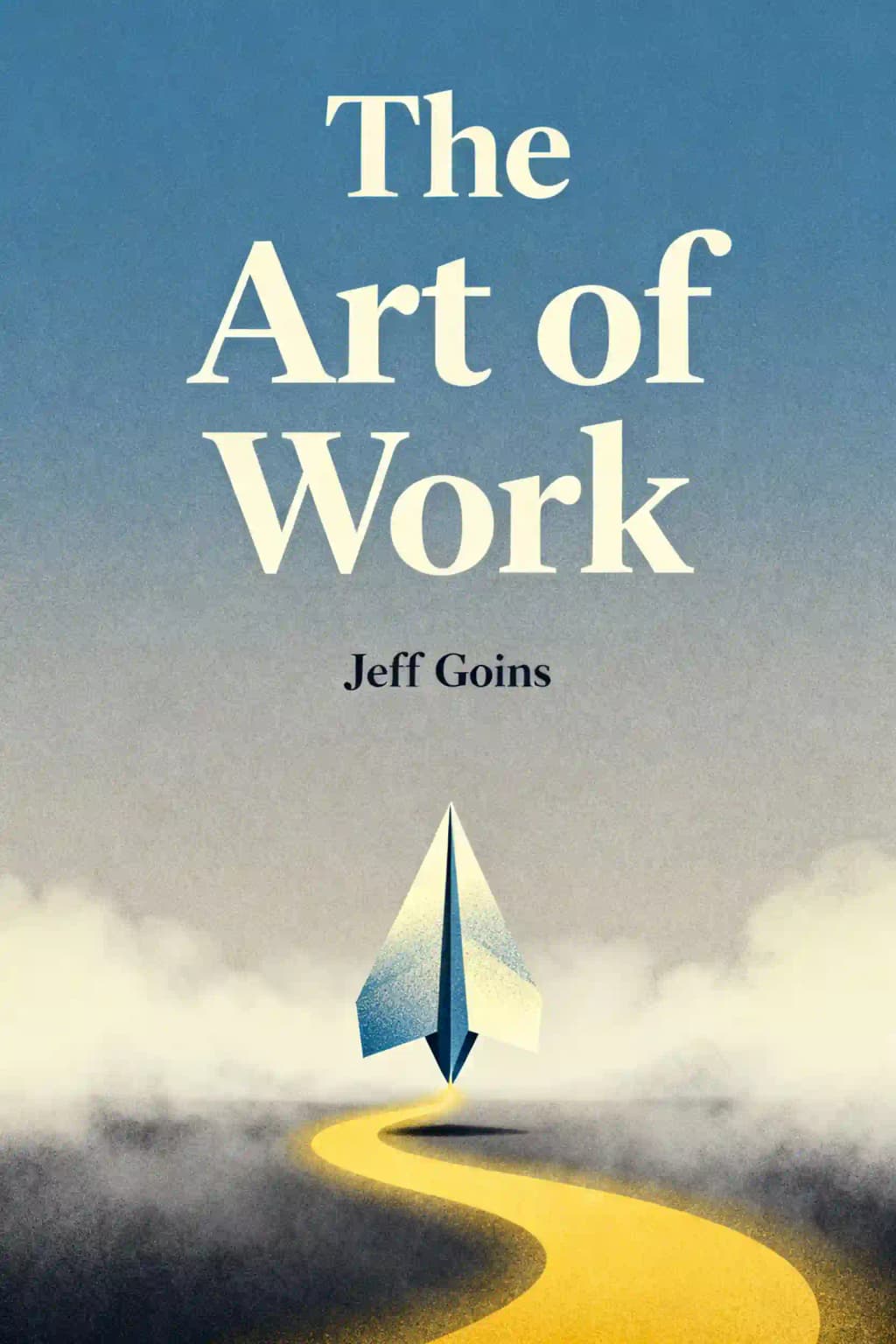
Have you ever felt that nagging sense that you were meant for something more? That beneath the daily grind lies a deeper purpose waiting to be discovered? You're not alone. In "The Art of Work," Jeff Goins explores this universal human quest through compelling stories of ordinary people who found extraordinary purpose. This isn't just another career guide-it's a roadmap for discovering what you were born to do. The book has resonated with millions seeking meaning in their work, including celebrities like Tim Ferriss who praised its "actionable insight about finding your calling." Since its 2015 publication, it has sparked a movement of purpose-seekers in an era when nearly 70% of workers report feeling disengaged from their jobs. Perhaps what makes this book so powerful is that Goins doesn't just tell us how to find our calling-he shows us through the transformative journeys of real people who discovered that a calling isn't something you simply choose, but something that chooses you.
Capítulo 2
When Life's Plan Goes Horribly Wrong
"A calling is not some carefully crafted plan. It's what's left when the plan goes horribly wrong." These words frame the remarkable story of Eric and Garrett Miller, whose lives changed forever when five-year-old Garrett was diagnosed with medulloblastoma-a golf ball-sized brain tumor. After surgery, Garrett was left blind, mute, and paralyzed with only a 50% chance of survival.
In this devastating moment, Eric had an epiphany that would transform their family's perspective: none of us are guaranteed tomorrow. "We needed to be living life all of the time," he realized. This wasn't just philosophical musing-it became their family's guiding principle. When Garrett met blind tandem cyclist Matt King, a spark ignited in the boy. Despite his limitations, Garrett was determined to ride again. Six months later, after enduring a year of treatments, six-year-old Garrett completed his first triathlon with his father-exactly one year after his debilitating surgery.
The story doesn't end there. Fourteen years later, Garrett has competed in over a dozen triathlons, climbed Machu Picchu, and earned Eagle Scout rank. Though still legally blind, he's accomplished what doctors deemed impossible. When asked if he ever wondered what life would've been like without the tumor, Garrett simply replied, "I've never really thought about it." His father added, "These are the cards we've been dealt, and we'll just play them the best we can."
At some point in your life, you believed you were born for something significant. Then life happened-parents, professors, and practicality talked you out of your dreams. You made excuses, calling it "growing up," but that small voice still whispers in quieter moments, taunting you with the shadow of your unlived life.
The Millers' story answers a question many of us fear: What happens when the life you end up living doesn't look like the one you planned? Their experience suggests that remarkable people differ from others not by circumstance but by mindset-seeing difficulties as opportunities. We can't control life's surprises, but we can control our reactions, potentially leading to something better than we ever imagined.
Capítulo 3
Listening for Life's Subtle Clues
Finding your calling isn't about having a dramatic epiphany where your life's purpose is suddenly revealed. It's about developing awareness-learning to listen for the subtle clues your life is constantly providing. This requires both patience and practice, as your purpose emerges not from getting what you want, but from how you respond to life's circumstances, especially the painful ones.
Most people bounce between jobs seeking happiness but finding the same complications wherever they go. Viktor Frankl, who survived the Holocaust, discovered that humans don't primarily seek pleasure-they crave meaning. Meaningful life requires three elements: a project to work on, a significant relationship, and a redemptive view of suffering. True satisfaction comes not from avoiding hardship but from rising above our desires to do what's required of us.
Not all fear should be avoided. Some fears-like the fear of not answering your calling-are worth heeding. When Jody Noland's husband Mike was diagnosed with stage four liver cancer, she urged him to write letters to his children, having seen the impact such letters made in her friend Larry's family after his death. Despite her pleas, Mike denied the severity of his condition and never wrote the letters. After his death, his daughter asked if he'd written any letters like those Jody had helped others write. This devastating moment forced Jody to confront her calling, eventually leading her to create a letter-writing program for the terminally ill. "I would rather go for it and fail than not try," she realized.
Every great story begins with ordinary life before transformation occurs. From Belle in Beauty and the Beast to Luke Skywalker in Star Wars, protagonists first appear dissatisfied with their current existence, sensing there must be more. This feeling of discontent isn't mere dreaming-it's awareness preparing us for our calling.
Most people claim they don't know their purpose, but the real question isn't about direction but certainty: "Can you promise I won't fail?" No one can promise that. Clarity doesn't precede action-it comes from it. Frederick Buechner advises us to "listen to your life," suggesting that discovering vocation requires cultivating awareness rather than experiencing dramatic moments of revelation. When you pay attention to life's lessons, seemingly disjointed events transform into a meaningful narrative.
As Jody Noland's journey demonstrates, no experience is wasted in finding your calling. Her sixteen years at IBM, where she developed the gift of affirmation during employee reviews, perfectly prepared her for helping people express love to others through letters. "God wastes nothing," she says. The key is listening to your life-imagining your death and considering what you'd regret not doing.
Capítulo 4
The Hidden Network of Mentors
Finding your calling is not a solitary journey-it requires a team of mentors, and help is available everywhere you look if you're willing to recognize it. Ginny Phang's story illustrates this perfectly. Getting pregnant at twenty-three devastated her life in Singapore. Despite rejection from family, ending her relationship, and facing public ridicule, she chose to keep her baby. Living with her grandfather, she prepared for motherhood alone, often feeling suicidal during her pregnancy.
After giving birth and returning to an unfulfilling secretarial job, she started an online business educating mothers about breastfeeding. Through an internet friend named Amy, Ginny discovered her calling as a doula. Though initially panicking at her first birth, she found the experience "exhilarating, like slipping into an old pair of shoes," revealing her natural talent for supporting women through childbirth.
In medieval times, apprentices worked for masters for seven years before becoming journeymen, then spent additional years perfecting their craft before achieving mastery. With the Renaissance's rise of universities, this system declined, leaving modern individuals to discover their potential largely alone. But the self-made approach is a cruel myth-we all need guides.
Every extraordinary person encounters mentors who help them grow into who they were born to be. Success is always a story of community, with both willing teachers and accidental contributors shaping our paths. Our job isn't to find these mentors but to recognize them when they appear.
True mentoring is harder to practice than discuss. Finding good mentors is challenging partly because few people have been mentored themselves. Your apprenticeship rarely looks as expected-the best mentors challenge you and force growth. Throughout life, we encounter many mentors whose importance we often recognize only in retrospect.
Ellen Frank's Illumination Atelier serves as a haven for live-in artists studying under her mastery. Unlike modern education's critique-based approach, Ellen teaches through gentle affirmation: "Yes, and why not try this?" This intimate mentorship model contrasts sharply with passive lecture halls, as some interns even surpass her in certain techniques-the true power of apprenticeship being not information exchange but skill multiplication.
The smartest approach to finding mentors is utilizing tools already available to us. While traditional mentors seem scarce, we already have access to wisdom and experience through friends, former coaches, and acquaintances willing to meet for coffee. The best mentors aren't found through searching but by recognizing those already present in our lives.
Capítulo 5
The Painful Path to Mastery
Your calling demands more than mere effort-it requires dedicated work and practice that reveals both your strengths and limitations. Stephanie Fisher's American Idol audition painfully demonstrated this truth. Despite claiming to have "been practicing her whole life," her performance was terrible, with Simon Cowell bluntly telling her, "Honestly, you can't sing, sweetheart." When she pleaded for more time to "get un-nervous," Simon responded, "We'd need years, Stephanie," revealing a harsh truth that no amount of immediate practice could fix.
We've all witnessed the familiar talent show narrative: dreamers bombing spectacularly, followed by their protests that they've "been practicing their whole life." Yet we also see unexpected successes like Susan Boyle. The traditional explanation is simple: talent. But how do we explain Hillary Scott and Colbie Caillat, both rejected by American Idol before achieving Grammy-winning success?
Researchers now argue that what we consider "natural talent" is largely the result of practice. Geoff Colvin claims "talent means nothing like what we think it means," suggesting that even when natural ability exists, it's irrelevant without rigorous training. Caillat herself admitted the Idol judges were right to reject her: "I was shy. I was nervous... I wasn't ready for it yet." Her rejection became valuable feedback that pushed her to improve.
Many of us were raised with the comforting notion that trying our best is what matters. The difference between success and failure often comes down to mindset. Psychologist Carol Dweck identifies two perspectives: the fixed mindset (abilities are finite) and the growth mindset (potential is unlimited). With the growth mindset, the goal isn't to be the best in the world but to be better than yesterday.
The concept of "deliberate practice," coined by psychologist K. Anders Ericsson, reveals that excellence requires not just any practice, but a specific kind that stretches and grows you. This painful practice typically spans about ten thousand hours-roughly the length of a traditional apprenticeship. But it's not just about time; it's about quality.
Daniel Coyle describes "deep practice" as repeated tasks that end in failure until you finally succeed, learning not just the right way but the best way. Deliberate practice requires three elements: a proper context (time, energy, trainers, facilities), activities that aren't "inherently motivating" (if it's enjoyable, you aren't growing), and the willingness to push through discomfort to the point of exhaustion. As Tom Hanks says in A League of Their Own, "It's supposed to be hard. If it wasn't hard, everyone would do it. The hard is what makes it great."
Capítulo 6
Building Bridges, Not Taking Leaps
Discovering your calling isn't an epiphany but a series of intentional decisions-less like a giant leap and more like building a bridge. Ben and Kristy Carlson exemplify this through their journey from leadership development in South Africa to starting a coffee business in Burundi. Despite language barriers and cultural challenges, they pursued their passions. "I can wake up, drink and talk about coffee all day long and not get tired," Ben said. Their formula combined what they loved with what the world needed.
The myth that people who find their calling "just know" what they're meant to do is a harmful fiction. Most people don't have an intuitive sixth sense about their purpose. Finding your calling is an intentional process marked by trust and choice, not magical certainty. When asked if coffee production was what they were born to do, Kristy Carlson explained they could do many things, but their business incorporated both their strengths and passions while helping farmers.
Finding your calling follows three key stages. First, you hear the call-a unique summons that many miss without proper guidance. Second, you must respond through action, not just words-persistence matters more than perfect understanding. Third, you begin to believe, discovering that your previous experiences have prepared you despite feeling unready. A calling requires practical response through small, intentional steps that reveal new opportunities.
In college, I serenaded a girl named Lane with a guitar song asking her to a dance-in front of her roommates-only to be rejected. I had built a fantasy relationship without ever developing a real connection with her. Similarly, we often fantasize about our dreams from afar, saving all our passion for some dramatic moment when we'll "take the leap," rather than doing the actual work required.
The worst mistake you can make with a calling is believing in the myth of the leap instead of understanding that dreams, like relationships, require time, routine work, and bridge-building. The phrase "I don't know what to do" often kills dreams before they begin. Bryan Allain suggests thinking of life's journey not as a flat, predictable map but as a complex globe-you don't need every detail planned to begin. "Say you live in Kansas but long for the beach," he explains. "Don't stay home because you're unsure which beach spot you want. Just get out of Kansas and head toward water."
Capítulo 7
Learning from Failure's Wisdom
Failure isn't what prevents us from success-it's what leads us there. Our calling often requires several attempts before we get it right. Matt McWilliams's journey continued through multiple career setbacks. After losing his political job, he designed websites for clients until a friend invited him to co-found an insurance lead generation company. Though initially reluctant, Matt eventually joined and helped grow the business to $20 million in revenue. Yet his perfectionism and poor treatment of colleagues led to his second firing-just before his wedding.
After six months off, Matt joined a company selling instructional DVDs, winning industry awards before leaving to start his consulting business. Through repeated failures and pivots, Matt ultimately discovered his true calling. His story demonstrates that finding your life's work often comes not through immediate success, but through learning from setbacks and remaining flexible enough to change direction.
Like a basketball player who can change direction while keeping one foot planted, pivoting allows us to adjust course when facing obstacles. Groupon exemplifies this principle-originally launched as "The Point," a platform for organizing people around social causes, the company faced financial crisis during the 2008 recession. When founder Andrew Mason reluctantly tried a new business model focused on group discounts, Groupon was born, eventually reaching a $13 billion valuation.
Successful people and organizations don't succeed despite failure; they succeed because of it. Every calling encounters setbacks, but the ability to pivot-to learn from failure rather than be defeated by it-determines success. As Einstein, Franklin, and Jobs demonstrated, failure becomes your greatest teacher when you're willing to learn from it.
Samuel Adams-not the beer maker but the Revolutionary leader-exemplifies how failure precedes purpose. Before becoming "the Man of the Revolution," Adams failed as a lawyer, maltster, and businessman, disappointing his family until finding his true calling in political writing. Through his words, he roused Washington, Jefferson, and others to the cause of independence.
Every calling includes a "wilderness period" that looks like failure to outsiders but serves as essential preparation. When you feel furthest from your purpose, you're often already on the right path. The difference between temporary setbacks and permanent failure lies in recognizing hardship as an opportunity to learn while remaining vigilant not to succeed at the wrong things.
Capítulo 8
The Portfolio Life: Your Multifaceted Calling
Your calling isn't just one thing but a combination of several things. The key is becoming a master of some rather than a jack-of-all-trades. Jody Maberry's journey illustrates how callings can emerge from places rather than voices. After a transformative trip to Yellowstone during college, he abandoned his finance career path, eventually moving to Washington State with no job, friends, or security-just $300 and a deep connection to Deception Pass State Park. Though he initially worked as a financial analyst, a friend's casual mention of park ranger positions changed everything.
Many successful people live what Keith calls "a portfolio life," meaning you aren't just one thing but a combination of roles to embrace. By 2020, freelancers will make up nearly half the American workforce, rising to a majority by 2030. We're not robots programmed for one task-we're multifaceted beings with varied interests. The portfolio life concept, coined by Charles Handy, reframes work as a complex collection of activities rather than a monolithic career. Handy identifies five work types: fee work, salary work, homework, study work, and gift work.
True mastery transcends mere competence or popularity-it means approaching life as creative work and understanding your potential. As Peter Senge notes, it "goes beyond competence and skills." In our expedient world, we've lost the concept of craft and excellence. Yet masters like James Joyce persevere despite criticism, knowing their allegiance is to a higher calling than pleasing the masses.
Dorothy Sayers proposed a revolutionary idea about work: we should approach it like play-something done for its own sake. "The habit of thinking about work as something one does to make money is so ingrained," she wrote, suggesting we focus on "the work done" rather than financial rewards. Mihaly Csikszentmihalyi's research confirms this, showing that increases in wealth don't necessarily make people happier once basic needs are met. Instead, happiness comes from "flow"-the intersection of challenge and competency.
After relocating for a promotion as a park ranger, Jody Maberry realized his dream job was costing him time with his family. He left the ranger position, got an MBA, and joined a construction company. Yet the parks kept "tugging" at him. Today, Jody works as a business consultant and hosts The Park Leaders Show podcast, which provides training for rangers. His former manager told him, "You may miss being a park ranger, but if you can make this podcast work, you will impact more people than you ever could working in a park." Jody realized he "was called to parks, not to be a park ranger," and that a calling isn't just a position but "a life lived well."
Capítulo 9
Creating Your Life's Masterpiece
Your calling is not a job. It is your entire life. In rural Uganda, I met Sam, who lived in a mud hut with his wife Christine, their son Augustine who was deaf, and their nine-year-old niece Kevin whom they'd taken in after her mother disappeared. Despite losing twin baby boys and facing significant hardships, Sam had clear goals-he needed five million Ugandan shillings (about $2,000) to send his son to a special needs school and build a better house. His dream wasn't for himself but for his family, showing how our work can become something generous rather than self-serving.
I always thought pursuing a dream was inherently selfish until I got everything I wanted. When I told my boss of seven years I was leaving to work for myself, he wasn't disappointed but proud: "I've been waiting for this conversation." With enough savings to live on for months, I began working independently. But I faced an unexpected problem-without financial pressure, I lacked motivation. After seeing work as merely a means to earn money for so long, I struggled to find purpose when that incentive disappeared.
In "Mr. Holland's Opus," a frustrated music teacher tries to compose his masterwork while teaching. Despite viewing his teaching job as temporary, Holland inspires countless students while slowly working on his symphony. When he's fired after decades of service, he discovers hundreds of former students gathered to celebrate his impact. The state governor, his former student, tells him: "Mr. Holland, we are your symphony." He realizes the "interruptions" to his calling were actually its fulfillment.
When asked what kind of writer I wanted to be, I hesitated, secretly desiring fame and fortune but knowing I needed a more thoughtful answer. Finding your calling isn't just about choosing an activity-it's about discovering your identity. As May Sarton wrote, "Now I become myself. It's taken time, many years and places; I have been dissolved and shaken, worn other people's faces." Too many of us spend our lives pretending to be someone else, recreating lives we admire rather than embracing who we truly are.
The easiest way to miss your calling is simple avoidance. We rationalize inaction, thinking dreams too risky or ourselves too old. Most people settle into uninspiring careers out of complacency, fearing the weirdness of pursuing something different. Another mistake is treating your calling as a single event rather than a lifestyle. Your vocation isn't just one masterpiece but a magnum opus-an entire body of work created throughout your life.
Stephen King once approached his writing career while battling addiction, placing a massive oak desk at the center of his study. After getting sober through family intervention, he replaced it with a smaller desk in the corner, transforming his office into a family gathering space. This taught him that "life isn't a support system for art. It's the other way around." Our callings shouldn't compete with our lives but become integrated with them.
My grandfather-journalist, artist, alcoholic-died from his addiction despite his artistic talents. Whenever I snap at my family, I remember Stephen King's wisdom: life isn't a support system for work; work supports life. Taking days off for family isn't an interruption to my calling but essential to it. Like Homer Simpson who decorated his workplace plaque "Don't forget; you're here forever" with photos of his daughter to read "Do it for her," we must recognize that apparent distractions are often central to our calling.
Capítulo 10
The Unfinished Symphony of Purpose
Your calling isn't a destination but a lifelong journey. Tolkien's story "Leaf by Niggle" illustrates this beautifully-an artist who never completes his masterpiece tree painting in life finds it gloriously finished in the afterlife. We all face what Hemingway feared: dying with important work left undone. "We all die unfinished symphonies," as a friend wisely noted.
The challenge isn't to complete everything-that's impossible-but to work passionately while accepting our limitations. Einstein, on his deathbed, asked for his glasses to continue his "theory of everything" work. He spent thirty years pursuing this project until his final day, showing that a healthy fear of death drives creation, but we must accept that our life's work will remain unfinished.
My experience creating Illinois College's first honor code taught me this lesson. Despite bureaucratic challenges, we succeeded in passing the document, but I had to entrust the implementation to others. Similarly, Ed Cathey's greatest pride wasn't his professional accomplishments but the homeless men whose lives he helped transform after retirement.
When we share our life's work and accept that we're not done until we're dead, we help others realize their potential too. Success isn't what you do with your life-it's what you leave behind. That's what calling is about: leaving a legacy that matters.
The seven characteristics of a calling aren't a formula but a description of the path you're already on. They provide a vocabulary to explain your vocation and understand it better. While a calling is both mysterious and practical, there are concrete steps you can take to progress on your journey.
Seven signs indicate you've found your calling: it feels familiar when reflecting on your past; others recognize it in you; it's challenging enough that not anyone can do it; it requires faith and contains mystery; it takes time and involves failures; it's multifaceted and complements your priorities; and it's bigger than you, requiring collaboration to complete.
In the end, finding your calling isn't about discovering something new-it's about recognizing what's been there all along, waiting for you to have the courage to embrace it. The journey may be difficult, filled with setbacks and unexpected turns, but the destination-a life of purpose and meaning-is worth every step.