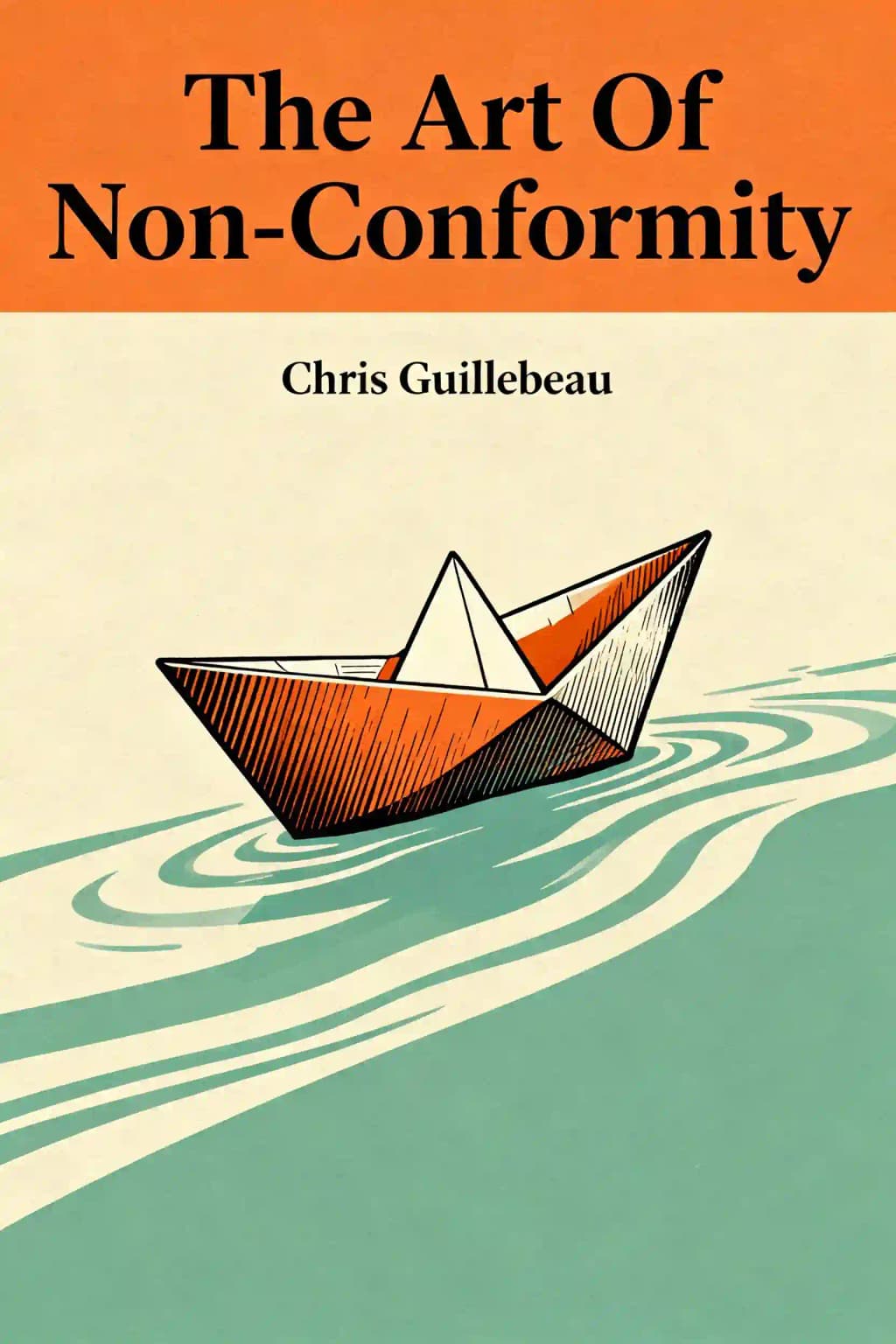
The art of non-conformity
set your own rules, live the life you want, and change the world
Visão geral de The art of non-conformity
Break free from society's script and design your dream life. In "The Art of Nonconformity," Chris Guillebeau - endorsed by Richard Branson - reveals how to balance personal freedom with positive impact. What if conventional success is actually holding you back from true fulfillment?

Temas principais em The art of non-conformity
- lifestyle design
- radical goal-setting
- challenging social norms
- location independence
- meaningful contribution
Citações de The art of non-conformity
Determination matters more than intelligence.
I'm frightened of the old ones.
Most people want meaningful work worth pursuing, not easy work.
Personagens de The art of non-conformity
- Chris GuillebeauAuthor and entrepreneur who traveled 100+ countries
- Bernard LopezFormer New Yorker who biked across America
- John CageComposer quoted regarding the fear of old ideas
- Bo BartlettArtist quoted on the importance of commitment
Baixar resumo de The art of non-conformity
Obtenha o resumo de The art of non-conformity como PDF ou EPUB gratuito. Imprima ou leia offline a qualquer momento.
Perguntas Frequentes Sobre Este Livro
The Art of Non-Conformity challenges traditional societal norms, advocating for a life built on personal freedom, purpose, and global impact. Guillebeau provides frameworks for rejecting mediocrity, designing self-directed careers, and combining individual goals with service to others. Key themes include self-reliance, unconventional entrepreneurship, and redefining success beyond material wealth.
This book is ideal for entrepreneurs, career changers, and anyone feeling trapped by conventional paths. It resonates with readers seeking actionable strategies to align their work with personal values, fans of Tim Ferriss’s The 4-Hour Workweek, and individuals interested in minimalist lifestyles or socially conscious entrepreneurship.
Yes, particularly for those new to self-help or entrepreneurship. While some critics note overlaps with broader genre advice, the book’s practical steps—like conducting a “self-audit” or crafting a “one-year rebellion”—offer clarity for designing a meaningful life. Its emphasis on balancing personal ambition with community impact remains compelling.
- Self-reliance: Prioritize competence over traditional job security.
- Unconventional living: Reject societal scripts about education, careers, and success.
- Purpose-driven impact: Align personal goals with contributing to others’ well-being.
Guillebeau argues that true fulfillment comes from autonomy, creativity, and intentional rule-breaking.
Guillebeau defines success as “freedom + purpose”—the ability to control your time while pursuing projects that matter. He contrasts this with societal metrics like wealth or status, emphasizing that success should be self-determined and tied to leaving a meaningful legacy.
- “Your dreams belong to no one but you”: Encourages rejecting external validation.
- “The game of mediocrity”: Critiques performative tasks (e.g., pointless meetings) that lack real value.
- “Be of service to others”: Stresses that personal and societal goals aren’t mutually exclusive.
Some readers find the advice overly generic if familiar with self-help tropes, noting that concepts like “define your own rules” lack granular implementation steps. Others argue the book’s focus on individualism underestimates systemic barriers to unconventional living.
The book provides tools to audit current dissatisfaction, identify transferable skills, and launch “side hustles” with minimal resources. Guillebeau’s “27-line business plan” helps readers test ideas quickly, while case studies illustrate transitioning from traditional jobs to passion-driven work.
Both advocate lifestyle design, but Guillebeau focuses more on community impact and incremental change, whereas Ferriss emphasizes radical efficiency and luxury. Non-Conformity also prioritizes ethical entrepreneurship over purely profit-driven ventures.
Guillebeau’s early high school dropout experience, volunteer work in West Africa with Mercy Ships, and visits to every country by age 35 inform his advocacy for self-directed living. His blend of global perspective and grassroots entrepreneurship grounds the book’s practical idealism.
Yes, including exercises like:
- Writing a “perfect day” script to clarify priorities.
- Creating a “revenue-generating idea” in 48 hours.
- Building a “legacy list” of desired lifetime achievements.
These tools help readers move from theory to action.
As remote work and AI reshape careers, the book’s emphasis on adaptability, micro-entrepreneurship, and purpose aligns with trends toward self-employment and socially conscious business models. Its critique of bureaucratic inefficiency remains timely amid corporate layoffs and gig economy growth.


