Capítulo 1
Fortune Favors the Prepared Mind: P.T. Barnum's Financial Wisdom
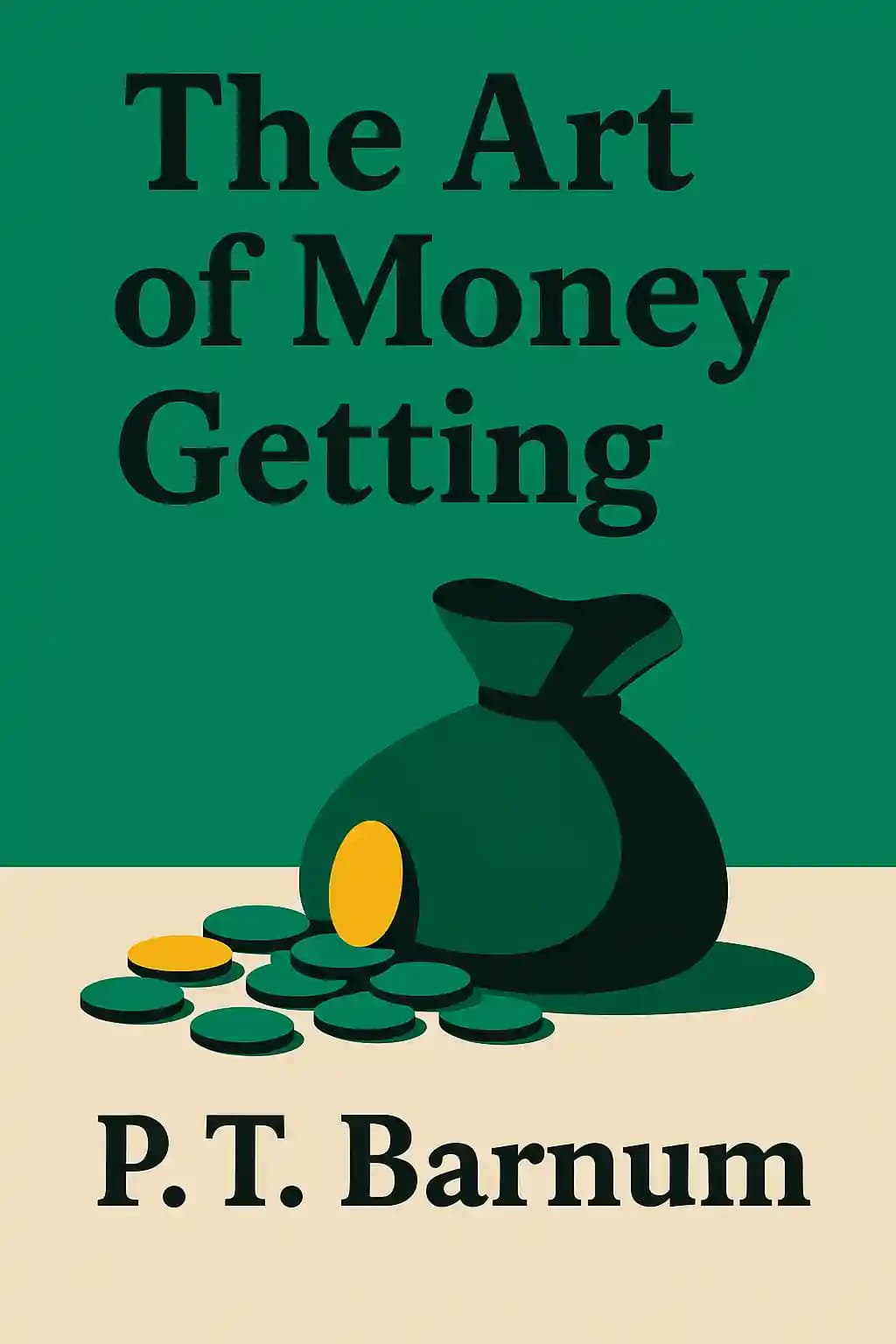
In an era where get-rich-quick schemes flood social media and financial gurus promise overnight wealth, P.T. Barnum's "The Art of Money Getting" stands as a refreshing counterpoint-a 19th-century guide that remains startlingly relevant today. Though Barnum is primarily remembered as the legendary showman who founded what became the Ringling Bros. and Barnum & Bailey Circus, his financial wisdom has quietly influenced generations. Warren Buffett reportedly keeps a copy on his nightstand, and the book's principles have shaped entrepreneurial thinking from Andrew Carnegie to modern business leaders. Written in 1880, this concise guide distills timeless principles of wealth-building that cut through the noise of today's financial advice industry. What makes this work particularly fascinating is that it comes from a man known for promoting celebrated hoaxes-yet when it came to money management, Barnum was deadly serious and remarkably insightful.
Capítulo 2
Finding Your True North: The Foundation of Financial Success
The journey to financial prosperity begins with self-awareness. Barnum emphasizes that selecting the right vocation-one aligned with your natural talents and inclinations-is the cornerstone of success. How many of us find ourselves trapped in careers that drain our energy rather than ignite our passion? This mismatch often stems from external pressures: parents steering children toward "respectable" professions, society's expectations, or the allure of industries promising quick wealth.
Consider the countless law school graduates who discover too late they have no passion for legal work, or the engineers who secretly long to be writers. When we force ourselves into vocations misaligned with our nature, we condemn ourselves to an uphill battle. Every task requires extra effort, every challenge seems insurmountable, and our competitors-those naturally suited to the field-outpace us with apparent ease.
The consequences extend beyond mere career dissatisfaction. Working against your natural grain creates a perpetual state of resistance that affects your mental health, relationships, and ultimately, your financial outcomes. How can you excel in negotiations if you're inherently uncomfortable with confrontation? How can you build a client base if networking depletes rather than energizes you?
This principle applies equally to entrepreneurial ventures. The most successful businesses often emerge when founders identify problems they're uniquely positioned to solve. Steve Jobs didn't succeed merely because he worked hard-he succeeded because his particular blend of aesthetic sensibility and technological interest perfectly positioned him to revolutionize personal computing.
Finding your vocational true north requires honest self-assessment. What activities put you in a state of flow? When do you lose track of time? What skills have always come naturally to you? The answers to these questions point toward your path of least resistance-not because it will be easy, but because your natural aptitudes will give you sustainable advantages in competitive landscapes.
Capítulo 3
Location, Location, Location: Positioning Yourself for Opportunity
Even the most brilliant business concept will fail if launched in the wrong environment. Barnum understood that success depends not just on what you do, but where you do it. This principle extends far beyond real estate-it encompasses the entire ecosystem in which your talents operate.
Have you ever wondered why certain industries cluster in specific regions? Silicon Valley for tech, Nashville for music, New York for finance? These concentrations aren't coincidental-they represent ecosystems where talent, capital, and opportunity converge. Placing yourself within such ecosystems dramatically increases your chances of success.
Barnum illustrates this with the story of an English showman who struggled in his homeland but flourished after relocating to America. The man's talents hadn't changed-only the environment in which he deployed them. The market was ready for what he offered, and his skills found fertile ground.
This principle applies on multiple scales. On a macro level, it might mean moving to a city where your industry thrives. On a micro level, it could mean positioning your retail store on the correct street corner or launching your product in the right initial market.
Consider how many entrepreneurs fail not because their ideas were flawed, but because they launched in saturated markets or regions unreceptive to their offerings. The best bakery in the world will struggle if opened on a street with five established competitors. The most innovative tech product might languish if launched in a region without the necessary support infrastructure.
Strategic placement also involves timing. Markets evolve, neighborhoods transform, and consumer preferences shift. The savvy entrepreneur monitors these changes, positioning themselves ahead of emerging trends rather than chasing established ones. Would Uber have succeeded if launched a decade earlier, before smartphone ubiquity? Probably not. Location encompasses not just physical space but the intersection of place and time.
In today's digital economy, "location" has taken on new dimensions. Your virtual presence-where your business appears in search results, which platforms you leverage, which online communities you engage-can be as crucial as your physical location. The principle remains the same: position yourself where demand exists for what you uniquely offer.
Capítulo 4
The Debt Trap: Freedom Through Financial Independence
Imagine waking up every morning with an invisible weight pressing on your chest-a constant, nagging pressure that colors every decision and limits every opportunity. This is the reality of living under significant debt, a trap that Barnum warns against with particular urgency.
Debt initially presents itself as a solution-a way to acquire what we desire before we've earned it. The new graduate finances a lifestyle their entry-level salary can't support. The entrepreneur borrows heavily to launch a business without validating the market. The family stretches to buy a home beyond their means, believing property values will only rise.
But debt quickly transforms from servant to master. The monthly payments that seemed manageable become oppressive. Opportunities must be evaluated not based on their merit but on their ability to service existing obligations. Risk tolerance shrinks as financial flexibility disappears. How many potential entrepreneurs remain in unfulfilling jobs because their debt burdens make the leap too risky? How many families endure financial stress because their lifestyle expanded faster than their income?
Barnum distinguishes between strategic borrowing and frivolous debt. The former leverages capital to generate greater returns-like financing equipment that increases productivity or education that enhances earning potential. The latter funds consumption or status symbols that depreciate while interest accumulates.
Consider the contrasting paths of two college graduates. The first finances a new luxury car, designer wardrobe, and upscale apartment, accumulating $50,000 in consumer debt beyond student loans. The second lives modestly, drives a reliable used car, and focuses on building savings. Five years later, when a promising entrepreneurial opportunity arises, who has the freedom to pursue it? Who sleeps better at night? Who has more options?
Financial independence doesn't necessarily mean wealth-it means having choices. It means the freedom to walk away from toxic work environments, to weather economic downturns without panic, to pursue opportunities without permission from creditors. This freedom comes from spending less than you earn and avoiding the golden handcuffs of consumer debt.
In an age of easy credit and aggressive marketing, Barnum's warning against debt feels almost countercultural. Yet the peace of mind that comes with financial independence-knowing you own your life rather than renting it from creditors-represents a form of wealth that no luxury purchase can match.
Capítulo 5
The Power of Persistence: Turning Failure into Stepping Stones
How close to success have you come before turning back? Barnum observed that many people falter just steps from their goal, surrendering to doubt or exhaustion when triumph lay just beyond the horizon. This failure of persistence-giving up too soon-represents one of the most common reasons dreams remain unrealized.
Success rarely arrives in a single, dramatic moment. Rather, it emerges from consistent effort applied over time, often through periods of apparent stagnation or even regression. The entrepreneur whose first three ventures failed before the fourth succeeded. The writer who faced hundreds of rejections before finding a publisher. The investor who weathered market downturns to reap long-term gains. These stories share a common thread: persistence transformed setbacks into stepping stones.
What separates those who persevere from those who surrender? Often, it's perspective. Setbacks can be viewed as evidence of personal inadequacy or as valuable feedback pointing toward improvement. Rejection can signal the end of a journey or a necessary recalibration. The persistent individual doesn't deny reality-they simply refuse to let temporary obstacles become permanent barriers.
Consider Thomas Edison's famous response when asked about his thousands of failed attempts to create a functional light bulb: "I have not failed. I've just found 10,000 ways that won't work." This mindset-viewing failure as information rather than indictment-sustains persistence through inevitable difficulties.
Persistence doesn't mean blind stubbornness. It requires strategic adaptation based on feedback. The entrepreneur who persists with a flawed business model despite clear market rejection isn't displaying admirable tenacity but costly inflexibility. True persistence combines unwavering commitment to the goal with flexibility about the path.
Modern psychology confirms what Barnum intuited: grit-the combination of passion and perseverance-predicts success better than talent or intelligence alone. Those who maintain effort and interest over years despite setbacks ultimately outperform those with higher initial aptitude but less staying power.
When facing obstacles, ask yourself: Is this a signal to quit, or a test of my commitment? Am I truly at a dead end, or merely at a difficult passage that requires greater effort? The answers to these questions often determine whether potential becomes achievement or remains forever unrealized.
Capítulo 6
Whole-Hearted Effort: The Commitment That Distinguishes Winners
Have you ever noticed how some people seem to extract extraordinary results from ordinary circumstances? The secret often lies not in what they do, but how they do it. Barnum observed that investing full effort into every endeavor-doing everything "with all your might"-creates a competitive advantage that half-hearted attempts can never match.
This principle transcends specific industries or activities. The salesperson who thoroughly researches prospects before meetings. The chef who sources ingredients with obsessive attention to quality. The teacher who customizes lessons for different learning styles. In each case, the difference between adequacy and excellence lies in the intensity of commitment.
Half-hearted efforts produce predictably mediocre results. When we approach tasks with divided attention or minimal investment, we signal to ourselves and others that the outcome doesn't truly matter. This creates a self-fulfilling prophecy: because we expect little, we invest little, and consequently achieve little.
Consider how differently we perform when the stakes feel high. The presentation we deliver when the CEO unexpectedly attends. The effort we invest when competing for a coveted opportunity. The focus we bring to tasks with imminent deadlines. What if we brought that same intensity to everyday work? The cumulative effect would transform ordinary careers into extraordinary ones.
This principle applies equally to personal development. Reading a book passively versus actively engaging with the material. Exercising while distracted versus with focused intention. Having conversations while mentally elsewhere versus with genuine presence. In each case, the quality of our experience-and results-corresponds directly to the quality of our attention.
Whole-hearted effort doesn't mean working longer hours or burning out. Rather, it means bringing full presence and commitment to the time we do spend. It means eliminating multitasking in favor of deep focus. It means approaching routine tasks with the same care we bring to special occasions.
Fortune favors those who press forward with tireless determination, who work efficiently and intelligently, who grasp opportunity with both hands rather than tentative fingers. In a world increasingly characterized by distraction and divided attention, the ability to bring whole-hearted effort to important tasks becomes an increasingly rare and valuable trait.
Capítulo 7
Personal Oversight: The Irreplaceable Eye of the Owner
Why do some businesses thrive under their founders but falter when management changes hands? Often, the difference lies in the quality of attention-the irreplaceable perspective that comes from personal investment in an enterprise's success. Barnum understood that no employee, however competent or well-intentioned, brings the same level of scrutiny and insight as someone whose own prosperity depends on the outcome.
This principle manifests in countless ways. The restaurant owner who notices subtle shifts in customer satisfaction that employees overlook. The retailer who senses emerging trends before they appear in sales reports. The service provider who intuitively recognizes when processes need refinement. These insights don't emerge from quarterly reviews or management reports-they come from direct, personal engagement with the business.
Even the most trusted employees might miss details obvious to the owner. This isn't necessarily due to negligence or incompetence-it reflects the different relationship each has with the enterprise. The employee's perspective, however dedicated, remains fundamentally different from the owner's comprehensive view.
Consider how differently we treat rental cars versus vehicles we own. The same principle applies to businesses. Those with personal stakes notice the small issues before they become major problems, identify opportunities others miss, and make decisions with a longer time horizon than those focused on quarterly performance metrics.
This doesn't mean micromanaging or refusing to delegate. Rather, it suggests maintaining sufficient personal engagement to develop what Barnum calls "profound business knowledge"-an intuitive understanding of your enterprise that transcends formal reports and analyses. Like the naturalist Cuvier, who could reconstruct an entire animal from a single bone fragment, the engaged owner develops pattern recognition that allows them to see the whole from a part.
In today's world of remote management and data-driven decision making, this principle might seem outdated. Yet the most successful organizations still reflect their founders' direct engagement. Think of how Steve Jobs' obsessive attention to detail shaped Apple's products, or how Warren Buffett's personal analysis drives Berkshire Hathaway's investment decisions. Despite vast resources and talented teams, these leaders maintain personal oversight of crucial aspects of their businesses.
The lesson? While systems and delegation remain essential, nothing replaces the insight that comes from direct personal engagement with your enterprise. Some knowledge can only be gained through presence, attention, and the irreplaceable perspective of someone whose name is on the door.
Capítulo 8
Quality Over Economy: Investing in Excellence
In business as in life, false economy often proves the most expensive path. Barnum recognized that securing the finest employees-like acquiring the best tools-represents an investment rather than merely an expense. This principle extends beyond hiring to encompass all business decisions where quality and cost must be balanced.
Consider the contrasting approaches of two competing businesses. The first, focused on minimizing expenses, hires the least expensive workers available, purchases the cheapest materials, and occupies the most affordable location. The second, prioritizing value creation, invests in talented team members, quality inputs, and strategic positioning. Which builds sustainable competitive advantage? Which attracts loyal customers? Which ultimately generates greater profit?
Barnum specifically emphasizes the value of retaining talented employees whose accumulated experience compounds their contribution over time. When workers intimately understand your business, customers, and processes, they bring contextual intelligence that no new hire-however qualified on paper-can match. This institutional knowledge represents an asset that doesn't appear on balance sheets but significantly impacts performance.
However, Barnum also warns against retaining employees who demand unjustified compensation based on tenure rather than value creation. The key distinction lies in whether experience translates to enhanced contribution or merely accumulated time. The employee who leverages five years' experience to develop innovative solutions provides compounding returns. The one who performs the same tasks in year five as in year one, yet demands premium compensation, diminishes value.
This principle-seeking brains over mere hands-feels particularly relevant in today's knowledge economy. The difference between average and exceptional talent has never been greater. In fields ranging from software development to marketing, top performers often deliver multiples of the value created by average contributors. Organizations that recognize and invest in this reality gain disproportionate advantages.
The same logic applies to tools, materials, and other business inputs. The manufacturer who sources slightly more expensive but significantly more reliable components. The restaurant that pays premium prices for superior ingredients. The retailer who invests in more intuitive inventory systems. Each recognizes that initial cost represents just one factor in the value equation.
Quality investments typically pay dividends through enhanced customer experience, reduced waste, higher productivity, and stronger reputation. The challenge lies in distinguishing between true quality-inputs that genuinely enhance outcomes-and mere prestige or unnecessary features that increase costs without corresponding benefits.
In an age of relentless cost-cutting and quarterly profit pressure, Barnum's emphasis on quality over false economy offers a refreshing counterpoint. The wisest investments often appear expensive in the short term but prove economical over time.
Capítulo 9
Staying Grounded: The Danger of Premature Elevation
Success contains within it the seeds of potential failure. Barnum observed that many promising careers derail when individuals rise "above their business"-abandoning the principles and practices that created their initial success in favor of shortcuts, delegation, or status-seeking behaviors. This pattern repeats across industries and eras: the entrepreneur who stops engaging with customers after initial success, the investor who abandons proven strategies after a few wins, the professional who neglects fundamentals after promotion.
Why does this happen? Often, it stems from impatience-a desire to skip the necessary steps between current reality and desired outcomes. Young professionals dream of executive suites without embracing the developmental journey. Entrepreneurs fantasize about funding rounds and exits before building sustainable value. Investors chase returns without developing the knowledge base to evaluate opportunities properly.
Barnum cites numerous examples of successful individuals-Girard, Stewart, Vanderbilt-who began with modest means and built lasting wealth through persistent application of sound principles. Their success wasn't accidental or overnight; it emerged from progressive mastery of their chosen fields. Each dollar earned taught lessons that formed the foundation for earning the next ten, and so on in compounding fashion.
Contrast this with wealth acquired through inheritance, speculation, or other means divorced from personal effort. Such "easy money" often disappears as quickly as it arrived precisely because the recipient hasn't developed the habits, knowledge, and perspective necessary to preserve and grow capital. The lottery winner who returns to poverty within years. The heir who squanders a family fortune. The speculator who mistakes a bull market for personal genius.
This principle applies equally to knowledge and skills. The medical student who focuses on specialization before mastering fundamentals. The writer who pursues stylistic flourishes before command of grammar. The musician who attempts advanced techniques before basic proficiency. In each case, premature elevation leads to unstable foundations that eventually collapse.
Staying grounded doesn't mean avoiding ambition-it means respecting the process through which sustainable success emerges. It means recognizing that there are few legitimate shortcuts in the development of genuine capability. It means valuing the journey not just for its destination but for the person it shapes you into along the way.
When tempted to rise "above your business," ask yourself: Have I truly mastered the fundamentals? Am I seeking advancement for the right reasons? Am I prepared not just to reach the next level but to thrive there? The honest answers to these questions may save you from the painful lessons that often accompany premature elevation.
Capítulo 10
Balancing Vision with Pragmatism: The Art of Calculated Optimism
Optimism powers achievement-but unchecked, it leads to ruin. Barnum advocated for a delicate balance: let hope predominate, but temper it with pragmatic assessment. This equilibrium-maintaining positive expectations while acknowledging practical constraints-distinguishes sustainable success from fleeting enthusiasm.
We've all encountered both extremes. The perpetual pessimist who sees obstacles in every opportunity, paralyzed by potential problems. The ungrounded optimist who leaps without looking, repeatedly surprised when reality fails to conform to their visions. Neither approach leads to consistent achievement.
Effective optimism isn't blind faith that everything will work out. Rather, it's the conviction that challenges can be overcome through effort, intelligence, and persistence. It acknowledges difficulties while maintaining confidence in one's ability to navigate them. This balanced perspective allows for both ambitious goals and practical planning.
Consider successful entrepreneurs. They typically combine ambitious visions with meticulous attention to execution details. They dream big but plan carefully. They maintain confidence in their ultimate success while realistically assessing each step along the path. This duality-simultaneously holding grand visions and granular awareness-creates the foundation for sustainable achievement.
The danger comes when vision disconnects from practicality. Projects launched with unrealistic timelines or budgets. Businesses built on market assumptions unsupported by research. Careers pursued without honest assessment of required capabilities. These endeavors typically end in disappointment not because the goals were too ambitious, but because the planning was insufficiently rigorous.
How do we cultivate this balance? Start by distinguishing between goals and expectations. Goals represent what we aim to achieve-they should stretch our capabilities and inspire our efforts. Expectations represent what we believe will actually happen-they should incorporate honest assessment of challenges and constraints. Maintaining ambitious goals alongside realistic expectations creates the optimal psychological foundation for achievement.
Similarly, distinguish between possibility and probability. Many things are possible-but not all are equally probable. The entrepreneur who recognizes that success is possible while acknowledging the statistical challenges can make informed decisions about risk and resource allocation. This clear-eyed assessment doesn't diminish ambition; it channels it productively.
Barnum's wisdom reminds us that hope and pragmatism aren't opposing forces but complementary ones. The most effective individuals aren't those who ignore reality in favor of positive thinking, nor those who surrender ambition to perceived limitations. Rather, they're those who maintain positive visions while engaging practically with the world as it is-not as they wish it to be.
Capítulo 11
The Power of Focus: Concentrating Your Energies for Maximum Impact
In a world of endless opportunities and distractions, focus becomes a superpower. Barnum observed that many potentially successful enterprises fail because their leaders scatter their powers across multiple ventures rather than concentrating on mastering one. This principle-that depth trumps breadth when building success-remains perhaps even more relevant in today's fragmented attention economy.
Consider what happens when you direct a flashlight beam. Spread wide, it illuminates a large area but with minimal intensity. Focused narrowly, it concentrates energy into a powerful beam that reaches much further. Your attention and resources operate similarly. Distributed across many projects, they create broad but shallow impact. Concentrated on a single pursuit, they generate the depth and momentum necessary for breakthrough results.
This principle manifests across domains. The entrepreneur who launches multiple businesses simultaneously versus the one who perfects a single offering. The professional who constantly shifts specialties versus the one who develops deep expertise in a specific area. The investor who chases every trend versus the one who masters a particular sector or strategy. In each case, focus typically yields superior outcomes.
Why does concentration prove so powerful? First, it allows for the discovery of nuances and insights invisible to casual observation. When you immerse deeply in any field or activity, you begin to perceive patterns and opportunities that remain hidden to dabblers. These insights often provide the foundation for innovation and competitive advantage.
Second, focus enables the development of compound knowledge-understanding that builds upon itself in accelerating fashion. The first year in any pursuit yields basic competence. The second builds on that foundation. By year five or ten, the focused individual operates at levels inaccessible to those who restart the learning curve repeatedly with new ventures.
Third, concentration creates momentum. Each achievement in a focused area creates resources, relationships, and reputation that facilitate the next. The successful product leads to customer relationships that enable the next offering. The well-received article builds credibility for subsequent publications. The effectively executed project leads to larger opportunities.
This doesn't mean never diversifying or exploring new directions. Rather, it suggests mastering one area before expanding to others. Build a solid foundation before constructing additional stories. Establish one successful venture before launching another. Develop deep expertise in one domain before leveraging it into adjacent ones.
In an age that celebrates multitasking and diverse portfolios, Barnum's emphasis on focused powers feels almost countercultural. Yet the evidence consistently supports his view: the path to extraordinary outcomes typically runs through depth rather than breadth, through sustained attention rather than scattered efforts.
Capítulo 12
Integrity as Ultimate Capital: The Foundation of Lasting Success
At the culmination of his financial wisdom, Barnum delivers perhaps his most profound insight: integrity represents the ultimate form of capital. Beyond techniques and strategies, beyond even talent and opportunity, character forms the foundation of sustainable prosperity. This principle-that how you conduct business ultimately matters more than what business you conduct-provides both practical guidance and ethical anchor.
Why does integrity matter from a purely practical perspective? First, business fundamentally operates on trust. Every transaction, partnership, and customer relationship depends on mutual confidence. When you consistently deliver on promises, speak truthfully, and deal fairly, you build reputational capital that facilitates future opportunities. Conversely, even small ethical compromises erode this capital, creating friction in every subsequent interaction.
Second, integrity simplifies decision-making. When principles guide choices rather than situational calculations, you avoid the cognitive and emotional burden of constantly recalibrating ethical boundaries. This clarity conserves mental energy for productive pursuits rather than moral gymnastics.
Third, integrity attracts similar individuals and organizations. Those who value honest dealing naturally gravitate toward others who share this orientation. This creates virtuous cycles where relationships reinforce rather than undermine ethical standards, building networks characterized by mutual respect and reliability.
Consider the contrasting paths of two professionals. The first achieves short-term gains through corner-cutting, exaggeration, and occasional deception. The second builds more slowly but on foundations of consistent honesty and fair dealing. A decade later, who sleeps better? Who has built sustainable relationships? Who has created transferable value beyond immediate transactions?
Integrity doesn't guarantee financial success-markets sometimes reward unethical behavior, at least temporarily. But it does provide something perhaps more valuable: the ability to succeed without sacrificing self-respect or social contribution. It allows achievement without the constant fear of exposure or the progressive corruption of character that often accompanies sustained dishonesty.
Barnum's emphasis on integrity might seem surprising coming from a showman famous for promotional stunts. Yet he distinguished between entertainment-where audiences participated willingly in the suspension of disbelief-and business dealings requiring absolute honesty. This nuanced understanding recognized different contexts while maintaining core principles.
In today's complex business environment, where regulations multiply but ethical lapses continue, Barnum's simple guidance remains powerful: "Preserve your integrity." Not because it always maximizes profit-though often it does-but because it represents wealth of a more fundamental kind. The kind that, once established, cannot be taken from you by market fluctuations or competitive pressures. The kind that allows you to build success you can genuinely be proud of.