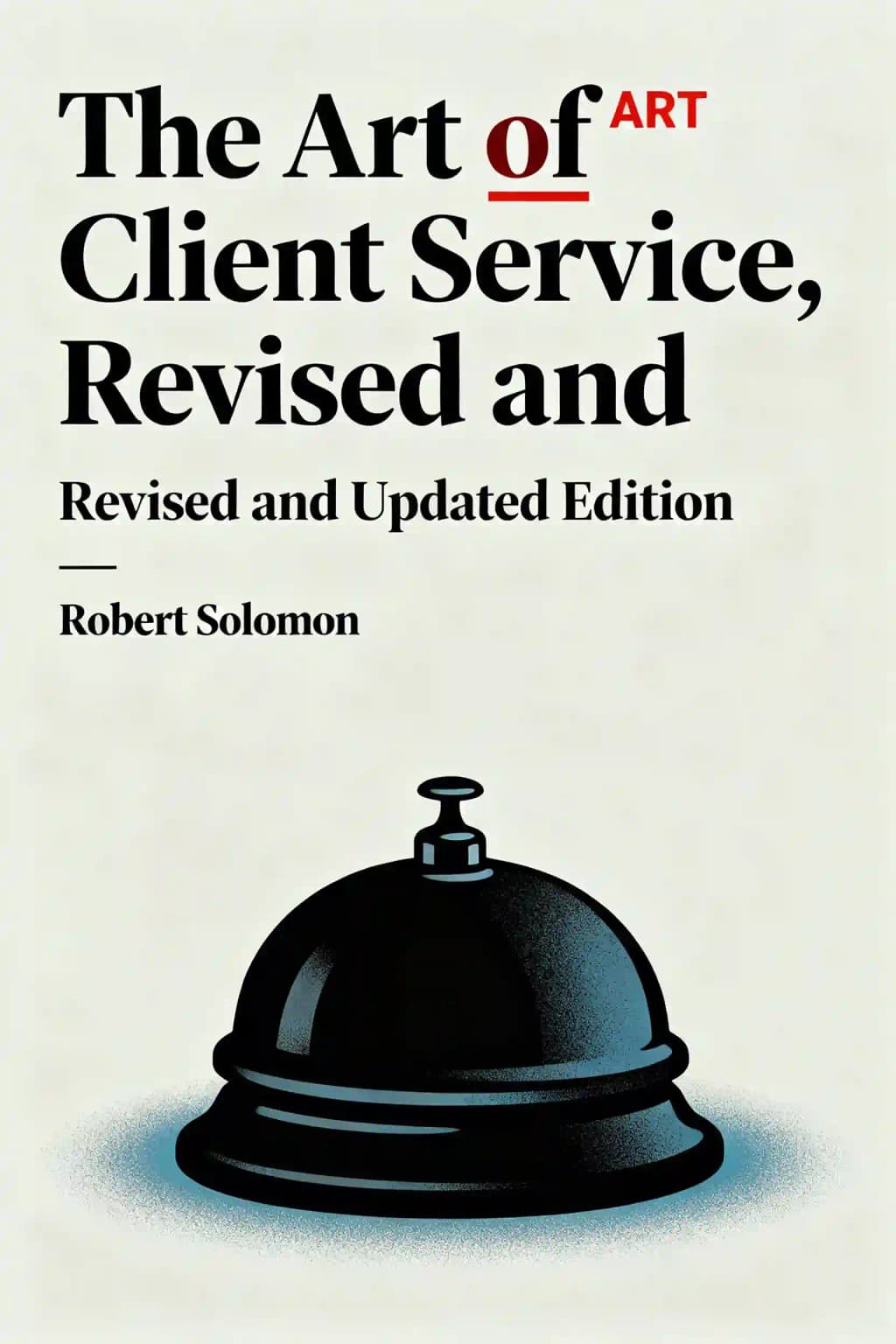
The Art of Client Service, Revised and Updated Edition
58 Things Every Advertising & Marketing Professional Should Know
Visão geral de The Art of Client Service, Revised and Updated Edition
The definitive playbook for client service professionals that transformed how agencies build relationships. Embraced by top marketing firms and featured in Franco's Renaissance Readers Book Club, Solomon's practical wisdom reveals why listening might be your most profitable skill in today's competitive landscape.

Temas principais em The Art of Client Service, Revised and Updated Edition
- agency client management
- trust based partnerships
- creative brief development
- expectation management
- account service excellence
Citações de The Art of Client Service, Revised and Updated Edition
Good work is the enemy of great work.
There is always time to do it over.
What do you want this advertising to do?
This isn't a brief; it's the anti-brief!
Personagens de The Art of Client Service, Revised and Updated Edition
- Robert SolomonAuthor and former advertising agency CEO
- David VerklinFormer CEO of Carat Americas
- Martin PurisCofounder of agency Ammirati & Puris
Baixar resumo de The Art of Client Service, Revised and Updated Edition
Obtenha o resumo de The Art of Client Service, Revised and Updated Edition como PDF ou EPUB gratuito. Imprima ou leia offline a qualquer momento.
Perguntas Frequentes Sobre Este Livro
The Art of Client Service by Robert Solomon is a practical guide to mastering client relationships in advertising and marketing. It offers 58 actionable principles for delivering exceptional service, emphasizing trust-building, clear communication, and problem-solving. Key themes include prioritizing client needs, balancing creativity with strategy, and using low-tech methods in a high-tech world. The book blends real-world examples with concise advice for sustaining long-term partnerships.
This book is ideal for advertising account managers, marketing professionals, and client-facing teams seeking to improve client retention and satisfaction. Newcomers to client service will benefit from its foundational playbook, while veterans can refresh their skills. Solomon’s insights also apply to freelancers and consultants aiming to strengthen client trust and deliver measurable results.
Yes, particularly for those in advertising or marketing. Critics praise its actionable frameworks and relatable anecdotes, though some note it’s more beneficial for beginners than seasoned professionals. The book’s concise chapters (e.g., “Be brief, be bright, be gone”) provide quick-reference solutions to common client challenges, making it a valuable desk reference.
Key principles include:
- “In a high-tech world, be low-tech”: Prioritize face-to-face communication over impersonal digital tools.
- “Judgment overrides any rule”: Adapt strategies to unique client needs.
- “Happy clients help you gain new ones”: Leverage satisfied clients for referrals.
- “Respect what it takes to do great creative”: Balance client demands with creative integrity.
Solomon advises transparency and swift action: admit errors immediately, propose solutions, and follow through. He stresses that recovering from mistakes can deepen client trust if handled with accountability. Example strategies include over-communicating progress and documenting lessons learned to prevent repeats.
The book advocates the “Be brief, be bright, be gone” mantra: streamline presentations to focus on client objectives, use clear visuals, and avoid overloading with details. Solomon emphasizes pre-meeting rehearsals, tailoring content to decision-makers, and leaving room for dialogue rather than monologues.
Great client service, per Solomon, hinges on anticipating needs, aligning agency and client goals, and delivering consistent results. It requires empathy to see challenges from the client’s perspective and the agility to pivot strategies when circumstances change. Trust is the ultimate measure of success.
Some reviewers argue the advice is too basic for experienced professionals, with a focus on traditional advertising over digital/performance marketing. Others note the lack of in-depth case studies. However, most agree it remains a foundational resource for mastering client relationship fundamentals.
Solomon outlines a lifecycle: winning trust through new business pitches, maintaining it via reliability, rebuilding it after missteps by owning errors, and expanding it by exceeding expectations. He highlights regular check-ins and underpromising/overdelivering as critical tactics.
While acknowledging technology’s importance, Solomon cautions against letting tools replace human connection. He advocates using tech for efficiency (e.g., data analysis) but prioritizing interpersonal skills for complex decisions. Updated editions address balancing digital communication with in-person collaboration.
Both emphasize client-centricity, but Solomon’s book focuses on advertising agency dynamics, while Sheridan’s approach targets content marketing and sales. The Art of Client Service offers tactical relationship-building steps, whereas They Ask You Answer prioritizes transparency and educating clients through content.
- Draft a client service playbook for your team.
- Replace lengthy emails with calls or meetings for critical issues.
- Document client preferences and decision-making processes.
- Conduct post-project reviews to identify improvement areas.


