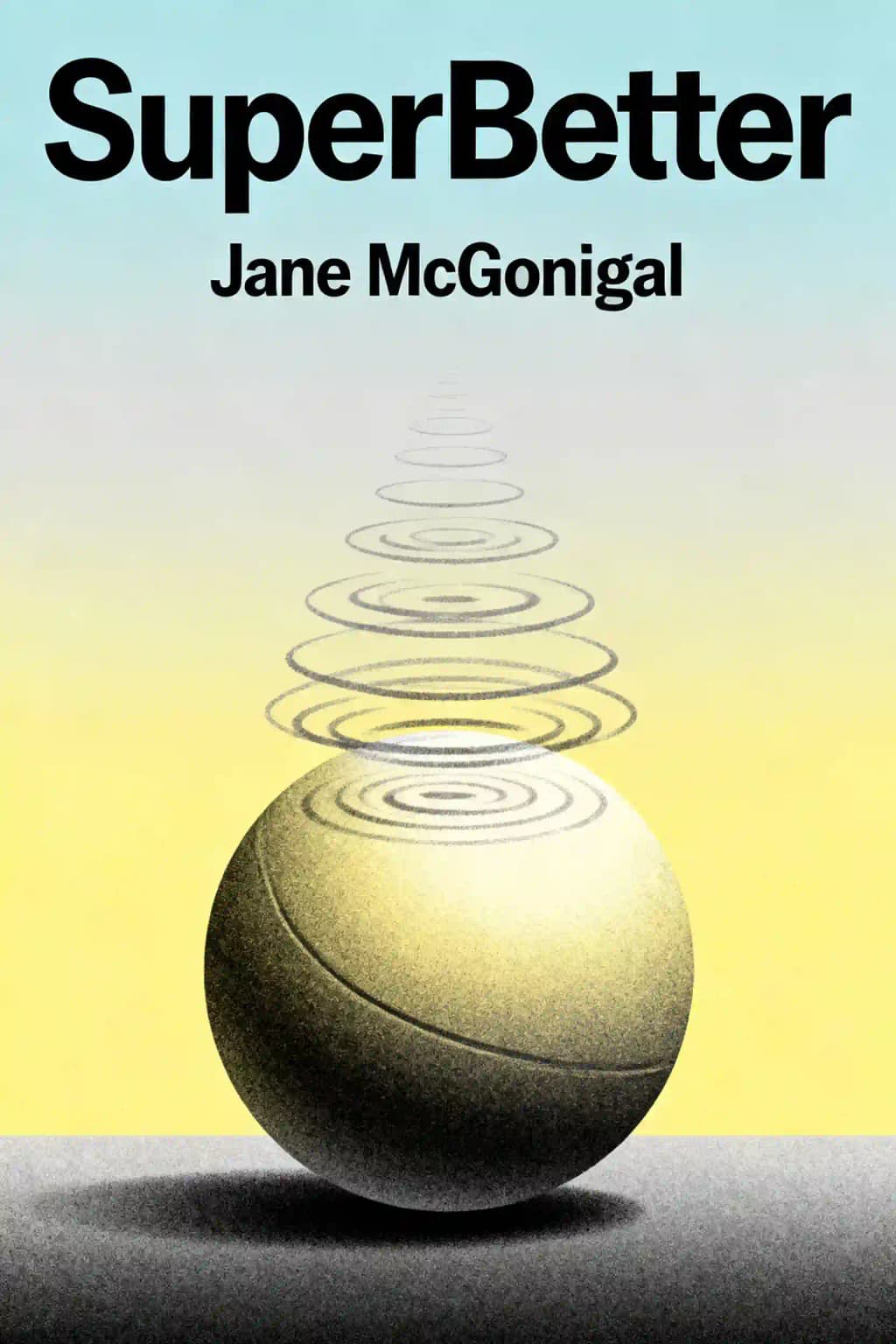
Transform personal challenges into winnable games with "SuperBetter" - the science-backed approach that's helped 400,000 people boost resilience. Endorsed by Harvard's Amy Cuddy, this revolutionary method turns everyday struggles into opportunities for growth. What if healing was actually fun?
Jane McGonigal, Ph.D., is the New York Times bestselling author of SuperBetter: The Power of Living Gamefully and a pioneering game designer renowned for blending psychology, neuroscience, and interactive storytelling to empower personal resilience. A UC Berkeley-trained performance studies scholar, McGonigal has spent her career creating games like EVOKE and World Without Oil that address real-world challenges such as mental health, climate change, and systemic inequality.
Her iconic TED Talks on gaming’s transformative potential have garnered over 15 million views, amplifying her reputation as a visionary in applied game theory. As Director of Game Research at the Institute for the Future, McGonigal has collaborated with organizations like the American Heart Association and the World Bank to design collaborative problem-solving experiences.
Her prior works, including Reality is Broken and Imaginable, established her as a leading voice in leveraging play for societal good. The SuperBetter framework, born from her own recovery from a traumatic brain injury, has helped more than 1 million people build emotional strength and tackle health challenges. The book’s science-backed strategies have been endorsed by clinicians and featured in The New York Times, NPR, and Wired.
SuperBetter presents a science-backed method to build resilience and achieve personal goals using game design principles. Jane McGonigal translates gaming strategies—like quests, power-ups, and allies—into real-life tools to overcome challenges such as chronic illness, depression, or career obstacles. The book blends 10+ years of research with actionable steps, encouraging readers to adopt a "gameful mindset" to tackle stress and adversity.
This book suits individuals facing mental health struggles, chronic conditions, or major life transitions, as well as gamers seeking practical self-improvement strategies. Educators, therapists, and teams can also apply its frameworks to foster resilience and social-emotional learning. McGonigal’s approach resonates with those open to unconventional, playful methods for personal growth.
Yes, particularly for its evidence-based techniques and adaptability to diverse goals like weight loss, grief management, or academic success. While some critique its length or prefer the interactive app, the book’s real-life success stories and customizable strategies make it a valuable resource for building mental and emotional resilience.
Key concepts include:
McGonigal leverages gaming mechanics like incremental progress, rewards, and narrative-driven goals to make daunting tasks engaging. For example, treating a fitness routine as a "boss battle" or using point systems for habit-building. This approach taps into intrinsic motivation, making resilience-building feel less like a chore.
The book cites studies showing gameful thinking reduces anxiety, improves pain tolerance, and enhances problem-solving. McGonigal references clinical trials where SuperBetter methods helped TBI patients recover faster and boosted depression recovery rates by 52% compared to traditional therapy.
Yes. Patients with conditions like fibromyalgia or cancer have used quests to manage symptoms and power-ups to counter fatigue. The framework emphasizes agency, helping individuals focus on small wins rather than feeling overwhelmed by their diagnosis.
Some reviewers argue the book’s length dilutes its core ideas, while others prefer the app’s interactivity. A New Yorker critique dismissed it as overly simplistic, though supporters note its practicality for readers new to gamification.
Unlike generic advice in traditional self-help, SuperBetter offers structured, customizable tools rooted in behavioral science. It’s more action-oriented than The Power of Habit and more accessible than academic texts on gamification, making it ideal for hands-on learners.
Case studies include a woman using quests to finish her PhD despite chronic pain and a veteran overcoming PTSD by framing therapy as "missions." McGonigal also details her own recovery from a TBI using the SuperBetter method.
Teachers use quests for classroom engagement (e.g., "Complete three math problems to unlock a group activity") and ally systems to promote peer support. The book’s focus on incremental progress aligns with SEL (social-emotional learning) goals.
Yes. Teams adopt power-ups like midday stretch breaks to reduce burnout and reframe projects as collaborative quests with milestone rewards. The book’s emphasis on resilience helps employees navigate uncertainty during organizational changes.
Sinta o livro através da voz do autor
Transforme conhecimento em insights envolventes e ricos em exemplos
Capture ideias-chave em um instante para aprendizado rápido
Aproveite o livro de uma forma divertida e envolvente
Stop trying so hard and start playing instead.
You are stronger than you know.
You are the hero of your own story.
Games aren't just entertainment—they're powerful tools.
With a challenge mindset, you focus on growth opportunities.
Divida as ideias-chave de SuperBetter em pontos fáceis de entender para compreender como equipes inovadoras criam, colaboram e crescem.
Destile SuperBetter em dicas de memória rápidas que destacam os princípios-chave de franqueza, trabalho em equipe e resiliência criativa.

Experimente SuperBetter através de narrativas vívidas que transformam lições de inovação em momentos que você lembrará e aplicará.
Pergunte qualquer coisa, escolha a voz e co-crie insights que realmente ressoem com você.

Criado por ex-alunos da Universidade de Columbia em San Francisco
"Instead of endless scrolling, I just hit play on BeFreed. It saves me so much time."
"I never knew where to start with nonfiction—BeFreed’s book lists turned into podcasts gave me a clear path."
"Perfect balance between learning and entertainment. Finished ‘Thinking, Fast and Slow’ on my commute this week."
"Crazy how much I learned while walking the dog. BeFreed = small habits → big gains."
"Reading used to feel like a chore. Now it’s just part of my lifestyle."
"Feels effortless compared to reading. I’ve finished 6 books this month already."
"BeFreed turned my guilty doomscrolling into something that feels productive and inspiring."
"BeFreed turned my commute into learning time. 20-min podcasts are perfect for finishing books I never had time for."
"BeFreed replaced my podcast queue. Imagine Spotify for books — that’s it. 🙌"
"It is great for me to learn something from the book without reading it."
"The themed book list podcasts help me connect ideas across authors—like a guided audio journey."
"Makes me feel smarter every time before going to work"
Criado por ex-alunos da Universidade de Columbia em San Francisco

Obtenha o resumo de SuperBetter como PDF ou EPUB gratuito. Imprima ou leia offline a qualquer momento.
What if the key to overcoming life's biggest challenges isn't trying harder but playing smarter? Jane McGonigal's revolutionary SuperBetter approach transforms personal growth into an engaging game that actually works. When we play games, we display remarkable resilience-tackling impossible odds with creativity, determination, and optimism. These same qualities can transform how we handle depression, anxiety, chronic pain, or any life challenge. The science is compelling: clinical trials show that just 30 days of SuperBetter significantly reduces depression and anxiety while boosting optimism and life satisfaction. The method works because games aren't just entertainment-they're powerful psychological tools that activate our innate strengths. Remember that virtual reality game that reduces severe burn pain more effectively than morphine? That's just the beginning of what gameful thinking can do for your life.
