Capítulo 4
Meeting Meghan: Love Against All Odds
The narrative takes a dramatic turn with Harry's description of first encountering Meghan Markle. Scrolling through Instagram in the quiet of Nottingham Cottage, he was struck by a video featuring an unknown woman. "The indescribable beauty and vibrant energy of that woman left an indelible impression," he writes, "prompting me to seek her out immediately."
Their initial meeting at Soho House crackles with nervous energy and instant connection. Harry arrived late, anxiety mounting with London traffic, while Meghan waited patiently. What followed was an evening of intimate conversation and mutual discovery that signaled "a new but natural chapter of deep connection."
Harry's description of falling in love with Meghan reveals a man who had long been searching for authentic connection. Their relationship progressed rapidly, from FaceTime calls to a magical trip to Botswana where they could escape public scrutiny. "Meghan arrives in Africa following a long odyssey, faced without a hint of irritability," Harry recalls. "Between shorts, hiking boots and a Panama hat, her appearance is stunning and perfect."
In Meghan, Harry found someone who understood both celebrity and privacy, someone who shared his humanitarian values, and most importantly, someone who saw him as Harry, not as Prince Henry of Wales. Their courtship unfolded largely in secret, with Harry going to extraordinary lengths to protect their privacy - sneaking around London in disguises, arranging covert meetings, and enlisting trusted friends to help maintain their bubble of normalcy.
What makes this love story particularly compelling is how it unfolds against increasingly impossible odds. As their relationship deepened, so did the challenges they faced. The press eventually discovered them, unleashing a torrent of coverage that ranged from intrusive to explicitly racist. Harry watched history threatening to repeat itself as the woman he loved became the target of the same predatory media behavior that had contributed to his mother's death.
"The rampant racism in the media becomes evident," Harry writes of November 2016, when their relationship became public. "Headlines from newspapers emerge defamatory and racist, as in the case of the 'Daily Mail,' deeply affecting me and raising questions about my homeland's readiness for such intolerance."
Capítulo 5
The Royal Wedding: Fairytale and Fractures
The lead-up to Harry and Meghan's wedding reveals both the fairytale aspects of royal life and the fractures beneath the surface. What should have been a purely joyous occasion became complicated by family dynamics, palace politics, and relentless media scrutiny.
Harry's account of proposing to Meghan in the kitchen of Nottingham Cottage shows his romantic side. He crafted an engagement ring incorporating diamonds from his mother's bracelet and an ethically sourced stone from Botswana, symbolically connecting his past and future. The moment itself was intimate and heartfelt, reminiscent of their time in Botswana.
Before proposing, Harry followed royal protocol by seeking permission from the Queen. This tradition struck him as somewhat absurd - "the notion of a grown man needing his grandmother's approval" seemed peculiar, especially given past precedents. Nevertheless, he approached her during a family hunting excursion at Sandringham, navigating the subtleties of duty and emotion to secure her blessing.
As wedding preparations advanced, tensions emerged. Harry describes conflicts over everything from Meghan's tiara to the bridesmaids' dresses. A particularly painful episode involved Meghan's father, Thomas Markle, who collaborated with paparazzi and ultimately didn't attend the wedding. "Meg repeatedly attempted to smooth tensions with her father besieged by the press, but without success," Harry writes. The situation culminated with news of Thomas suffering a heart attack, preventing him from attending the ceremony.
Even more revealing are Harry's descriptions of growing friction with his brother William. What began as minor disagreements - like whether Harry should keep his beard for the wedding - symbolized deeper issues. When William questioned Harry's choice, it echoed "feelings of familial inequality," highlighting the different standards applied to the heir versus the spare.
Despite these challenges, the wedding day itself was magical. Harry's emotion watching Meghan walk down the aisle reflects their shared journey against media hostility. The ceremony culminated in a public commitment that solidified their bond, though Harry reveals they had already exchanged private vows with just a few witnesses days earlier.
Capítulo 6
The Breaking Point: When Protection Failed
The period following Harry and Meghan's wedding marks a devastating decline in their relationship with the institution of the monarchy. What began as occasional friction escalated into what Harry perceived as systematic failure to protect his wife from racist and sexist attacks.
Harry describes watching helplessly as Meghan faced increasingly vicious press coverage. "Scandals and criticism in the media reached a new unfair peak, accusing Meghan of being the cause of global problems even with innocent gestures like eating avocado," he writes. The narrative transformed, and "Meghan was defined as a witch within a system apparently fueled by elements inside the Palace as well."
A particularly painful moment came when a private letter Meghan wrote to her estranged father was published by the Mail on Sunday. Harry was outraged by this "immense invasion of privacy" but felt constrained by palace restrictions on taking legal action. This incident crystallized his growing sense that the system was failing them and that family support was lacking.
The situation reached a breaking point when Meghan, overwhelmed by constant hatred and scrutiny, told Harry she no longer wanted to live. "Coming home, I found Meg overcome with emotions, to the point of no longer wanting to live under constant hatred and scrutiny," Harry recalls. Concerned for her mental well-being, he convinced her to attend a Sentebale charity event to maintain appearances. During a Cirque du Soleil performance, "Meg burst into tears and we were forced to pretend, promising each other to stay strong amid incessant challenges."
This moment echoes painfully with Diana's struggles decades earlier. Harry saw history repeating itself - another woman he loved being destroyed by an institution that prioritized protocol over people, image over well-being. The parallel was too stark to ignore, especially for someone still carrying the trauma of his mother's death.
Capítulo 7
The Royal Rift: Brothers Divided
One of the most heartbreaking aspects of Harry's story is the deterioration of his relationship with William. Once inseparably close, bound by shared trauma and understanding following their mother's tragic death, the brothers gradually grew apart as their paths and priorities diverged. Their childhood bond, forged through countless shared experiences at Eton and military service, began showing signs of strain as they assumed different roles within the monarchy.
The tension escalated dramatically when William confronted Harry about concerns regarding Meghan. "Willy met with me to address growing tensions caused by Meghan, accusing her of inappropriate behavior," Harry writes. "The discussion became heated and culminated in a physical confrontation." During this altercation, William allegedly grabbed Harry by the collar and knocked him to the floor, breaking a dog bowl in the process. The incident, which occurred in the kitchen of Nottingham Cottage, marked a shocking departure from their usual fraternal disputes and highlighted the depth of their growing estrangement.
This physical confrontation represents the nadir of their relationship, but Harry suggests the problems ran much deeper, rooted in systemic issues within the royal institution. He reflects on the "toxic effects of the institution on newcomers," noting his brother's "lack of listening and support." Harry draws parallels between Meghan's experience and that of other royal brides, including their mother Diana and sister-in-law Kate, though with crucial differences in how the family responded. After the altercation, Harry confided in his therapist, finding pride in not responding with violence himself - a decision he attributes to years of therapy and personal growth.
The brothers' divergent responses to media scrutiny created further distance. While William had largely made peace with the royal-press symbiosis, viewing it as a necessary evil of modern monarchy, Harry increasingly viewed it as corrupt and dangerous, drawing direct connections to their mother's death. William's apparent unwillingness to publicly defend Meghan against racist attacks particularly wounded Harry, who saw it as a betrayal of their mother's values and their childhood promise to always protect each other's partners.
Family events became minefields of tension, with every interaction scrutinized by both the media and family members. At Prince Philip's funeral, underlying hostilities resurfaced during a walk through Frogmore Gardens. "After the funeral, tensions reemerged between me, William and my father during a walk at Frogmore Gardens," Harry writes. "Misunderstandings intensified when my support for the hacking cause was questioned, and I was disappointed by the family's silence on the media." The funeral, which should have been a moment of family unity in grief, instead highlighted the deep fissures that had developed.
William's invocation of "sacred words" - presumably referencing their shared memories of Diana - to try to reconnect couldn't bridge the gulf that had formed. Harry describes multiple attempts at reconciliation, including private meetings and family therapy sessions, all of which failed to address the fundamental issues dividing them. The brotherhood that once provided Harry's primary source of support and understanding now seemed "irreparably compromised, submerged by the shadows of the past and media pressure." The relationship deterioration extends beyond personal disagreements to encompass fundamental differences in their views of duty, loyalty, and the future of the monarchy itself.
Their estrangement now symbolizes a broader divide within the royal family, reflecting generational differences in approaching tradition, duty, and modernization. The once-inseparable "heir and spare" have become representatives of two competing visions for the British monarchy's future, their personal conflict echoing larger questions about the institution's role in contemporary society.
Capítulo 8
Escape to Freedom: The California Chapter
Harry and Meghan's decision to step back from royal duties marked an unprecedented break with tradition. Their journey from Windsor to California represents not just a geographic relocation but a fundamental reimagining of what royal identity could mean in the modern world.
The couple initially hoped for a compromise - perhaps splitting their time between Britain and a Commonwealth country like South Africa or New Zealand. However, negotiations with the palace proved frustrating. Harry describes the surreal experience of having private discussions leaked to the press, undermining their attempts to find a workable solution.
When the "Sandringham Summit" finally occurred, Harry felt his proposals were not given serious consideration. The outcome - a complete separation from royal duties - was presented as a mutual agreement when Harry felt it was imposed. "February 2021 marks a turning point with the Palace deciding to remove many official roles and grades from me and Meghan, presenting it as a mutual agreement when in reality it was imposed," he writes.
The transition brought new challenges, including the shocking removal of their security protection despite continuing threats. Harry describes the anxiety of suddenly being vulnerable after a lifetime of protection, especially with a young family to consider. The pandemic added another layer of complexity as borders closed and uncertainty reigned.
In this moment of crisis, an unexpected savior emerged - Tyler Perry offered his Los Angeles home as a sanctuary. "In a surprising turn, celebrity Tyler Perry offers his home in Los Angeles to me and Meghan," Harry writes. "This gift, motivated partly by affection for my mother, Diana, provides the refuge we desperately need while navigating a hostile world."
Eventually, Harry and Meghan purchased a home in Santa Barbara, creating a new base for their reimagined lives. Harry describes the joy of watching Archie take his first steps in this environment and later welcoming their daughter Lilibet in circumstances of "calm and intimacy, far from the media chaos that had followed us in the past."
California represented not just escape but reinvention. Free from the constraints of royal protocol, Harry and Meghan could pursue projects aligned with their values through their Archewell Foundation. They signed deals with Netflix and Spotify, reclaiming narrative control after years of being spoken about but rarely heard.
Capítulo 9
Healing and Reconciliation: The Ongoing Journey
Throughout the memoir, Harry's quest for healing is evident. From military service to therapy to creating a family of his own, each chapter reveals another attempt to process his trauma and forge a healthier identity beyond "the spare."
Therapy plays a crucial role in Harry's journey. Initially reluctant, he eventually embraces psychological support after recognizing patterns of anger and anxiety. "On the therapist's couch, the weight of public life and media pressures collide with personal trauma from the past," he writes. Sessions help him understand how his mother's death shaped his responses to threat and abandonment.
Harry's reflections on surrogate mother figures reveal his ongoing negotiation with loss. "Conversations with the therapist reveal deep insights into how surrogate mother figures shaped my life," he writes. "I grapple with guilt about whether seeking this comfort betrays the memory of my mother." This exploration shows Harry's growing self-awareness and willingness to examine complex emotions.
The birth of his children represents another healing milestone. Becoming a father gives Harry both joy and perspective, allowing him to channel protective instincts in healthy ways. The contrast between Archie's birth - managed amid palace protocols and press arrangements - and Lilibet's arrival in the privacy of California highlights Harry's journey toward autonomy and peace.
Perhaps most poignantly, Harry describes visiting Diana's grave with Meghan on the twenty-fifth anniversary of her death. This pilgrimage, "filled with emotion and reflection," symbolizes his ongoing relationship with his mother's memory. Later, a hummingbird appears at their California home, which Harry interprets as a possible sign from Diana, suggesting that healing doesn't mean forgetting but integrating loss into a new narrative.
Reconciliation with the royal family remains uncertain. Harry's account of Queen Elizabeth's death reveals continued complexity in these relationships. While he rushes to be with her, he arrives too late to say goodbye. In the aftermath, he celebrates "a special relationship with the queen, full of little secrets and intimate moments," even as tensions with other family members persist.
Capítulo 10
Legacy of a Spare: Redefining Royal Purpose
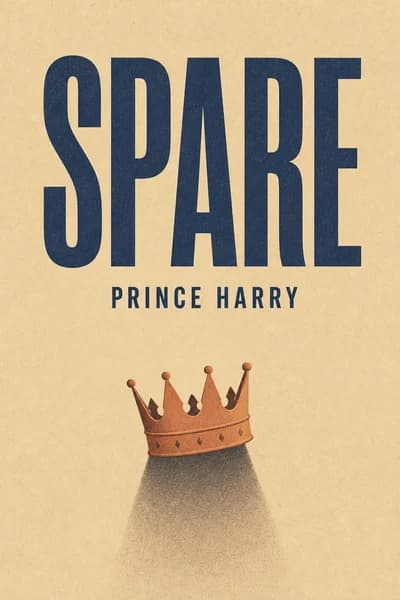
"Spare" ultimately tells the story of a man determined to break generational patterns of emotional repression and institutional rigidity. Harry's journey from reluctant prince to self-determined individual offers a radical reimagining of what it means to be royal in the 21st century.
The memoir challenges the monarchy's traditional bargain with the press - access and deference in exchange for favorable coverage. Harry rejects this arrangement, viewing it as fundamentally corrupt and harmful. His legal battles against tabloid intrusion represent not just personal vendettas but principled stands against what he sees as institutional abuses of power.
Harry's emphasis on mental health advocacy marks another departure from royal tradition. By speaking openly about his own psychological struggles, he breaks the stoic silence that has characterized generations of his family. This vulnerability, once considered unbecoming of royalty, becomes in Harry's hands a form of strength and service - potentially helping others facing similar challenges.
Perhaps most significantly, Harry redefines loyalty. Traditional royal thinking equates loyalty with silent service to the Crown above all else. Harry proposes an alternative: loyalty to one's values, to loved ones, and to personal well-being. This shift represents a modernization of royal purpose, suggesting that authentic service comes not from suppressing one's humanity but from embracing it.
The title "Spare" transforms through the narrative from a diminishment to a liberation. Being the spare - not bound by direct succession - ultimately gave Harry the freedom to chart his own course. His journey suggests that true value comes not from position or title but from the courage to live authentically and the determination to protect those we love.
In the end, Harry's story is not just about leaving an institution but about finding himself. It's about a boy who lost his mother, a soldier who found his purpose, a man who met his match, and a father determined to break cycles of trauma. It's about the universal human struggle to reconcile the life we're born into with the life we choose to create.