Capítulo 4
The Return of the Prodigal Son
Twelve years before the novel's main action, Hank's stepmother (Lee's mother) left Oregon, taking young Lee east to pursue education and escape the rough logging life. Now, Lee returns to Wakonda after receiving a postcard saying the family needs help since Henry has been injured. The real message comes in Hank's handwritten addition: "You should be a big enough guy now, bub."
Lee arrives as a pale, intellectual contrast to the physically powerful Hank. Where Hank is direct and practical, Lee is introspective and calculating. Where Hank works with his body, Lee works with his mind. Their opposition represents the classic American divide between physical and intellectual labor, West and East, action and contemplation.
But Lee harbors a dark secret motivation for his return. As a teenager, he discovered his mother and Hank engaged in a sexual relationship-a betrayal that has festered for years. Lee has returned not to help the family but to exact revenge by seducing Hank's wife Viv and destroying his brother's marriage. This plot unfolds with psychological complexity as Lee struggles with his own conflicted feelings toward the family and place he once rejected.
Lee's return creates a triangle of desire and resentment between himself, Hank, and Viv that drives much of the novel's tension. As Lee gradually becomes drawn into the physical work of logging and the rhythms of the household, he finds his determination for revenge complicated by unexpected feelings of belonging. The intellectual who once disdained manual labor discovers a strange satisfaction in the physical challenges of logging, while his plan to seduce Viv evolves from cold calculation to genuine attraction.
Through Lee's perspective, Kesey explores the alienation of modern intellectual life and the seductive pull of more primal connections to place, family, and physical labor. Lee's journey becomes a reverse bildungsroman-not a coming-of-age story but a return to origins, forcing him to confront the parts of himself he's tried to escape through education and distance.
Capítulo 5
The Land That Consumes
The Oregon landscape Kesey depicts is not the pastoral ideal of much American literature but a primal, threatening force that shapes human character through constant resistance. The endless rain, the dangerous river, the dense forests create an environment where human survival requires perpetual vigilance and effort. As Jonas Stamper, Henry's father, discovered upon arriving in Oregon, this is a land that makes humans feel "dwarfed" rather than "Big And Important."
Unlike the Midwestern farmland where crops and livestock depended on human care, Oregon's wilderness flourishes or fails with "complete disregard for man and his aims." Jonas found it a place "saturated with moist and terrible dying" despite its bounty-so overwhelming that he eventually abandoned his family and fled back east. His son Henry, however, responded to this challenge by becoming harder, developing the "berry-vine toughness" the wilderness demanded.
The novel's central metaphor is the river-constantly changing, powerful, indifferent to human desires. The Stampers' house juts into the river as a physical manifestation of their defiance against natural forces, but this position requires constant maintenance and reinforcement. Their struggle against the river parallels their struggle against the community and ultimately against their own natures.
For Hank, this battle began in childhood when he built an elaborate cage for three bobcat kittens he'd rescued, only to have the river rise overnight and drown them. This loss created a lifelong grudge match between Hank and the river-making him rush home from dates and basketball practice to check on rising waters. He understands the river "wants its fair advantage," and he sees it as an enemy that has taken things from him and threatens to take more.
The logging operation itself represents humanity's exploitation of natural resources-the virgin timber stand the Stampers harvest won't be replaced, creating a countdown to the inevitable end of their way of life. This environmental subtext, remarkably forward-thinking for 1964, suggests that the Stampers' rugged individualism is ultimately unsustainable in a world of finite resources.
Capítulo 6
Masculinity and Its Discontents
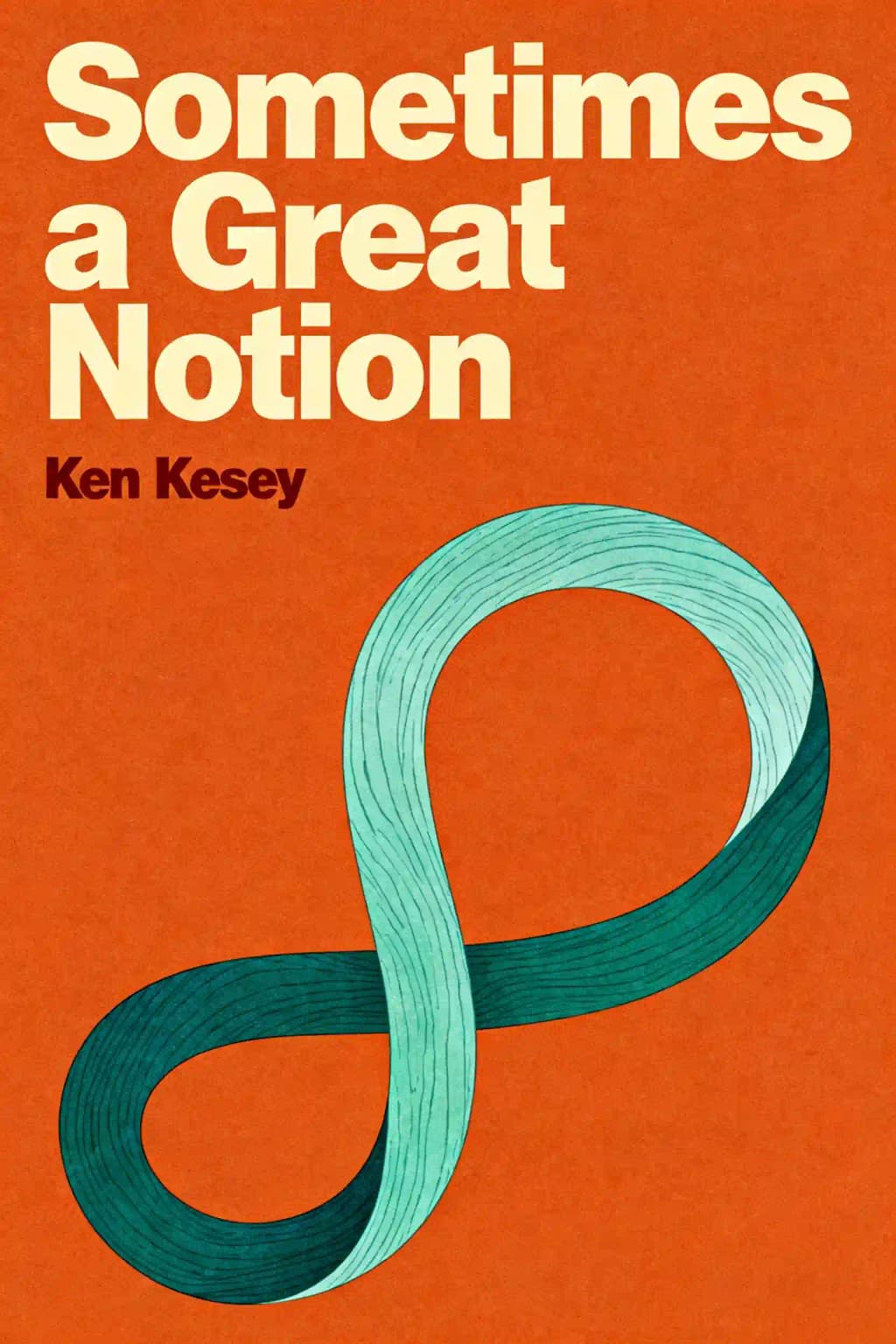
At its heart, Sometimes a Great Notion is an exploration of American masculinity in crisis. The Stamper men embody a traditional masculine ideal - physically powerful, emotionally restrained, fiercely independent, and defined by their work. Yet Kesey reveals the psychological costs of this ideal through their damaged relationships and inner turmoil, painting a complex portrait of men struggling to reconcile societal expectations with their inner lives.
Henry Stamper, the patriarchal figure, has shaped his son Hank through brutal lessons in self-reliance, replacing the biblical "Blessed Are the Meek" with his own uncompromising creed: "NEVER GIVE A INCH!" This philosophy, born from the harsh realities of frontier life and logging culture, has made Hank extraordinarily capable but emotionally isolated. The cost of this training becomes evident in Hank's inability to form deep connections outside his work identity. When Hank fights Biggy Newton in the town bar, Lee observes his brother's "primitive ferocity" with a mixture of horror and admiration. Hank fights not with technique but with pure animal determination, embodying a masculinity both powerful and terrifying - a raw force that succeeds through sheer willpower but leaves psychological wreckage in its wake.
Lee represents a different masculine model - intellectual, sensitive, strategic rather than direct. His education has given him analytical tools but left him disconnected from his body and uncertain of his identity. His years away at college have created a gulf between him and his family's traditional values. Lee's revenge plot against Hank is partly an attempt to prove his own masculinity by the standards of his father and brother - to show he's "a big enough guy now." His intellectual approach to masculinity reveals the tension between modern education and traditional male roles, highlighting the growing divide between physical and mental labor in American society.
Joe Ben Stamper offers yet another variation - combining physical capability with emotional openness and religious faith. His boundless optimism and lack of competitive ego make him the most psychologically healthy male character, but also the most vulnerable. He represents a potential bridge between old and new forms of masculinity, maintaining the physical competence valued by the logging community while allowing himself emotional expression and spiritual connection. His drowning in a logging accident suggests the impossibility of maintaining innocence in the harsh world the novel depicts, serving as a tragic commentary on the costs of combining sensitivity with traditional masculine pursuits.
The novel's climactic fistfight between Hank and Lee represents their competing masculinities finally meeting in direct confrontation. The battle embodies the larger conflict between traditional and modern conceptions of manhood. Significantly, this fight doesn't resolve their differences through one man's victory but through mutual exhaustion that leads to a kind of respect. When they later join forces for the dangerous log run downriver, they demonstrate that their different strengths might complement rather than oppose each other - suggesting a possible reconciliation between different modes of masculinity in modern America.
Through these complex male characters, Kesey explores how traditional masculine ideals both empower and damage men, while suggesting that true strength might lie in the integration of different masculine qualities rather than adherence to a single rigid model.
Capítulo 7
The Women Who Bear the Cost
While the Stamper men occupy center stage, Kesey gives remarkable depth to his female characters, particularly Viv Stamper. Initially appearing as a potential prize in the brothers' competition, Viv emerges as the novel's moral center - the character most capable of honest self-reflection and emotional authenticity. Her journey from dutiful wife to independent woman forms a crucial counternarrative to the male-dominated main plot, revealing the hidden emotional costs of the lumber industry's ruthless culture.
Trapped in a marriage to Hank that has grown increasingly distant, Viv finds herself drawn to Lee's intellectual interests and emotional availability. Their growing connection isn't merely sexual but represents a meeting of minds that Viv has been denied in her life with Hank. During their late-night conversations, they discuss everything from Greek mythology to modern poetry, revealing Viv's natural intelligence and curiosity. She shows particular insight when analyzing Tennessee Williams's plays, drawing parallels between the trapped characters and her own situation. These moments illuminate how marriage to Hank, while providing security and stability, has slowly suffocated her intellectual growth.
Yet Viv's loyalty to Hank runs deep, rooted in their shared history and her understanding of his complexity. She recognizes his fundamental decency beneath his hardened exterior, remembering the "somebody she fell in love with" years earlier - the young man who once spent an entire night building a shelter for an injured deer. When Lee finally asks her to leave with him, she's torn not just between two men but between different versions of herself - the intellectual companion she might become with Lee versus the supportive partner she's been with Hank. Her internal struggle reflects the broader tensions between tradition and change affecting the entire logging community.
Other female characters illuminate different aspects of gender relations in this male-dominated world. Indian Jenny, an aging Native American prostitute, represents the dual exploitation of both women and indigenous people. Her attempts at hexing Hank Stamper reveal not just vengeance but a desperate bid for agency in a world that has rendered her powerless. Her shell-reading rituals, performed in solitude by firelight, become poignant symbols of hope in the face of crushing loneliness. Simone, a young woman who abandons her religious purity for sexual experience, demonstrates the limited options available to women in this community. Her transformation from innocent church girl to disillusioned woman serves as a stark commentary on the community's sexual double standards.
Through these characters, Kesey shows how women bear the emotional and often physical costs of men's competitive struggles. The novel's final image of Viv taking Lee's bus ticket and leaving town alone - telling a child passenger simply "I'm just going" - suggests her ultimate rejection of the destructive masculine competition that has consumed both brothers. This departure represents not just an escape but an act of self-preservation and self-discovery. By choosing neither brother, Viv claims her independence and challenges the novel's underlying assumption that women must define themselves through their relationships with men. Her journey becomes a powerful testament to female autonomy in a world designed to deny it.
Capítulo 8
The Collective Versus the Individual
The central conflict between the striking union workers and the independent Stampers represents a fundamental American tension between collective action and individual freedom - a struggle that reverberates throughout the novel's Oregon logging community. Kesey masterfully refuses to present either position as wholly right or wrong, instead exploring the complex motivations, historical context, and far-reaching consequences on both sides of this deeply American divide.
The union men have legitimate grievances born from decades of exploitation. Their livelihoods are increasingly threatened by corporate consolidation, technological automation, and the ruthless efficiency demands of modern capitalism. Their collective action represents their only meaningful leverage against these larger economic forces. Floyd Evenwrite, the local union representative, emerges as a complex figure who genuinely believes he's fighting for the community's survival. His passionate response when discovering the Stampers have been secretly cutting and storing timber during the strike stems from intimate knowledge of families struggling without income - children going hungry, mortgages falling behind, and proud men forced to accept charity.
Yet Kesey deliberately shows the darker side of collectivism through escalating waves of community pressure. What begins as solidarity can transform into something more sinister - the way group identity can become coercive and dehumanizing. The union's tactics follow a grim progression from reasonable persuasion to systematic harassment to outright violence. Anonymous phone calls in the night, social ostracism at the grocery store, children bullied at school, and eventually physical attacks on the Stampers reveal how quickly community bonds can turn toxic. The townspeople's psychological need for a scapegoat transforms Hank from familiar neighbor to demonic other - "that goddam hardnose up the river" who becomes the focus of their collective hatred and projected fears.
The Stampers' fierce individualism contains equally complex shadings of nobility and selfishness. Their determination to honor their contract demonstrates an admirable integrity and work ethic passed down through generations. However, their stubborn refusal to consider the community's broader needs reveals a moral blindness to social obligations beyond family. Hank's growing exhaustion late in the novel suggests his dawning awareness of this contradiction: he's "tired" not just physically but spiritually - worn down by being treated like a "bogey man" by people who were once friends and neighbors.
Jonathan Draeger, the sophisticated union executive from the city, represents a cynical manipulation of both sides in this primal conflict. His calculated strategy of creating the false impression he's negotiating to buy the Stamper operation demonstrates how modern power often operates through deception and misdirection rather than direct confrontation. His private journal entries reveal a man who views human relationships purely as transactions to be managed through carefully calibrated doses of fear and hope - a corruption of both collective and individual values.
Through this layered conflict, Kesey explores whether true community is possible without sacrificing individual dignity, and whether individual freedom can exist without destroying the bonds of mutual obligation that make society function. These questions - about the proper balance between self and group, freedom and responsibility, individual conscience and collective need - remain profoundly relevant in American culture, where similar tensions continue to shape our political and social discourse.
Capítulo 9
A Reckoning with the American Myth
Sometimes a Great Notion ultimately confronts the sustainability of America's foundational myths-particularly the myth of endless westward expansion and unlimited natural resources. The Stamper family history embodies this national narrative of perpetual movement, always seeking "greener grass over the hill" until they reach the Pacific Ocean, the literal end of the westward journey.
The novel's Oregon setting represents the final frontier-there's nowhere left to go when the land ends at the ocean. This forces a reckoning with the question of how to live when you can no longer outrun your problems by moving west. The Stampers' defiant stand against the river, the union, and ultimately nature itself represents a refusal to accept this limitation, but the novel suggests such defiance cannot be sustained indefinitely.
Henry Stamper, dying in his hospital bed, drifts through morphine-induced hallucinations of his past-whales killed with an ax, his wife's death, his lifelong battle with the Stokes family for dominance in the community. His memories reveal a life defined by conquest and competition, a quintessentially American story that's reaching its inevitable end. His desperate attempt to communicate something vital to Hank before being sedated suggests his belated recognition of some essential truth he's failed to pass on.
The novel's ambiguous ending-with Hank and Lee joining forces for one final, dangerous log run while Viv leaves town alone-offers no simple resolution to these tensions. The brothers' cooperation suggests a possible integration of their opposing qualities, while Viv's departure implies that some new path must be found beyond the destructive patterns of the past.
Through Mr. Siggs, a character mentioned in the novel's conclusion who has learned to "make it with other people" and "make it with yourself" before facing the "main party" (possibly Nature, God, Time, or Death), Kesey hints at a progression of human development. The Stampers have mastered individual survival but failed at community; their next challenge would be reconciling with the larger forces that ultimately determine human fate.
In this sense, Sometimes a Great Notion is not just about a family's stand against a union or a town, but about America's necessary maturation-from adolescent belief in unlimited expansion and individual triumph to a more sustainable relationship with both community and nature. Fifty years after its publication, as America continues to wrestle with these same tensions, Kesey's masterpiece remains not just relevant but prophetic.