Capítulo 1
A River's Journey Through Love and Loss
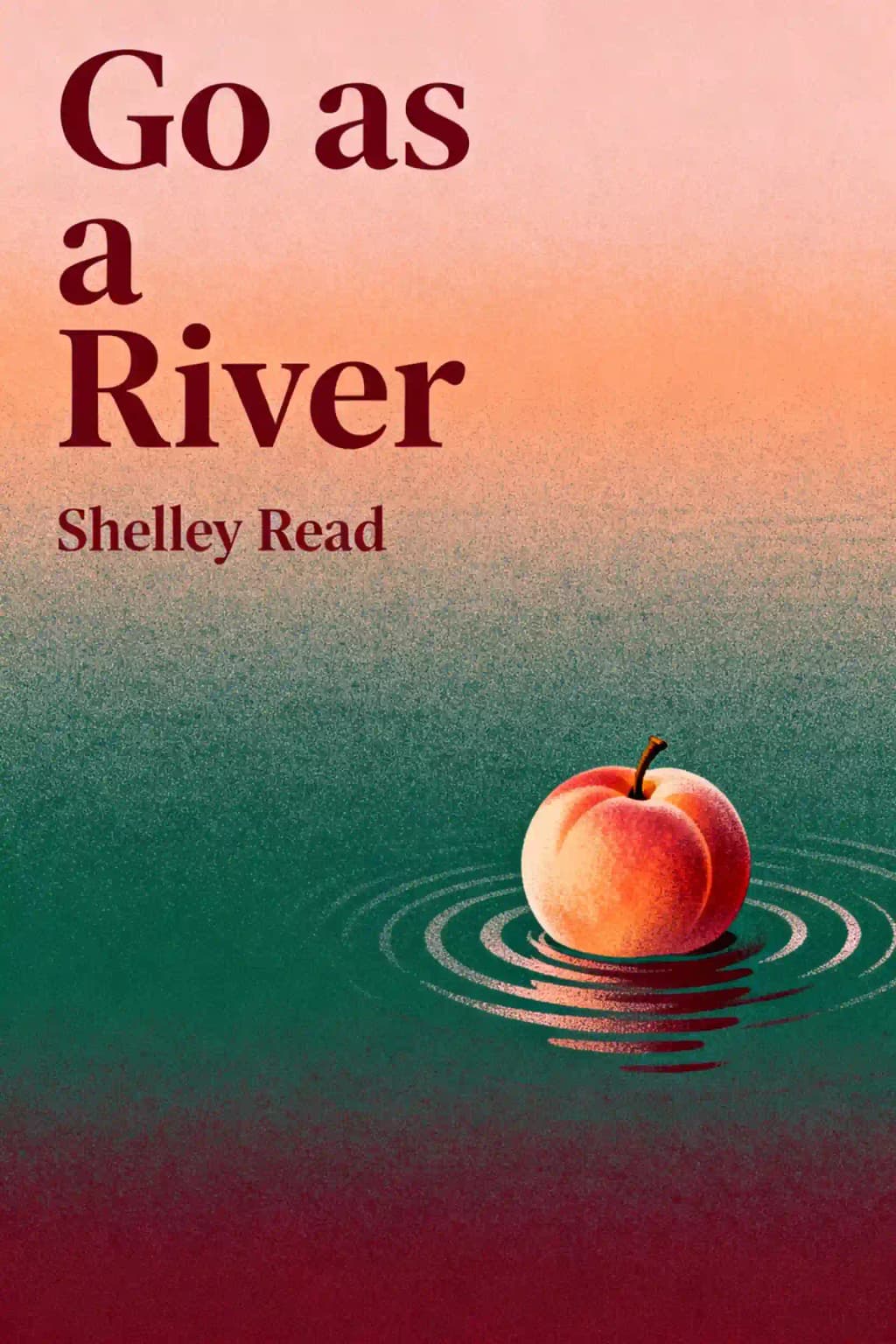
When Shelley Read's "Go as a River" first appeared on bookshelves in 2023, it quietly made waves among readers seeking stories of resilience and transformation. This lyrical novel about a young woman's journey through love, loss, and redemption in mid-20th century Colorado quickly became a book club favorite, with celebrities like Reese Witherspoon praising its "breathtaking portrayal of the human spirit." What makes this novel particularly striking is how it weaves together themes of displacement-both physical and emotional-against the backdrop of America's dam-building era, when entire communities were sacrificed for "progress." In Read's hands, the drowning of towns becomes a powerful metaphor for the submerged parts of ourselves that continue to shape who we become, even when hidden from view.
Capítulo 2
The Peach Orchard Girl and the Drifter
In 1948 Colorado, seventeen-year-old Victoria Nash's life revolves around tending her family's renowned peach orchard and caring for her father, brother Seth, and disabled Uncle Og. Since her mother's death five years earlier, Victoria has shouldered all domestic responsibilities while navigating her brother's increasing volatility. Their once-thriving farm has fallen into disrepair, mirroring the family's emotional decline.
Everything changes when Victoria encounters Wilson Moon, a mysterious young man who's hopped a train to escape the coal mines. Their chance meeting on Main Street marks the beginning of a forbidden connection that defies the town's racial boundaries. When Victoria injures her ankle and Wil carries her home, the encounter triggers immediate hostility from her family, particularly her drunken brother Seth. Despite this opposition, Victoria finds herself drawn to Wil's gentle nature and unhurried presence-qualities starkly absent in her own household.
The racial tensions in their small town of Iola become immediately apparent. When Victoria searches for Wil at Dunlap's boarding house, she's shocked by Mrs. Dunlap's disgust upon learning she's looking for "that Injun boy." This revelation about Wil's Native American heritage doesn't diminish Victoria's feelings but heightens her awareness of the dangers their relationship faces in a deeply prejudiced community.
What makes their connection so powerful is how it awakens Victoria to possibilities beyond her prescribed existence. In Wil's presence, she discovers parts of herself previously dormant-curiosity, desire, and a yearning for freedom. Their relationship develops in secret meetings by Willow Creek and at the home of Ruby-Alice Akers, a local outcast who becomes their unexpected ally. Through stolen moments of tenderness, Victoria experiences for the first time what it means to be truly seen and valued for herself, rather than for what she can provide to others.
Capítulo 3
Tragedy and Escape
The young lovers' happiness proves tragically brief. When Wil fails to appear at their rendezvous, Victoria's frantic search leads to a horrifying realization: her brother Seth, motivated by racism and a posted reward, has been involved in Wil's disappearance. Seth's drunken boast that he "got better'n that reward" confirms her worst fears about Wil's fate.
Devastated and discovering she's pregnant with Wil's child, Victoria makes a desperate decision to flee into the wilderness of Big Blue. This flight represents not just an escape from potential shame but a profound rejection of the community that destroyed her chance at happiness. In the mountains, Victoria builds a rudimentary shelter and attempts to create a life for herself and her unborn child.
Read's portrayal of Victoria's wilderness survival is both harrowing and transformative. Far from romanticizing this experience, the narrative unflinchingly depicts the physical hardships Victoria endures-hunger, isolation, and the terrifying vulnerability of giving birth alone. Yet within this struggle, Victoria discovers reservoirs of strength she never knew she possessed. "I have never been less afraid in my life," she realizes, finding paradoxical freedom in her isolation from the societal constraints that once defined her.
The birth scene is particularly powerful, as Victoria delivers her son alone in the hut, rubbing his initially lifeless body until he finally gasps and cries. She names him "Baby Blue" after the wilderness that shelters them, creating a moment of pure connection that stands in stark contrast to the tragedy that preceded it. But this idyllic period cannot last-as Victoria's milk supply dwindles and her garden is destroyed by an unexpected snowstorm, she faces the most wrenching decision of her life.
Capítulo 4
The Ultimate Sacrifice
In one of the novel's most devastating sequences, Victoria, weakened by starvation and desperate circumstances, stumbles upon a well-to-do couple picnicking with their infant near a roadside rest stop. The stark contrast between their abundance and her destitution becomes unbearable as she watches them from behind a cluster of trees. Her own baby, wrapped in threadbare blankets and growing weaker by the day, makes barely a sound - a silence that terrifies her more than his crying ever did. Recognizing that her son faces certain death if she keeps him, Victoria makes an excruciating decision that will haunt her for the rest of her life. While the couple is distracted by a passing train, she places her baby in their car, tucking him securely in the back seat with a hastily scrawled note. This heart-wrenching sacrifice epitomizes the novel's exploration of maternal love - the willingness to endure unbearable pain to give one's child a chance at life.
The aftermath of this decision carves deep emotional wounds into Victoria's psyche. She wanders for days in a fever-induced haze before finding her way back to Iola, where Ruby-Alice takes her in without question or condemnation. The older woman's quiet strength becomes Victoria's anchor, as she slowly nurses her back to health with herbal remedies and bone broth soups. During her recovery, Victoria battles not only physical weakness but also overwhelming grief and guilt, spending countless nights pacing the floorboards of Ruby-Alice's spare room.
When Victoria finally musters the courage to return to her family farm, she finds her father transformed by her absence. Once a commanding presence, he has become a shadow of himself - gaunt, silent, and ravaged by tuberculosis. Yet in his diminished state, he shows an unexpected tenderness, welcoming her return with a simple nod and a squeeze of her hand. Their reconciliation, though brief, allows them precious months to rebuild their relationship before his death. Victoria tends to him in his final days, but never reveals the existence - or loss - of his grandson.
The years that follow bring a cascade of losses that reshape Victoria's world. After her father's death, she loses her beloved draft horse to colic, then watches as her cattle succumb one by one to a harsh winter. The final blow comes when the government announces plans to construct a dam that will submerge Iola beneath hundreds of feet of water. While her neighbors band together in fierce resistance, Victoria becomes the first to sell her land, secretly relieved at the prospect of seeing her painful memories drowned forever. Yet even as she prepares to leave, she cannot abandon everything from her past. Working with Seymour "Greeney" Greeley, a passionate botanist who understands the historical significance of her family's unique peach varietals, she undertakes the painstaking process of saving the trees that have defined generations of her family, transplanting them to new ground in Paonia where they might flourish again.
Capítulo 5
Rebirth and Reunion
Victoria's move to Paonia marks a tentative rebirth. With her transplanted trees and Ruby-Alice's quilts, she attempts to create a new life while honoring what came before. The novel beautifully parallels Victoria's emotional journey with the fate of her beloved peach trees-both uprooted, both struggling to survive in new soil, both ultimately resilient beyond expectation.
Throughout these years, Victoria maintains one ritual that connects her to her lost child. Each summer, she returns to the clearing where she abandoned her baby, placing a stone in a circle to mark another year of his absence. This silent ceremony becomes her only way of mothering from afar, a physical manifestation of her enduring love.
The novel's emotional climax comes twenty years later when Victoria discovers pages left at the stone circle by Inga Tate, the woman who found her baby. Through these diary entries, Victoria finally learns her son's name-Lukas-and the complex story of his upbringing alongside Inga's biological son Maxwell. The pages reveal how Lukas grew into a thoughtful young man who sensed his difference from his family, particularly from his volatile twin brother and dismissive adoptive father.
What makes this revelation so poignant is how it illuminates the ripple effects of Victoria's desperate choice. Her son has lived a life both blessed and troubled-saved from starvation but subjected to prejudice, loved by his adoptive mother but never fully belonging. When Lukas discovers his true origins just before being drafted to Vietnam, he enlists immediately, severing ties with the only family he's known.
Capítulo 6
The River's Path
The novel's resolution brings Victoria, Inga, and eventually Lukas together at the edge of Blue Mesa Reservoir - the man-made lake that now covers Victoria's childhood home. This setting powerfully embodies the novel's central metaphor: that what lies beneath the surface - of landscapes, of lives, of memories - continues to shape what remains visible above. The reservoir itself serves as a potent symbol of how the past persists, even when submerged beneath layers of time and transformation. Just as the original river valley still defines the contours of the lake, childhood experiences continue to influence adult lives in ways both subtle and profound.
As Victoria awaits her son's arrival, she contemplates how her life has been like the drowned river - continuing to flow forward despite obstacles, gathering everything along the way because it knows no other path. The metaphor extends beyond mere forward motion; like a river, her life has carved new channels when blocked, created deep pools of memory in quiet moments, and occasionally overflowed its banks in times of emotional flood. She realizes that every experience - the joy of early motherhood, the pain of separation, the years of longing - has become part of her journey, impossible to separate from who she has become.
When Lukas finally appears, the moment is neither sentimental nor simple. Instead, it acknowledges the complexity of their situation - he is simultaneously the baby she once knew and a stranger shaped by experiences she didn't share. His mannerisms, some eerily familiar and others completely foreign, remind Victoria of both what has been lost and what might still be discovered. The physical resemblance to his younger self serves as a poignant reminder of the years that have passed, while his adult presence forces her to confront the reality of their separate lives.
What makes this reunion so moving is its tentativeness. There are no guarantees that mother and son will forge a meaningful relationship, only the courage to try. Small gestures - a shared glance, a hesitant smile, the careful navigation of personal space - carry enormous emotional weight. The novel presents their meeting as both an ending and a beginning, acknowledging that while the past cannot be undone, new connections can be forged from its fragments. In this way, the novel avoids easy resolution while still offering hope that connections severed by circumstance might be, if not fully restored, at least acknowledged and honored. Like the river that still flows beneath the reservoir's surface, the bond between mother and son persists, altered but unbroken by time and distance.
Capítulo 7
The Landscape as Character
Throughout "Go as a River," the Colorado landscape functions as more than setting - it becomes a living, breathing character with agency and influence that shapes the narrative as powerfully as any human protagonist. From the sun-drenched peach orchards of Iola to the rugged wilderness of Big Blue, from the untamed Gunnison River to the meandering North Fork that flows past Victoria's new home, the natural world both challenges and sustains the human characters in profound and unexpected ways.
Read's evocative descriptions bring this landscape vividly to life through sensory details and metaphorical language: "Light slants differently through autumn windows than any other time of year" and "The land had chosen to keep me, and I responded with determination." These observations reflect Victoria's deep connection to place, illustrating how the rhythms of nature become intertwined with human experience. The changing seasons mirror Victoria's emotional journey, while the daily tasks of farming and river work ground her in the physical reality of her surroundings.
The landscape serves multiple roles throughout the narrative - as provider and destroyer, sanctuary and challenge, teacher and witness. The peach orchards represent both sustenance and vulnerability, requiring constant attention while remaining at the mercy of frost and drought. The river itself embodies this duality, offering life-giving water while maintaining its potential for devastating floods.
The novel's treatment of the dam project is particularly nuanced, exploring the complex relationship between human ambition and natural forces. While mourning the drowning of towns and the displacement of communities, Victoria also recognizes that even this massive intervention cannot fully conquer the river's essential nature: "Looking at my river that would soon be a lake, I felt sure that after the dam was built, release gates would open, and some current would still push on. No matter how slow its course, I knew it would find a way to keep flowing." This observation speaks to both the resilience of nature and the limitations of human control.
The wilderness of Big Blue becomes a character in its own right - a place of both refuge and reckoning where Victoria must confront her past and forge her future. Its harsh beauty and isolation force her to develop new strengths while teaching her about survival, adaptation, and the raw power of the natural world. Through Victoria's eyes, readers experience the landscape as both intimate companion and formidable force, understanding how deeply place can shape identity and destiny.
Capítulo 8
Bearing Witness to Injustice
Beyond its personal story, "Go as a River" offers a clear-eyed examination of historical injustices that ripple through generations of American life. The murder of Wilson Moon - unpunished and barely investigated - starkly highlights the systemic lack of legal protections for Indigenous people in mid-20th century Colorado. Local authorities dismiss the crime with practiced indifference, treating it as an unfortunate but ultimately unremarkable occurrence, reflecting deeply entrenched patterns of institutional racism.
The government's forced relocation of entire towns for the dam project serves as a powerful metaphor for the broader pattern of displacement in American history. This modern exodus eerily mirrors the earlier forced removals of Native communities from their ancestral lands, a parallel that Zelda pointedly emphasizes to Victoria: "The only reason we're sitting here is they got forced off all this land we call our own." The dam project, presented as progress, becomes another link in a long chain of dispossession, where those with power repeatedly remake the landscape with little regard for existing communities.
The novel meticulously documents how prejudice shapes individual lives through countless daily interactions and seemingly small decisions. When Lukas is called a "half-breed" and denied entry to a taxidermist's shop, we witness how racism follows him despite his privileged upbringing and education. His experience reveals how no amount of social status can fully shield someone from the effects of racial prejudice. The shopkeeper's casual cruelty - delivered without hesitation or shame - demonstrates how deeply normalized such discrimination was in this era.
Similarly, Victoria's friend Zelda's observation about her deceased son and the Vietnam draft illuminates another facet of systemic inequality. Her declaration that "I'd run him to Canada or risk jail or hell to make sure he wouldn't have to go" highlights the stark differences in options available to different segments of society. While some families had the resources and connections to help their sons avoid the draft, others - particularly those from marginalized communities - found themselves with few choices. This disparity becomes painfully personal for Victoria when she loses her own son, underscoring how systems of power and privilege determine not just opportunities in life, but sometimes survival itself.
Through these interconnected stories of injustice, the novel reveals how historical wrongs continue to shape present realities. The characters' experiences demonstrate that progress is neither linear nor universal, and that the weight of history falls unevenly across different communities. Their struggles illuminate how individual acts of prejudice and institutional discrimination work together to perpetuate cycles of inequality and loss.
Capítulo 9
The Wisdom of Water
The novel's title comes from Wilson Moon's grandfather's advice for handling difficult situations: "I'll go as a river." This philosophy - finding the path of least resistance while maintaining one's essential nature - becomes Victoria's guiding principle throughout her journey. Like water conforming to any vessel while retaining its fundamental properties, she learns to adapt without losing herself. Rather than fighting circumstances she cannot change, she learns to flow around obstacles, to persist despite barriers, and to carve new channels when necessary, just as water inevitably finds its way forward.
This wisdom extends beyond mere survival to encompass a deeper truth about identity and transformation. Just as a river remains itself despite changing course - whether rushing through narrow canyons or spreading peacefully across valleys - Victoria maintains her essential self through devastating losses and new beginnings. The river metaphor appears repeatedly in crucial moments: during her early grief, through her years of searching, and in her eventual healing. When she tells her son she's tried to "go as a river," she's expressing not resignation but a hard-won understanding of resilience, drawn from years of learning to persist and adapt while staying true to her core self.
The water imagery gains additional layers of meaning throughout the narrative. Like the seasonal changes of a river - from spring floods to winter ice - Victoria's journey encompasses both moments of overwhelming emotion and periods of apparent stillness, each essential to her story. The river's patience in carving through rock mirrors her own steady persistence in searching for truth, while its ability to nurture life despite harsh conditions reflects her capacity for love and growth in the face of loss.
The water metaphor culminates in the novel's powerful final scene at Blue Mesa Reservoir, where three generations stand at the edge of drowned history. The reservoir represents both loss and possibility - the submerged past lying quiet beneath the surface and the potential for new connections flowing above. The flooded valley below mirrors the way memories can be simultaneously preserved and transformed by time. As Victoria and Lukas walk toward each other along the shore, they embody the novel's central hope: that even after terrible separation, we might find our way back to each other, changed but still recognizable, like water returning to its source after a long journey through the landscape.
Capítulo 10
A Testament to Resilience
At its heart, "Go as a River" is a testament to human resilience in the face of overwhelming loss. Victoria endures a series of devastating blows: the early death of her mother that leaves an irreparable void, the brutal murder of Wilson, her first and deepest love, the heart-wrenching sacrifice of giving up her child for adoption, the slow decline and eventual passing of her father, and ultimately, the literal drowning of her hometown beneath the waters of a new reservoir. Yet through each tragedy, she finds ways to persist - planting trees in the harsh Colorado soil, nurturing new life in the orchard, and creating pockets of beauty in a world that has shown her its darkest corners.
What makes Victoria's journey so compelling is that her strength never feels superhuman or idealized. Instead, it emerges from necessity and develops through daily practice - in the methodical work of tending orchards, in the quiet moments of grief, in the small acts of moving forward when standing still would be easier. "I realized that strength comes from both resilience and vulnerability," she reflects, "from small triumphs and countless failures." Her healing isn't linear; some days find her stronger, others bring her to her knees, but she continues to rise. This nuanced understanding of courage - as something cultivated rather than innate - offers readers a model of resilience that feels both aspirational and attainable.
The novel's exploration of resilience extends beyond mere survival to encompass transformation. Victoria learns to swim in her grief without drowning in it, to hold both love and loss in the same heart, to find purpose in tending to what remains while honoring what's been lost. Her relationship with the land itself becomes a source of strength, teaching her that even the harshest winters give way to spring, that dormancy isn't death but preparation for renewal.
In Shelley Read's capable hands, Victoria's story becomes more than a personal narrative - it becomes a meditation on how we all might navigate loss without being defined by it, how we might honor what's been submerged without drowning in grief, how we might, in the end, go as a river toward whatever awaits us downstream. Through Victoria's journey, readers learn that resilience isn't about becoming impervious to pain, but about remaining porous to both suffering and joy, allowing life to flow through us like water through a canyon, shaping us but never breaking us completely.