Capítulo 1
When the Fall Has No Bottom: A Journey Through Darkness
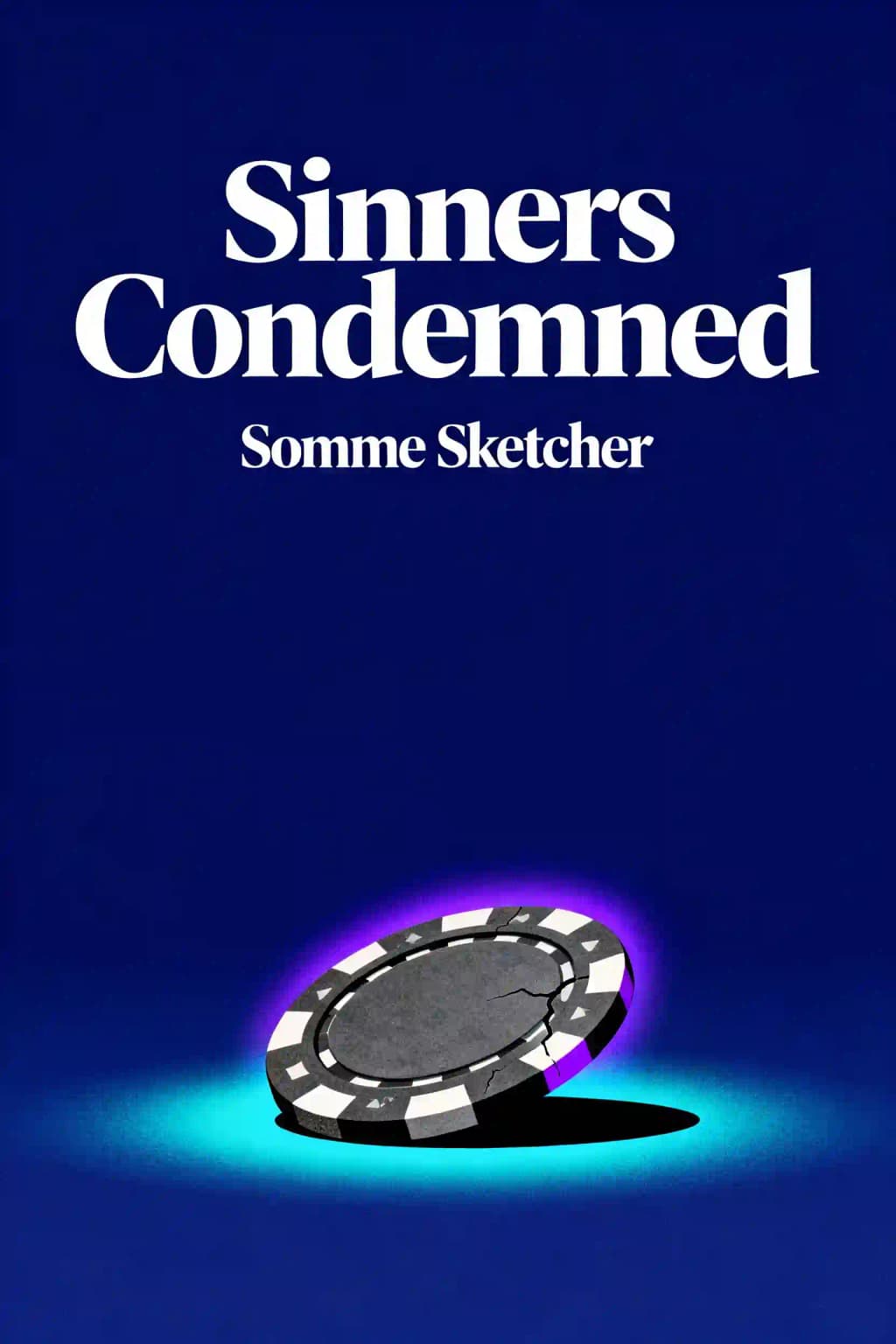
Imagine a world where redemption seems impossible, where the lines between good and evil blur until they disappear completely. This is the world of "Sinners Condemned," the first installment in a gripping duet that has captivated readers across the globe with its raw exploration of human darkness. Since its release, this dark romance has developed a cult following, with celebrities like Megan Fox and Machine Gun Kelly citing it as one of their favorite reads during a 2023 Vogue interview. The book has sparked intense debates on social media platforms about the nature of forgiveness and whether some actions place people beyond redemption. What makes this story particularly compelling is how it forces readers to confront their own capacity for darkness while questioning whether love can truly exist in the shadows of violence and trauma.
Capítulo 2
The Blood-Soaked Beginning: A Descent Into Chaos
The story opens with a scene that immediately plunges readers into a world of violence and moral ambiguity. Blood pools on the ground as our protagonist, Rafe, steps over it with chilling detachment. Griffin's shocked question-"What have you done?"-hangs in the air, unanswered and heavy with implication. This isn't just any violent incident; it's a pivotal moment that defines the trajectory of the entire narrative. As Rafe slams the car door shut, six pairs of eyes watch him drive away, but only one matters to him-Penelope's. Her gaze burns into his bloodied hands gripping the steering wheel, creating an intimate moment amidst the chaos.
"What the fuck, Rafe?" she says, using his nickname for the first time. There's something deeply personal about this moment-the shock in her voice coupled with a breathless edge that suggests she's seeing him clearly for perhaps the first time. The juxtaposition of violence and intimacy creates a dissonance that characterizes their relationship throughout the story. Rafe doesn't answer her question directly, instead retreating into memory, recalling the night he first wondered if Penelope might be his "Queen of Hearts."
This memory-set against the backdrop of his brother's wedding and a port explosion that turned the sky orange-reveals Rafe's awareness of his own moral descent. He had wondered what the bottom of his fall would feel like, and now he knows: it's Penelope's breathing, her citrus perfume, and the incongruously innocent sound of Bing Crosby's "White Christmas" playing in the background. The contrast between the violence just committed and the holiday music creates an unsettling atmosphere that perfectly encapsulates the novel's tone.
What's most disturbing is the "calming tranquility" that washes over Rafe in this moment. There's a twisted comfort in knowing he's fallen to the bottom and can fall no further. When Penelope quietly asks where they're going, his hand slides off the wheel to find her knee-an intimate gesture stained with someone else's blood-and he answers simply: "Home, Queenie." This nickname, both possessive and affectionate, establishes their complicated dynamic from the very beginning.
Capítulo 3
The Queen of Hearts and Her Bloody King
The relationship between Rafe and Penelope forms the dark, beating heart of the narrative. Their connection isn't built on traditional romantic foundations but rather on a shared understanding of darkness and trauma. Rafe's nickname for Penelope-"Queenie" or his "Queen of Hearts"-carries multiple layers of meaning throughout the story. In playing cards, the Queen of Hearts represents love but also power; in Lewis Carroll's Alice in Wonderland, she's known for her famous line: "Off with their heads!" This duality perfectly captures Penelope's role in Rafe's life-she simultaneously represents his capacity for love and his potential for violence.
Their relationship develops against a backdrop of danger and moral ambiguity. Penelope isn't portrayed as an innocent corrupted by Rafe's darkness; rather, she has her own shadows that complement his. There's a moment when Rafe observes her watching the blood trickling down his hand until it disappears under his shirt cuff. Her fascination reveals something about her character-she's not repulsed by the violence but rather captivated by it. This shared comfort with darkness creates a bond between them that's both disturbing and profound.
What makes their relationship so compelling is how it challenges conventional notions of love. Can genuine love exist between two damaged people? Can it flourish in environments of violence and trauma? The story doesn't offer easy answers but instead explores the gray areas where love and darkness intersect. There's a scene where Rafe thinks about how people often talk about falling in love as if it's a gentle descent, but for him, loving Penelope feels like plummeting from a great height with no safety net-dangerous, exhilarating, and potentially fatal.
Their conversations often reveal this complex dynamic. "You don't get to decide what I can handle," Penelope tells Rafe during a particularly intense moment. "I've seen monsters before. The difference is, you've never pretended to be anything else." This acceptance of each other's true nature-flawed, dangerous, and damaged-forms the foundation of their connection. It raises uncomfortable questions for readers: Is their relationship toxic or truthful? Is acceptance of someone's darkest parts an act of love or enablement?
Capítulo 4
Shadows of the Past: Origins of Darkness
The narrative doesn't present Rafe's darkness as something that emerged fully formed in adulthood. Instead, it carefully constructs a past that explains-without excusing-how he became the man capable of such violence. Through flashbacks and memories that punctuate the main storyline, we learn about formative traumas and pivotal moments that shaped his moral compass.
One particularly revealing memory involves Rafe as a twelve-year-old boy, standing in his father's study while being told: "There are two types of men in this world-those who take what they want and those who watch others take it." This toxic lesson in masculinity and power becomes a cornerstone of Rafe's worldview. His father, a figure both feared and admired, taught him that vulnerability was weakness and that power came through control and sometimes violence.
Another crucial element of Rafe's backstory involves his brother's betrayal-a complex situation involving love, loyalty, and deception that left permanent scars. "Brothers are supposed to protect each other," Rafe says at one point, the bitterness evident in his voice. "Mine taught me that everyone has a breaking point." This betrayal fundamentally altered his ability to trust and contributed to his belief that relationships are ultimately transactional.
The port explosion mentioned in the opening scene isn't just background detail-it represents a collective trauma that affected many characters in the story. Set against this backdrop of community-wide suffering, personal tragedies take on additional weight and meaning. There's a poignant scene where Rafe recalls watching people helping each other in the aftermath of the explosion, wondering why crisis brings out both the best and worst in humanity. This observation reveals a self-awareness that makes him more than just a one-dimensional villain.
Penelope's past is equally complex, marked by experiences that taught her to be wary but resilient. "I learned early that the world doesn't care about your pain," she tells Rafe during an intimate conversation. "It only cares about how well you hide it." This shared understanding of suffering creates a foundation for their connection that goes beyond physical attraction or convenience. They recognize in each other a familiar type of damage-different in its specifics but similar in its effects.
Capítulo 5
The Moral Gray Zone: Justice, Revenge, and Rationalization
One of the most thought-provoking aspects of the story is how it explores the thin line between justice and revenge. The violence that opens the narrative isn't random-it's presented as retribution for a prior wrong. This raises uncomfortable questions about moral relativism: When is violence justified? Can vengeance ever truly be considered justice?
Rafe operates according to his own moral code-one that doesn't align with conventional ethics but maintains an internal consistency. "I don't believe in forgiveness," he states plainly in one scene. "I believe in balance. You take from me, I take from you. It's the only kind of justice that makes sense." This perspective challenges readers to examine their own beliefs about forgiveness and retribution.
The story doesn't shy away from showing how people rationalize their darkest actions. There's a chilling scene where Rafe methodically explains his reasoning for a particularly brutal act: "He had choices. He made the wrong ones. Everything that happened after was just consequence." This cold logic reveals how moral boundaries can shift when viewed through the lens of personal justice.
What complicates this further is that the narrative doesn't present clear heroes and villains. Characters who commit reprehensible acts are also shown performing acts of kindness and loyalty. Those who appear virtuous harbor their own dark secrets and selfish motivations. This moral ambiguity forces readers to constantly reassess their judgments and allegiances.
Penelope serves as both participant in and witness to this moral gray zone. There's a powerful moment when she confronts Rafe about his actions: "I'm not asking you to be good. I'm asking you to be honest about what you are." This statement encapsulates one of the central themes of the story-that authenticity, even in darkness, may be more valuable than pretended virtue.
The community surrounding these characters also operates in this moral gray zone. Friends, family members, and associates all make compromises and justifications for behavior they would condemn in others. "We're all sinners here," one character observes during a tense confrontation. "Some of us are just more honest about it." This acknowledgment of universal moral compromise creates an environment where traditional concepts of right and wrong become increasingly blurred.
Capítulo 6
The Price of Power: Control, Vulnerability, and Sacrifice
Power dynamics play a crucial role throughout the narrative, with characters constantly negotiating for control-over situations, over others, and over their own emotions. Rafe's approach to power is direct and unapologetic: "Power isn't about making people fear you," he explains in one revealing conversation. "It's about making them believe they need you." This philosophy informs how he navigates relationships, business dealings, and conflicts.
What makes this exploration of power particularly nuanced is how the story shows its costs. Maintaining control requires constant vigilance and often means sacrificing genuine connection. There's a poignant scene where Rafe realizes that his carefully constructed walls have not only kept others out but have trapped him within. "The problem with armor," he reflects, "is that eventually you forget how to take it off."
Vulnerability becomes a form of currency in this power economy. Characters strategically reveal weaknesses to gain trust or manipulate others, but genuine vulnerability-the kind that risks real hurt-remains rare and precious. When Penelope deliberately makes herself vulnerable to Rafe, it represents a significant shift in their relationship dynamic. "I'm choosing to trust you," she tells him. "Don't make me regret it." This moment carries tremendous weight because both characters understand exactly what's at stake.
The story also explores how power operates differently for men and women within their social context. Female characters often wield influence through less direct but equally effective means. Penelope demonstrates this when she observes, "Men like you understand force. I prefer leverage." Her approach to power involves gathering information, building alliances, and strategic patience-a contrast to Rafe's more immediate and forceful methods.
Sacrifice emerges as another aspect of power-what are characters willing to give up to maintain control or protect what matters to them? For Rafe, the answer increasingly includes his own moral boundaries. There's a disturbing scene where he acknowledges this slippage: "Every line I swore I wouldn't cross is behind me now. And the worst part? I'd cross them all again." This willingness to sacrifice his own principles reveals both the depth of his commitment and the extent of his moral compromise.
Capítulo 7
The Supporting Cast: Allies, Enemies, and Those In Between
While Rafe and Penelope's relationship forms the central axis of the story, a rich supporting cast provides depth and complexity to the narrative world. Griffin, whose shocked question opens the story, represents a moral counterpoint to Rafe-someone who still believes in clear distinctions between right and wrong. Their friendship is tested throughout the narrative, with Griffin repeatedly confronting Rafe about his choices: "I've known you since we were kids," he says during one heated exchange. "This isn't who you are." Rafe's response-"Maybe you never knew who I was"-highlights how people can maintain different versions of themselves for different relationships.
The six pairs of eyes mentioned in the opening scene belong to a group whose dynamics significantly impact the main storyline. Each character brings their own motivations, loyalties, and moral compromises to the table. There's Eli, whose quiet observation masks a calculating mind; Mara, whose fierce loyalty comes with expectations of reciprocity; Dominic, whose humor conceals deeper wounds; and others whose alliances shift as circumstances change.
Family relationships add another layer of complexity. Rafe's relationship with his brother-mentioned in connection with the wedding night memory-carries unresolved tensions that influence his current behavior. "Family is supposed to be blood," Rafe says bitterly at one point. "Mine taught me that blood can betray you faster than anything." This fractured family history explains much about his difficulty trusting others and his need for control.
Enemies in the story aren't simply obstacles but serve as dark reflections of the protagonists. There's a chilling moment when Rafe confronts a longtime adversary who tells him, "We're not so different, you and I. We both take what we want." Rafe's disturbed recognition of their similarities forces him to question his own self-perception and moral standing.
What makes these supporting characters particularly effective is how they refuse to remain static. Allies become enemies, enemies find common ground, and those caught in between make choices that reveal their true priorities. This constant shifting of allegiances creates tension and unpredictability that drives the narrative forward.
Capítulo 8
The Setting: A World of Contrasts
The physical and social environment of the story serves as more than just backdrop - it actively shapes characters' choices and reflects their internal states. The setting is characterized by stark contrasts: opulent wealth alongside desperate poverty, public respectability masking private corruption, beautiful facades concealing ugly realities. These dualities create a complex tapestry that mirrors the moral ambiguities faced by the characters.
The city itself (unnamed but vividly realized) functions almost as a character, with distinct neighborhoods representing different social spheres and moral territories. The affluent district, with its gleaming glass towers and manicured parks, houses Rafe's legitimate business empire - a world of boardrooms, private clubs, and carefully maintained appearances. In stark contrast, the industrial waterfront, with its rusting cargo containers and shadowy warehouses, hosts darker dealings. The transition between these zones is marked by gradually deteriorating architecture and increasing desperation, creating a physical manifestation of social decline. These physical boundaries mirror the moral boundaries that characters cross throughout the narrative.
Weather and natural elements serve as powerful metaphors, often reflecting emotional states and plot developments. The port explosion that turned the sky orange - visible for miles and bathing the city in an otherworldly glow - represents a moment when normal rules were suspended and true natures revealed. Similarly, a violent thunderstorm coincides with a crucial confrontation between Rafe and Penelope, the external chaos echoing their internal turmoil. The persistent fog rolling in from the harbor creates an atmosphere of moral ambiguity, while rare moments of clear sunshine coincide with instances of emotional clarity.
Homes and personal spaces reveal character through their details. Rafe's penthouse apartment is described as "immaculate but impersonal," with expensive furnishings but few personal touches - a physical manifestation of his emotional walls. The chrome and glass interior reflects both his wealth and his tendency to keep people at a distance. In contrast, Penelope's modest apartment contains carefully chosen items that each tell a story from her past: a worn leather chair inherited from her grandfather, photographs from her travels, and collected artifacts from various cases. When Rafe brings her "home" at the end of the opening scene, the significance extends beyond mere location to represent a psychological state they've reached together - a metaphorical shelter from the moral storms outside.
The Christmas setting mentioned in the opening (with Bing Crosby playing) creates an effective contrast between cultural expectations of peace and goodwill and the violent reality of the characters' lives. Holiday decorations mock the darkness of their world: cheerful storefront displays illuminate blood in the snow, while carol singers provide soundtrack to backroom deals. This juxtaposition highlights how disconnected their world is from conventional morality and social norms, while also emphasizing the characters' longing for connection and redemption. The season's promise of renewal and hope stands in sharp relief against the cynicism and corruption that pervades their daily existence.
Capítulo 9
The Cliffhanger: Poised Between Condemnation and Consumption
True to the author's warning, the narrative builds toward a cliffhanger ending that leaves readers suspended between resolution and continuation. The final chapters accelerate the pace relentlessly, with conflicts intensifying and stakes rising until reaching a breaking point. Characters are forced to make impossible choices that reveal their true priorities and values - choices that test not only their relationships but their fundamental understanding of themselves.
The title "Sinners Condemned" takes on multiple meanings as the story progresses, each layer adding depth to the narrative's exploration of judgment and morality. Initially, it seems to refer to social judgment - how these characters are viewed by the conventional world around them, particularly through the lens of Boston's elite society and their rigid moral codes. Later, it suggests self-condemnation - the internal judgment characters pass on themselves for their actions, especially as Rafe grapples with his role in his family's destruction and Penelope confronts the consequences of her manipulation. By the end, it raises questions about ultimate judgment - whether redemption remains possible for those who have gone so far beyond conventional moral boundaries, and who gets to make that determination.
The cliffhanger itself centers on a moment of terrible choice for both Rafe and Penelope. Their relationship, built on a foundation of shared darkness and mutual understanding, faces its greatest test when circumstances force them to prioritize between loyalty to each other and other deeply held values. For Rafe, this manifests as a choice between protecting Penelope and preserving what remains of his family legacy. For Penelope, it's a decision between her love for Rafe and her carefully orchestrated plans for revenge. The final scene leaves them literally and figuratively at a crossroads, with multiple possible paths forward but no clear right answer - standing in the rain-soaked streets of Boston, each holding secrets that could destroy the other.
This suspension between "Sinners Condemned" and its sequel "Sinners Consumed" creates a powerful tension that resonates beyond the immediate plot. The first title suggests judgment and punishment, while the second implies something more complex - perhaps being devoured by sin or perhaps consuming it and making it part of oneself. This linguistic progression hints at the larger thematic journey of the duet, suggesting that the path from condemnation to consumption might be less about redemption and more about acceptance and transformation.
What makes this cliffhanger particularly effective is how it leaves readers not just wondering what will happen next, but questioning what they want to happen next. By investing readers in these morally complex characters - showing their flaws, desires, and vulnerabilities in intimate detail - the narrative creates a situation where the audience may find themselves hoping for outcomes that conflict with conventional morality. The story forces readers to confront their own moral flexibility, as they potentially root for characters whose actions they would condemn in real life. This creates a discomforting but thought-provoking position that lingers long after the final page.
The author masterfully weaves together personal and societal stakes, ensuring that the cliffhanger works on multiple levels - emotional, moral, and plot-driven. The unresolved tensions between duty and desire, revenge and redemption, judgment and acceptance create a web of possibilities that makes the wait for the sequel both frustrating and delicious.
Capítulo 10
Beyond Good and Evil: The Philosophical Underpinnings
Beneath the surface of this dark romance lies a sophisticated engagement with philosophical questions about morality, identity, and human nature. Without ever becoming didactic, the story explores Nietzschean concepts of going "beyond good and evil" to establish personal values in a world without absolute moral truths.
The characters repeatedly confront situations where conventional morality provides no adequate guidance. "Right and wrong are luxuries," Rafe states during one pivotal scene. "Sometimes all you have are bad choices and worse ones." This moral relativism isn't presented as an excuse for bad behavior but as a realistic assessment of complex situations where traditional ethical frameworks break down.
Questions of identity permeate the narrative. Characters struggle with the gap between how they present themselves to the world and who they believe themselves to be. Rafe's observation that "we're all wearing masks; some of us are just more honest about it" speaks to this universal human experience of navigating between authentic self and social performance.
The story also grapples with determinism versus free will. How much are characters shaped by their past experiences? To what extent can they choose to become something different? There's a powerful scene where Penelope challenges Rafe's fatalistic view: "Your past explains you; it doesn't excuse you. What you do now is still your choice." This tension between understanding the roots of behavior and holding people accountable for their actions runs throughout the narrative.
Perhaps most fundamentally, the story asks whether love can exist alongside darkness-whether genuine connection is possible between people who have committed terrible acts. It doesn't offer easy answers but suggests that authentic acceptance of another person's complete self-including their darkest aspects-might be the truest form of love, even if it's not the healthiest by conventional standards.
As the first book concludes and points toward its sequel, readers are left not just wondering about plot resolutions but contemplating these deeper questions about human nature. The real power of "Sinners Condemned" lies in how it uses the framework of a dark romance to explore philosophical terrain usually reserved for more explicitly literary fiction, creating an experience that is simultaneously entertaining and thought-provoking.