Capítulo 1
When Obsession Becomes Possession
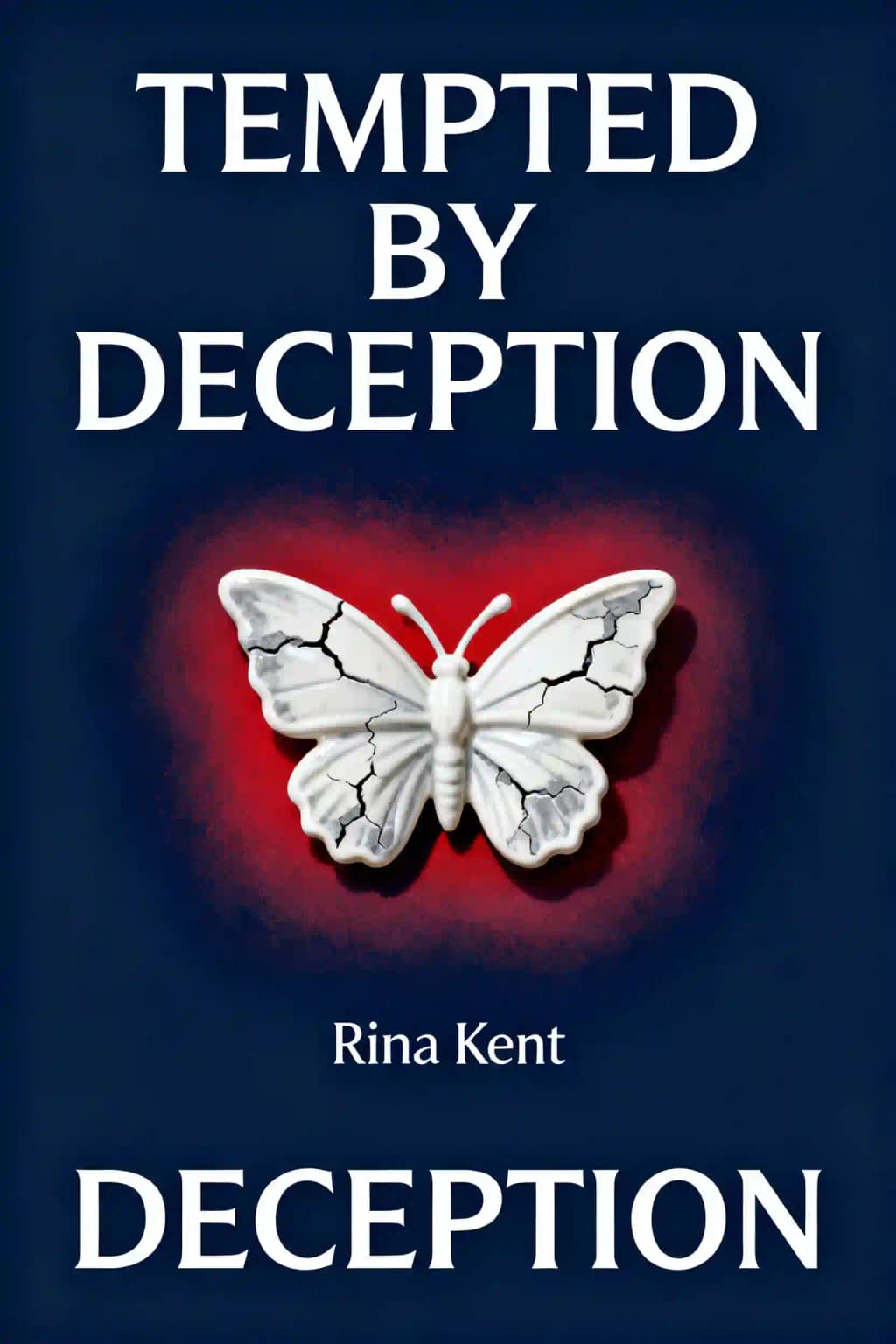
In the dark and twisted world of Rina Kent's "Tempted by Deception," readers are pulled into a dangerous dance between predator and prey that blurs the lines between fear and desire. This second installment in Kent's Deception Trilogy has captivated readers worldwide with its exploration of toxic relationships, power dynamics, and the thin line between obsession and love. The novel has developed a cult following among dark romance enthusiasts, with BookTok creators particularly drawn to its morally ambiguous characters and intense psychological elements. Kent's ability to create characters who are simultaneously repulsive and magnetic has earned her a reputation as the queen of dark romance, with readers often debating whether Adrian Volkov represents the ultimate anti-hero or a true villain beyond redemption.
Capítulo 2
The Making of a Monster: Adrian's Traumatic Origins
Adrian Volkov's transformation into a ruthless Bratva enforcer is deeply rooted in a childhood marked by manipulation and betrayal. At seven years old, he exists in a fractured reality - shuttling between his mother's sparse, emotionally barren apartment in Moscow's outskirts and his father's warmly lit home where his stepmother Annika creates a sanctuary of normalcy. In his mother's domain, Adrian learns early that love is conditional, measured in acts of loyalty and obedience. His mother, Natasha, a former ballerina whose career ended after his birth, wields her bitterness like a weapon, teaching her son that affection must be earned through compliance.
The contrast between his two worlds shapes Adrian's understanding of relationships. While Annika teaches him to bake cookies, helps with his homework, and treats his childhood fears with gentle understanding, his mother transforms every interaction into a test of allegiance. She demands detailed reports about Annika's daily routines, friends, and conversations with his father. Adrian, displaying early signs of the strategic thinking that would later serve him in the Bratva, begins crafting elaborate fictions - protecting Annika while appearing to fulfill his mother's demands.
The price of his deception, when discovered, is severe. His mother's reaction transcends mere punishment - she systematically destroys his sense of security. The breaking point comes literally when she deliberately pushes him down the stairs, calculating the angle needed to break his arm without causing permanent damage. As he lies there in pain, her words become a lesson he never forgets: "Sometimes we need to make sacrifices for love, my darling. You don't mind making a little sacrifice for your mother's happily ever after, do you?"
His cherished copy of The Nutcracker becomes a symbol of lost innocence. The book, Annika's Christmas gift, represents everything his mother despises - warmth, imagination, and unconditional love. When she burns it page by page before his eyes, forcing him to watch, she's not just destroying a book but methodically dismantling his capacity for open emotional attachment. This moment crystallizes into a core memory that shapes his adult understanding of possession and protection.
The situation escalates when Adrian overhears his mother's plans for Annika. The casual way she discusses arranging an "accident" - while preparing his favorite breakfast, no less - teaches him that violence and care can coexist in disturbing harmony. This duality becomes fundamental to his adult personality, allowing him to compartmentalize tenderness and brutality with frightening efficiency.
These formative experiences architect Adrian's adult psyche: his obsessive need for control stems from years of powerlessness, his inability to trust is rooted in his mother's betrayal, and his tendency to view relationships as strategic arrangements rather than emotional bonds reflects his early training in emotional manipulation. When he later meets Lia, these deeply ingrained patterns manifest in his simultaneous desire to protect and possess - making him both her fiercest protector and most dangerous threat.
Capítulo 3
A Witness to Violence: Lia's Fateful Encounter
Lia Morelli's life changes irrevocably on a rain-slicked Tuesday evening when she witnesses a murder in her apartment building's underground garage. Hidden behind her Mercedes, she watches in paralyzed horror as a Russian man named Volkov methodically executes someone - three precise shots that echo off concrete walls. The victim's blood spreads across the garage floor like spilled wine, a sight that will haunt her dreams for months to come.
When discovered, she's dragged before the killer - a tall, imposing man with penetrating gray eyes and an expensive black wool coat. Adrian Volkov presses his still-warm Glock against her forehead, the metal burning against her skin. Despite her terror, Lia summons remarkable composure, negotiating for her life with the steady voice she usually reserves for high-stakes corporate deals. She offers money, silence, anything to survive this encounter.
The power dynamic that will define their relationship crystallizes in these first moments. Adrian's response to her offered bribe is a slight curl of his lips, dismissing millions with casual disdain. His Russian-accented English flows like silk over steel as he explains he operates in a world where money is merely a byproduct of power, not its source. With chilling calmness, he warns her that speaking about what happened would have consequences she "wouldn't like" - his thumb brushing across her bottom lip as he speaks, a gesture both intimate and threatening.
The psychological aftermath hits Lia in waves. She manages to maintain composure until reaching the elevator, where she collapses, retching from fear and adrenaline. Her mind races with the certainty that she's signed her death warrant, regardless of any agreement. The following week becomes an exercise in paranoia - she scrutinizes every reflection in store windows, obsessively checks her rearview mirror, and sleeps with a kitchen knife beside her bed.
Her instincts prove correct. Black SUVs with tinted windows appear in her peripheral vision. Men in dark suits materialize wherever she goes. When she returns to the garage days later, she finds it immaculate - not a trace of violence remains. The thorough sanitization of the crime scene demonstrates the reach and resources of the organization she's now entangled with.
This initial encounter establishes the complex foundation of their relationship - Lia's visceral fear of Adrian's capacity for violence exists alongside an unsettling attraction to his raw power. The way he commanded the space, his sophisticated manner contrasting with his brutal actions, creates cognitive dissonance in Lia's mind. His touch on her lips - possessive yet almost gentle - marks her as his property, initiating a psychological claim that runs deeper than mere surveillance. Despite her terror, she finds herself remembering the steel-gray of his eyes, the graceful efficiency of his movements, the cultured timbre of his voice - elements that draw her toward him even as her rational mind screams to run.
Capítulo 4
The Predator's Game: Adrian's Calculated Pursuit
Adrian's pursuit of Lia follows a calculated strategy designed to destabilize and possess her. A week after their first encounter, he appears at her ballet rehearsal, watching her with those same cold gray eyes that held her at gunpoint. The psychological impact is immediate - Lia stumbles but recovers, dancing with more passion than ever before, perhaps sensing it might be her last performance.
The invasion continues when she finds him waiting in her dressing room, casually examining her belongings with the entitled air of someone who recognizes no boundaries. His command that she have dinner with him reveals his approach to relationships - not requests but orders, with compliance assumed rather than requested. When she needs to change clothes, he refuses to leave the room, watching her with mechanical precision as she cleverly puts a dress on over her dance clothes, defying his apparent expectation of seeing her undress.
During dinner, Adrian demonstrates his research into Lia's life, probing about her parents' deaths and dismissing her social media following as meaningless validation. His psychological manipulation reaches its peak when he casually confirms he eventually plans to sleep with her, treating her consent as inevitable rather than necessary. This declaration sends conflicting waves of fear and forbidden attraction through Lia, establishing the complex emotional response that will characterize their relationship.
The pattern of invasion continues when Adrian appears in her apartment after she's been drinking, watching her sleep and later touching her while she's unconscious. His violation of her physical boundaries mirrors his disregard for her emotional ones, yet he maintains certain lines - refusing to have sex with her while intoxicated, claiming "I'm not a rapist" even as he plans to "deal with her in the morning."
Adrian's pursuit reveals his predatory nature - he's not interested in mutual connection but in domination and possession. His tactics of surveillance, boundary violation, and psychological manipulation are designed to break down Lia's resistance and create dependency, establishing a foundation for the toxic relationship that follows.
Capítulo 5
Surrender and Resistance: Lia's Internal Conflict
Lia's response to Adrian's advances reveals a complex internal struggle between fear, desire, and self-preservation. Despite knowing Adrian is dangerous - she witnessed him commit murder - she finds herself responding to his touch with an intensity that confuses and shames her. When he stimulates her to orgasm after refusing her drunken advances, she experiences both violation and pleasure, a contradiction that becomes the hallmark of their sexual relationship.
Her body's betrayal of her mind creates profound shame, yet she cannot deny the physical response Adrian evokes. This disconnect between her rational fear and her physical desire creates a psychological split that Adrian expertly exploits. When he forces her to watch their sexual connection in a mirror, making her acknowledge her response to him, he's reinforcing this split, using her body's reactions against her mind's resistance.
Lia develops small acts of resistance within her surrender. When Adrian demands she verbalize her desires, her mortification battles with arousal before she finally gasps "Fuck me." Later, after being punished with his belt, she deliberately remains silent during climax, denying him the sounds he craves - a small victory in a situation where she has little power. This pattern of finding minimal agency within forced submission becomes her survival strategy.
Her internal conflict extends beyond the sexual realm. When Adrian appears at her ballet rehearsal to save her from Ryan's unwanted advances, Lia experiences conflicting gratitude and resentment. She recognizes Adrian's protection comes with possession, yet cannot help responding to the security his dangerous presence provides. This contradiction - needing protection from the very person who represents her greatest threat - creates a dependency that further entangles her with Adrian.
Lia's struggle represents the psychological complexity of trauma bonding - developing attachment to someone who alternates between threatening and protecting you. Her resistance never fully disappears, but it transforms from outright rejection to finding small spaces for agency within a relationship defined by profound power imbalance.
Capítulo 6
The Brotherhood's Shadow: The Russian Mafia Context
The Russian Bratva forms the dangerous backdrop against which Adrian and Lia's relationship unfolds. Adrian's position as a high-ranking member of this criminal organization shapes his worldview and behavior. His casual violence - shooting Ryan in the legs before killing him slowly after he causes Lia's career-ending injury - demonstrates how thoroughly the Bratva's code has become his moral compass.
Adrian's meetings with Sergei (the Pakhan or leader) and other brotherhood members reveal the complex politics within the organization. The brotherhood is negotiating an alliance with the Italian Lucianos to access the Colombian cartel, creating tension between those advocating violence (like Damien) and those favoring caution (like Kirill). Adrian's promise to Sergei that he'll deliver results hints at his ulterior motives for pursuing Lia - she may be connected to information the brotherhood needs.
The arranged marriage between Adrian and Igor's daughter Kristina represents the Bratva's traditional approach to alliances and succession. When Adrian breaks this engagement to marry Lia, he violates brotherhood protocol, risking his position and potentially creating enemies. His willingness to jeopardize his standing for Lia reveals the extent to which she has disrupted his carefully ordered world.
The brotherhood's values permeate Adrian's behavior in his relationship with Lia. When she speaks up at Sergei's house, challenging the way the men discuss her as if absent, Adrian later punishes her severely for this breach of protocol. His explanation - "You will not talk back, whether in front of me or anyone else in the brotherhood" - demonstrates how thoroughly he expects Bratva hierarchies to govern their relationship.
The criminal context creates constant danger for Lia, from the initial murder she witnesses to the later attack that targets both her and Adrian. This persistent threat reinforces her dependence on Adrian for protection even as she fears him, creating a cycle of trauma bonding that deepens her entrapment. The Bratva's presence transforms what might otherwise be a toxic relationship into a potentially lethal one, raising the stakes of every interaction between Adrian and Lia.
Capítulo 7
Possession Through Pregnancy: Adrian's Ultimate Control
Adrian's most calculated move to secure permanent control over Lia comes through deliberately getting her pregnant. After her career-ending injury leaves her vulnerable and dependent, Adrian tampers with her birth control pills, ensuring she conceives his child. When confronted, he admits his manipulation, though claims she was "already pregnant before he had to intervene" - a statement that only highlights his determination to bind her to him permanently.
The pregnancy represents Adrian's ultimate form of possession - creating a biological connection that can never be severed. When Lia discovers she's pregnant, Adrian immediately forces her to marry him, presenting an ultimatum: either marry him or watch him marry Kristina while making Lia his mistress and taking her child. His threat is explicit: "It's either you or her, and if you play stubborn, I'm going to make you watch me marry her, then fuck her to put an heir inside her."
The wedding itself becomes another exercise in control. Adrian has prepared everything in advance - even having a wedding dress tailored for Lia a month before she knew about the pregnancy, revealing the extent of his planning. The ceremony is empty except for Adrian, a priest, and Adrian's guards - a stark contrast to traditional celebrations, emphasizing the transactional nature of this union.
After the ceremony, Adrian possessively declares, "You're mine now, Mrs. Volkov," considering the marriage his victory. However, this forced union marks a turning point for Lia, who silently vows revenge: "He forced me to be his wife? Fine. But it's by his wife's hands that his life will end." The pregnancy and marriage that were meant to secure Lia's submission instead crystallize her determination to escape.
The child, Jeremy, becomes both Adrian's means of control and Lia's greatest vulnerability. When she attempts to escape with Jeremy, Adrian's punishment is not physical but emotional - threatening to confine her permanently and take away their son if she ever tries to leave again. This threat proves more effective than any physical violence, demonstrating Adrian's understanding of Lia's maternal instincts and using them as another tool for control.
Capítulo 8
The Doppelganger Deception: Lia's Desperate Escape
Four years into their marriage, Lia's desperation for freedom leads her to an audacious plan when she meets Winter Cavanaugh - a homeless woman who bears a striking resemblance to her. Despite Winter's precarious circumstances, she eagerly agrees to take Lia's place when offered her husband, fortune, and lifestyle in exchange for Lia's freedom with Jeremy.
The plan reveals Lia's growing capacity for manipulation, mirroring Adrian's own calculating nature. She provides Winter with detailed instructions about Adrian and the Bratva, has her dye her hair and even wear Lia's rose scent - the sensory marker Adrian uses to identify her. The meticulous preparation shows how thoroughly Lia understands Adrian's surveillance methods and how carefully she must plan to evade them.
There's a dark irony in Lia's willingness to thrust another woman into Adrian's dangerous world. Though she feels momentary guilt, she justifies it as necessary for her survival and Jeremy's safety. Winter's strange enthusiasm about her new life - even asking if she can sleep with Adrian - stabs Lia with unexpected jealousy, revealing her complicated feelings toward the husband she's fleeing.
The plan ultimately fails when Adrian immediately recognizes Winter as an imposter. His rage at discovering Lia's deception is volcanic, and he immediately activates his resources to track her through her dental implant - a tracking method Lia never suspected. The failure of her elaborate scheme demonstrates the thoroughness of Adrian's control and surveillance, reinforcing the near-impossibility of escaping him.
Lia's desperate flight into the forest when she realizes she's been discovered leads to the novel's climactic scene at the cliff edge. When Adrian catches up to her and she accidentally stabs him, her momentary concern reveals her conflicted feelings. At the cliff's edge, her final question - asking if he's ever loved her - exposes the emotional core of her resistance. When his silence confirms what she's feared, she chooses to fall from the cliff rather than endure his "slow emotional torture," leaving readers with the dramatic image of Adrian screaming her name as she falls.
Capítulo 9
The Price of Freedom: Trauma's Lasting Legacy
Throughout the narrative, both Adrian and Lia carry the weight of past traumas that shape their actions and relationships. Lia's nightmares reveal ongoing psychological damage from witnessing her parents' murder when she was five - men came demanding "the girl," forcing her mother to hide her in a box with instructions to stay until someone called her by the maiden name Gueller. This early experience of violence and loss creates a pattern of hypervigilance and fear that makes her vulnerable to Adrian's control.
Adrian's childhood trauma with his manipulative mother and the loss of his beloved stepmother Annika creates his adult pattern of possessiveness and control. His tattoos tell the story of his wounds - the red rose signifying he's killed, the map of Russia representing a childhood vacation he never took, and the skull marking him as Bratva. These physical markers mirror his psychological scars, creating a man who understands relationships only through the lens of possession and power.
The novel suggests trauma creates cycles that are difficult to break. Adrian's childhood experience of being used as a weapon against someone he loved shapes his later tendency to weaponize intimacy. Similarly, Lia's early experience of hiding and losing her parents creates patterns of compliance and fear that make her susceptible to Adrian's control tactics.
The cliff scene represents Lia's desperate attempt to break this cycle, choosing potential death over continued psychological captivity. Her final question to Adrian - asking if he's ever loved her - reveals her fundamental need for emotional connection beyond the physical possession and control that define their relationship. His silence becomes the final confirmation that their relationship, despite its intensity, lacks the emotional foundation she needs to survive.
The novel ends with this dramatic cliff scene, leaving readers to discover Lia's fate in the trilogy's conclusion. The unresolved ending emphasizes that trauma's legacy cannot be easily escaped - whether Lia survives the fall or not, the psychological damage of her relationship with Adrian will remain, just as Adrian's childhood wounds continue to shape his adult behavior decades later.
Capítulo 10
The Dark Seduction of Power and Control
"Tempted by Deception" explores the seductive nature of power imbalances in relationships, revealing how control can become its own form of intoxication. Adrian's dominance manifests not just through physical strength but through psychological manipulation, surveillance, and financial control. His ability to anticipate Lia's movements and monitor her activities creates an omnipresent threat that makes resistance seem futile.
What makes the novel particularly unsettling is how it portrays Lia's occasional enjoyment of submission. During their sexual encounters, she experiences intense pleasure despite herself, creating a psychological split between her mind's resistance and her body's response. This disconnect becomes another tool Adrian uses to control her, forcing her to acknowledge desires that conflict with her conscious will.
The power dynamic extends beyond their private relationship into the public sphere. Adrian controls how Lia is perceived by others, presenting her to the Bratva as merely carrying his heir rather than as his wife, deliberately portraying their relationship as transactional to keep her "off their radar." This public diminishment reinforces her sense of powerlessness and isolation.
Even Lia's eventual acts of resistance - her attempted escape with Jeremy and her plan with Winter - operate within parameters Adrian has established. Her options are limited by his surveillance and resources, forcing her to adopt his methods of deception and manipulation. This mirrors how abusive relationships often force victims to develop survival strategies that mirror their abusers' behaviors.
The novel refuses easy moral judgments about this power dynamic. While clearly portraying Adrian's control as abusive, it also shows Lia's complex response - her fear alongside desire, her resistance alongside submission. This nuanced portrayal challenges readers to consider how power operates in relationships, how trauma shapes responses to control, and how the line between protection and possession can become dangerously blurred.
The cliff scene represents Lia's final attempt to reclaim power - choosing her own fate rather than remaining under Adrian's control. Whether this act represents true empowerment or another form of victimization remains ambiguous, leaving readers to contemplate the true nature of agency within relationships defined by profound power imbalance.