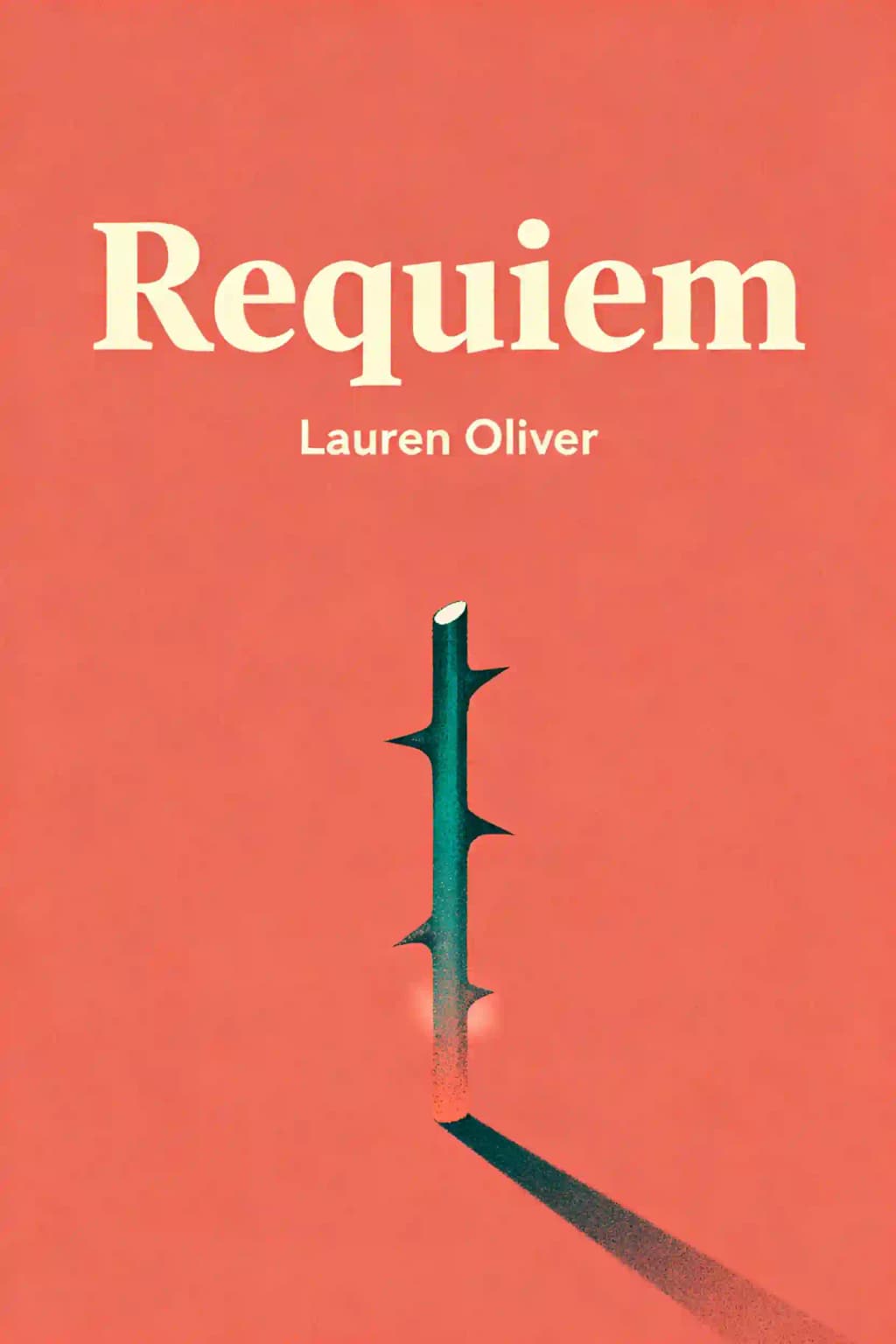
In "Requiem," Lauren Oliver concludes her bestselling dystopian trilogy with a bold dual-perspective finale that divided fans. Kirkus Reviews warned readers to "clear their schedules" before starting this "tour de force" with its deliberately ambiguous ending that challenges our expectations of freedom.
Lauren Oliver is the New York Times bestselling author of Requiem, the powerful conclusion to her acclaimed dystopian Delirium trilogy. Born Laura Schecter in 1982 and raised in Westchester, New York, Oliver crafts compelling young adult fiction that explores themes of love, freedom, government control, and the courage to choose one's own path. Her background includes degrees from the University of Chicago and an MFA in creative writing from NYU, which shaped her ability to blend philosophical depth with fast-paced storytelling.
Beyond the Delirium series, Oliver has written multiple bestselling novels including Before I Fall, which was adapted into a major motion picture, and Panic, which she transformed into an Amazon Prime series where she served as showrunner and sole writer. She's also authored middle-grade novels like Liesl & Po and the Curiosity House series. Oliver later founded Glasstown Entertainment and co-founded Incantor AI, expanding her influence beyond traditional publishing.
Her novels have sold over 3.5 million copies worldwide and have been translated into more than thirty-five languages, establishing her as one of the most influential voices in contemporary young adult literature.
Requiem by Lauren Oliver is the dystopian conclusion to the Delirium trilogy, set in a world where love is considered a disease. The novel follows dual perspectives: Lena, now an active resistance fighter in the Wilds navigating a dangerous love triangle between Alex and Julian, and Hana, her best friend living a "cured," loveless life in Portland as the mayor's fiancée. The story culminates as rebellion ignites into revolution and their divided worlds converge.
Lauren Oliver is a New York Times bestselling author born November 8, 1982, who graduated from the University of Chicago and earned her MFA from NYU. Beyond the Delirium trilogy (Delirium, Pandemonium, Requiem), she wrote Before I Fall, which became a major motion picture in 2017, and Panic, which she adapted into an Amazon Prime series. Her novels have sold over 3.5 million copies worldwide and been translated into thirty-five languages.
Requiem by Lauren Oliver appeals to young adult readers who enjoy dystopian fiction with romance and social commentary. It's ideal for fans of The Hunger Games or Divergent seeking stories about rebellion, government control, and forbidden love. Readers who've invested in Lena's journey through the first two books will want closure on the love triangle and revolution arc. The dual-perspective narrative also attracts those interested in contrasting worldviews within oppressive societies.
Requiem by Lauren Oliver delivers a thrilling conclusion to the Delirium trilogy with sophisticated, lyrical writing that seamlessly weaves action with emotional complexity. Kirkus Reviews called it "a dystopian tour de force" readers won't be able to put down. However, some readers found it disappointing, particularly Lena's character development and the ambiguous ending. The dual perspective between Lena and Hana provides compelling contrasts between freedom and conformity that elevate the trilogy's themes.
The central conflict in Requiem by Lauren Oliver involves the resistance's all-out revolution against a government that mandates surgical "cures" for love, now called Delirium. Lena faces external danger as Regulators infiltrate the Wilds to eliminate Invalids, while battling internal turmoil over her feelings for Alex versus Julian. Meanwhile, Hana experiences growing restlessness beneath her perfect, cured existence in Portland, questioning her life choices. These converging storylines explore freedom versus safety.
Requiem by Lauren Oliver alternates chapters between Lena's perspective in the Wilds and Hana's life in Portland. This structure provides contrasting visions of the dystopian world: Lena's dangerous but authentic existence versus Hana's safe but emotionally hollow conformity. The dual narrative allows readers to see both sides of the cure debate—those fighting for the right to love and those living under government control. Their separate paths eventually converge as tensions between resistance and government escalate.
The love triangle in Requiem by Lauren Oliver centers on Lena torn between Alex and Julian after discovering Alex survived events from the first book. Alex, Lena's first love from Delirium, is angry about her relationship with Julian and initially refuses to speak to her. Julian, whom Lena rescued from execution, remains patient and gentle despite her changed behavior, telling her he loves her without demanding reciprocation. Lena avoids being affectionate with Julian while sorting through her conflicted feelings about both men.
The cure in Requiem by Lauren Oliver symbolizes government-mandated conformity and emotional suppression in the name of safety. This surgical procedure eliminates the capacity for love (labeled Delirium by authorities), creating compliant citizens who live "safe, loveless" existences like Hana's. The cure represents the broader theme of trading freedom and authentic human experience for security and control. Through Hana's growing restlessness despite being cured, Lauren Oliver questions whether eliminating emotions truly creates happiness or merely numbs people to oppression.
The Wilds in Requiem by Lauren Oliver are unregulated territories outside government-controlled cities where Invalids (uncured people) live freely. Previously a safe haven for the resistance, the Wilds become increasingly dangerous as Regulators infiltrate to stamp out rebels and the government acknowledges Invalid existence. These borderlands represent physical and ideological freedom from the cure mandate. However, Lauren Oliver shows that freedom comes with peril—Lena must navigate treacherous terrain as rebellion pockets open throughout the country.
Requiem by Lauren Oliver concludes with an ambiguous ending that divided readers, as many found it unsatisfying. The revolution reaches a climactic confrontation between resistance forces and the government, with Lena and Hana's storylines finally converging after existing in divided worlds. While Lauren Oliver brings the trilogy's central conflicts to resolution, the ending leaves certain character fates and relationship outcomes open to interpretation. Some readers appreciated the sophisticated conclusion while others felt disappointed by unresolved elements in Lena's character arc.
Common criticisms of Requiem by Lauren Oliver include disappointment with Lena's character development, particularly after she gained favor in Delirium but lost it in Pandemonium. Readers noted Lena never fully regained her appeal throughout the final book. The ambiguous ending frustrated many who invested in the trilogy, with some describing Requiem as disappointing overall. However, reviewers praised Hana's perspective as the character who "really shone," with readers connecting to her struggle against emotional shutdown and rooting for her rebellion.
Requiem by Lauren Oliver escalates the stakes from Pandemonium's nascent rebellion into full-scale revolution. Unlike the first book's focus on Lena's personal awakening to love, Requiem balances intimate character moments with broader societal conflict through dual perspectives. The addition of Hana's viewpoint provides depth absent from earlier books, showing the cure's effects from inside Portland's walls. While Delirium captivated readers with forbidden romance and Pandemonium delivered action, Requiem attempts sophisticated convergence of personal and political themes, though execution divided fans.
Sinta o livro através da voz do autor
Transforme conhecimento em insights envolventes e ricos em exemplos
Capture ideias-chave em um instante para aprendizado rápido
Aproveite o livro de uma forma divertida e envolvente
I'm not something to be won.
I am beautiful, but I no longer care.
Divida as ideias-chave de Study Guide em pontos fáceis de entender para compreender como equipes inovadoras criam, colaboram e crescem.
Destile Study Guide em dicas de memória rápidas que destacam os princípios-chave de franqueza, trabalho em equipe e resiliência criativa.

Experimente Study Guide através de narrativas vívidas que transformam lições de inovação em momentos que você lembrará e aplicará.
Pergunte qualquer coisa, escolha a voz e co-crie insights que realmente ressoem com você.

Criado por ex-alunos da Universidade de Columbia em San Francisco
"Instead of endless scrolling, I just hit play on BeFreed. It saves me so much time."
"I never knew where to start with nonfiction—BeFreed’s book lists turned into podcasts gave me a clear path."
"Perfect balance between learning and entertainment. Finished ‘Thinking, Fast and Slow’ on my commute this week."
"Crazy how much I learned while walking the dog. BeFreed = small habits → big gains."
"Reading used to feel like a chore. Now it’s just part of my lifestyle."
"Feels effortless compared to reading. I’ve finished 6 books this month already."
"BeFreed turned my guilty doomscrolling into something that feels productive and inspiring."
"BeFreed turned my commute into learning time. 20-min podcasts are perfect for finishing books I never had time for."
"BeFreed replaced my podcast queue. Imagine Spotify for books — that’s it. 🙌"
"It is great for me to learn something from the book without reading it."
"The themed book list podcasts help me connect ideas across authors—like a guided audio journey."
"Makes me feel smarter every time before going to work"
Criado por ex-alunos da Universidade de Columbia em San Francisco

Obtenha o resumo de Study Guide como PDF ou EPUB gratuito. Imprima ou leia offline a qualquer momento.
Imagine a world where love is considered a disease, where emotional connection is surgically removed at age eighteen. This is the haunting reality of "Requiem," where society is split between Portland-a walled city of emotional control-and the untamed Wilds where rebels fight for the right to feel. The contrast couldn't be more stark: inside Portland's walls, citizens live in climate-controlled homes with reliable food and modern conveniences, but exist in a state of emotional numbness. Parents show no particular affection for their children, spouses interact with mechanical politeness, and friendships remain superficial. Meanwhile, in the Wilds, rebels struggle daily for survival-scavenging abandoned buildings, sleeping in makeshift camps, enduring bitter cold with limited supplies-yet they experience the full spectrum of human emotion that gives life its vibrancy. The physical wall separating these worlds isn't just keeping rebels out; it's keeping Portland's citizens in-both physically and mentally. As one character observes, the wall represents not just containment but constraint-a barrier between two ways of being human. This division forces us to consider: Is safety worth sacrificing what makes us human? Is a controlled, predictable life preferable to one filled with both joy and pain?
