Capítulo 1
When Artists and Engineers Take the Helm
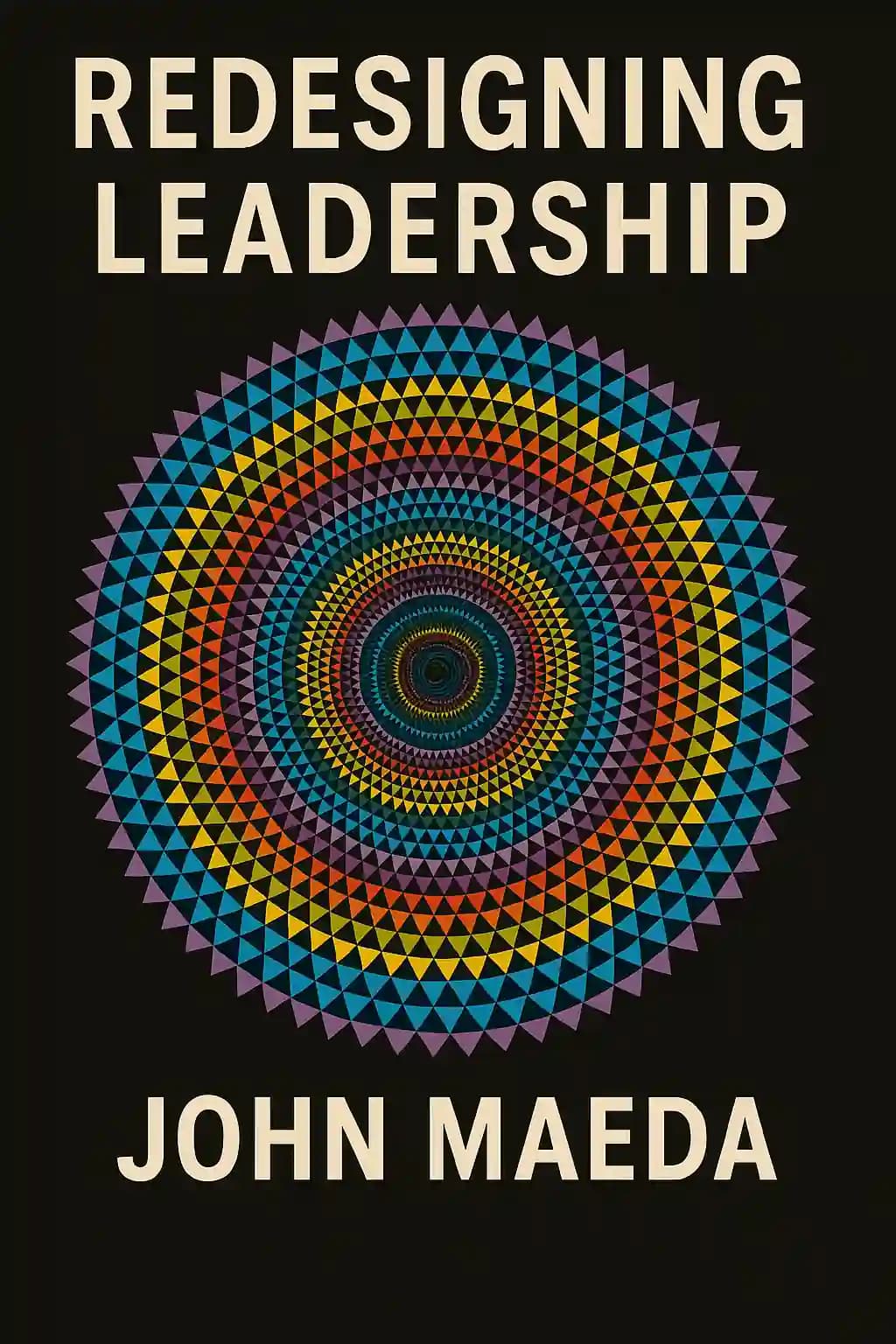
In the bustling world of leadership books dominated by military metaphors and corporate jargon, John Maeda's "Redesigning Leadership" stands as a refreshing anomaly. As the former president of the prestigious Rhode Island School of Design (RISD) and an MIT-trained computer scientist turned artist, Maeda offers a perspective that has captivated everyone from Silicon Valley executives to creative professionals. The book, which grew from Maeda's popular Twitter feed where he distilled leadership insights into 140-character "haikus," has become required reading at companies like Google and Apple. What makes this slim volume so powerful is its unique fusion of artistic sensibility with technological precision - a combination increasingly valued in today's innovation economy. Beyonce reportedly keeps a copy on her studio bookshelf, while Elon Musk has referenced Maeda's leadership philosophy when discussing the culture he aims to build at his companies. Beyond its celebrity endorsements, the book represents a cultural shift toward valuing leadership that embraces vulnerability, intuition, and creative thinking alongside traditional management skills.
Capítulo 2
The Artist's Perspective: Getting Your Hands Dirty
Artists approach leadership differently than traditional executives - they're not afraid to get their hands dirty. This isn't merely a metaphor; it's a fundamental difference in problem-solving methodology. While conventional leaders might delegate and direct from a distance, creative leaders need to physically engage with materials and solutions, seeing them with their own eyes rather than just conceptualizing them.
This hands-on approach stems from artists' training. In studios across disciplines, creators learn by doing - mixing paints, throwing clay, coding interactive experiences - developing an intimate knowledge of how materials behave under different conditions. When these creators become leaders, they bring this tactile intelligence to organizational challenges.
Consider how differently an artist-leader might approach a struggling department. Where a traditional executive might analyze spreadsheets and order restructuring from above, the artist-leader might spend time working alongside team members, experiencing their daily challenges firsthand. This immersion provides insights no report could capture - the subtle workplace dynamics, the emotional climate, the unspoken knowledge that drives or hinders success.
However, this approach isn't without complications. What feels like necessary engagement to the creative leader might appear as micromanagement to others. The line between helpful involvement and undermining autonomy can blur easily. Maeda himself struggled with this balance at RISD, learning that his desire to personally reshape processes sometimes prevented others from owning their work.
The artist-leader must also navigate the tension between emotional drive and systematic thinking. Artists are trained to follow intuitive leaps and emotional responses - to trust that feeling of "something's not right here" even before they can articulate why. Yet organizations require systems and structures that can function predictably over time. The challenge becomes integrating these seemingly contradictory approaches: maintaining the artist's sensitivity while building the engineer's reliability.
What makes this integration possible is the recognition that both artistic and systematic thinking serve the same ultimate goal: creating something meaningful that works. The best artist-leaders don't abandon their creative instincts when they take leadership positions - they channel those instincts into building organizations that combine beauty and functionality, inspiration and execution, vision and practical reality.
Capítulo 3
Visual Thinking: Seeing What Others Miss
When faced with complexity, visual thinkers possess a remarkable ability to reveal hidden patterns. Imagine being presented with ninety seemingly random data points - while others might see chaos, the visual thinker immediately begins mapping relationships, seeking order in the apparent randomness. This visualization skill transforms abstract information into tangible insights that can guide decision-making.
Projects like Processing, which Maeda helped pioneer, have enabled artists to visualize massive data sets in ways that illuminate connections invisible to the naked eye. These visualizations provide what Maeda calls "the bird's-eye view" - a perspective that changes how we understand problems and inspires different approaches to solving them. Think about how weather pattern visualizations transformed our understanding of climate change, making abstract global trends viscerally comprehensible.
During his early presidency at RISD, Maeda created hundreds of organizational diagrams to understand the institution's complex structure. These visual maps helped him personally navigate relationships between departments, funding sources, and institutional priorities that would have been difficult to grasp through text alone. The process of drawing these connections forced him to think holistically about the organization rather than addressing each department in isolation.
Yet Maeda discovered an important limitation to this approach: diagrams often lose their meaning when shared with others who didn't witness their creation. The static result rarely captures the dynamic thinking process that produced it. A beautifully designed organizational chart might appear elegant on paper but fail to communicate the subtle power dynamics, historical tensions, or cultural factors that truly drive institutional behavior.
This limitation reveals something profound about visual thinking in leadership: its greatest value often lies not in the final artifact but in the process of creation itself. The act of visualizing forces leaders to make implicit assumptions explicit, to recognize connections they might otherwise miss, and to communicate complex ideas in accessible forms. The visualization becomes a thinking tool rather than merely a communication device.
Effective visual thinkers in leadership positions learn to balance the clarity that visualization provides with the recognition that no diagram, no matter how sophisticated, can fully capture organizational complexity. They use visual thinking as one tool among many, complementing it with deep listening, experiential learning, and narrative understanding to build a more complete picture of their organizations and challenges.
Capítulo 4
The Power of Critique: Feedback as Fuel
Artists thrive on critique. In studio environments, having your work dissected by peers and mentors isn't just expected - it's essential to growth. This culture of critique creates a fundamental openness to feedback that many traditional leaders lack. When Maeda would open meetings with "How am I doing?" he wasn't engaging in empty ritual but seeking the honest assessment that artists recognize as the fastest path to improvement.
This approach stands in stark contrast to traditional leadership cultures where criticism often flows downward but rarely upward. The higher one climbs in most organizations, the less likely people are to speak their minds about leadership performance. This creates a dangerous feedback vacuum where leaders become increasingly isolated from reality.
The artist-leader's embrace of critique offers a powerful antidote to this isolation. By actively soliciting feedback and demonstrating that they can hear difficult truths without defensiveness, they create psychological safety that encourages honest communication throughout the organization. When Maeda held open office hours for faculty, staff, and students, he wasn't just gathering information - he was modeling vulnerability and continuous learning.
However, the challenge with feedback isn't just receiving it but managing expectations about how you'll respond. When diverse stakeholders offer conflicting advice - as inevitably happens in complex institutions - you cannot possibly act on all of it. The art lies in listening deeply enough that people feel truly heard while maintaining the autonomy to make final decisions that may disappoint some constituents.
Maeda's approach to this challenge reveals the artist's comfort with ambiguity. When asked how he was doing as president, his honest answer was simply, "I'm learning" - acknowledging both progress and incompleteness. This stance embraces the reality that leadership, like art-making, is never finished but always evolving through cycles of creation, critique, and refinement.
The most valuable aspect of critique culture for leaders may be its fundamental assumption that being wrong isn't failure but opportunity. Artists expect their first attempts to be flawed; they build improvement into their process rather than expecting perfection. This mindset creates resilience in the face of setbacks and maintains forward momentum through difficulties. When a leader can say, "I got that wrong, and here's what I learned," they transform mistakes from sources of shame into engines of growth.
Capítulo 5
Intuition in a Data-Driven World
In our era of big data and analytics, intuition often gets dismissed as unreliable compared to quantifiable metrics. Yet Maeda argues that intuition remains an undervalued leadership asset, particularly in navigating unprecedented challenges where historical data offers limited guidance. Artists develop this intuitive capacity through years of practice making creative decisions that can't be reduced to formulas.
The power of intuition lies partly in its connection to emotion. While data can make compelling intellectual cases for action, it rarely creates the emotional resonance needed to inspire people to move. As Zainab Salbi memorably put it at Davos 2010, "Stories trump statistics." Artists excel at storytelling through various media, creating emotional richness that purely analytical approaches often miss.
This storytelling capacity becomes crucial in change management. When Maeda needed to guide RISD through difficult financial decisions during the 2008 recession, he found that presenting budget spreadsheets alone couldn't build the necessary community support. Instead, he needed to craft a compelling narrative about the institution's values and future that gave meaning to the numbers and inspired collective sacrifice.
The artist's approach to problem-solving differs fundamentally from the analytical method. Where analytical thinkers typically break problems into components for systematic examination, artists make intuitive leaps toward solutions, guided by aesthetic judgment and emotional intelligence. This doesn't mean abandoning analysis but complementing it with intuitive synthesis that can generate unexpected approaches.
This intuitive capacity proves especially valuable in managing the unexpected. Artists train specifically to work with uncertainty, developing comfort with ambiguity that serves them well when plans go awry. They're accustomed to feeling their way forward when clear paths don't exist, making them adaptable leaders in turbulent environments.
Maeda's own career illustrates this principle. His early computer art that morphed black squares in response to voice was dismissed by his Japanese design professor as work that would "never amount to anything." Yet that same work now hangs in the Museum of Modern Art - a reminder that intuitive leaps often lead to innovations that analytical thinking might reject as impractical or unproven.
In rapidly changing fields where yesterday's best practices quickly become obsolete, this intuitive capacity becomes increasingly valuable. Leaders who combine analytical rigor with artistic intuition can navigate complexity more nimbly than those relying exclusively on data-driven approaches, particularly when facing novel challenges without historical precedent.
Capítulo 6
Communication Beyond Technology
Technology has revolutionized how we share information, but Maeda argues it hasn't necessarily improved our ability to convey meaning. This distinction between information transfer and genuine communication represents a critical leadership challenge in our digital age. As a technologist who became a leader, Maeda learned that digital tools answer only part of the communication equation.
Transparency, for instance, doesn't automatically create clarity. Just as open-source software exposes code that remains incomprehensible without context, organizational transparency needs interpretation to create understanding. Maeda discovered that the simple phrase "for example" dramatically improved his communication effectiveness by connecting abstract principles to concrete situations people could relate to.
Email presents particular challenges for leaders. Maeda found that brevity typically works better than comprehensive explanations, and directing messages to single recipients rather than groups creates clearer communication channels despite sacrificing efficiency. These practices run counter to the "cc everyone" culture that technology encourages but often leads to information overload rather than understanding.
The most effective communication path between people remains direct conversation. While broadcast methods like town halls or campus-wide emails serve purposes, nothing matches the high-bandwidth engagement of person-to-person dialogue. Digital communications lack the bodily warmth, nuanced laughter, and commitment formed by physical presence. Even emoticons or parenthetical expressions like "(smile)" can't fully replace the subtle cues we exchange in person.
Designers understand that subtle details endow messages with the power to capture imagination. From paper texture to handwriting, traditional communication carries craft that electronic messages struggle to replicate. When Maeda tried using online polls for student feedback, they failed to engage. A RISD senior organized an in-person conversation that drew forty students eager to hear each other's perspectives - revealing the irreplaceable value of seeing expressions, smelling scents, and feeling the energy in a room.
This doesn't mean rejecting digital communication but recognizing its limitations and complementing it with in-person engagement. The leader's challenge becomes determining which medium best serves each communication need rather than defaulting to technological convenience. Some messages require the efficiency of email; others demand the richness of face-to-face conversation.
What matters most in leadership communication isn't the words, numbers, or pictures, but how you come across as a human being. The most important thing to convey is respect - the prerequisite for any meaningful exchange. Technology can transmit information but struggles to convey this fundamental respect that makes people feel valued rather than merely informed.
Capítulo 7
Social Media: Promise and Limitations
Twitter creates a unique democratic space where college presidents and celebrities have equal voice alongside everyone else. This flattening effect represents both opportunity and challenge for leaders accustomed to hierarchical communication structures. Maeda, known as "the president who tweets," experienced firsthand how social media can both connect leaders directly with constituents and complicate traditional authority structures.
During the 2008 election, young people discovered they could create impact online without voting credentials. This revelation about digital influence has permanently changed expectations about organizational communication. Today's stakeholders expect direct access and transparency that previous generations didn't demand, creating pressure for leaders to maintain authentic social media presences.
Yet traditional hierarchies still govern most organizations - we're not ready to run governments or schools entirely through social media. The challenge for leaders becomes integrating these new communication channels without undermining necessary organizational structures. When Maeda launched a blog for transparent community conversations at RISD, he initially responded personally to comments but later realized this practice was undermining his own management team by creating direct president-to-employee channels that bypassed supervisors.
The power of social media for leaders lies not in replacing traditional communication but in complementing it with authentic listening. Maeda discovered that his role wasn't necessarily to respond online but to understand campus conversations - using social platforms as windows into community concerns rather than primarily as broadcast channels. This listening posture transformed social media from a potential disruption into a valuable leadership tool.
Despite its benefits, social media has clear limitations for building community. As Maeda wryly notes, "Until you can serve pizza or drinks over the Web, a social media portal to foster true collaboration will be so-so." His initial instinct that everything could be fixed with websites proved incorrect - digital spaces remain meaningless unless visited and constantly refreshed with content that serves real needs.
Even Facebook, which Maeda had hoped would connect him with students, proved less effective than expected. Students explained they used it less on campus because "all my friends are here now" - highlighting the fundamental truth that digital connection matters most when physical connection isn't possible. This insight led Maeda to abandon purely digital solutions for the ancient technology of free food, discovering that "Free pizza" motivates students more effectively than abstract causes.
The lesson for leaders isn't to abandon social media but to recognize its proper place in a broader communication ecosystem that includes face-to-face engagement. Digital platforms extend reach but can't replace the human connection that happens when people gather in physical space around shared purposes and, yes, shared food.
Capítulo 8
Building Teams That Win
As a professor, Maeda had always worked as a "lone wolf," never truly experiencing teamwork. His leadership journey at RISD forced him to learn team-building skills that didn't come naturally to someone accustomed to individual achievement. This transition from individual contributor to team leader represents a common challenge for professionals promoted into leadership roles based on personal excellence rather than management experience.
The fundamental challenge in team formation is getting people to move from "me" to "we." Before rewards or punishments can work, individuals must choose to join a collective cause. In academia, where turnover is low and institutional memory is long, ancient grudges often prevent collaboration. Maeda discovered that the simplest starting point is getting everyone in the same room - whether by duty or desire, physical presence creates the basic stance of togetherness where negativity and positivity can neutralize each other.
Once everyone's in the room, the challenge becomes creating psychological safety that encourages authentic communication. Maeda noticed how his presence as president could artificially change conversations, making them predictably restrained. He learned from Media Lab director Frank Moss that leaders must reveal their humanity while maintaining the confidence necessary for positive momentum. Finding this balance is crucial - neither emotionless nor perpetually smiling, but authentically human in ways that invite others to bring their full selves to work.
Body language powerfully affects team dynamics. Open hands lead to the open arms necessary for bringing people together, while crossed arms can unintentionally signal resistance even when none exists. These nonverbal cues matter because communities form through active, impromptu conversations where everyone can speak truth and be heard - a process that depends on mutual respect and understanding one's role in the larger group.
In academia, professors treat arguing like a full-contact sport - debating until no stone remains unturned. What appears confrontational to outsiders is actually constructive conflict with integrity. This productive tension between research groups with unique identities allows creativity to flourish, unlike industrial environments where differentiation is often minimized. Academic individualism drives innovation but challenges institutional team-building, creating a leadership paradox: how to preserve the creative benefits of individualism while fostering the collaborative spirit needed for organizational success.
Meetings represent a particular challenge for team-building. As someone who naturally disliked meetings, becoming an administrator forced Maeda to embrace them as necessary team alignment tools. He discovered that improving the ratio of engaged participants ("wannacomes") to disengaged ones ("havetacomes") requires increasing meeting effectiveness while decreasing length - leaving people wanting more rather than watching the clock. When he inherited leadership of an MIT council, he eliminated unproductive commiseration time and focused on clear objectives, which dramatically improved attendance and engagement.
Capítulo 9
Leadership Through Crisis and Change
In times of great change, leaders must navigate both operational challenges and emotional responses. When the 2008 financial crisis hit shortly after Maeda became RISD's president, he faced difficult budget decisions that affected people directly, creating discomfort no "administrator-speak" could explain away. This crucible experience taught him fundamental lessons about leading through uncertainty that apply far beyond academia.
Maeda observed how uncertainty creates rumors - informal information streams that fill official information vacuums, transferring power away from methodical structures toward faster, emotional channels. Initially, he focused on explaining facts in campus meetings, but eventually realized listening is more important than explaining during crisis. By holding open office hours and faculty breakfasts, he invested time to truly hear concerns, which helped keep rumors in remission and built the trust necessary for difficult decisions.
The financial crisis tested trust in leadership, forcing Maeda to simultaneously manage through difficulty while calming a community unaccustomed to new leadership. Through this challenge, he changed as a person, rebuilding trust with his community as they recovered together - a process he describes as still very much "in beta," acknowledging leadership as continuous learning rather than achieved status.
Status quo can become a status symbol in established institutions like RISD. While competitors might desire their position, suggesting radical changes can be interpreted as criticism of those who've been doing things right for years. Like in The Last Samurai, there's an allure to preserving traditional methods that honor an idea's pure form. This preservation is core to long-living institutions, where status quo becomes a valid status symbol that people naturally protect. Effective change leadership requires honoring this history while creating space for necessary evolution.
Humility proves essential in navigating change. Maeda contrasts truly accomplished people with visible egos versus those with invisible ones, sharing how Japanese design master Ikko Tanaka demonstrated remarkable humility by personally preparing dinner for his staff and thanking each individually. This example showed Maeda that respect must be constantly earned, not assumed through position. Similarly, TED founder Richard Wurman's advice to speakers - "be vulnerable" - applies equally to leaders, allowing others to witness their humanity rather than projecting infallibility.
The Japanese word "sumimasen" beautifully combines "thank you" and "I'm sorry," recognizing both gratitude and the inconvenience caused. As president, Maeda learned the power of genuine apology, following President Obama's example of being real rather than always right. This vulnerability paradoxically strengthens rather than weakens leadership authority, creating authentic connection that sustains communities through difficult transitions.
Capítulo 10
Leadership as Legacy and Gratitude
Leadership ultimately concerns legacy - not just what you accomplish during your tenure but how you shape the organization's future beyond your time. Maeda references his "spring-counter" program that calculates how many spring seasons one has left based on life expectancy - a progress bar for life that motivates him to welcome seasons, think clearly, and focus on what matters most.
This mortality awareness shapes leadership priorities. Nice guys truly work harder, often choosing the right thing even when personally disadvantageous. Maeda recalls a colleague at MIT who consistently took the high road - missing career advancement opportunities to help students in trouble or defending bullied staff. While media headlines focus on leaders' failures, validating our skepticism of authority, such positive actions frequently go unnoticed but form the true foundation of institutional strength.
Momentum becomes critical to sustainable leadership. Maeda quotes baseball hall-of-famer Casey Stengel: "The key to being a good manager is keeping the people who hate you away from those that are still undecided." He reflects on achieving momentum with his team through fundraising successes, improved recruitment, and connecting innovation with art and design. Designing this winning team proved more challenging than any creative project he'd ever undertaken - revealing leadership as perhaps the ultimate creative act.
Acknowledgment matters deeply in leadership. Maeda admires his provost Jessie Shefrin's thoughtful recognition of colleagues and expresses gratitude for weekends that allow reflection rather than crisis management. He values humor as a way to stay human and find levity in serious situations - his own form of therapy amid leadership pressures.
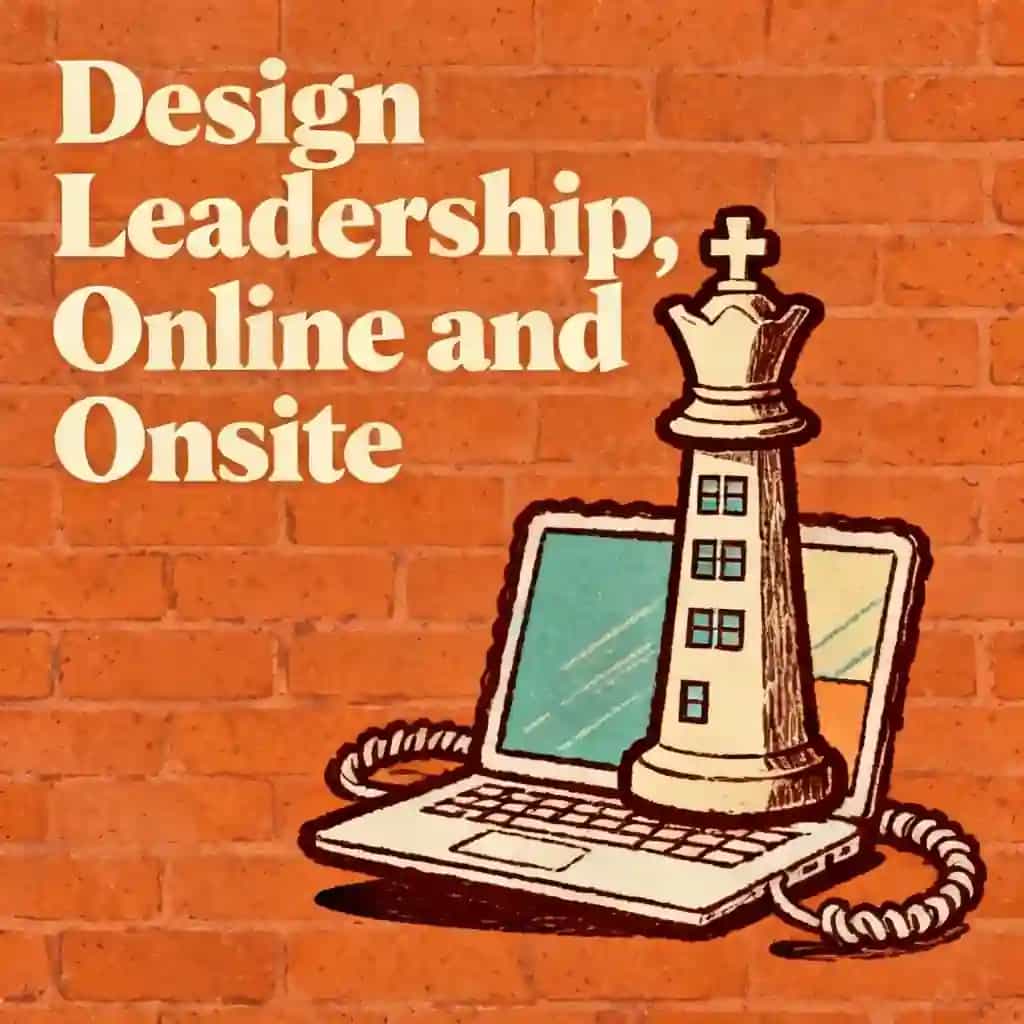
A profound leadership insight came while teaching chess to his daughter; when he described the king's limited movement, she wisely noted, "But daddy, the king is still powerful. Because if he dies, the game is over." This helped Maeda realize a leader's impact extends beyond individual actions to ensuring the organization operates fairly, joyfully, and with gratitude. The leader's greatest power lies not in personal accomplishment but in creating conditions where others can thrive and the institution can fulfill its purpose with integrity.
This perspective transforms leadership from ego-driven achievement to humble service - not denying ambition but channeling it toward collective rather than merely personal success. The leader becomes less the hero of the story and more its faithful narrator and guardian, ensuring that the organization's story continues meaningfully beyond any individual's chapter within it.