Capítulo 4
The Dance of Opposites
To understand creative relationships, we must grasp how disparate qualities enter into dynamic relation. Three archetypes recur most often: the star and director; the liquid and container; and the dreamer and doer. Each represents a significant creative dialectic.
Many creative partnerships feature one member in the spotlight while another remains offstage. The spotlight/shadow relationship is relative and often ironic-a pair's center of gravity frequently lies with the less visible partner. The van Gogh brothers exemplify this dynamic perfectly. While Vincent pursued art with revolutionary fervor, Theo provided financial support, emotional stability, and art world connections. Though Vincent's work dominates history, Theo's quiet presence made it all possible, with Vincent acknowledging, "Whatever happens in life, we have our work, and we have faith in one another."
The "liquid and container" dynamic appears throughout creative partnerships. John Lennon functioned as the iconoclast-deliberately using feedback in "I Feel Fine," playing his guitar slightly out of tune for a raw sound, and challenging authority with his impish humor. In contrast, Paul McCartney was the diplomat who "decided very early on" to play the game, making press comfortable and representing the band positively.
Engineer Geoff Emerick observed their striking differences: Paul was "meticulous and organized" with a notebook of neatly written lyrics and chords, while John "seemed to live in chaos" with scattered notes. As Cynthia Lennon noted, "John needed Paul's attention to detail and persistence. Paul needed John's anarchic, lateral thinking."
The dreamer-doer dynamic forms another essential creative pairing. South Park's Trey Parker and Matt Stone exemplify this perfectly. Parker is the quintessential visionary-a "true original" who developed the show's distinctive aesthetic in high school and sits alone late at night agonizing over unwritten scenes. Stone is the quintessential doer-running interference with networks and lawyers, organizing environments conducive to creativity, and handling production logistics.
Many fans mistakenly diminish Stone's contribution, assuming Parker alone is responsible for South Park's creative essence. This represents a fundamental misunderstanding of creativity, which isn't just original ideas but bringing those ideas into form and reaching an audience. As the author concludes: "Creativity is what happens when the dreamer meets the doer."
While identifying clear roles in creative pairs provides initial clarity, deeper understanding comes from recognizing role fluidity. Like the taijitu (yin-yang symbol), creative partners contain aspects of each other. Matt Stone may be the "doer" to Trey Parker's "dreamer," but Matt can relate to Trey because he's also a dreamer, and Trey values getting things done.
Our character forms in relation to others-we become reliably "this way" because someone else is "that way." John Lennon's rebelliousness wasn't simply innate; it existed in dialectical relationship with Paul McCartney's charm. "John didn't insult reporters while Paul charmed them. John could insult reporters because Paul charmed them."
Capítulo 5
The Space Between
For some pairs, optimal distance comes naturally, while others make conscious choices about it. The spectrum ranges from collaborators who work entirely through correspondence to those who fuse their identities completely. Emily Dickinson exemplifies the creative monk approach-not isolated as often portrayed, but engaged in philosophical issues and human relationships while maintaining careful distance. She cultivated meaningful correspondence with selected individuals, avoiding superficial exchanges while reading copiously and staying current with publications.
Dickinson, like many creative people, may have been what psychologists now call a "highly sensitive person"-someone with heightened responsiveness to their environment who needs solitude not from coldness but from being so porous they require buffers. At the opposite extreme are artists like Gilbert and George who function as a single artist, and AndrewAndrew who attempt to collapse all distance between them-matching everything from clothes to birthdays.
High-functioning pairs recognize that optimal distance varies widely depending on temperaments and pursuits. Despite Kahneman and Tversky's prolific collaboration while together, their work languished after geographic separation, as they "completely failed to appreciate how critically our successful interaction had depended on our being together at the birth of every significant idea."
Lennon and McCartney maintained their creative spark partly through distance-John in suburban Weybridge, Paul in London's St. John's Wood. While still meeting regularly, their separate lives developed different flavors, with Paul immersed in avant-garde culture while John spent time at home "taking acid, watching TV."
The tension between autonomy and intimacy serves creativity by allowing alternation between different thinking modes: solitude enables unconscious, wandering thought (like Steinbeck's "committee of sleep"), while social connection provides testing and evaluation of ideas. The best creative pairs move fluidly between generating and testing, focus and play, as when Lennon and McCartney wrote "With a Little Help from My Friends" in sessions that alternated between intense work and relaxed digressions.
Rather than being fixed or static, optimal distance is a fluid, ongoing dance between partners. George Balanchine and Suzanne Farrell exemplify this perfectly. Their relationship was "extremely physical and extremely gratifying" without being sexual-a "glorious blend of victory and surrender" expressed through dance. For six years, they maintained this passionate connection across the space between them.
But Balanchine couldn't maintain the delicate balance. When twenty-one-year-old Farrell refused his advances, not to push him away but to preserve their relationship, he reacted by pursuing her more intensely. After forcing her departure from the company, they reconciled years later to produce a more mature, powerful artistic relationship. Their story reveals a profound truth: creative potential often depends on separation, on the tension of distance rather than fusion.
Capítulo 6
Playing the Infinite Game
The rivalry between Magic Johnson and Larry Bird exemplifies how competition fuels creative excellence. Their relationship evolved into what scholars call a "subjective competitive relationship," where stakes feel higher regardless of objective circumstances. Kilduff's research shows rivals in races run 25 seconds faster in a 5K than with mere competitors.
Great rivalries thrive on temperamental differences alongside similarities in ambition-Bird was the taciturn "hick from French Lick" while Magic enjoyed LA's "big party," yet both played selflessly as "mirrors of each other." Rivals provide three key benefits: motivation (pushing us to work harder), inspiration (modeling what we need to do), and dedication (keeping us in the game).
Over time, rivals become entwined, understanding each other in ways others can't. When Magic announced his HIV diagnosis in 1991, Bird lost interest in basketball: "Knowing that he's not there, it wouldn't feel right."
The Matisse-Picasso relationship illustrates how creative rivalry transcends simple competition. Though often framed as a "chess game" or "duel," art historian John Richardson rejected these characterizations: "The show is not a boxing match." Their dynamic represents what philosopher James Carse distinguishes as an "infinite game" versus a "finite game." While finite games are played to win with predetermined rules, infinite games adjust continuously to keep players engaged.
They operate at the intersection of competition and cooperation-"coopetition." This explains why Steve Jobs shocked Apple loyalists in 1997 by announcing Microsoft's $150 million investment in Apple. The companies had always been more like Luke Skywalker and Han Solo than enemies-they began as allies with Microsoft providing Applesoft BASIC for Apple II.
The Lennon-McCartney relationship exemplified this dynamic perfectly. Their "friendly competition" involved "answering each other's songs"-John's introspective "Strawberry Fields Forever" prompted Paul's observational "Penny Lane," both drawing from Liverpool landmarks but revealing their distinct sensibilities. Their songs were so strong they were released as a "double A-side," illustrating how infinite games change rules to continue play.
George Martin described their relationship as "two people pulling on a rope, smiling at each other and pulling all the time with all their might." Such creative tension isn't about balance but productive imbalance, where competition slightly edges cooperation to generate necessary change.
Capítulo 7
The Power Dance
Power is to relationships what gravity is to matter. In most pairs, one person typically has more influence, needs the other less, or could more easily leave. As Jerry tells George in Seinfeld, "We all want the hand. Hand is tough to get. You gotta get the hand right from the opening."
Power disparity itself isn't problematic-it can even facilitate intimacy by creating clear patterns of interaction. The powerful tend to be more confident and action-oriented, but also more blinkered. They see the world from their perspective, drawing the letter "E" on their foreheads in a way that's correct from their view but reversed to others. Meanwhile, those with less power often have greater awareness and clearer perception of those above them.
The most effective creative pairs maintain clear power structure while allowing for fluidity-where leaders truly listen and followers genuinely influence. As tango dancers demonstrate, "the follower teaches the leader how to lead."
Conflict is an organic part of creative partnerships. Rather than indicating a problem, it often emerges from people properly acting their parts-expressing opinions, bringing perspectives, being sticklers or dreamers. Francis Crick believed candor was crucial, saying "politeness" was the death knell to collaboration.
The Wright brothers exemplified productive conflict-"I love to scrap with Orv," Wilbur said. Their collaborative approach mirrored their flight principles: embracing flexibility and dynamic stability rather than rigid strength, which ultimately led to their success while Langley's well-funded but inflexible approach failed.
The dynamic between two strong personalities creates a dance of power where challenge and accommodation form a spiral pattern of ascending complexity. John Lennon and Paul McCartney exemplify this relationship, with John reasserting dominance through subtle power moves. Though outsiders often saw Paul as the leader due to his public presence, the inner circle recognized John's authority.
Paul explicitly acknowledged this in interviews, stating "John is, in fact, the leader of the group," yet he often led the leader through diplomatic maneuvering. Their power dynamic followed a pattern: John dominant but open; Paul impressive but deferent; Paul stepping up in areas of strength; John abruptly reasserting control-as when he changed their songwriting credits from McCartney-Lennon to Lennon-McCartney, leaving Paul feeling blindsided but ultimately acquiescing.
Capítulo 8
When the Music Stops
Creative partnerships break when their shared faith is violated. When Crosby stopped playing music to assemble a drug pipe, Nash realized "the drugs were more important to Crosby than the music." Nash characterized this not as personal frustration but as a rupture of their sacred commitment.
As South Park writer Vernon Chatman explained about successful partnerships like Stone and Parker's: "Humility is recognizing 'There is me, there is you, and there is us. And us is the biggest thing.'" This devotion may manifest as loyalty-Susan B. Anthony remained steadfast to Elizabeth Cady Stanton despite differences.
Success itself often becomes the wedge that drives creative partners apart. After Dave Chappelle's show became a massive hit, he grew suspicious of his surroundings, ultimately rejecting co-creator Neal Brennan's plea to negotiate as a team. Though Chappelle secured a reported $50 million deal, he soon fled production, later saying "Success takes you where character cannot sustain you."
Similarly, Apple's explosive growth sent Jobs and Wozniak down divergent paths-Wozniak retreated to teaching and personal interests while Jobs continued building partnerships with figures like Jonathan Ive. Research shows that even thinking about wealth makes people more self-sufficient and less collaborative.
The Beatles' partnership began unraveling after three critical disruptions in the late 1960s. First, manager Brian Epstein died of a drug overdose in August 1967, leaving John and Paul to manage not just the band but an expanding business empire without someone they "loved and was one of us." Second, George Harrison, having grown as a musician and connected with Bob Dylan, began resisting his subordinate position. Third, women entered what had been a closed male dynamic when Paul and John's romantic lives underwent dramatic changes.
When did Lennon-McCartney truly end? The answer is frustratingly elusive. It wasn't when they fought over manager Allen Klein, nor when John privately told Paul he was leaving in September 1969. It wasn't even when Paul's April 1970 self-interview led the Daily Mirror to declare "PAUL IS QUITTING THE BEATLES."
The truth is their partnership never conclusively terminated. Creative partnerships create a "joint bank account" where two individuals deposit energy and creativity, but "rights of withdrawal are beyond either individual's control." Though John once claimed their songwriting partnership ended around 1962, he later admitted, "I was lying... It was when I felt resentful."
Despite their separation, both remained creatively entangled-Paul was "desperate to work with John again" in the decade before Lennon's death, while John acknowledged they continued competing with and inspiring each other: "I'll scare him into doing something decent, and then he'll scare me into doing something decent."
By 1974-75, John spoke fondly of his former bandmates and expressed willingness to reunite. They experienced a significant rapprochement, talking frequently and even jamming together. Their missed connections continued throughout the 1970s through "stumbles and wedges."
Even John's death didn't end their partnership in Paul's psyche. In the decades since, Paul has repeatedly sought reassurance that John truly respected him, treasuring memories of rare praise and admitting to having ongoing conversations with John in his mind. As a Guardian critic noted in 2013, reviewing McCartney's sixteenth solo album: "The one thing he really needs is the one thing that he can't have, because it doesn't exist: an equal."
Capítulo 9
The Courage to Connect
Creative work fundamentally depends on authentic play - doing what you naturally excel at while maintaining honest, open dialogue with your creative partners in a way they can truly comprehend and engage with. While internal dialogue is valuable, it shouldn't become a substitute for genuine external communication. As project deadlines draw near, they transform from abstract concepts into visceral, physical sensations that demand attention. The creative process often requires destruction before construction - we must break down existing structures to build something new, both in our work and in ourselves.
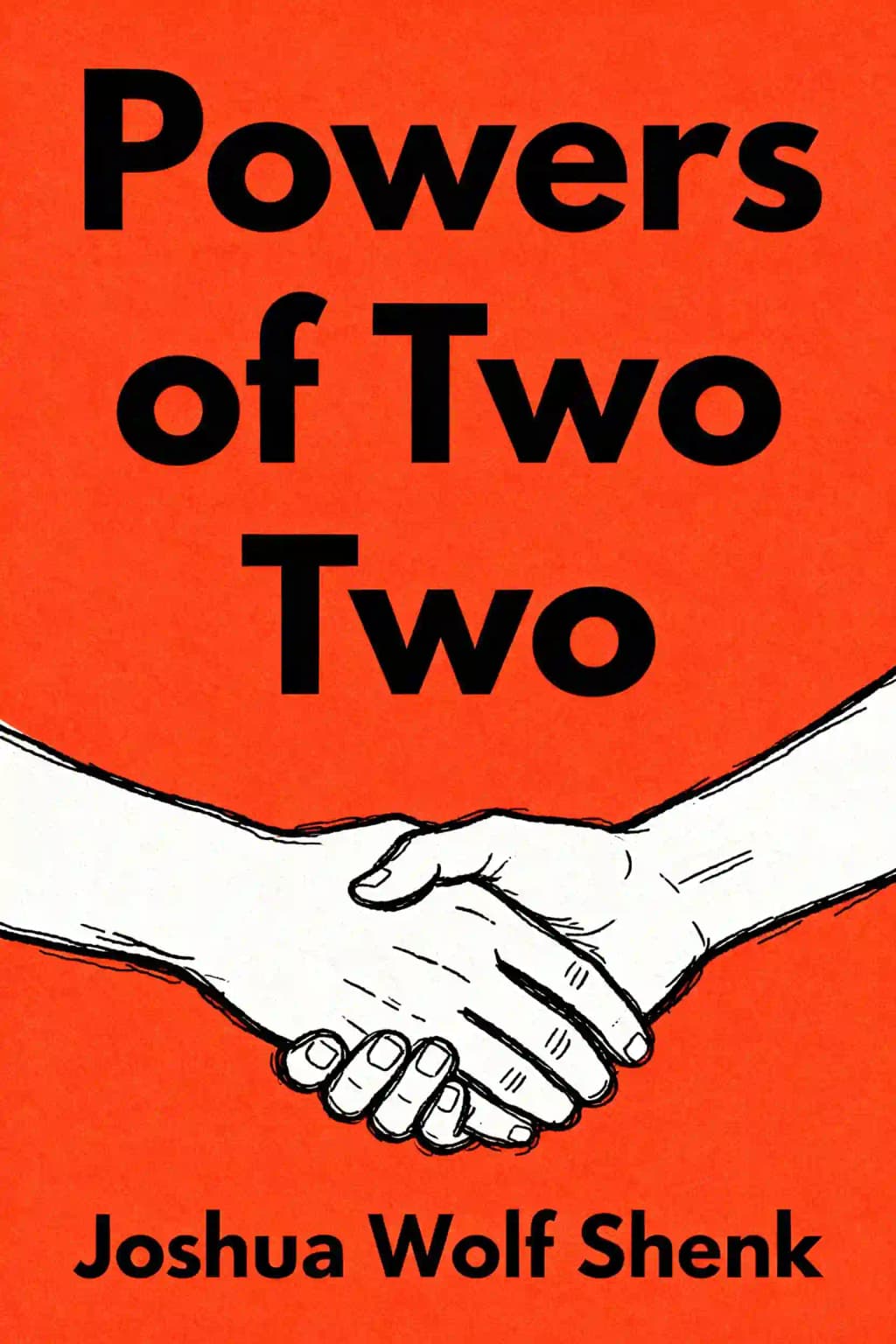
The persistent myth of the solitary genius has colored our perception of creativity for generations, but empirical evidence points in a different direction. Research consistently shows that the pair - the dyad - is actually the fundamental creative unit. Sociologist Michael Farrell's extensive studies revealed that while larger creative circles provide essential community support and shared purpose, the most transformative and innovative work typically emerges from partnerships. Dyads possess unique advantages: they're more adaptable and fluid than larger groups, naturally fostering deeper engagement and emotional intensity. Historical examples abound - from Lennon and McCartney to Jobs and Wozniak - of how creative pairs have changed their fields.
Beginning this journey requires small steps. Take action, even if imperfect. Answer calls that intimidate you. Seek assistance when needed. Look for unexpected connections - whether it's a stranger who inexplicably understands your vision or a familiar friend who challenges your perspective in surprising ways. Accept the risks inherent in creative partnership: potential humiliation, abandonment, and perhaps most frightening of all, success. We ultimately receive not what we think we deserve, but what we have the courage to endure and embrace.
The fear of success often proves more paralyzing than the fear of failure. What truly terrifies us isn't our inadequacy but our potential power. Successful creative partnerships require radical acceptance: acknowledge that your partner will inevitably frustrate you, just as you will them. Recognize that the very qualities that drive you crazy about your creative partner are often inextricably linked to what makes them brilliant and inspiring. Understanding that reality exists not solely in your mind but in the dynamic space between you and others is crucial.
As philosopher Martin Buber profoundly noted, genuine encounters dissolve the traditional boundaries between subject and object, touching something transcendent and divine. Embracing this possibility opens new horizons. Greater achievements - whether in creativity, intimacy, or innovation - become possible when we boldly venture into the vast, often uncomfortable space between ourselves and others. This space, though challenging, is where true creative magic happens.