Capítulo 1
Beyond Belief: Dawkins' Journey Through Faith and Evolution
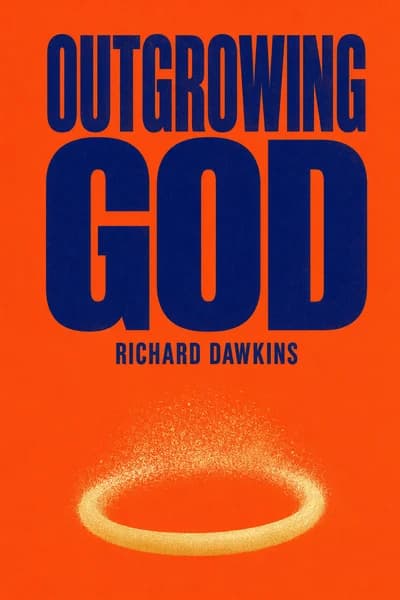
Richard Dawkins' "Outgrowing God" arrived like an intellectual thunderbolt when published in 2019, quickly becoming a cultural phenomenon that sparked heated debates across religious and scientific communities worldwide. The book has sold over two million copies and been translated into 37 languages, cementing its place as one of the most influential works on religion and science in recent decades. What makes this book particularly fascinating is how it distills complex evolutionary concepts and religious criticism into accessible language without sacrificing intellectual rigor.
Dawkins, voted "World's Top Thinker" by Prospect magazine readers in 2013, brings his formidable credentials as an Oxford evolutionary biologist to bear on questions typically dominated by theologians. The book has found surprising fans in unexpected places - from Hollywood celebrities like Ricky Gervais and Daniel Radcliffe to tech titans including Bill Gates and Elon Musk, who called it "a necessary read for our times." Even religious leaders have engaged with it seriously, with the Archbishop of Canterbury acknowledging that Dawkins "asks questions that deserve to be answered."
But what makes us cling to religious beliefs in an age of scientific enlightenment? And can we find meaning, morality, and wonder without supernatural explanations? These are the questions Dawkins invites us to explore.
Capítulo 2
The God Lottery: How Geography Determines Faith
Imagine being born in ancient Greece, Viking Scandinavia, or modern Saudi Arabia. In each case, you'd likely embrace entirely different gods with absolute conviction. This "accident of birth" argument forms Dawkins' opening salvo against religious certainty. The thousands of deities worshipped throughout human history - from Zeus and Thor to Yahweh and Allah - can't all be true, yet believers typically reject all gods except their own without examining why they accept the particular deity of their culture.
The supposed monotheism of Abrahamic religions quickly unravels under scrutiny. Christianity's Trinity doctrine effectively creates three gods in one, while Catholicism's veneration of Mary and countless saints functions as practical polytheism. Each saint specializes in particular problems - St. Anthony for lost items, St. Jude for hopeless causes - mirroring how ancient Romans assigned different domains to their gods.
Dawkins shares his personal journey, describing how at age 15 he realized his Christian faith resulted solely from his British upbringing. Had he been born in Afghanistan, he'd likely be Muslim; in India, perhaps Hindu. This geographical lottery of belief raises profound questions about religious truth claims.
This observation leads to one of Dawkins' most passionate arguments - against labeling children with their parents' religion before they can think critically. We don't speak of "Marxist children" or "Republican children," recognizing that political views require mature consideration. Yet we casually accept "Muslim child" or "Christian child," imposing complex theological positions on minds too young to evaluate them.
Between firm belief and atheism lies agnosticism, a position Dawkins treats with nuance. Following Thomas Huxley, who coined the term, agnostics acknowledge uncertainty while recognizing the extreme improbability of supernatural claims. This differs from Einstein's "pantheism," which poetically equated God with nature's laws rather than a personal deity who answers prayers or punishes sinners.
Capítulo 3
The Evidence Problem: History, Hearsay, and Holy Books
How do we know anything about the past? We accept Julius Caesar's existence through archaeological evidence and contemporary accounts. But the New Testament faces serious evidential challenges - written decades after Jesus's death, in a language (Greek) he never spoke, by unknown authors falsely attributed to apostles.
Before modern record-keeping, history relied on oral transmission - essentially sophisticated gossip passed through generations. The "Chinese Whispers" effect inevitably distorted stories long before they were written down. Homer's Iliad likely contains kernels of historical truth about Bronze Age conflicts, but centuries of oral transmission transformed those events into mythological epics featuring gods and supernatural heroes.
The New Testament suffers from similar problems. Mark, the earliest gospel, appeared 35-40 years after Jesus's death - ample time for stories to evolve and supernatural elements to accumulate. The other gospels drew from Mark and a lost document scholars call "Q," further removing them from original events. Outside the gospels, historical references to Jesus are scarce and problematic - Josephus's mention is widely considered a later Christian interpolation, while Tacitus merely notes Christ's execution under Pilate.
Modern parallels help illustrate how quickly false stories spread. Consider contemporary conspiracy theories around Kennedy's assassination or 9/11, which developed despite extensive documentation and immediate reporting. Jesus's era lacked cameras, newspapers, and instant communication - only word-of-mouth connected isolated Christian communities across the Mediterranean, allowing dramatic variations in beliefs.
The Bible's canonical form wasn't established until the Council of Nicaea in 325 CE - nearly three centuries after Jesus's death. The selection process often seemed arbitrary; Irenaeus insisted on exactly four gospels because there are "four corners of the earth and four winds." Many gospels were excluded, including the Infancy Gospel of Thomas with its mischievous child Jesus striking dead children who annoyed him - stories modern Christians reject while accepting equally fantastical miracles from canonical texts.
Capítulo 4
Mythmaking: From Ancient Floods to Modern Cults
Myths emerge through various mechanisms - from campfire tales and moral parables to dreams and historical events distorted through retelling. This process of mythmaking follows recognizable patterns across cultures and time periods, often beginning with actual events that gradually acquire supernatural elements through oral transmission. The Noah's Ark story exemplifies this process, borrowed directly from the Babylonian myth of Utnapishtim in the Epic of Gilgamesh, which featured the same essential elements: a great flood, animals saved on a boat, birds sent to find land, and a rainbow finale. Similar flood myths appear in hundreds of cultures worldwide, likely inspired by actual flooding events that became mythologized over generations.
The Noah story collapses under scientific scrutiny, revealing how myths can persist despite contradicting observable evidence. If all animals dispersed from Mount Ararat after the flood, why are marsupials found almost exclusively in Australia, lemurs in Madagascar, and particular species of sloth in South America? The global distribution of animals matches evolutionary predictions perfectly but contradicts flood mythology. Furthermore, the logistics of housing millions of species on a single vessel, feeding them for months, and maintaining genetic diversity from just two specimens of each species presents insurmountable practical challenges.
Modern myth-making demonstrates how religious stories develop in real-time. During World War II, Pacific islanders witnessed military supplies arriving by plane and developed "cargo cults" - building dummy airports and control towers to attract these "gifts from gods." These cults created elaborate rituals, including marching with wooden rifles and constructing bamboo radio equipment, believing these actions would summon cargo-laden aircraft. On Tanna Island, the Prince Philip Movement worships Queen Elizabeth's husband as a divine figure, believing he will someday return to bring prosperity. The movement began after his 1974 visit to Vanuatu, demonstrating how quickly divine narratives can form around charismatic figures.
The Mormon religion offers another well-documented example of recent mythology. Joseph Smith claimed to translate golden plates using "seer stones," producing the Book of Mormon in peculiar King James English despite supposedly translating from ancient Egyptian. Contemporary accounts describe Smith dictating the text while looking at a stone in his hat, with the plates often not even present. From this dubious beginning, Mormonism has grown to millions of followers worldwide - a modern demonstration of how religions form and spread. The evolution of Mormon doctrine, including later additions like celestial marriage and baptism for the dead, shows how religious mythologies continue to develop and adapt over time.
These examples reveal a common pattern in myth formation: extraordinary claims become normalized within believing communities, supernatural elements are added to historical events, and contradictory evidence is rationalized or ignored. Whether ancient or modern, myths serve similar social functions - explaining natural phenomena, establishing moral codes, and creating shared cultural identities.
Capítulo 5
Examining Religious Narratives: A Critical Analysis of Sacred Texts
Ancient religious texts contain complex moral narratives that merit careful scholarly examination. Consider the story of Abraham and Isaac, which presents a profound test of faith that raises important questions about the nature of divine authority and human obligations. This account, while foundational to several faiths, invites philosophical discussion about the relationship between devotion and ethical reasoning.
Religious scholarship notes how ancient texts often portrayed divine beings with human-like attributes. In Exodus 34:14, for instance, the divine is described as possessing strong emotions. A notable incident involves Moses confronting idol worship, resulting in significant consequences for the community, highlighting the text's emphasis on exclusive devotion above other considerations.
Historical analysis reveals how ancient Near Eastern texts, including religious chronicles, often contained accounts of territorial conflicts. These narratives frequently included detailed instructions about dealing with conquered peoples, reflecting the cultural and social contexts of their time. The story of Jephthah presents a particularly complex moral scenario about promises and their consequences.
The New Testament introduces evolved theological concepts, with Paul developing sophisticated frameworks about human nature and divine redemption. The doctrine of Original Sin emerges as a central theological concept, attempting to explain human imperfection and the need for spiritual restoration. Augustine later expanded on these ideas with his own theological interpretations.
The development of atonement theology raises important philosophical questions about justice, forgiveness, and the nature of divine mercy. Scholars have long debated these concepts, examining how different religious traditions understand the relationship between divine authority and human redemption.
Capítulo 6
Morality Without Gods: The Evolution of Ethics
Many believe religious faith necessary for morality, as evidenced by American politics where atheist candidates face severe disadvantages. But this assumption rests on two flawed premises: that we need holy books to tell us right from wrong, and that humans require divine surveillance to behave ethically.
The "divine surveillance" theory has some experimental support. Professor Melissa Bateson's "honesty box" experiment showed people paid nearly three times more for coffee when a picture of eyes (versus flowers) appeared above the price list. This suggests we're unconsciously influenced by the feeling of being watched - perhaps explaining why religious people who believe God monitors their thoughts might behave more ethically.
However, prison statistics don't support this theory - American federal prisons show Christians vastly outnumber atheists (28% Protestant, 24% Catholic versus just 0.07% atheist). A criminal is 750 times more likely to be Christian than atheist, though education levels and other factors may influence these numbers.
Regarding morality from holy books, the Ten Commandments make a poor ethical guide. Some focus on God's jealousy rather than human welfare, while others (like sabbath-breaking) carried disproportionate punishments like stoning. The commandment "Thou shalt not kill" has been routinely violated in war with religious blessing, while "Thou shalt not covet thy neighbor's wife" treats women as property alongside houses and livestock.
Our moral values come from multiple sources. Like all animals, we've evolved certain instincts that helped our ancestors survive. We've also evolved tendencies toward cooperation and kindness, though this evolutionary explanation is complex. Most significantly, our moral values change rapidly across generations - far faster than evolution works. Slavery, once accepted even by great figures like Jefferson and Washington, is now universally condemned. Women's voting rights, unthinkable a century ago, are now taken for granted. These shifts come from conversations, literature, parliamentary debates, and academic discourse - not from religion or genetics.
Capítulo 7
Nature's Engineering: The Appearance of Design
The natural world abounds with structures that appear designed - from the cheetah's perfectly engineered body for high-speed pursuit to the vertebrate eye functioning like a sophisticated camera. The chameleon's independently focusing eyes and explosive tongue (accelerating 300 times faster than a cheetah) provide additional examples of nature's complexity.
The chameleon's tongue achieves its remarkable speed through a catapult-like energy storage system. The muscles slowly store energy in an elastic component, which then releases suddenly - like a bow and arrow - launching the tongue at incredible acceleration. Similar elastic energy storage appears in jumping insects and most spectacularly in mantis shrimps, whose hammer-like limbs strike with the acceleration of a .22 pistol bullet - underwater!
Cephalopods (octopuses, squids, and cuttlefish) possess skin that functions like a living television screen. Their skin contains three types of pigment bags controlled by muscles that can expand or contract these pigment organs within one-fifth of a second. This sophisticated system allows cephalopods to instantly mimic their backgrounds for camouflage despite having colorblind eyes - possibly using light-sensing organs distributed across their skin.
Beyond remarkable adaptations like camouflage, the sheer complexity of living organisms presents an even greater challenge to explain without a designer. The human brain contains about 100 billion interconnected nerve cells enabling thought, emotion, and imagination. Even a single body cell contains an intricate network of chemical reactions that must continue for survival.
However, living designs aren't perfect - they contain revealing flaws that point to evolutionary history rather than intelligent design. Examples include flatfish with distorted skulls because they evolved to lie on their sides, vertebrate eyes with backward-wired retinas creating blind spots, and the recurrent laryngeal nerve that takes an absurd detour in giraffes. Even our goosebumps are useless vestiges of our hairy ancestry.
Capítulo 8
Evolution's Elegant Solution: Small Steps to Complexity
The extraordinary improbability of complex living structures tempts many to assume they must have been designed. Random chance certainly cannot explain such complexity - a randomly scrambled cheetah with legs on one side or teeth in its backside would be as useless as a "cheetah smoothie." But there's a critical alternative to both random chance and intelligent design: Darwin's solution of gradual, cumulative change.
Unlike Reverend William Paley's watchmaker argument that compared complex living things to intricate watches requiring designers, Darwin recognized that small, random mutations - not massive scrambling - drive evolution. While large mutations are almost always harmful, small changes approach a 50% chance of being beneficial. Those beneficial changes are preserved through natural selection, as animals with slightly advantageous traits survive to reproduce.
Evolution works through a perpetual arms race between predator and prey. When a cheetah develops slightly longer claws through mutation, it catches more prey and passes this trait to offspring. This puts pressure on gazelles, where those with genes for faster running survive to reproduce. Both species gradually improve their equipment for survival - whether running speed, stamina, dodging skills, or sensory abilities.
Complex structures like eyes didn't appear suddenly but evolved gradually through tiny incremental improvements, each slightly better than what came before. Even a very poor eye provides some survival advantage over no eye at all. Improbability dissolves when we understand that complex structures emerge through countless small steps over immense time periods.
Paley's watchmaker argument actually undermines the case for God when properly understood. Designers themselves require explanation. Human watchmakers evolved gradually through a long chain of ancestors. Anything complex enough to design things must arrive late in the universe, as the product of a long evolutionary process. God, as an alleged designer complex enough to create everything else, would be even more improbable than Paley's watch.
Capítulo 9
Self-Assembly: Order Without Design
While Paley's stone and watch argument suggests only designed objects have special properties, nature produces objects of striking beauty and geometric precision without any designer at all. Crystals of iron disulphide (pyrite or "fool's gold") form perfect, shiny cubes that resemble sophisticated sculptures, yet they form spontaneously through natural processes.
Their precise geometric shapes emerge directly from the orderly arrangement of their atoms in three-dimensional lattices. Salt crystals grow when sodium and chloride ions recognize each other and link arms through bonds, forming cube-shaped structures because their "arms" connect at right angles. Different crystals have different shapes because their molecular bonds form at different angles.
Snowflakes demonstrate nature's ability to create unique beauty without design. Each has six-sided symmetry reflecting the underlying structure of water ice crystals, yet no two are identical because each experiences a unique history of temperature and humidity changes as it falls through clouds. Their beauty comes from symmetry, not from conscious design.
The lambda bacteriophage virus exemplifies biological self-assembly, looking remarkably like a lunar lander with its crystalline head and legs. After landing on a bacterium, it injects its DNA through a central "hypodermic" tail. The virus's components self-assemble like crystals, with molecules drifting about inside the infected bacterium and slotting into place.
Living cells contain thousands of chemical reactions that don't interfere with each other thanks to enzymes - specialized protein catalysts with unique three-dimensional shapes that bring reactant molecules together in precisely the right orientation. Each enzyme has specific crevices where molecules slot in and combine perfectly, like jigsaw pieces fitting together.
Enzyme molecules get their crucial shapes through self-assembly. Each protein is a chain of amino acids that folds into a specific three-dimensional structure because certain amino acids along the chain are attracted to others, causing the chain to bend and twist into a particular "knotted" configuration. The sequence of amino acids determines the final shape, which in turn determines the enzyme's function.
Capítulo 10
The Religious Mind: Why We Believe
Religious belief appears nearly universal across human history, suggesting a possible evolutionary explanation for faith in gods. Our ancestors likely evolved a tendency to detect agency - purposeful actors like predators - in their environment. Those who erred toward assuming agency (even falsely) often survived better than those who missed actual threats. This "agency detection bias" persists in modern humans who fear burglars in nighttime noises.
The human brain evolved as a pattern-seeker, noticing sequences and potential cause-effect relationships. We often perceive patterns where none exist (false positives). Superstitions arise from these false positives - like believing prayer caused rain or goat sacrifices cured illness. B.F. Skinner demonstrated similar superstitious behavior in pigeons, who developed ritualistic movements when food was delivered randomly, "believing" these actions caused food to appear.
Children evolved to believe whatever their parents tell them - both useful survival information and useless superstitions. Natural selection favored children who trusted adult advice without questioning, as they couldn't distinguish good from bad advice. This explains how religious beliefs persist across generations - they're transmitted alongside genuinely useful information.
While not strictly Darwinian, religions with warlike gods might help their societies prevail in conflict. Nations whose priests preach martyrdom and heavenly rewards for warriors would likely produce braver fighters than those with peaceful deities. This explains how religions like Islam and Christianity spread through military conquest. Shared religious rituals may also foster social cohesion and cooperation, benefiting the group even if the specific beliefs have no direct effect.
Reciprocal altruism - being nice to those who are nice to you - provides an evolutionary foundation for human morality without requiring conscious awareness. Gerald Wilkinson's vampire bat studies demonstrated this beautifully. When bats return to their cave after hunting, successful ones vomit blood to feed starving companions, but only to familiar cave-mates, suggesting a system of reciprocal favors. This pattern makes evolutionary sense: in our ancestral small communities where everyone knew each other, the brain rule "be nice to everyone initially" was adaptive - you never knew when you might need help in return.
Capítulo 11
Embracing Reality: The Wonder of Scientific Truth
Before Darwin, it seemed absurd that life's complexity could exist without a designer. Now we understand evolution, but people still insert God into remaining knowledge gaps. Science, however, has a habit of filling these gaps, and we should expect it will continue doing so.
Our intuitions often fail us when confronting scientific realities. The entire Earth's surface consists of interlocking tectonic plates that move at roughly fingernail-growth speed, carrying continents with them. Even more surprisingly, matter - including our bodies and everything around us - consists almost entirely of empty space. In a diamond's carbon lattice, if a nucleus were the size of a tennis ball, the nearest neighbor would be 2 kilometers away.
Einstein's Special Theory of Relativity produces another shocking truth: a person traveling near light speed would age much slower than those on Earth. Science regularly upsets common sense, from quantum theory's bewildering Copenhagen Interpretation (suggesting quantum events haven't happened until observed) to the Many Worlds Interpretation (where reality continuously splits into trillions of alternative worlds).
Our understanding of the universe has expanded through courageous thinking. People born in the early 20th century entered a world where scientists recognized only one galaxy. Now we know of 100 billion galaxies in an expanding universe that began 13.8 billion years ago. Many scientists even suggest our universe is just one of billions in a vast multiverse.
God-worshippers have abandoned the living world as evidence for a creator since Darwinian evolution provides a full explanation. Instead, they've turned to cosmological "gaps," particularly the fundamental constants of physics - numbers like the gravitational constant G whose values seem precisely tuned. This "fine-tuning" tempts some to invoke a divine "knob-twiddler," but this merely pushes the improbability problem back a step.
The anthropic principle offers a better explanation: we exist in a universe capable of producing us. In a multiverse with billions of universes having different constants, we necessarily find ourselves in one of the rare "Goldilocks universes" with conditions just right for life. Science's spectacular track record of explaining the seemingly inexplicable should give us courage to embrace this view rather than clinging to gods.
Scientific truth requires courage to face, but with that courage comes the opportunity to experience wonder and beauty far greater than any offered by supernatural beliefs. The universe revealed by science - vast, ancient, and governed by elegant natural laws - provides a foundation for awe that surpasses the parochial myths of our ancestors.