Capítulo 1
The Seductive Promise of Efficiency
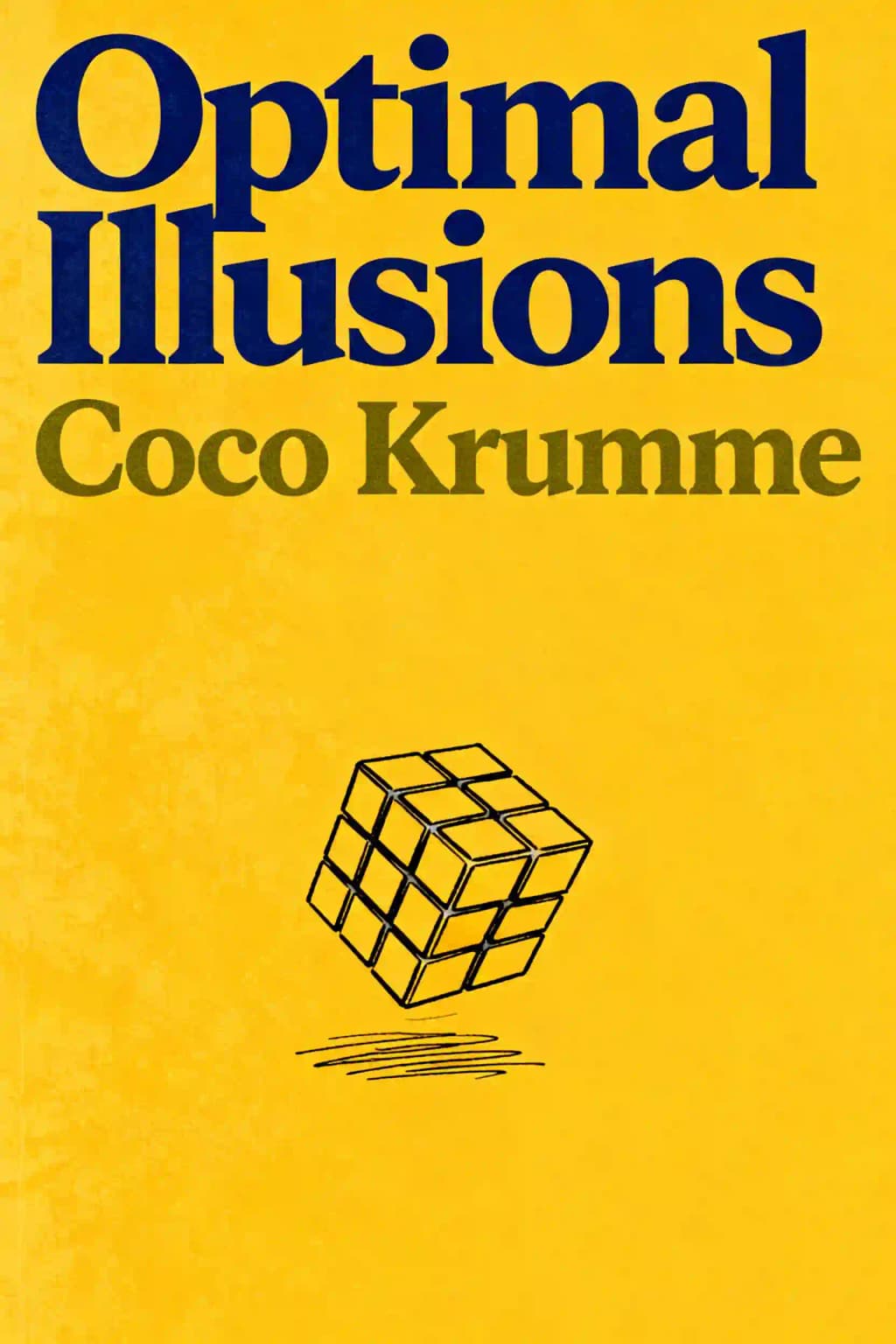
In the heart of Kentucky, a massive $1.5 billion Amazon Air Hub rises from the landscape, representing America's obsession with efficiency. This facility, strategically positioned within a day's drive of 65% of the U.S. population, embodies our national fixation with optimization-a concept that has transformed from mathematical technique to cultural religion. Coco Krumme's "Optimal Illusions" explores this transformation through personal stories gathered across America, from Dakota sugar beet farmers to Texas oil magnates. The book has garnered attention from tech leaders and economists alike, with Bill Gates praising its "clear-eyed examination of efficiency's hidden costs" and The Economist calling it "a necessary corrective to Silicon Valley's optimization gospel." As our supply chains falter and climate challenges mount, Krumme's exploration of how we became captivated by efficiency-and what we've lost along the way-couldn't be more timely.
Capítulo 2
The Birth of Optimization Culture
Optimization traces its roots to the Latin "optimus" (the best), which evolved into the French "optimisme" in the eighteenth century. The concept entered popular culture through Voltaire's banned 1759 novella "Candide," which satirized philosopher Gottfried Leibniz's idea that we live in "the best of all possible worlds" through the character Professor Pangloss.
A simple lemonade stand illustrates modern optimization principles: define your objective function (what makes "best" lemonade), identify parameters (available ingredients), and consider constraints (customer preferences, budget limitations). This framework reveals key optimization questions: How do you know when your solution is complete? When should you update parameters? How well does your solution apply to other situations?
The optimization mindset transformed agriculture through Norman Borlaug, an Iowa farm boy whose "Green Revolution" introduced disease-resistant dwarf wheat varieties through techniques like backcrossing. His innovations increased crop productivity severalfold, reportedly saving a billion lives and earning him the Nobel Peace Prize. His approach fundamentally altered not just farming but our entire modern worldview.
In North Dakota's Red River Valley, traditional farming cooperatives underwent dramatic transformation. Farms consolidated as new seed technologies allowed fewer farmers to manage more land. Economic pressures mounted from both ends-higher fixed costs and lower grain prices-forcing operations to "get big or get out" as Secretary of Agriculture Ezra Taft Benson infamously proclaimed.
The four-crop rotation gave way to mono-cropping, triggering an arms race with weeds. Seed companies hired teams of scientists, developing costlier seeds while farmers managed tenfold more acres than previous generations. Chemical fertilizers derived from WWII munitions technology boosted yields but created environmental costs. Farmers gradually shifted from field work to office management, selecting varietals and managing futures contracts rather than working the soil.
Unlike Voltaire's satirical Professor Pangloss who retrospectively justified tragedies, modern optimization looks forward, imagining all possible worlds to determine the best. Our vocabulary has been colonized by optimization's language: scale, more, better, faster. This lens has fundamentally changed how we see the world in three key ways: breaking everything into specialized components, shifting from observation to control, and assuming technological solutions for everything while embracing perpetual growth as inherently good.
Capítulo 3
The Hidden Costs of Progress
Despite saving billions from starvation, the Green Revolution carried significant costs. In America, the worship of efficiency abandoned traditional soil regeneration methods like crop rotation, cover cropping, and natural composting. This shift fundamentally separated farmers from their land, creating a system dependent on ever-increasing yields at lower prices. Traditional farming knowledge, passed down through generations, was replaced by standardized industrial practices that prioritized short-term productivity over long-term sustainability.
Food production became industrialized as neighborhood bakeries transformed into global factories. Small bakeries that once served fresh bread daily to local communities were replaced by massive operations producing shelf-stable products shipped across continents. Transportation networks expanded with refrigerated trucks and sophisticated logistics, while grocery chains consolidated power. Advertising reshaped eating habits, while local food cultures eroded. As food prices dropped, consumer habits changed dramatically-fast food chains multiplied exponentially, home cooking declined sharply, and local businesses struggled against national chains with superior economies of scale.
Sugar's ubiquity in American life exemplifies this transformation. From sweetened coffee drinks to hidden additives in processed foods, sugar infiltrated nearly every aspect of the modern diet. Modern agriculture and processing have made sugar cheaper and more abundant than ever before, with consumers paying just a third of what they did a century earlier, adjusted for inflation. This price reduction came through innovations in beet farming, processing efficiency, and global supply chains.
These efficiencies, however, came with profound trade-offs. Mid-Victorian Britain, despite limited medical knowledge, maintained one of history's healthiest societies through diverse, seasonal diets. However, industrialization eventually undermined those gains through processed foods and changing eating patterns. America's Midwest has lost over fifty billion tons of topsoil since cultivation began-equivalent to removing several feet of fertile soil across entire states. Fertilizer runoff has created massive dead zones in the Gulf of Mexico, some spanning thousands of square miles. Communities once held together by agrarian life have eroded as farms consolidated and rural populations declined.
Optimization's hidden costs manifest in three critical losses: slack, place, and scale. Slack-the essential redundancy that cushions systems against shocks-diminishes as margins grow razor-thin, leaving farms vulnerable to weather, market fluctuations, and supply chain disruptions. Place-the specific knowledge connecting farmers to land through generations of experience-disappears as cultivation follows algorithmic demands of global trade rather than local conditions. Scale-the vital connection between part and whole-distorts when short-term metrics override long-term community values and ecological health.
The difference between small and large operations extends beyond mere size to fundamental adaptability. Small farms can pivot with changing consumer tastes and local conditions, maintaining diverse crops and practices. Large operations scale non-linearly, requiring massive capital investments that cement decisions for decades. When beet co-ops voted for GMO adoption, they built upon prior choices that homogenized production and marginalized dissenters, making it nearly impossible for individual farmers to maintain alternative practices.
In a brief century, American farmers traded the richness of slack, place, and scale for optimization along a single axis: yield. This bargain extends beyond agriculture to our entire Western world, reflecting a broader pattern of sacrificing resilience and diversity for efficiency and standardization. The true costs of this transformation-in soil health, biodiversity, community stability, and food quality-are only now becoming fully apparent.
Capítulo 4
From Atoms to Algorithms
Our journey toward optimization involved three fundamental conceptual shifts. First came atomization-breaking reality into indivisible units of matter and information that could be measured and manipulated. Second was increasing abstraction-creating complex models and algorithms that divorced representation from reality while concentrating power with those who could navigate these abstractions. Third was automation-first applied to the material world, then to the digital realm-which decoupled output from human-scale input and removed the checks and balances of small-scale knowledge.
Isaac Newton marks a pivotal milestone in optimization's development. Though often portrayed as the first modern scientist, he actually stood at the transition between eras-fascinated by alchemy and "secret fire" while developing mathematical frameworks that would transform science. Newton's work on calculus allowed us to divide continuous phenomena into infinitesimal slices that could be summed back together, providing mathematical tools to manipulate these divisions.
The atomization of physical processes transformed manufacturing. Adam Smith's pin factory demonstrated how dividing labor into eighteen distinct operations increased productivity dramatically. This principle expanded through mechanization, with Henry Ford's assembly line inspired by Chicago meatpacking plants. Ford's approach-using interchangeable parts, continuous flow, division of labor, and waste reduction-reduced automobile production time eightfold.
Las Vegas itself represents optimization through atomization-a place built on smallest units combined and recombined for maximum effect. From cards and chips to specialized labor roles, everything is broken into discrete components that can be measured, manipulated and optimized. This mirrors the computational thinking that reduces everything to binary digits, call-center metrics, and genetic code.
Modern abstractions differ from historical ones by emphasizing prediction and involving many more layers of complexity. As Matthew Crawford notes, "In becoming less obtrusive, our devices also become more complicated." These abstractions-from climate forecasts to credit-default swaps-often replace direct observation with pattern recognition, distancing us from what we're modeling.
The shift from mechanical to algorithmic optimization fundamentally changed our relationship with technology. While factory robots build cars deterministically and linearly, modern algorithms operate probabilistically at massive scale-a news recommendation system can generate ten billion recommendations with barely more computing power than ten.
Despite Peter Drucker's prediction that humans would tell machines what to do in the Information Age, we've become disconnected from the pace, place, and effects of our technological systems, exemplified by drone strikes controlled like video games from distant military chambers.
Capítulo 5
When Systems Fail
A sudden crisis gripped Texas in February 2021 when the polar vortex reached southward, bringing record low temperatures to normally balmy regions. As households turned up their heat, the Texas electric grid partially collapsed. Natural gas pipelines froze, valves iced shut, and windmills stopped turning, creating a cascade of failures. Nearly five million customers lost power, with many more facing intermittent blackouts. Water treatment plants shut down, Houston residents burned whatever they could find to stay warm, and electricity prices skyrocketed from $30 to $9,000 per megawatt hour. The crisis revealed how interconnected failure points could trigger widespread devastation - from frozen pipes bursting in homes to hospitals struggling with backup generators to food spoiling in powerless refrigerators across the state.
Systemic collapses follow a pattern described by Ernest Hemingway's character Mike Campbell when asked about bankruptcy: "Two ways. First gradually, then suddenly." This pattern appears repeatedly-in the 2008 financial crisis with its slow buildup of defaults, in California's decades of poor fire management, and in supply chain fractures that seemed invisible until the pandemic. The 2008 crisis exemplified this perfectly - years of increasingly risky mortgage lending practices and complex financial instruments gradually accumulated risk until the housing market's sudden collapse triggered a global financial meltdown. Similarly, California's fire crisis emerged from decades of suppressing natural fires while allowing development in fire-prone areas, creating tinderbox conditions that eventually erupted into megafires.
The metaphoric era of optimization is entering decline, though not disappearing entirely. While trains still run on schedule and factories continue production, the belief that efficiency always leads to improvement is faltering. The breakdown appears first at the edges-small failures and lags-before suddenly engulfing entire systems. The 2008 financial crisis marked a rupture in banking, 2018 saw declining faith in tech companies following privacy scandals and algorithm manipulation, and the early 2020s revealed the fragility of global supply chains. The pandemic exposed how just-in-time inventory systems, while efficient during normal times, left no margin for error when disruptions occurred. Even Amazon, the paragon of optimization, struggled with delivery delays and inventory shortages.
William Stanley Jevons's work on coal supplies revealed a counterintuitive relationship: as resource extraction becomes more efficient, demand increases rather than decreases. This "Jevons's paradox" mirrors a modern paradox of optimization-the better we get at local optimization, the more we rely on optimization generally, and the worse we become at questioning optimization itself. The Texas energy grid exemplifies this problem, functioning as a three-layer system of network algorithms, planning systems, and pricing mechanisms, topped with financial instruments. Similar breakdowns appear across systems, from airline cancellations cascading through hub-and-spoke networks to the Ever Given blocking the Suez Canal for six days, disrupting 12% of global trade. Each case demonstrates how optimization can create hidden vulnerabilities - the pursuit of efficiency often eliminates redundancy and backup systems that provide resilience during crises. Modern supply chains, for instance, have become so lean and interconnected that a shortage of semiconductor chips can halt automobile production worldwide.
Capítulo 6
The Gospel of Efficiency
Three cultural shifts cemented optimization as the dominant mindset of the modern West: first, a move toward individualized access to knowing rather than institutional knowledge; second, the belief that humanity has both the power and duty to create a more perfect world on earth; and third, the codification of individual action in service of a better world. These shifts, closely tied to Protestant beliefs, transformed optimization into a set of practices and shared customs-going faster, packing in more, saving money, increasing productivity-that process the material world according to a common code.
Marie Kondo's wildly popular minimalism tapped into America's anxiety about material excess. Her KonMari method promises salvation through efficiency, echoing Benjamin Franklin's virtue of frugality. While Franklin listed frugality among thirteen virtues to practice throughout life, describing it as "make no expense but to do good to others or yourself; i.e., waste nothing," Kondo offers a modern spiritual path through decluttering.
While frugality was a personal virtue, efficiency became about engineering and building. This transformation was accelerated by British thinkers responding to industrialization's uncertainties. Mill and his colleagues helped forge the lens of optimization, transforming anxiety about salvation into action itself. The individual became responsible not just for personal virtue but for the reverberation of actions in the world.
Stan Ulam, a Polish-born mathematician recruited to the Manhattan Project in Los Alamos, made his most important contribution to optimization while recovering from encephalitis in 1946. Playing solitaire in bed, he wondered about calculating odds by tracking outcomes across many games. This insight evolved into the Monte Carlo method-using random sampling to approximate complex distributions. First applied to neutron diffusion problems, the method traced neutron collisions using random numbers to map potential fission weapon explosions.
Our understanding of efficiency has transformed dramatically since the 18th century. Activities once considered frugal and virtuous in themselves-like darning socks or baking pies-are now leisure activities, with store-bought alternatives often more "efficient" in terms of time and money. This shift reflects how efficiency evolved from an intrinsic virtue to a system-wide calculation.
Capítulo 7
False Solutions to Optimization's Failures
Silicon Valley glamorized postwar economic optimization language, claiming world-saving potential through innovation and gamification. This romantic optimization has infiltrated even love-from Amy Webb's 72-trait spreadsheet for finding a husband to dating consultants applying the optimal stopping problem to marriage timing. Modern relationships have become "receptacles of emotional commodities" with even caregiving reduced to "emotional labor" with price tags.
Climate change has transformed from a local, aesthetic concern to a global phenomenon driven by complex models and abstract solutions. Despite our growing ability to collect data, our optimization-driven approaches-carbon taxes, offsets, cap-and-trade schemes-have proven largely ineffective. We've created a paradox where climate issues feel both apocalyptic yet individually unsolvable, disconnecting us from tangible mechanisms in favor of modeled outcomes.
Elon Musk warns that AI's danger lies not in developing its own will but in following "the optimization function of its creators." This reflects the techno-utopian belief that machines possess a purity humans lack-if only we could program them perfectly. From Musk's $6 billion Twitter challenge to the UN about ending world hunger to Sam Altman's predictions about AI creating universal basic income, optimization thinking pervades tech solutions.
Our attempts to fix optimization's failures often involve more optimization-what might be called "deoptimizing optimally" or finding the perfect local optima. But these solutions merely cement our faith in optimization while teaching us nothing about alternative evaluation methods. Worse, these deoptimizations are frequently co-opted by those who control optimization in the first place: corporate mindfulness programs increase productivity, financial "circuit breakers" help big players first, and the Federal Reserve's attempts to engineer economic "soft landings" reveal our obsession with control.
Silicon Valley's natural beauty makes perfection seem more attainable than it did to optimization pioneers like James Mill in gray England. This environment fosters the belief in a perfectible world, with engineers constantly speaking of "making the world a better place" while optimizing everything from data storage to diets. Yet a massive chasm divides places like Palo Alto from the rest of America-a division between optimization's winners and losers.
Capítulo 8
Beyond the Optimization Mindset
Jason, a Shoshone biologist managing his tribe's bison-restoration project in Wyoming, represents a different approach to optimization's damage. Where once seventy million bison roamed North America, by the 1880s Western settlers had reduced them to mere hundreds-an "optimization" that cleared land for more profitable ventures like cattle ranching and wheat farming. Now Jason envisions restoring not just bison but entire ecosystems through what he calls "decolonization of land," unwinding two centuries of water diversion, cattle grazing, and resource extraction. This involves reintroducing native plants, restoring natural water flows, and rebuilding soil health - a complex web of interconnected changes that can't be reduced to simple metrics.
Unlike optimization with its clear formulas, unwinding has no recipe or predetermined path. While we know how to build skyscrapers, we don't know how to dismantle them gracefully or restore the land beneath. Take agriculture: if we decided our modern industrial system isn't working, how would we determine the "right" farm size? Who would pay to replace half-million-dollar tractors and massive distribution infrastructure? What about the communities built around large-scale farming? These aren't just measurement questions but value judgments about how many people should farm versus pursue other professions, how food should be distributed, and what we consider "efficient" agriculture.
Like Magritte's painting of a pipe captioned "This is not a pipe," optimization deceives us by mistaking the model for reality. The more we optimize, the more we frame things in a certain way, making it increasingly difficult to see alternatives. Just as a painting substitutes an image for the real thing, optimization suggests its outcome is the best and most real way forward. Economic projections, train schedules, and school timetables aren't necessarily more true than alternatives, yet our bodies and habits shape around them. We begin to mistake these constructed systems for natural laws, forgetting they're human choices that could be made differently.
The treachery of optimals involves collapsing complex systems into single-dimension measurements. Early conservationists like Gifford Pinchot viewed forests through productivity metrics - board feet of lumber and maximum sustainable yield - while John Muir advocated conservation for its own sake, recognizing the intrinsic value of wilderness. Unlike traffic patterns that can be reversed by "flipping a switch," ecological systems face path dependence-random evolutionary steps that are difficult to reverse-engineer precisely. Once species are lost or ecosystems disrupted, we can't simply optimize our way back to previous states. The Amazon rainforest, for instance, can't be restored simply by replanting trees - it requires complex interactions between thousands of species developed over millions of years.
This challenge of unwinding optimization extends beyond ecology to social systems. Consider urban planning: after decades of optimizing cities for cars, many communities now struggle to reintroduce walkability and public spaces. The physical infrastructure, economic interests, and cultural habits all resist change, demonstrating how optimization creates its own momentum and logic that becomes self-reinforcing over time.
Capítulo 9
Finding Balance in a Post-Optimization World
Islands reveal optimization's double edge. In 1918, Western Samoa lost nearly a quarter of its population to Spanish flu after an infected ship arrived from Auckland. Meanwhile, neighboring American Samoa suffered no losses by implementing strict quarantine measures. The difference? Western Samoa had become a vital trade hub, transforming its isolation from strength to weakness. American Samoa, with just a third of Western Samoa's trade, could afford to make ships quarantine offshore.
James Jerome Hill, the railroad tycoon who embodied America's era of expansion, recognized by 1910 that the nation had reached its physical limits. His autobiography "Highways of Progress" warned of resource depletion and called for innovation to increase productivity within closed systems. Economist Tyler Cowen echoes Hill's concerns a century later, describing recent decades as "The Great Stagnation"-a period where the low-hanging fruit of growth has been picked, leaving only the optimization myth without its former reality.
The metaphor of optimization is rupturing due to its central paradox: the more we optimize, the less we can see or do things differently. We can't solve optimization's shortcomings within its own framework. Today's yearnings-for tangible experiences over material goods, for slowing down, for local connection, for integrity between part and whole-represent attempts to reclaim what optimization has cost us.
Jane Jacobs noted that vigorous cultures thrive through redundancies and insularity of small pockets. The future requires balancing islands (where innovation incubates in tight circles) with the mainland's productive capacity-neither forgetting the value of the other. Islands foster innovation but risk becoming echo chambers, while the mainland produces at impressive speeds but leaves even hardened city dwellers longing for quiet and escape from the machine.
A malaise permeates America today-the feeling that unchecked growth isn't serving us despite optimization's many gifts. Two opposing urges emerge: doubling down on efficiency as Sam Altman proposes, or escaping it altogether like Jason Baldes hopes to do. Both perpetuate optimization's primacy-the first by entrenching it as a way even to deoptimize, the second by shifting focus from present to past.
The American fable of escaping to nature fails as a resolution because progress continually interrupts this retreat. We're caught between streamlined optimization and human connection, between control and escape. This paradox demands acknowledgment: we can't have escape without control, nor control without retreat. Rather than full reconciliation or demolition, we must choose how to see. The remedy isn't doubling down or escaping, but choosing how to tell the tale-selecting work beyond seeking "the best," committing to beliefs defying calculated utility, creating new myths, and seeing the world as less controllable yet more worthy of reverence.