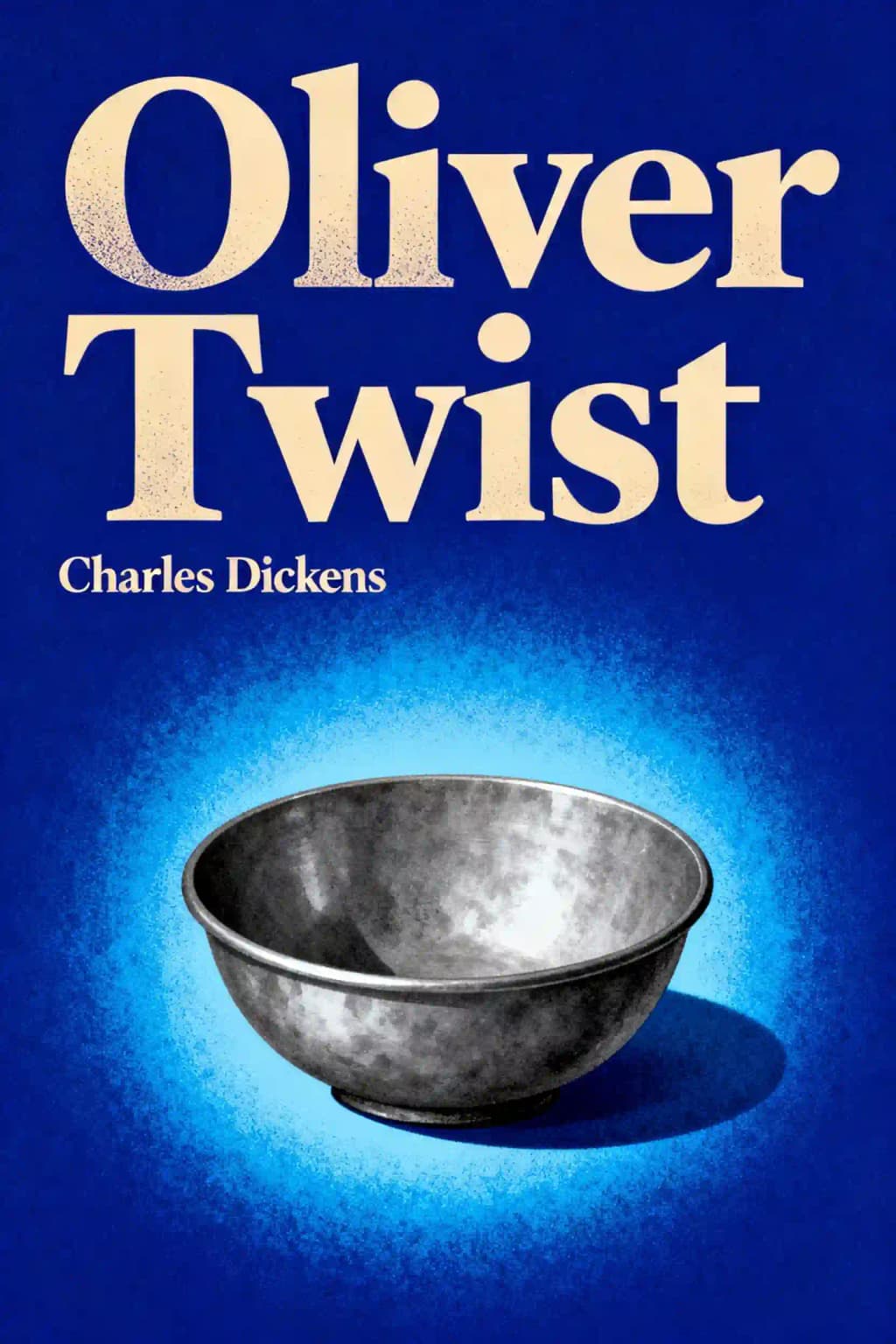
Dickens' revolutionary social novel exposes Victorian-era child exploitation through orphan Oliver's journey. Commanding up to $17,000 at auction, this literary masterpiece ranked 362nd greatest book ever written sparked a cultural phenomenon - inspiring an Academy Award-winning musical and revealing society's darkest corners.
Charles John Huffam Dickens (1812-1870) is the author of Oliver Twist and widely regarded as the greatest novelist of the Victorian era. A former journalist and social critic, Dickens drew from his own experiences with poverty and hardship to expose the brutal realities of industrial England. Oliver Twist, first serialized in 1838, explores themes of crime, poverty, and social injustice through unforgettable characters like Fagin, Nancy, and the Artful Dodger.
Beyond Oliver Twist, Dickens created literary masterpieces including A Christmas Carol, Great Expectations, David Copperfield, A Tale of Two Cities, and Bleak House.
His vivid characters and sharp social commentary sparked real reform during his lifetime, and the term "Dickensian" still evokes conditions of poverty and exploitation. Dickens also revolutionized the modern Christmas celebration through his beloved Christmas stories. His novels remain enduring classics, with characters that rival Shakespeare in cultural impact and recognition.
Oliver Twist follows the journey of an orphan boy born in a workhouse who escapes to London after asking for more food—a scandalous act of rebellion. In London, Oliver falls into the hands of Fagin, a criminal who trains orphan boys as pickpockets, but is eventually rescued by the kind Mr. Brownlow. The novel traces Oliver's quest for identity, belonging, and a better life while exposing the harsh realities of poverty, crime, and social injustice in 1830s England.
Oliver Twist is ideal for readers interested in classic literature, social justice, and Victorian history. The novel appeals to those seeking powerful critiques of poverty, inequality, and institutional failure. It's particularly valuable for students studying 19th-century literature, advocates of child welfare reform, and anyone drawn to stories about resilience and human connection in the face of adversity. The book's exploration of good versus evil and the impact of environment on character makes it compelling for readers of all ages.
Oliver Twist remains a powerful and relevant work that continues to resonate with modern readers. Charles Dickens crafted the first English novel with a child as the main character, offering an unforgettable view of Victorian society's lower depths. The novel's critique of social injustice, poverty, and institutional corruption is as urgent today as it was in Dickens' time. Its enduring appeal lies in its ability to illuminate the human consequences of inequality while celebrating resilience, compassion, and the possibility of transformation.
Oliver Twist explores interconnected themes including social injustice and poverty, particularly the mistreatment of children in Victorian society. The novel examines identity and belonging through Oliver's quest for his true place in the world, while contrasting good versus evil through Oliver's innate goodness against systemic corruption. Other prominent themes include the failure of charity, crime and punishment, class disparity, and the power of love and compassion demonstrated by characters like Nancy and Mr. Brownlow. Dickens also investigates how environment shapes moral character while asserting the possibility of inherent goodness.
Oliver Twist is the innocent protagonist—an orphan seeking identity and belonging despite constant mistreatment. Fagin is the criminal mastermind who trains orphan boys as pickpockets, representing the exploitation of vulnerable children. The Artful Dodger, a well-dressed young thief, introduces Oliver to London's criminal underworld. Mr. Brownlow is the compassionate elderly gentleman who rescues and cares for Oliver, embodying kindness and generosity. Nancy, an associate of Fagin's, shows fierce loyalty and demonstrates that goodness can exist even in corrupt environments.
Charles Dickens uses Oliver Twist as a powerful critique of Victorian England's treatment of the poor and marginalized. The novel exposes how poverty dehumanizes people, treating them as a collective mass rather than individuals with hopes and dreams. Dickens highlights the criminal justice system's deep flaws, showing how innocent people like Oliver are wrongly accused while real criminals escape punishment. The workhouse system, child exploitation, and the failure of both public and private charity are depicted as perpetuating cycles of poverty and desperation. The novel calls for empathy, compassion, and systemic reform to protect society's most vulnerable members.
After six months of near-starvation in the workhouse, the children draw lots to decide who will ask for more gruel, and Oliver is chosen. When Oliver approaches the master and requests a second helping, it triggers a great uproar—the authorities view this innocent request as a scandalous act of rebellion. This iconic moment symbolizes Oliver's refusal to accept inhumane treatment and represents the desperation of starving children in Victorian institutions. The scene became one of literature's most memorable depictions of institutional cruelty and childhood vulnerability.
Oliver Twist presents crime as a consequence of poverty and social neglect rather than inherent evil. Fagin's gang of juvenile pickpockets consists of orphaned boys with nowhere else to turn, forced to fend for themselves through illegal means. The novel shows how industrialization, mass production, and displacement create slums and ghettos, contributing to cycles of poverty and desperation that drive people toward exploitation. Characters like the Artful Dodger and Nancy, though criminals, demonstrate fierce loyalty and camaraderie—reminding readers that community and compassion can exist even in the darkest circumstances.
Mr. Brownlow embodies compassion, justice, and the transformative power of kindness in Oliver Twist. When Oliver is wrongly accused of theft, Brownlow realizes the mistake and takes the boy into his home, offering care, education, and a chance at a respectable life. He represents the best of the middle class—using wealth and influence to uplift the vulnerable rather than exploit them. Brownlow's actions demonstrate that empathy and generosity can break the cycle of poverty and despair, serving as Dickens' model for how society should treat its most marginalized members.
Dickens critiques multiple Victorian institutions in Oliver Twist, particularly the new Poor Law system that treated the impoverished as undeserving and subjected them to brutal workhouse conditions. He exposes the hypocrisy of the middle class, who maintained moral superiority while ignoring systemic injustice. The criminal justice system is portrayed as deeply flawed and corrupt, punishing the innocent while allowing real criminals to escape. Dickens also condemns both private and public charity as ineffective and often harmful, perpetuating rather than alleviating poverty. The novel highlights how children bore the worst consequences of these institutional failures.
Oliver Twist remains relevant because its themes of social injustice, poverty, and institutional failure continue to resonate in contemporary society. The novel's critique of systems that marginalize vulnerable populations—particularly children—mirrors ongoing debates about child welfare, homelessness, and economic inequality. Dickens' examination of how environment shapes character while asserting the possibility of inherent goodness speaks to current discussions about nature versus nurture. The call for empathy, compassion, and systemic reform to address social problems is as urgent now as it was in Victorian England. The book's enduring message reminds readers that positive change comes through human connection and solidarity.
Oliver Twist's true parentage is ultimately revealed, showing his connection to a more respectable life and higher social status. He is rescued from the criminal underworld and reunited with Mr. Brownlow, who provides him with education, care, and a proper home. The novel concludes with Oliver finding the identity, belonging, and family he sought throughout his journey. Dickens uses Oliver's happy ending to demonstrate that goodness can triumph over corruption and that compassionate individuals can make a meaningful difference in breaking cycles of poverty and exploitation, though the broader social critique suggests that systemic change remains necessary for lasting transformation.
Sinta o livro através da voz do autor
Transforme conhecimento em insights envolventes e ricos em exemplos
Capture ideias-chave em um instante para aprendizado rápido
Aproveite o livro de uma forma divertida e envolvente
Oliver's innocence repeatedly makes him vulnerable to punishment for others' crimes.
Dickens wasn't just telling another story-he was igniting a social revolution.
Oliver becomes property of the parish, thrust into a system designed not to nurture but to punish poverty.
What kind of society, Dickens asks us, creates conditions where a small child believes his best chance lies in fleeing alone into the unknown?
Divida as ideias-chave de Oliver Twist, or, The parish boy's progress em pontos fáceis de entender para compreender como equipes inovadoras criam, colaboram e crescem.
Destile Oliver Twist, or, The parish boy's progress em dicas de memória rápidas que destacam os princípios-chave de franqueza, trabalho em equipe e resiliência criativa.

Experimente Oliver Twist, or, The parish boy's progress através de narrativas vívidas que transformam lições de inovação em momentos que você lembrará e aplicará.
Pergunte qualquer coisa, escolha a voz e co-crie insights que realmente ressoem com você.

Criado por ex-alunos da Universidade de Columbia em San Francisco
"Instead of endless scrolling, I just hit play on BeFreed. It saves me so much time."
"I never knew where to start with nonfiction—BeFreed’s book lists turned into podcasts gave me a clear path."
"Perfect balance between learning and entertainment. Finished ‘Thinking, Fast and Slow’ on my commute this week."
"Crazy how much I learned while walking the dog. BeFreed = small habits → big gains."
"Reading used to feel like a chore. Now it’s just part of my lifestyle."
"Feels effortless compared to reading. I’ve finished 6 books this month already."
"BeFreed turned my guilty doomscrolling into something that feels productive and inspiring."
"BeFreed turned my commute into learning time. 20-min podcasts are perfect for finishing books I never had time for."
"BeFreed replaced my podcast queue. Imagine Spotify for books — that’s it. 🙌"
"It is great for me to learn something from the book without reading it."
"The themed book list podcasts help me connect ideas across authors—like a guided audio journey."
"Makes me feel smarter every time before going to work"
Criado por ex-alunos da Universidade de Columbia em San Francisco

Obtenha o resumo de Oliver Twist, or, The parish boy's progress como PDF ou EPUB gratuito. Imprima ou leia offline a qualquer momento.
In the grim workhouses of Victorian England, a small boy dares to ask for more. "Please, sir, I want some more." With these six simple words, Oliver Twist challenges an entire social order. Charles Dickens' 1837 novel wasn't merely entertainment - it was a deliberate attack on a society that warehoused its poor in conditions deliberately made harsh to discourage "dependency." Through Oliver's eyes, we witness the cruelty of institutions supposedly designed to help the vulnerable. The novel struck such a nerve that it helped spark actual reform of England's Poor Laws. What makes this story endure nearly two centuries later isn't just its social critique but its perfect balance of darkness and hope. Oliver's journey from workhouse to London's criminal underworld to eventual salvation creates a narrative that still captivates us today. Why does this Victorian orphan's tale continue to resonate? Perhaps because the fundamental question it poses remains urgent: how do we measure a society if not by how it treats its most vulnerable members?