Bleak House
Visão geral de Bleak House
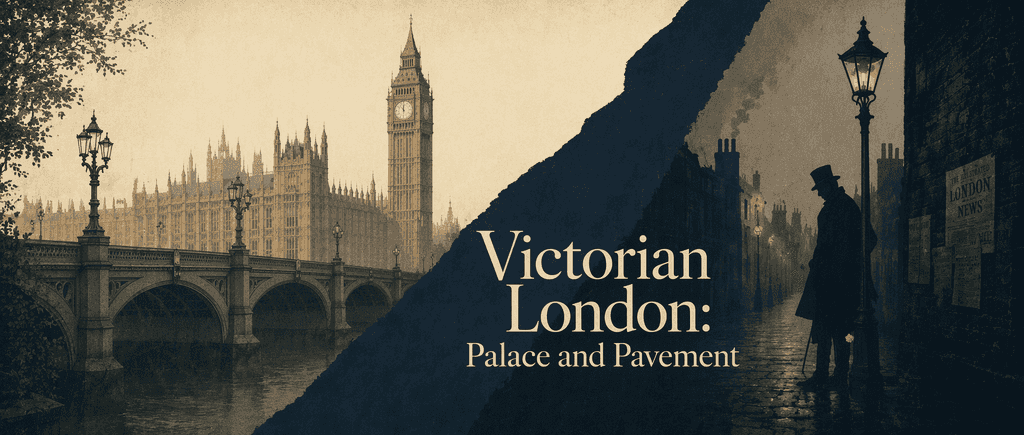
In Dickens' masterpiece "Bleak House," fog-shrouded London's corrupt legal system destroys lives through endless litigation. This scathing critique of Victorian injustice directly influenced 1870s legal reforms, pioneered urban Gothic atmosphere, and remains a cornerstone of detective fiction with its groundbreaking dual-narrator structure.

Temas principais em Bleak House
- institutional corruption
- bureaucratic paralysis
- systemic poverty
- legal injustice
- social interconnectedness
Citações de Bleak House
no man alive knows what it means
perpetual stoppage
mountains of costly nonsense
no one exists in isolation
Personagens de Bleak House
- Esther SummersonThe novel's first-person narrator and protagonist
- John JarndyceThe benevolent guardian of the Jarndyce wards
- Richard CarstoneA young man destroyed by his obsession with law
- JoA poor crossing-sweeper and victim of neglect
- TulkinghornA lawyer representing the legal system's malice
Baixar resumo de Bleak House
Obtenha o resumo de Bleak House como PDF ou EPUB gratuito. Imprima ou leia offline a qualquer momento.
Perguntas Frequentes Sobre Este Livro
Bleak House by Charles Dickens centers on the interminable legal case Jarndyce v Jarndyce, exposing the corruption and inefficiency of England’s Court of Chancery. Through interconnected narratives—including Esther Summerson’s coming-of-age, Lady Dedlock’s concealed past, and Richard Carstone’s obsession with the lawsuit—Dickens critiques institutional neglect, social inequality, and the human toll of bureaucratic stagnation.
Fans of Victorian literature, legal dramas, and social critiques will find Bleak House compelling. It appeals to readers interested in Dickens’ intricate plotting, themes of justice and identity, and layered characters like the resilient Esther Summerson and tragic Lady Dedlock. Scholars of 19th-century societal structures also gain insights into systemic legal flaws.
Yes. Ranked among Dickens’ greatest works, Bleak House offers a masterful blend of satire, mystery, and moral urgency. Its dual narrative (partly voiced by Esther Summerson), vivid depictions of London’s underclass, and critique of legal bureaucracy remain influential, making it essential for literary enthusiasts and historians alike.
Key themes include:
- Legal corruption, embodied by the Jarndyce lawsuit
- Social inequality, highlighted through contrasts between aristocrats like the Dedlocks and impoverished figures like Jo
- Identity, explored via Esther’s quest for belonging
Dickens also examines obsession, redemption, and the destructive power of secrets.
Dickens condemns the Court of Chancery through the endless Jarndyce v Jarndyce case, which drains heirs like Richard Carstone financially and emotionally. Lawyers profit while claimants suffer, illustrating how institutional greed and procedural delays perpetuate injustice—a scathing indictment of 19th-century legal practices.
Esther, the novel’s co-narrator and moral anchor, is an orphan raised in secrecy who becomes housekeeper at Bleak House. Her resilience, compassion, and pursuit of truth contrast with societal corruption. Her hidden lineage ties her to Lady Dedlock, deepening the novel’s exploration of identity and forgiveness.
The lawsuit symbolizes systemic failure: its decades-long stagnation destroys lives, including Richard Carstone’s descent into obsession and financial ruin. Dickens uses it to critique legal systems prioritizing procedure over humanity, where justice becomes inaccessible to those it claims to protect.
Class divisions are stark: the Dedlocks’ opulence contrasts with Jo’s destitution and Krook’s grimy shop. Dickens underscores how wealth shields the privileged (e.g., Sir Leicester’s ignorance of poverty) while the poor face neglect, as seen in Jo’s death and Esther’s marginalized upbringing.
The Court epitomizes bureaucratic decay, enabling the Jarndyce case to languish for generations. Lawyers like Mr. Tulkinghorn exploit its complexities, while heirs like Ada and Richard inherit despair. Dickens frames it as a vampiric institution draining societal vitality.
Its innovative structure (mixing first-person and omniscient narration), rich symbolism (e.g., the fog symbolizing legal obscurity), and unflinching social critique cement Bleak House as a landmark work. Characters like Inspector Bucket and themes of institutional reform remain culturally resonant.
Lady Dedlock’s secret past—as Esther’s mother and Nemo’s former lover—drives the novel’s central mystery. Her flight from society and tragic death highlight Victorian hypocrisy, while her ties to the Jarndyce case reveal hidden connections between aristocracy and marginal figures.
Modern parallels in bureaucratic inefficiency, wealth disparity, and institutional distrust echo Dickens’ critiques. The novel’s focus on resilience (via Esther) and systemic reform resonates in discussions about legal transparency and social equity, ensuring its enduring relevance.