Capítulo 1
The Mindset That Builds Nine-Figure Businesses
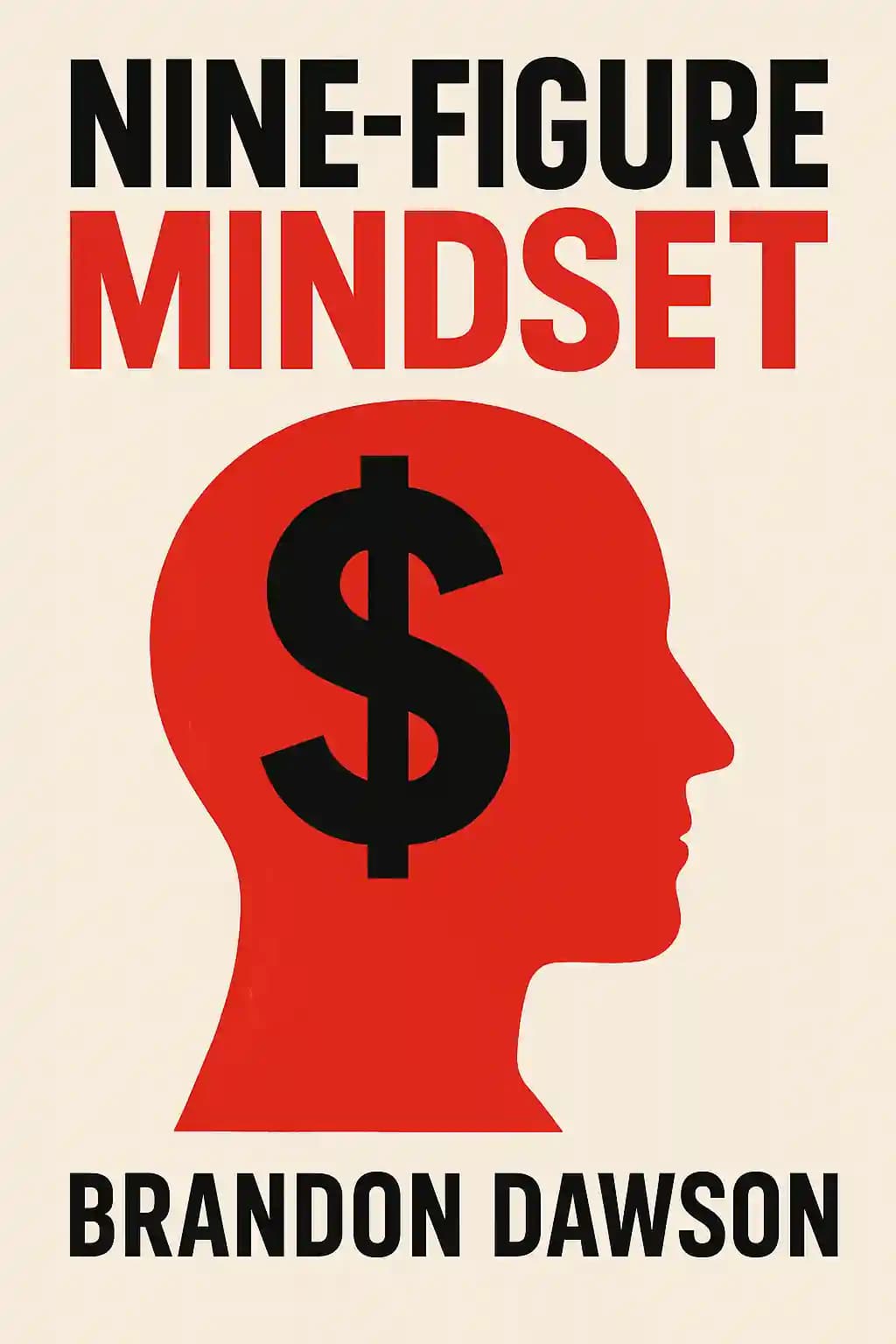
What separates the entrepreneurs who build nine-figure businesses from those who struggle to break six figures? It's not luck, connections, or even education-it's mindset. Brandon Dawson, who sold his company Audigy Group for an astonishing $151 million (seventy-seven times EBITDA), knows this firsthand. As a high school graduate with a 2.4 GPA who once dreamed while working on his parents' walnut farm, Dawson has proven that success begins between your ears. His journey from humble beginnings to building multiple successful businesses offers a powerful blueprint for entrepreneurs seeking to scale their companies. With 97% of small businesses failing within ten years, Dawson's approach to developing a nine-figure mindset has become essential reading for business owners, attracting praise from industry titans like John C. Maxwell, who credits Dawson with transforming his own leadership organization. Through his work with Cardone Ventures (co-founded with sales guru Grant Cardone), Dawson continues to help thousands of business owners break through their limitations and achieve previously unimaginable success. His methods have become particularly relevant as businesses navigate increasingly uncertain economic landscapes, with many of his clients experiencing exponential growth even during challenging times.
Capítulo 2
The Entrepreneur's Journey: From Victim to Victor
Brandon Dawson's entrepreneurial path began with a painful but transformative lesson. After being removed from his own company, Sonus Hearing Centers, he spent a full year trapped in a cycle of bitterness, complaining about the "bastards" who had wronged him. His narrative was one of betrayal and injustice, until a pivotal conversation during a golf game with his friend Hector LaMarque. Hector delivered some tough love that would change Dawson's trajectory forever: "If you want to know where you're going, just listen to what you're talking about right now-everything that went wrong in the past. Until you find what worked and accept responsibility for what you screwed up, you'll continue to fail forward."
The story of Sonus itself was remarkable. Dawson had built the company from scratch in his early twenties, expanding it from a single location to a national chain of hearing centers. By age 29, he had achieved what many entrepreneurs only dream of - getting his company listed on the American Stock Exchange. However, beneath this success story lay the seeds of his downfall. His aggressive expansion into European markets, driven more by personal ambition than sound business strategy, created tension with investors. His leadership style, characterized by what he later recognized as arrogance and impulsivity, ultimately led to his board-mandated exit.
The relationship with Hector evolved from friendship to something more demanding but ultimately more valuable: true mentorship. "Unlike friendship, which accepts you as you are, mentorship is about change and development," Dawson explains. "Friends commiserate; mentors challenge." Hector's approach was methodical and uncompromising. He had Dawson create two comprehensive lists - one of his accomplishments and another of things he would do differently. When Dawson identified leadership as a critical weakness, Hector didn't just offer platitudes; he prescribed specific books and exercises, including "Good to Great" and "The 7 Habits of Highly Effective People," to address these gaps systematically.
Through this process, Dawson discovered he fit the profile of what he termed an "entrepreholic" - someone addicted to the adrenaline rush of starting new ventures without learning from past mistakes. This pattern manifested in a cycle of launching increasingly unsatisfying businesses, each time playing either the hero or the victim, but never truly growing as a leader. The behavior was rooted in deep-seated patterns of ego-driven decision-making and an inability to process failure constructively.
The breakthrough came when Dawson finally internalized Hector's wisdom: "When your thoughts are fixed on the past, you miss opportunities in the present." This wasn't just about moving forward; it required a complete mindset transformation. Dawson needed to shut his mouth, open his mind, and actively create his future rather than remain trapped in past grievances. This fundamental shift in perspective would eventually become the cornerstone of his nine-figure mindset approach, a methodology that would help countless other entrepreneurs avoid the same pitfalls he had encountered.
Capítulo 3
Building a Business That Works For You, Not Against You
The entrepreneurial journey often begins with a paradox. Many people start businesses to escape employment, only to create jobs for themselves that are more demanding than the ones they left. Dawson discovered that most business owners fall into one of two categories: those who work for their business and those whose business works for them.
"The job of a business is to create resources, opportunities, and results-not to enslave its owner," Dawson explains. The key difference lies in how entrepreneurs approach leadership and team building. Most struggle with what Dawson calls the "entrepreneurial dilemma"-failing to recognize that most employees aren't entrepreneurs but want development, security, and guidance.
At Audigy, Dawson implemented a revolutionary approach. Instead of pushing everyone to achieve his goals without considering what they wanted (as he had done earlier in his career), he focused on recruiting people with potential, discovering their personal goals, and showing how his business could help them achieve those goals. This wasn't just herding-it was true leadership.
"To gain cooperation, make it about them, not about your business," Dawson advises. He developed a four-step process: perfecting processes for duplication, teaching others to duplicate best practices, leading through self-accountability, and aligning everyone's interests through targets. This approach allowed him to train people like Mason Walker, who started as a car dealership employee and eventually became CEO of Audigy.
The shift from a self-centered approach to one focused on helping others succeed created exponential growth. "The businesses I've built to help others succeed were far more rewarding than those built to prove I could," Dawson reflects. His business model evolved from "I take from you to make money" to "I help you so we both make money and achieve our goals."
This philosophy extends to how Dawson structures companies. At Audigy, he implemented an Employee Maturity Model where advancement wasn't about getting promoted and then taking on new responsibilities-employees had to first demonstrate growth, independent thinking, and improve something at the company before earning a new title and salary. This created a culture where everyone understood that their personal success was directly tied to the company's success.
Capítulo 4
The Reverse Consolidation Revolution
Dawson's most innovative business insight came from recognizing the fundamental flaws in traditional business consolidation models. While at Sonus, he struggled with capital-intensive acquisitions that couldn't be operationalized fast enough to create returns, and acquired business owners resisted adopting new systems.
His solution was a "reverse consolidation, decentralized ownership structure" where instead of buying companies and imposing his systems, he would give them equity in his management company and effectively work for them. "In this model, I would provide expertise in strategy, marketing, sales, operations, people, finance, leadership, data, and technology," Dawson explains. "Clients would buy products through us and pay management fees plus equity, but could exit anytime. If we ever sold, they would share in the proceeds as shareholders."
This approach made it easier for clients to succeed while aligning everyone's interests. The management fee structure became a variable expense rather than the fixed expense of hiring employees, and clients could terminate the relationship if unsatisfied. This revolutionary model targeted already-successful small businesses that felt stuck despite their technical expertise.
At Audigy, this approach created extraordinary results. By the time of its sale in 2016, the company had 198 employees supporting 280 business owners whose operations were three-and-a-half to fifteen times larger than industry competitors. The company sold for $151 million-seventy-seven times EBITDA, one of the highest multiples ever paid for a private company.
The key insight was recognizing that business success depends on emotional connection and alignment of people, not just numbers. Traditional "cram-down models" where buyers dictate terms create resentment when sellers realize they sold too cheaply or aren't sharing fairly in growth. Dawson's model included personal, professional, and financial (PPF) goal-planning that shifted conversations from "who gets what" to how they could create value together.
Capítulo 5
Breaking Through Self-Limiting Beliefs
When Dawson started his first business, he quickly noticed how each employee's self-image and belief system impacted performance. Many sales professionals believed $250,000 was the maximum annual revenue possible. By having high-producers who regularly generated $600,000 to $1 million train new team members, these newcomers accepted those higher figures as normal and quickly achieved similar results.
"Creating new beliefs about what's possible is a core leadership practice," Dawson explains. "Your beliefs, whether realistic or not, determine your business outcomes." He cites Richard Bach: "Argue for your limitations and sure enough, they're yours." The problem is that once you establish a belief, even a false one, your subconscious finds information to reinforce it, creating conditions to "be right" rather than succeed.
This principle applies to organizations as well. A company culture reflects the collective thinking, beliefs, and behaviors of the team. As a leader, you're responsible for helping staff develop self-images aligned with what you want them to accomplish. At Dawson's companies, new employees receive books communicating the operating principles, and training focuses on problem-solving rather than just task completion.
We all have what Dawson calls a subconscious "environment"-a picture of our business size, employee count, desired income, and comfort zone. When pushed beyond this zone, we naturally want to "get back where we belong," inhibiting growth. To expand these comfort zones, Dawson recommends visualization techniques and data-driven education that challenges limiting beliefs.
For example, when staff express discomfort with client follow-up because they fear being perceived as pushy, Dawson educates them with data showing customers actually give higher service scores to businesses that follow up. This approach replaces fear with confidence based on evidence.
The biggest obstacle to changing beliefs is our programming to fear change and crave certainty. "We'd rather be certain we're miserable than risk happiness," Dawson observes. Successful people experience anxiety too, but don't let it immobilize them-they channel it into creativity and action. The key is seeing change as a friend instead of an enemy, taking it with you as you climb life's ladder.
Capítulo 6
Becoming an Expert on Yourself
Far too many entrepreneurs spend their lives doing what they believe they should do rather than what truly excites them. This leads to what Thoreau called "quiet desperation," where people fail to pursue paths that bring both financial rewards and deep fulfillment. When 70% of your days are filled with activities misaligned with your core values, the remaining 30% can't compensate, creating a cycle where you spend more money trying to offset growing unhappiness.
"Many fear exploring their inner selves," Dawson notes, "but this resistance to truth is what causes harm, not the truth itself." To grow, you must discover and accept all aspects of yourself without judgment, understanding that learning and growing is a lifelong practice. Self-discovery requires admitting what isn't working, the first step toward making changes that lead to personal, professional, and financial freedom.
Dawson recommends creating lists of what you love and hate doing in your business. Write specific answers to questions like what gets you out of bed, what excites you, what keeps you awake at night, and what makes you procrastinate. Then answer 25 specific questions thinking 10X bigger and ten years out, covering everything from daily work preferences to legacy goals.
High performers determine what they want and build pathways toward those results. Dawson visualizes his ten-year future in vivid detail-seeing himself on magazine covers as a business innovator, flying in his fleet of planes, living on a beautiful yacht where he hosts valued partners. When facing pressure, he asks whether his current actions align with this vision or sidetrack him.
"You must become the co-creator of your future by making decisions that reflect your ten-year vision rather than your present self," Dawson advises. "Your present self has been programmed by past failures and others' opinions." Only after establishing this clear picture and fulfilling your purpose will you naturally attract the resources, people, and circumstances needed to accomplish your goals.
This approach helped Ephraim Ebstein transform FIT Solutions, his IT service provider. After working with Dawson, they created a mission "to impact lives through technology" and a vision "to help six thousand businesses achieve their goals through technology." This expanded their purpose beyond just business success to improving lives for staff, customers, and families. They implemented daily training for all employees and created a transparent employee maturing model showing exactly what competencies and results were needed for promotion.
Capítulo 7
The Flow of Abundance in Business
We live in an abundant universe filled with endless ideas and opportunities. Money is simply an idea in action, and like a current, it must flow freely. Those with a scarcity mindset hoard resources out of fear, blocking this natural flow. True abundance begins in the mind, not the bank account-which explains why lottery winners often return to their original financial state within two years while those with abundance consciousness can rebuild wealth even after losing everything.
"Many people harbor negative beliefs about money and wealth that limit their potential," Dawson explains. To overcome these limitations, one must consciously replace them with empowering intentions. These affirmations should embrace personal wealth goals, business success, and the desire to help others prosper-recognizing that abundance isn't a zero-sum game but an infinite opportunity for everyone.
While many understand giving, receiving requires equal attention in the flow of abundance. Many people struggle with receiving because it makes them feel vulnerable or out of control. Rejecting compliments, bonuses, or gifts disrupts the natural cycle of abundance and denies others the joy of giving. Learning to accept with gratitude keeps the flow of abundance moving.
The seed money principle operates on the law of circulation, where giving with expectation of return multiplies wealth. In business, these seeds aren't necessarily monetary-they can be time invested in developing staff. Like a farmer planting in rich soil, your belief in the person you're investing in matters, with your expectancy of return driving growth.
Pat Morstad's experience with Precision Landscape and Irrigation demonstrates this principle. Despite hiring industry consultants, the business stagnated at $1 million in revenue with $80,000-$100,000 net profit. After connecting with Dawson's team, the breakthrough came when Dawson told Pat, "The first thing you have to change is you." By shifting from a scarcity mindset to an abundance perspective and implementing PPF goal-setting throughout the company, Pat's business grew to $3.5 million with $500,000 net profit in the first year, then $4.5 million with $750,000 profit the following year.
Pat and his wife Trista have fully embraced this mindset change, selling their home of sixteen years on 350 acres to reinvest in their business growth, new ventures, and passive investments-something they would have never considered before working with Dawson's team.
Capítulo 8
Creating for Tomorrow While Living for Today
Most people desire to reach their potential yet remain discontent with present circumstances. The universe works in reverse of what we expect: instead of Having-Doing-Being (believing that having what we want enables us to do what we want, which makes us happy), true fulfillment follows Being-Doing-Having.
When entrepreneurs start businesses, they often begin with the Being-Doing-Having model, focused on their identity as business owners and the work of building something. Later, they shift to wanting more possessions and lose the joy that initially drove them. Like actors who become obsessed with fame rather than craft, entrepreneurs exchange excitement for fear and defensiveness.
"Saying 'I'll be happy when...' creates an unreachable goal," Dawson warns. "Even when you obtain what you thought would bring happiness, it makes no difference to how you feel, forcing you to find something else." True happiness comes from within rather than from external possessions. This doesn't mean avoiding abundance or growth, but recognizing you're already successful at the Being level.
The key is creating for tomorrow while living fully in today-appreciating what you have while still working toward goals that fulfill your purpose. Focusing solely on Having turns life into constant problem-solving, making entrepreneurship exhausting after the initial excitement fades.
Most people aren't islands but family members, friends, and teammates who need our presence. If personal time is spent only unwinding from work stress, little value remains for loved ones. Choose to enjoy what you have today while working for tomorrow, rather than stressing over what you lack and living only for some future fulfillment.
Some mistakenly believe freedom means avoiding commitment, maintaining "optionality" that keeps options open. However, true freedom lies in making choices and commitments. Great leaders are both confident decision-makers and adaptable learners who can self-correct when needed.
Writing down goals impresses ideas into your subconscious, provides courage to follow through, helps eliminate distractions, and serves as a progress yardstick. The physical act of writing crystallizes thought and motivates action, reinforcing commitment and providing a reference point when obstacles arise. Written documentation of goals is essential for both the business and every staff member.
The most crucial step in goal-setting is identifying the benefits that will come from achieving the goal. Goal-setting should identify benefits for each employee across personal, professional, and financial domains. Keep written records of accomplished goals and obstacles overcome, celebrate wins, and share successes with your team.
Capítulo 9
Thriving Through Crisis: The Entrepreneurial Advantage
When crisis hits, most people are unprepared, but entrepreneurs must develop a mindset that transforms emergencies into opportunities. Dawson starts with a mental checklist: Am I okay? Is my family okay? Are my friends okay? Are those I'm responsible for okay? How much time do I have to act? Do I know a trusted resource?
Business ownership tests your fortitude, especially during crises when reactive decisions can be dangerous. The key is gaining context before making decisions and creating contrasting scenarios to think through your steps. Unlike professional athletes who train for predictable challenges, most business owners neglect crisis preparation.
"During contraction periods like pandemics, many competitors will be eliminated because they freeze, flee, or fight incorrectly," Dawson explains. "With the right mindset, a crisis can become a growth catalyst rather than a setback." Instead of viewing disruption negatively, see it as an opportunity to drive your business forward by recruiting the best talent and securing favorable market positions.
Crisis often reveals underlying problems that were previously masked during good times-fixing these becomes your biggest growth opportunity. The most important lesson: ensure your present actions align with your future vision, especially under pressure, or you risk letting fear permanently alter your life trajectory.
When crisis strikes, carefully evaluate who you're listening to. Ask whether your advisors embody what you want to achieve, have relevant experience, possess credibility from successful execution, and have built what you aspire to build. As Navy SEAL Adam La Reau emphasizes, "People look to you to see how to respond in uncertainty." Leaders must remain calm under pressure since employees, family, and stakeholders will mirror your reactions.
Greg and Stacy Conner's experience with Equipment Experts demonstrates these principles. When COVID hit just after they began working with Dawson, he immediately guided them through crisis management: increasing their line of credit, implementing a "lifeboat drill" to evaluate team members, and preserving benefits while utilizing unemployment assistance. This crisis response strengthened their business fundamentals, increasing revenue by 46% and establishing solid cash flow. Stacy learned that understanding financial rules prevents crises and that gaining Dawson's "60,000-foot perspective" transformed their outlook from doom to possibility.
Capítulo 10
The Nine-Figure Mindset: One Zero at a Time
Developing a nine-figure mindset requires incremental growth-one zero at a time. You must first master a six-figure mindset, then seven, and so on. Each level demands different skills: your first $100,000 depends on your individual production; your first million requires inspiring others to work with you; and eight figures comes through multiplying your impact through teams.
To build this mindset, follow four key principles: First, find a mentor who has achieved exactly what you want to accomplish. Second, realistically assess what size problem you can solve right now and grow incrementally. Third, only seek advice from people who have actually achieved the level of success you're targeting. Finally, master the "seven promotes": promote what you do, why you do it, who you do it for, the impact clients can expect, the benefits for team members, promote people to take over your responsibilities, and teach everyone to promote these same elements.
As you grow from six to nine figures, look beyond your initial offerings. Add products and services that allow existing customers to do more business with you. While building your business through systems duplication and promotion, regularly assess your company's market value using industry networks, research, and comparable sales. Remember that income, revenue and value measure different things-a $100 million company might only be worth $40-50 million if built incorrectly.
By studying your market yearly and tracking business valuations, you'll recognize the cycles in which all businesses operate. Your business value will fluctuate-the closer attention you pay to these fluctuations, the better chance you'll have of exiting at peak value.
The highest level of promotion comes when your teams and clients promote your business because of the significant impact you've had on their lives. Remember that the habit of promotion never ends-it simply becomes amplified through modeling, mimicking, mastering, and multiplying.
Through these principles, Dawson has helped thousands of business owners transform their companies and lives. His approach combines practical business strategies with profound mindset shifts, creating a comprehensive framework for entrepreneurial success. By focusing on helping others achieve their goals, building systems that create freedom, and maintaining an abundance mindset, entrepreneurs can develop the nine-figure mindset that leads to extraordinary business success.