Capítulo 4
The Tale and Its Tellers: Destiny as Narrative
Throughout *Little, Big*, characters refer to "the Tale"-a grand narrative that encompasses and directs their lives. This Tale isn't merely happening to them; they are essential parts of it, moving toward a conclusion established long before their births. As Daily Alice explains to Smoky early in their relationship: "It's a Tale. And Tales work out."
This concept of life as a predetermined story raises profound questions about free will and destiny. Are the Drinkwaters merely characters in someone else's story? Do their choices matter if the ending is already written? Crowley explores these questions through Smoky's perspective, as he struggles to reconcile his rational worldview with the Drinkwaters' mystical fatalism.
The novel suggests a complex relationship between destiny and choice. The Tale requires willing participation-characters must choose to play their parts, even when those parts involve sacrifice and loss. When August Drinkwater rebels against his role by stealing Violet's cards and making a bargain with a kingfisher, the consequences ripple through generations.
The cards themselves represent another form of storytelling-a way of glimpsing fragments of the Tale through symbols and patterns. Great-aunt Cloud and later Sophie use these cards not to predict the future in a deterministic sense but to understand the shape of possibilities, the narrative currents flowing beneath everyday events.
Crowley's exploration of destiny as narrative extends to the novel's structure itself. Just as the characters gradually realize they're part of a story larger than themselves, readers experience the novel as a Tale that grows more expansive the further they venture into it. The boundaries between the story being told and the experience of reading it begin to blur, creating a meta-fictional dimension that enhances rather than diminishes the emotional impact.
Capítulo 5
Fairies and the Modern World: Magic in the Margins
Unlike many fantasy novels that create entirely separate magical realms, *Little, Big* places its fairy world at the margins of our own-in the spaces between perception, in forgotten corners of cities, and in the wild places that civilization hasn't quite tamed. These fairies aren't the diminutive, winged creatures of Victorian imagination but ancient, powerful beings whose relationship with humanity is complex and often inscrutable.
Crowley's fairies operate according to their own logic and morality. They make bargains, steal children, and manipulate human affairs, yet they're not simply malevolent. They represent another way of being-one that follows different rules and perceives time and space differently than humans do. As Mrs. Underhill, one of the fairy queens, explains: "I've been here all the time. It's you who've been in motion."
This conception of fairies speaks to modern anxieties about our relationship with the natural world and with older ways of knowing. As the novel progresses from the early 20th century into a dystopian near-future, the fairy realm recedes further from human experience. The rise of Russell Eigenblick (revealed to be the awakened Holy Roman Emperor Frederick Barbarossa) coincides with an endless winter and the dwindling of fairy numbers-a magical ecological crisis mirroring environmental collapse.
Yet even as the modern world encroaches, magic persists in unexpected forms. Auberon Barnable, Smoky and Alice's son, finds that his work writing for a soap opera called "A World Elsewhere" has unexpected connections to the Tale. The urban farm where he lives with George Mouse contains hidden doorways to fairy realms. Even the subway system becomes a liminal space where worlds intersect.
Through these juxtapositions of magic and modernity, Crowley suggests that enchantment hasn't disappeared from our world-it has simply changed form, requiring new ways of seeing and new stories to make it visible again.
Capítulo 6
Love's Transformations: Relationships as Magic
At its heart, *Little, Big* is a love story-or rather, many love stories woven together across generations. Crowley explores love in all its forms: the immediate, transformative passion between Smoky and Daily Alice; the complex, sometimes painful bond between Sophie and George Mouse; the obsessive longing Auberon feels for Sylvie; and the familial love that binds the Drinkwaters together despite their differences.
Love in the novel functions as a form of magic-a force that transforms those who experience it. When Smoky first meets Daily Alice, he feels himself "cured from the inside out... as though she stirred him with cornstarch. He had begun to thicken." His lifelong anonymity-the ability to pass unnoticed through the world-begins to dissolve in the face of her recognition.
Yet love's transformations aren't always benevolent. When August Drinkwater makes a bargain with the kingfisher for power over women, he receives an unexpected curse: he falls deeply, genuinely in love with multiple women simultaneously, unable to choose between them. His "gift" becomes a form of emotional torture that destroys his life and affects generations to come.
The novel also explores love's relationship to loss. Daily Alice knows from the beginning that she and Smoky will eventually part-that her destiny lies elsewhere. This foreknowledge doesn't diminish their love but gives it a poignant intensity. Similarly, Sophie's love for her stolen daughter Lilac becomes a wound that never fully heals, yet also connects her to deeper truths about the Tale.
Through these varied portraits of love, Crowley suggests that loving another person always involves a kind of magic-a willingness to believe in something beyond rational understanding. As Smoky realizes when Daily Alice tells him about her childhood encounter with the talking dog: "if she went there, ever, he didn't want to be left behind."
Capítulo 7
The Architecture of Memory: Time and Remembrance
Memory forms another central theme in *Little, Big*, particularly in the novel's later sections as characters struggle to make sense of their experiences through acts of remembrance. Ariel Hawksquill, a powerful mage who practices the Art of Memory, creates elaborate mental "memory palaces" to store and organize information - vast imagined structures where each room, corridor, and object corresponds to specific knowledge or memories. Her technique draws from ancient Greek and Roman traditions of mnemonics, where orators would mentally construct detailed buildings to organize their speeches. Auberon, devastated by Sylvie's disappearance, attempts to use the same technique to exorcise his pain by mapping his memories onto a city park, assigning each bench, tree, and pathway a specific moment of their time together.
These formal memory systems contrast with the more organic ways memory functions within families. The Drinkwaters pass down stories, photographs, and objects that carry memories across generations - each item becoming a repository of multiple meanings and interpretations. Great-aunt Cloud's collection of seemingly random objects proves to contain vital clues to family mysteries. Auberon the elder's photographs capture glimpses of fairy beings that only become visible years later, suggesting that memory sometimes precedes understanding. The photos themselves change over time, revealing details that weren't apparent when first developed. John Drinkwater's architectural book, with its mysterious folded diagram, transmits knowledge that its author may not have fully understood himself, becoming a physical embodiment of inherited wisdom that requires multiple generations to decode.
Crowley suggests that memory isn't simply a record of the past but a creative force that shapes both present and future. The novel presents memory as something alive and mutable, constantly being rewritten as new understanding emerges. When Sophie finally meets her long-lost daughter Lilac, now eternally a child, Lilac explains that memories are transforming into predictions: "something that had not been but which Alice, with a deep sense of happy possibility, could imagine one day being." This transformation suggests that remembering isn't just about preserving what was, but about creating what might be.
This fluid relationship between past, present, and future connects to the novel's cyclical structure. Characters frequently experience deja vu or premonitions, suggesting that time itself might be as intricate and interconnected as Edgewood's architecture. As the story concludes, we understand that endings become beginnings, that the Tale continues even as individual stories reach their conclusion. The final image of Edgewood standing empty, its lights gradually failing as nature reclaims it, suggests that even forgetting has its place in the cycle of remembrance. The house itself becomes a kind of memory palace, its rooms holding the accumulated stories of generations - stories that persist even as the physical structure fades away.
Capítulo 8
The Infundibular World: Reality as Nested Dimensions
One of the novel's most striking concepts comes from Dr. Theodore Bramble, Violet's father, who describes the fairy realm as "infundibular"-shaped like a funnel or nested series of rings. The further one penetrates into this world, the larger it becomes, contrary to ordinary spatial logic. This geometric paradox becomes a metaphor for the novel's approach to reality itself.
Crowley constructs his fictional world as a series of nested realities, each containing and contained by the others. The City contains Old Law Farm, which contains doorways to fairy realms, which somehow contain the City again. Edgewood exists simultaneously as an architectural oddity in rural New York and as a doorway to an infinite elsewhere. Even the novel's title plays with this paradox-the little contains the big, and vice versa.
This infundibular structure extends to the characters' experiences. Smoky, initially an outsider to the Drinkwater mysteries, gradually finds himself at the center of events he doesn't understand. Daily Alice, who begins firmly rooted in the fairy Tale, moves further outward toward her destiny beyond the human world. These trajectories cross and recross, creating a complex topology of experience that defies linear mapping.
The novel suggests that reality itself might be infundibular-that what appears small and insignificant from one perspective might contain vastness from another. A single family in a peculiar house in upstate New York becomes the nexus of cosmic forces. A forgotten deck of cards contains an entire cosmology. A child's imaginary friend turns out to be real, just existing in a different dimension of reality.
This philosophical perspective offers a profound challenge to reductive materialism. In Crowley's world, the magical isn't supernatural but hypernatural-not an exception to reality's rules but a deeper expression of them. The further in you go, the bigger it gets applies not just to fairy realms but to all genuine engagement with the mystery of existence.
Capítulo 9
The Endless Tale: Conclusion Without Ending
As *Little, Big* reaches its conclusion, the various narrative threads converge on a final gathering-the Fairies' Parliament where the remaining fairy folk will meet with their human counterparts before departing forever. This ending has been foretold throughout the novel, yet its emotional impact remains powerful precisely because we've come to care deeply about these characters and their world.
The Parliament represents both an ending and a transformation. The fairy realm isn't simply vanishing but changing form, merging with the human world in new ways. Characters who seemed peripheral reveal their central importance to the Tale. Sylvie, whose disappearance devastated Auberon, returns as a fairy princess. Daily Alice, who left Smoky behind, welcomes him to a new existence beyond ordinary reality.
Yet Crowley resists providing simple closure. The final chapter unfolds in fragments, shifting perspectives, and glimpses of possible futures rather than definitive statements. Some characters choose to remain behind; others transform into new forms. The Tale concludes yet continues, like a story that folds back on itself to begin again.
This approach to ending reflects the novel's deeper themes about storytelling and reality. Just as the Drinkwaters' Tale exists simultaneously as destiny and choice, the novel's conclusion offers both resolution and openness. The characters' journeys end, yet the reader is left with the sense that the story continues beyond the final page-that we've glimpsed only a portion of an infinite narrative.
In the novel's final paragraphs, Crowley acknowledges the bittersweet nature of endings: "Stories last longer, but only by becoming only stories." Yet this recognition doesn't diminish the power of what we've experienced. The Tale may be "only" a story, but stories are how we make sense of existence, how we connect past to future, how we find meaning in a world of flux and uncertainty.
*Little, Big* ultimately suggests that all of reality might be a Tale being told-not by a single author but by countless narrators whose stories intersect and influence each other in ways we can barely comprehend. Our role is not merely to listen but to participate, to find our place in the narrative and play our part with courage and grace. As Auberon realizes in the novel's final pages, we are all "infants in power," learning to tell our own stories within the greater Tale that contains us all.
Capítulo 10
The Tapestry of Existence: Crowley's Enduring Vision
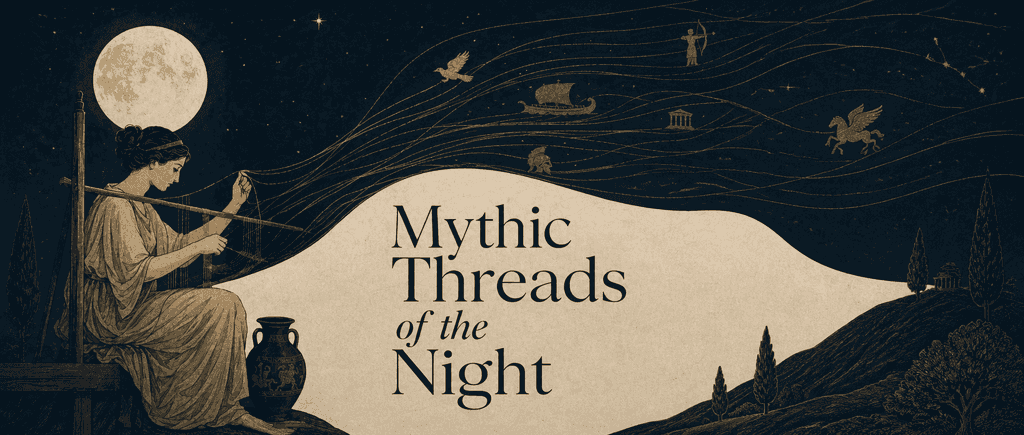
John Crowley's *Little, Big* offers more than entertainment or escape - it presents a vision of reality as infinitely complex yet ultimately unified, a tapestry where every thread connects to every other. Through its intricate narrative structure, richly developed characters, and profound philosophical insights, the novel invites readers to see their own lives as part of something larger - a Tale that encompasses both the mundane and the magical. Like the architecture of Edgewood itself, with its impossible geometries and shifting perspectives, the story operates on multiple levels simultaneously, each layer revealing new depths of meaning.
What makes this vision so compelling is Crowley's refusal to simplify or moralize. The fairy realm isn't presented as superior to the human world, merely different - operating according to its own internal logic and rules. Characters make choices with consequences they can't fully foresee, much like Daily Alice's decision to marry Smoky Barnable despite knowing it will lead to both joy and sorrow. Love transforms but also wounds; memory preserves but also distorts; faith sustains yet demands sacrifice. These complexities reflect the messy, contradictory nature of human experience while suggesting patterns and meanings beneath the surface chaos. The novel's treatment of time itself - circular, recursive, simultaneously moving forward and backward - mirrors the way meaning accumulates in our own lives.
Perhaps most importantly, *Little, Big* affirms the value of wonder in a disenchanted age. Without denying the harsh realities of modern life - environmental degradation, political corruption, personal loss - Crowley suggests that magic persists in unexpected forms and places. It lives in family stories passed down through generations, like the tales Violet Bramble tells her grandchildren. It manifests in the mysterious workings of love and memory, in the way certain places seem to exist outside ordinary time, and in our capacity to imagine worlds beyond our immediate perception. The novel's treatment of photography - as both a technical craft and a magical art - exemplifies this fusion of the ordinary and the extraordinary.
Four decades after its publication, *Little, Big* remains a singular achievement - a novel that expands our sense of what's possible in literature and in life. Like Edgewood itself, it appears different from every angle, revealing new facets with each reading. The book's intricate system of correspondences - between the Tarot and daily life, between fairy tales and family history, between architectural spaces and psychological states - creates a rich symbolic framework that rewards repeated exploration. And like the Tale it describes, it reminds us that reality is always larger, stranger, and more wonderful than we can comprehend - that the further in we go, the bigger it gets.
The novel's influence can be seen in contemporary works that blur the boundaries between literary and fantastic fiction, in stories that treat magic not as mere spectacle but as a way of illuminating deeper truths about human experience. Crowley's achievement lies not just in creating an alternative world, but in suggesting that our own world contains depths and mysteries we have only begun to fathom. Through its masterful integration of the mythic and the mundane, *Little, Big* continues to offer readers a transformative vision of reality's hidden dimensions.