Capítulo 1
When Grief Walks with Memory: A Mother-Daughter Journey
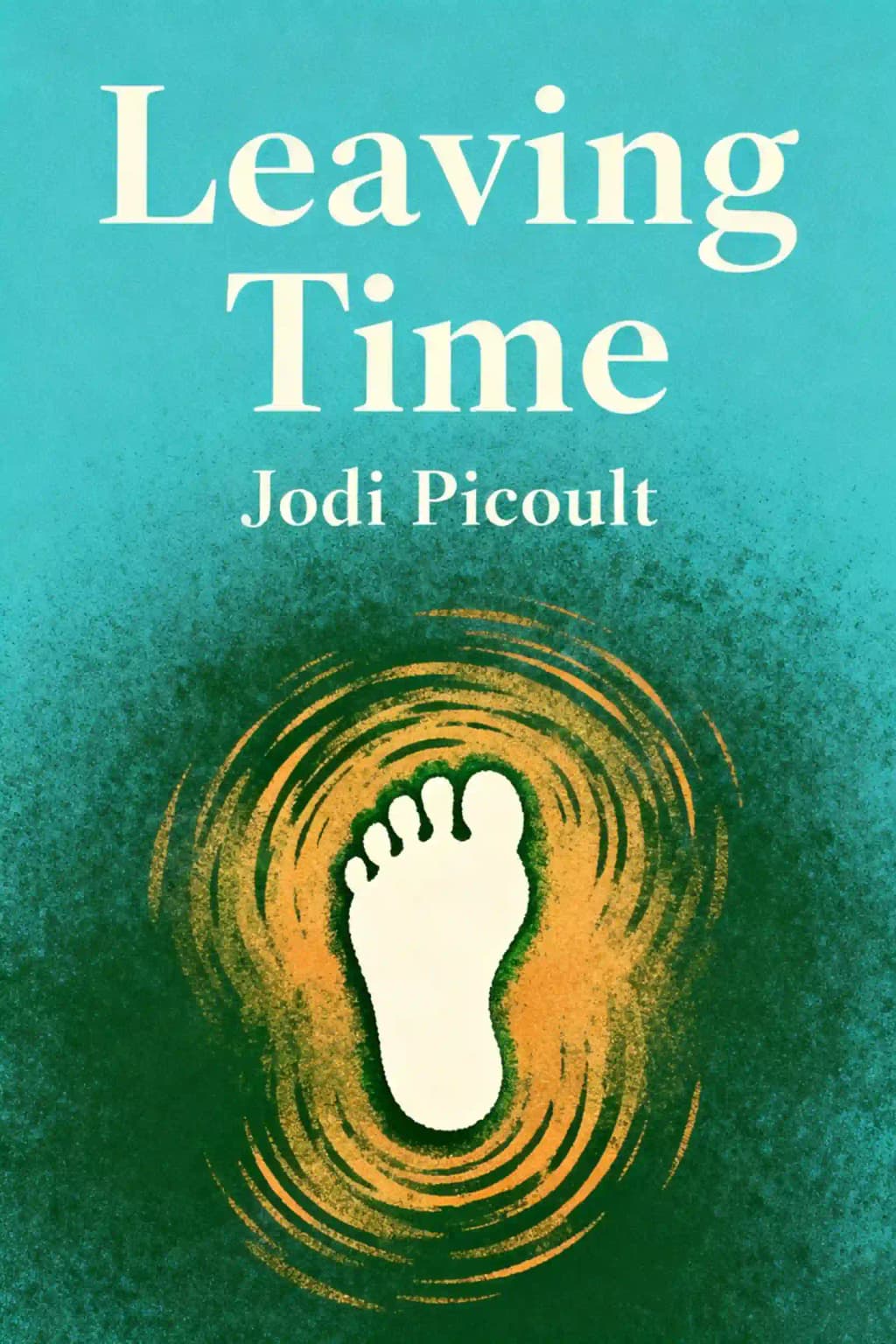
What happens when the person you've been searching for your entire life might not want to be found? In Jodi Picoult's "Leaving Time," this question haunts thirteen-year-old Jenna Metcalf as she embarks on a desperate search for her mother Alice, who mysteriously vanished following a tragic accident at their elephant sanctuary a decade earlier. The novel masterfully weaves together themes of grief, memory, and the unbreakable bonds between mothers and their children-both human and elephant. Since its 2014 publication, this New York Times bestseller has captivated millions with its unique blend of mystery, science, and emotional depth. Celebrities like Reese Witherspoon have praised its intricate plot twists, while psychologists have noted its nuanced portrayal of grief and trauma. What begins as a missing person case evolves into a profound meditation on what it means to remember, to forget, and ultimately, to let go.
Capítulo 2
The Elephant in the Room: Memory as Both Gift and Burden
Elephants never forget-this isn't just a cliche but scientific fact. Through Alice Metcalf's research journals, we learn that elephants can recognize over a hundred individuals by their contact calls, remember commands from decades earlier, and even return to the bones of family members years after their deaths. When researchers played recordings of a deceased elephant's call to her family, they approached the speaker with contact calls of their own-suggesting not just memory but hope of reunion.
This extraordinary memory serves a vital purpose in elephant society. Matriarchs become "walking archives" for their herds, remembering ancient migration routes, hidden water sources, and which humans can be trusted. After a culling operation in Botswana, elephants charged helicopters resembling those used by rangers fifty years earlier. In Kenya, elephants distinguished between the scents of Masai (who hunt elephants) and Kamba (who don't) tribes without ever seeing the cloth samples used in the experiment.
But memory carries burdens too. Alice observes that unlike humans who repeatedly make poor judgments, elephants accurately identify friends from foes. "The real question," she writes, "isn't whether elephants can remember, but what they're incapable of forgetting." This becomes a central metaphor for the human characters, each haunted by memories they cannot escape.
Thomas Metcalf, Alice's brilliant but unstable husband, becomes obsessed with developing a chemical compound to erase traumatic memories. After the stillbirth of an elephant calf at their sanctuary, he covers walls with formulas for "molecular consolidation theory"-a way to chemically block traumatic memories by regressing the mind back to the traumatic moment. His descent into obsession raises profound questions: Would we be better off forgetting our most painful experiences? Or do these memories, however painful, form essential parts of who we are?
Capítulo 3
The Language of Loss: How Grief Manifests Across Species
When Maura, one of the sanctuary elephants, loses her stillborn calf, Alice documents her mourning behaviors with scientific precision. For days, Maura stands guard over her calf's body, protecting it from vultures and predators. She attempts to revive him by pushing with her foot and lifting with her trunk-behaviors Alice has observed in wild elephants too.
The scientific community resists attributing emotions to non-human animals. When Alice records elephants touching another's skull or returning to death sites, interpreting this as grief crosses a forbidden line. Her boss likely sees this as a phase she'll outgrow before returning to "real science." But Alice believes that understanding complex behaviors-whether human or elephant-requires more intricate science than closed systems like math or chemistry.
In Botswana, Alice witnessed a remarkable demonstration of cross-herd empathy when a matriarch named Sethunya approached a fallen elephant from an entirely different, unrelated herd. With head bowed and ears drooped, Sethunya performed what appeared to be a ritual-straddling the body and swaying back and forth for six minutes, like a silent dirge.
This elephant grief mirrors the human grief throughout the novel. Jenna grieves for the mother she barely remembers. Alice grieves for her fractured family. Serenity Jones grieves for her lost psychic abilities and the mother who never contacted her from beyond. Virgil grieves for his failed investigation and ruined career. Even Thomas, in his manic episodes, grieves for a life and mind he can no longer control.
But the novel suggests there's a crucial difference between natural grief and traumatic loss. Alice observes that elephants who witness their families being killed during culling operations show markedly different long-term effects than those who experience natural death. After a natural death, the herd encourages the grieving individual to move on. After mass killing, there's no herd left for support.
"When studying elephant grief," Alice writes, "we must remember that death is natural. Murder is not."
Capítulo 4
The Matriarchal Herd: Motherhood Across Boundaries
"I have never seen more devoted mothers than elephants," Alice writes in her journal. Perhaps it's because they carry their young for two years before birth, creating an unbreakable bond. A baby elephant can do no wrong in its mother's eyes-she remains infinitely patient with its mischief, food stealing, and clumsy mishaps.
The entire herd participates in protecting calves, clustering them in the middle when traveling. When passing vehicles, mothers position themselves as shields between the baby and potential danger. Often, a sister aged six to twelve will join this protective formation, sometimes even threatening vehicles with head-shaking displays that clearly communicate "Don't you dare harm my little brother."
This communal child-rearing is called "allomothering"-essentially, it takes a village. There's sound biological reasoning behind this practice: a mother elephant must consume 150 kilograms of food daily to produce milk, making it impossible to simultaneously monitor an adventurous calf. Allomothering also serves as training for young females, teaching them how to protect babies while allowing them appropriate space to explore.
The novel draws explicit parallels between elephant mothering and human mothering. Alice's fierce protection of Jenna mirrors the elephant mothers she studies. When Thomas threatens their daughter, Alice's maternal instincts drive her to seek help, even though it means temporarily leaving Jenna behind. Later, when Jenna is in danger, Serenity feels an unexpected maternal protectiveness: "Though I'm not a mother, I feel a maternal protectiveness toward this girl."
Even more poignantly, the novel explores what happens when mothering instincts are disrupted. In Zambia, Alice observed a calf orphaned by poaching who began hanging around young bulls. Without female role models, she had no understanding of maternal behavior. When she calved at only ten years old, she treated her baby the way the bulls had treated her-walking away when it fell asleep, ignoring its cries. In a breeding herd, at least three females would rush to comfort a crying baby.
This mirrors Jenna's situation-raised by her grandmother after losing her mother, she struggles to understand maternal love. Her search for Alice is not just about finding answers, but about reconnecting with that primal bond.
Capítulo 5
Broken Bonds: The Aftermath of Trauma
The novel intricately explores how trauma ripples outward, affecting not just individuals but entire systems and communities across generations. At the elephant sanctuary, Wanda carries the deep physical and psychological scars of her past mistreatment - she was repeatedly pushed by Bobcats when she refused to move, beaten when she acted out, and chained for days without adequate food or water. Despite her traumatic history, she now cautiously trusts the sanctuary staff, particularly Grace who spends hours singing to her, though she once broke Gideon's leg during a moment of panic triggered by a thunderstorm. These episodes reveal how even in safety, trauma leaves lasting imprints that can surface unexpectedly.
Similarly, the human characters carry invisible yet profound wounds that shape their daily lives. Thomas's mental illness manifests in increasingly destructive ways - obsessive behavior, violent outbursts, and paranoid episodes that leave him unable to distinguish reality from delusion. Alice bears not only the physical bruises of his abuse but also the emotional scars of a fractured marriage, causing her to doubt her own perceptions and worth. Virgil drowns his guilt in alcohol after failing to solve the case properly, his drinking becoming both escape and punishment. Serenity loses her cherished psychic abilities after giving a grieving family false hope about their missing daughter, the weight of their devastation crushing her confidence in her gift.
Jenna perhaps carries the heaviest burden - growing up in the shadow of uncertainty, never knowing what happened to her mother. She creates elaborate fantasies to explain Alice's absence, collecting newspaper clippings and constructing timeline after timeline. "You'd be surprised how much you can learn from someone who's completely disappointed you," she tells Serenity while folding a dollar bill into an elephant shape, a skill her mother taught her during their last summer together. This simple act becomes both connection and wound, a reminder of what was lost and what remains.
The novel suggests that healing from trauma requires community and connection - just as elephant herds support grieving members through physical touch and constant presence. When Maura loses her calf to pneumonia, she initially isolates herself, refusing food and comfort for weeks. Eventually, she finds companionship with another elephant, Hester, who lost her own calf years before. Their bond forms slowly through shared grief and gentle interactions. When Alice witnesses this transformation, she realizes the elephant has "compartmentalized her grief" and moved forward - something the human characters struggle to do, often remaining trapped in cycles of pain and remembrance. This parallel between human and elephant healing suggests that while trauma leaves permanent marks, connection and community can create paths toward recovery.
Capítulo 6
The Veil Between Worlds: Psychic Connections and Spiritual Bonds
Serenity Jones, a former celebrity psychic who lost her abilities after a catastrophic failure, provides the novel's spiritual dimension. Her character offers a complex exploration of the metaphysical, describing ghosts as "transparent layers stacked over our world" and comparing psychic impressions to "foreign thoughts in her mind, like listening to a radio station that keeps fading in and out." Her detailed accounts of communicating with spirits - feeling sudden temperature drops, experiencing unexplained scents, and sensing emotional residue - paint a vivid picture of supernatural connection.
Through flashbacks, we learn of Serenity's rise to fame, including her accurate predictions about missing children and her popular television show. The devastating mistake that cost her both her reputation and her gifts - incorrectly telling parents their kidnapped son was dead when he was actually alive - haunts her throughout the narrative, adding depth to her reluctance to help Jenna.
Though initially skeptical of Serenity's abilities, Jenna's journey from doubt to belief unfolds gradually and convincingly. Small inexplicable moments accumulate: objects moving mysteriously, dreams that reveal unknown details, and emotions that feel borrowed from someone else. When Serenity claims to see Jenna's mother's spirit, describing specific memories only Alice would know, Jenna's desperate calls across the spiritual divide become heart-wrenching attempts to bridge the gap between worlds.
The novel maintains careful ambiguity about the reality of psychic phenomena, presenting both rational explanations and inexplicable events. Serenity herself acknowledges this uncertainty, saying, "Sometimes what we call psychic ability is just paying attention to what others ignore." This nuanced approach allows readers to draw their own conclusions while exploring deeper questions about faith, connection, and the nature of consciousness.
The spiritual theme finds its most powerful expression in the novel's treatment of elephant behavior. The true story of Lawrence Anthony's death provides a compelling example of unexplained connection - his beloved elephants, absent for over a year, traveled more than twelve hours to stand vigil outside his home for two days after his passing. The novel weaves this remarkable incident into its broader meditation on bonds that transcend ordinary understanding, whether between mother and child, human and animal, or the living and the dead.
As Jenna reflects in the final chapter: "If you think about someone you've loved and lost, you are already with them. The rest is just details." This sentiment echoes throughout the story, suggesting that love and memory create their own form of magic - one that exists in the space between science and spirituality, between what we can prove and what we simply know to be true.
Capítulo 7
The Detective's Dilemma: Truth, Justice, and Redemption
Virgil Stanhope, the detective who investigated the original incident at the sanctuary, embodies the novel's complex exploration of justice, truth, and personal redemption. Having failed to properly investigate ten years earlier due to a combination of external pressure and his own demons, he sees Jenna's case as more than just another investigation - it represents his last chance at professional and personal salvation. "Jenna Metcalf has somehow accomplished what three rehab centers couldn't," he reflects - "drying me out cold turkey by giving me purpose." This transformation from a broken man to a determined investigator forms one of the novel's most compelling character arcs.
As Virgil digs deeper into the case, he uncovers a web of evidence that not only contradicts the official story but suggests a deliberate attempt to obscure the truth. The trampled body had been hastily identified as Nevvie Ruehl, but when Virgil and Serenity travel to Tennessee, they make a shocking discovery: Nevvie is alive but blind, living in squalid conditions in a condemned house. The revelation forces them to question everything about the original investigation. They also discover crucial physical evidence - a fingernail caught in the seam of the victim's shirt - suggesting a violent struggle that was either overlooked or deliberately ignored in the initial investigation. Each new piece of evidence adds another layer to the mystery while highlighting the thoroughness lacking in the original investigation.
The novel meticulously explores how justice can be compromised by a confluence of factors: political pressure during election seasons, institutional corruption, personal failings, and the simple human tendency to accept convenient answers. Virgil vividly recalls how his superior took him aside, warning that powerful people wanted the case resolved quickly and quietly - a common scenario where truth becomes secondary to political expediency. His own battle with alcoholism, which culminated in a near-fatal suicide attempt, further illustrates how personal demons can derail the pursuit of justice. The author draws a parallel between Virgil's impaired judgment during his drinking days and the broader systemic failures that allow truth to remain buried.
Yet through Virgil's journey, the novel makes a powerful argument for the possibility of redemption. By helping Jenna search for her mother, he finds not just purpose but a path to sobriety and self-forgiveness. His willingness to admit past mistakes and face their consequences demonstrates genuine growth. The investigation becomes both his penance and his salvation. By pursuing the truth with renewed vigor and integrity, regardless of personal cost or where the evidence leads, he honors his fundamental commitment to justice. The novel suggests that while justice delayed may be justice denied, the pursuit of truth remains valuable even when it comes years after the fact - both for solving the crime and healing those affected by it.
Capítulo 8
The Sanctuary: Safe Havens in a Dangerous World
The elephant sanctuary serves as both literal setting and powerful metaphor throughout the novel, embodying multiple layers of meaning for different characters. For the elephants, it represents safety and healing after years of systematic mistreatment in circuses and zoos - a place where they can finally express natural behaviors and form authentic social bonds. For Alice, it initially represents not just employment but a "forever home" for herself and her unborn child, offering both professional fulfillment and personal refuge. For Thomas, it represents his life's work and scientific legacy - a testament to his dedication to understanding elephant cognition and emotional complexity.
Yet the sanctuary isn't immune to the outside world's dangers and complications. Financial pressures constantly threaten its existence, forcing difficult decisions about care and capacity. Personal conflicts among the staff create underlying tension that affects both human and animal residents. The sanctuary's remote location, while providing isolation from human interference, also makes it vulnerable. And ultimately, it becomes the site of profound tragedy and loss - proving that even the safest spaces cannot completely shield us from life's harsh realities.
The novel explores other sanctuaries as well - both physical and emotional. Serenity's apartment becomes a temporary haven for Jenna, offering not just shelter but emotional support and a space to process her grief. The mental institution where Thomas resides provides containment for his unstable mind while simultaneously representing the limitations of manufactured safety. Even Maura, the matriarch elephant, creates a protective sanctuary for Jenna, using her massive body and gentle nature to shield the child, spreading her ears "like a blanket to keep me warm."
But the most profound sanctuary exists in the intangible realm of memory and connection. For Jenna, her memories of her mother - however fragmentary and uncertain - provide both comfort and purpose, driving her quest for truth. For Alice, her scientific observations of elephants offer structure and meaning amid personal chaos, creating a cognitive sanctuary where logic meets emotion. For the elephants themselves, their deep social bonds create portable sanctuaries that sustain them through trauma and loss - demonstrating that true safety often lies not in physical spaces but in relationships.
The sanctuary theme extends beyond literal protection to explore how beings - both human and elephant - create safe spaces within themselves and their relationships. These various forms of sanctuary highlight the universal need for security while acknowledging its inherently temporary nature. Through this lens, the novel suggests that perhaps the most reliable sanctuary is the one we build through understanding and connecting with others, whether human or animal.
Capítulo 9
The Final Revelation: Truth Beyond the Veil
The novel's stunning twist comes when we discover that Jenna, Virgil, and Thomas have been dead all along. Jenna was killed the night of the incident at the sanctuary, and Virgil died by suicide after failing to solve the case. They've been ghosts throughout the narrative, visible only to Serenity because of her psychic abilities.
This revelation forces readers to reexamine everything that came before. Jenna's search for her mother wasn't just about finding Alice-it was about understanding her own death and finding peace. Virgil's investigation wasn't just about solving a cold case-it was about atoning for his failure before he could move on. Even Thomas's mental illness takes on new significance-his confusion between past and present reflects his liminal state between life and death.
The twist also reframes our understanding of memory and grief. Alice has been grieving for her daughter all along, while Jenna has been searching for a mother who couldn't see or hear her. Their parallel journeys of loss finally converge when Serenity helps them connect across the divide between life and death.
In the novel's final scene, Jenna appears to her mother during "the in-between hours when it's neither night nor morning." Alice tells her daughter stories about the elephant orphans at her nursery, her conservation speeches, and a calf who's befriended a dog. This tender moment suggests that while death may separate us physically, love and memory create bridges that even death cannot destroy.
Capítulo 10
The Leaving Time: Finding Peace in Letting Go
The novel's title "Leaving Time" resonates with layers of meaning throughout the narrative. For young Jenna, it represented her childhood naptime-a period of intense anxiety when she feared her mother would vanish during her sleep, a fear that would prove tragically prophetic. For the elephants, it marks the profound moment when they make the conscious choice to move forward after mourning their dead-a natural progression from grief to acceptance. For Alice, it becomes the watershed moment when she finally embraces the painful truth about her daughter's fate and begins the difficult journey of reclaiming her own life.
Through its masterful parallel exploration of elephant grief, the novel presents a compelling argument that true healing coexists with memory rather than erasing it. The elephants demonstrate this profound truth in their mourning rituals-they return repeatedly to the bones of their deceased, touch them with their trunks in recognition, and can identify the calls of dead family members years after their passing. Yet they also embody the delicate balance between remembrance and renewal. When Maura finally departs from her weeks-long vigil at her calf's grave site, her subsequent playful behavior signals what Gideon recognizes as a crucial transition-she's "finally letting go of her grief" without diminishing the love that preceded it.
This fundamental lesson reverberates through the human characters' journeys. Serenity must confront and release her deep-seated guilt over past psychic readings gone wrong-particularly the devastating case of a missing child-to reclaim the full potential of her supernatural abilities. Virgil's journey requires him to accept not only the fact of his death but also his role in the larger story unfolding around him. Alice faces perhaps the most wrenching challenge-acknowledging the death of her daughter to find her own peace. And Jenna must come to terms with the fact that her years-long search concludes in a way she never anticipated, forcing her to redefine what closure truly means.
The novel's final message weaves together strands of sorrow and hope: love's power extends beyond the boundary of death, memory serves as a sacred vessel preserving what matters most, and sometimes the purest expression of love lies in the courage to let go. This truth manifests differently for each character-through Serenity's renewed purpose, Virgil's acceptance, Alice's peace, and Jenna's growth. As Jenna articulates in the novel's poignant conclusion: "If you think about someone you've loved and lost, you are already with them. The rest is just details." This observation captures the essence of the novel's exploration of grief, memory, and the eternal nature of love-suggesting that true connection transcends physical presence and that letting go doesn't mean losing what matters most.