Capítulo 1
A Journey Through Nine Lives and One Soul
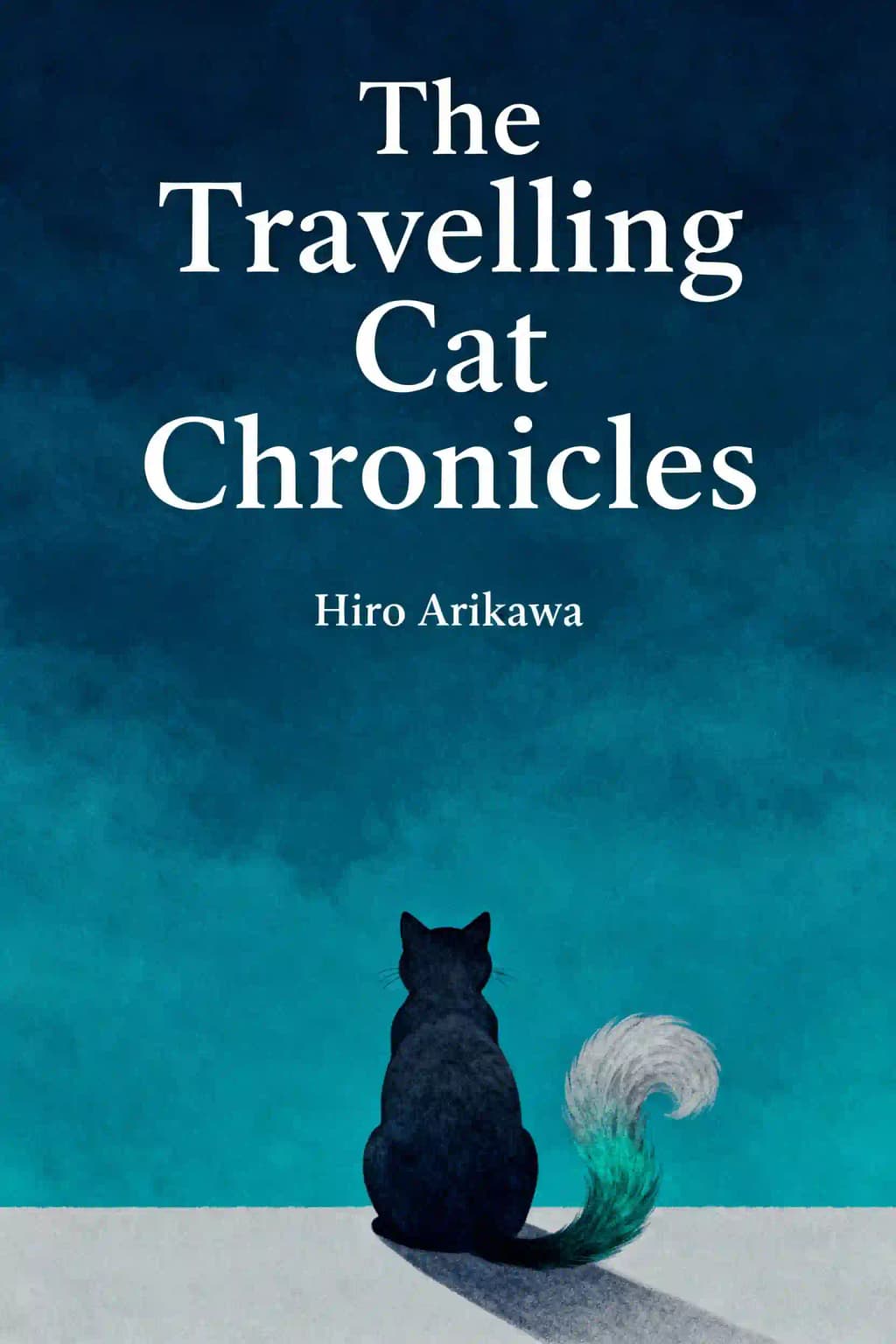
The Travelling Cat Chronicles has captivated readers worldwide with its deceptively simple tale of a man and his cat on a road trip across Japan. This novel by Hiro Arikawa became an international sensation after dominating bestseller lists in Japan, drawing praise from literary critics and cat lovers alike. The book's unique narrative perspective-alternating between the sardonic voice of a street-smart cat and the poignant human stories that unfold around him-creates an emotional depth that transcends typical pet literature. Celebrities including Taylor Swift and Haruki Murakami have cited it among their favorite contemporary Japanese novels, with Swift noting how it changed her perception of the human-animal bond. Beyond its entertainment value, the book has sparked conversations about Japan's unique relationship with cats, from temple cats to the famous cat islands, and has been adapted into both film and stage productions. At its heart, this is a story about connection, mortality, and the quiet dignity with which we face life's most difficult journeys.
Capítulo 2
The Cat Who Named Himself
I am a cat. As yet, I have no name. This famous opening line references a classic of Japanese literature, but our narrator quickly establishes himself as more original than derivative. Unlike that literary predecessor, this particular feline has lived without a name until reaching adulthood-approximately five years ago when fate brought him together with Satoru Miyawaki.
Their first encounter occurred on the hood of a silver van where our protagonist was enjoying a nap. Satoru, described as tall and lanky, offered chicken in exchange for petting privileges-a transaction the cat found acceptable. From that day forward, Satoru faithfully left cat food under the van each night, establishing a routine of mutual respect without overstepping boundaries.
Everything changed when the cat suffered a devastating injury-hit by a car, bone protruding from his leg. In desperation, he dragged himself to the silver van and cried out. Satoru responded immediately, rushing him to a veterinarian and subsequently nursing him back to health in his apartment for two months. When recovery was complete, Satoru asked a simple question that would change both their lives: "Would you become my cat?"
The notion of becoming someone's pet had never crossed the cat's mind before. In a beautifully choreographed dance of decision-making, he slipped outside with Satoru following, then demonstrated his newly recovered ability to jump onto the van's hood. When a car drove by, he instinctively hid behind Satoru's legs-a moment of vulnerability that revealed his growing trust. After exploring the neighborhood together, the cat signaled his decision by meowing to return to the apartment. Satoru understood immediately, tears of joy in his eyes.
Satoru named him "Nana" because his bent tail resembled the number seven (nana in Japanese). Despite Nana's protests about receiving a feminine name despite being male, the name stuck. Satoru even moved apartments specifically to accommodate his new companion, and they lived contentedly together for five years.
Now, however, Satoru apologetically explains he can no longer keep Nana. With characteristic feline philosophy, Nana accepts this development without excessive concern-cats take whatever comes their way. As they load into the silver van together, Nana doesn't understand their destination but commits to accompanying his human on whatever journey lies ahead.
Capítulo 3
The Childhood Friend's Dilemma
Kosuke Sawada receives an unexpected email from his childhood friend Satoru, asking if he would consider taking in Nana. The attached photos reveal a striking cat with distinctive markings-two spots forming the character for "eight" on his forehead and a hooked tail resembling the number seven. The cat's appearance immediately reminds Kosuke of Hachi, another cat from their shared childhood.
Kosuke's life is currently in disarray-his wife has moved back to her parents' home with no indication of when she might return. He forwards Satoru's photos to her, receiving only a terse reply: "Do whatever you like." When Satoru arrives with Nana, the cat refuses to emerge from his carrier, seemingly sensing the tension in the household.
As the old friends catch up over coffee, Kosuke reveals his marital troubles while Satoru remains vague about why he can no longer keep Nana, only saying cryptically that "something came up" and they "can't live together anymore." The conversation inevitably turns to memories of Hachi, the stray kitten they had found together as children.
Their childhood friendship had formed at swimming club in second grade-Kosuke attending for health reasons related to skin allergies, while Satoru was naturally gifted, earning nicknames like "Kappa" or "Webfoot" for his exceptional speed. Despite their different abilities, they formed a strong bond, though Kosuke sometimes envied Satoru's effortless talents.
When they discovered a stray kitten and Kosuke's father refused to let him keep it, a tearful Kosuke brought the cardboard box to Satoru's house. Inspired by a book, Satoru proposed running away from home, convinced their parents would eventually relent. Their escapade escalated dramatically, culminating in a neighborhood chase that ended with the boys cornered on their school roof with angry parents below. In a moment of quick thinking, Satoru suggested his family could keep the cat instead-a solution that satisfied everyone. The cat, named Hachi, became Satoru's pet, though Kosuke spent considerable time with him too.
Two years later, tragedy struck when Satoru's parents died in a car accident during a school trip. At the wake, Kosuke gave Satoru the Yojiya blotting paper his mother had wanted, finally causing his stoic friend to break down crying. Satoru's aunt became his guardian, but the move meant leaving Hachi behind. Despite Kosuke's desperate pleas, his father wouldn't allow them to adopt Hachi.
Years later, after inheriting his father's photography studio and experiencing his own marital troubles, Kosuke hopes adopting Nana might fill the void left by Hachi and potentially win back his wife. However, Satoru gently suggests they find a new cat together instead. After Satoru leaves, Kosuke receives a text from his wife and calls her, suggesting they get their own new cat as a fresh start.
Capítulo 4
The Farm Where Cats Must Earn Their Keep
The silver van continues its journey with music playing-"Necklace of Olive," which Nana thinks should include something about doves in the title. Unlike their previous short trip, this journey requires overnight accommodation. Satoru has thoughtfully prepared the van for extended travel, even including a hooded litter box in the back. During a service station stop, Nana attracts attention from various passersby, including an elderly man whom he surprisingly allows to pet him. Back on the road, Nana sees the ocean for the first time outside of television and is mesmerized by its vastness.
They arrive at a large, practical farmhouse where they're greeted by Yoshimine, Satoru's former junior-high classmate. Unlike gentle Satoru, Yoshimine immediately grabs Nana by the scruff to check if he's "a proper cat." When Nana twists free and lands perfectly, Yoshimine declares him "outstanding." An orange tabby kitten named Chatran appears, which Yoshimine demonstrates isn't yet a "real cat" because it lacks natural hunting abilities.
Yoshimine represents a practical approach to cats-they're useful on farms for controlling mice, not pampered pets. Despite this utilitarian stance, his care for the abandoned kitten reveals a softer side. The kitten immediately takes to Satoru, stretching a paw to his cheek and reminding him of a cat from his past-one whose name he can't bring himself to speak aloud.
Their friendship began when Yoshimine transferred to Satoru's junior high in his second year. Unlike the tragic circumstances of Satoru's life-parents dead in a car accident, living with his aunt-Yoshimine's situation was less dire but still complicated: parents too consumed by careers to properly care for him, resulting in his living with his grandmother. Satoru's approach to Yoshimine-"Just take it as it comes, be grown-up about it"-formed an immediate bond between them.
Their shared experiences in the school's gardening club cemented their friendship. Yoshimine took the greenhouse so seriously that during a heatwave, he abruptly left class to open the vents, fearing the tomatoes would suffer. When scolded, Satoru covered for him with an outlandish story. Together, they managed a successful harvest before summer vacation.
During that summer, Yoshimine discovered his parents were divorcing, with neither truly wanting custody. His grandmother simply said, "You can live with me," understanding what had happened all along. When Yoshimine confessed everything to Satoru while washing vegetables in the school greenhouse, Satoru offered a different perspective: "I never once experienced my parents acting like I was a nuisance, because they were gone."
While Satoru and Yoshimine visit the grandmother's grave, Nana seizes the opportunity to train the orange tabby kitten in fighting stances. The kitten learns quickly, but this creates confusion when the men return and see what appears to be hostility between the cats. Despite Yoshimine's offer to let Nana stay and see if the cats might eventually adjust to each other, Satoru decides against it, feeling it would be cruel to force them together. As they depart, Yoshimine offers his farm as a future option if Satoru ever needs help.
Capítulo 5
The Pet-Friendly Bed and Breakfast
Sugi and Chikako's bed and breakfast offers breathtaking views of Mount Fuji and a unique selling proposition-pets can stay off-leash, with dogs and cats accommodated on separate floors. The establishment began three years ago after Sugi took voluntary redundancy from his struggling company. They purchased the property near Chikako's family's fruit orchards, creating a haven for pet owners rarely found elsewhere.
Chikako is particularly excited about their incoming guest-their mutual high-school friend Satoru and his cat Nana. Satoru has contacted them because he needs to give away his beloved cat for some "compelling reason" he hasn't explained. While Sugi worries about the circumstances, Chikako optimistically views it as a temporary arrangement, convinced that Satoru will eventually return for Nana.
When the silver van arrives, an unexpected incident occurs-Toramaru, the couple's normally well-behaved Kai Ken dog, barks aggressively at Satoru, infuriating Nana who's ready to defend his owner. Inside, Nana meets Momo, the dignified older tabby who apologizes for Toramaru's behavior. Over herbal tea, Chikako assures Satoru they consider the arrangement temporary, telling him he can take Nana back anytime-words that visibly move Satoru.
Their friendship began in high school when Sugi spotted Satoru attempting to rescue a Shih Tzu trapped on a sandbar in an irrigation ditch. Despite concerns about missing an exam, Sugi stopped to help. Their rescue attempt ended with both boys soaked and Satoru bitten when they finally caught the trembling dog. This incident formed their friendship, with Satoru, Sugi, and Chikako often spending time together at her family orchard.
Later, when Satoru needed money to visit his childhood cat in Kokura, Chikako offered him weekend work at their orchard. When Satoru missed work one day, they learned his beloved cat had been hit by a car. Devastated, Satoru revealed the cat had been with him since his parents were alive. After his mourning trip to Kokura, Satoru returned with thoughtful souvenirs-Hakata ramen for Sugi and Yojiya blotting paper and a mirror for Chikako.
Years later during their visit, Sugi drinks too much wine and confronts Satoru, asking how he can be such a good person despite his misfortunes. The narrative reveals that Sugi has carried guilt for years-Satoru had confessed to having feelings for Chikako in high school but never told her because of Sugi. Panicked, Sugi had begged Satoru never to tell Chikako, feeling ashamed but desperate to protect his relationship.
The next morning, another meeting between Nana and Toramaru is arranged. When the dog insults Satoru's health, Nana attacks, leaving scratch marks on Toramaru's muzzle. Satoru apologizes and decides to take Nana home. As they leave, Satoru casually mentions to Chikako that he liked her in high school, causing momentary tension before everyone laughs it off-a burden finally lifted from all three friends.
Capítulo 6
Landscapes of Memory and Connection
Satoru and Nana's exploration of Hokkaido unfolds like a tapestry of shared moments and deepening bonds. In a meadow dotted with late summer wildflowers, Nana's playful attempt to catch a honeybee draws Satoru's immediate protective response - his gentle warning about stings reflecting the careful attention he's always shown his feline companion. The scene captures their dynamic perfectly: Nana's curious nature and Satoru's watchful care.
Their drive takes them through Hokkaido's diverse terrain, each vista more breathtaking than the last. The fields of pampas grass create an ethereal landscape, swaying silver-white heads stretching to the horizon like an earthbound ocean. When Nana ventures into this natural maze, Satoru's composed exterior cracks. His frantic search through the towering grass leads to an unguarded moment of emotional truth: "Don't leave me... Stay with me." The raw desperation in his voice reveals what has been unspoken throughout their journey - his deep attachment and fear of separation.
This watershed moment transforms their relationship. Nana, witnessing Satoru's vulnerability, finally understands the bittersweet nature of their journey. Each failed attempt to find him a new home wasn't really a failure at all - Satoru had been secretly relieved every time. The cat makes a silent but profound promise never to abandon his human companion, even as he intuitively senses this journey marks their final adventures together.
The natural world continues to offer its gifts as they traverse Hokkaido. They encounter wild horses grazing in misty morning pastures, their forms ethereal against the landscape. Stands of white birch trees create natural corridors of dappled light, their pale bark gleaming like scattered moonlight. The mountain ash berries become an unexpected teacher, helping Nana develop a more nuanced understanding of color as he learns to distinguish between crimson, scarlet, and burgundy - each shade telling its own story in the autumn light.
Their journey reaches an emotional crescendo at a peaceful cemetery nestled among the hills. Here, Satoru finds his parents' grave - the destination that has pulled at his heart throughout their travels. With careful, reverent movements, he cleans the gravestone and arranges their collected wildflowers, creating a bridge between past and present. While Satoru sits in contemplative silence, Nana provides quiet companionship, understanding the sacred nature of this moment.
The following day brings them to his grandparents' resting place, completing a circle of remembrance. As they resume their journey, nature seems to acknowledge their pilgrimage. A family of deer emerges from the forest, their presence both mysterious and familiar. Then appears a perfect double rainbow, its vibrant arc seeming to connect heaven and earth, one end appearing to touch the very spot where they'd placed wildflowers at the grave. Standing together beneath this celestial phenomenon, Satoru and Nana share a moment of transcendent connection - a reminder that love bridges all distances, even those between life and death. Their arrival in Sapporo marks the end of their physical journey, but the emotional voyage has transformed them both irrevocably.
Capítulo 7
The Reluctant Guardian's Transformation
Noriko had grown accustomed to relocating frequently in her previous job as a judge, living minimally with few possessions. When Satoru arrived at their new apartment with Nana, she noticed how frail her nephew had become and fought back tears. Despite her awkwardness around cats-stemming from a childhood incident where she was bitten-Noriko tried to accommodate Nana, initially greeting him with startled shrieks and inappropriately touching his tail. Satoru patiently taught her proper cat-handling techniques, which she dutifully noted.
As Satoru's condition deteriorated, requiring daily hospital visits that left him exhausted and covered in injection bruises, Noriko would cry secretly when alone. Despite his weakening state, Satoru maintained their daily walks with Nana through the snowy town, proudly introducing his cat to passersby. During holiday celebrations, Noriko's attempt to prepare special chicken for Nana failed when she added sake, which the sensitive cat refused to eat.
The truth of Satoru's origins is revealed during a New Year's conversation: he had been abandoned as a baby and rescued during Noriko's first major case as a judge. Her sister had adopted him, and after their death, Noriko took him in out of duty. Despite her social awkwardness that cost her relationships, Satoru assured her he was grateful she raised him, as she could tell him about his parents and helped him appreciate the extraordinary love they had shown him.
As Satoru's condition worsens, he begins staying at the hospital more frequently. When he finally prepares to leave permanently, taking only a photograph of himself with Nana, the cat desperately tries to accompany him. Despite Nana's protests, Satoru leaves him behind with Noriko, who gradually learns to comfort the heartbroken cat.
When Noriko finally takes Nana to visit Satoru at the hospital, their reunion is emotional but brief. After being returned to the car, Nana cleverly escapes and disappears into the snowy Hokkaido landscape. Despite the harsh winter, Nana uses his street smarts to survive, eventually finding Satoru outside the hospital in his wheelchair. Becoming Satoru's "commuting cat," Nana visits whenever Satoru sits on the hospital terrace.
During a snowy period when Satoru doesn't appear outside, Noriko arrives looking disheveled. Inside the hospital room, as Satoru's condition deteriorates, Nana's persistent mewling from outside prompts Noriko to bring the cat inside against hospital rules. With his last strength, Satoru opens his eyes, feels Nana's head beneath his hand, and whispers "Thank you" before passing away.
Capítulo 8
The Continuing Journey
After Satoru's death, Nana visits him in dreams of flower-filled Hokkaido fields. Meanwhile, Noriko receives numerous condolence messages from Satoru's wide circle of friends and colleagues. Following Satoru's wishes, she contacts everyone on his list, keeping herself busy during her grief.
On a sunny day after a quiet funeral, Kosuke, Yoshimine, Sugi and Chikako visit Noriko's apartment. The initially somber mood lightens as they share stories about their experiences with Nana and show photos of their own pets. They exchange contact information, creating new connections through their shared love for Satoru.
As they gather around Noriko's table, Satoru's friends eagerly share stories about him, discovering new facets of his life. When Sugi questions why Satoru never revealed his illness, Yoshimine understands: "He wanted to say farewell with everybody still smiling." Kosuke confirms this, noting how Satoru's final letters contained jokes and funny stories, making it impossible to believe they were his last.
Years pass, and Satoru's friends build new lives while maintaining connections. Kosuke transforms his shop into a pet photography studio following Satoru's advice. Yoshimine regularly sends vegetables from his farm. Noriko visits the Sugis' B&B, climbing Mount Fuji while they care for Nana. The Sugis now have a precocious daughter who calls Noriko "Grandma."
One day, Noriko brings home an abandoned calico kitten, whom Nana welcomes as "the next cat." Noriko names her Calico and becomes surprisingly devoted. In his dreams, Nana meets Satoru in purple and yellow flower fields, telling him about Noriko and the kitten. Though Nana remains Satoru's cat rather than Noriko's, he decides to stay until he's taught Calico survival skills. Once she can manage on her own, he'll journey to join Satoru beyond the horizon of flowers, where they'll travel together again.
Capítulo 9
Reflections on a Journey's End
The Travelling Cat Chronicles invites readers to consider how both Satoru and Nana demonstrate that life is about the journey rather than the destination. Their travels across Japan become a metaphor for life itself - filled with unexpected encounters, breathtaking vistas, and connections that transcend ordinary understanding. From the snow-capped peaks of Mount Fuji to the rolling waves of the coastal highways, each landscape they traverse adds layers to their shared experience, teaching both cat and human about the profound beauty found in transient moments.
The novel beautifully portrays how friendships can endure despite long separations. Satoru's childhood and school friends - Kosuke, Yoshimine, Sugi, and Chikako - each carry pieces of his story, and through their reunion after his death, these fragments come together to form a complete picture of a life well-lived despite its brevity. Each friend represents a different chapter of Satoru's life: Kosuke's shared childhood adventures, Yoshimine's agricultural wisdom, Sugi's collegiate camaraderie, and Chikako's unwavering support through difficult times. Their collective memories paint a portrait of a man whose kindness touched everyone he encountered.
At its heart, this is a story about mutual salvation. Nana is saved from homelessness by Satoru, while Satoru is emotionally sustained by Nana's unwavering companionship during his final journey. Their relationship exemplifies the profound bonds that can form between species, transcending verbal communication through a deeper understanding. Through silent gestures, shared glances, and intuitive responses, they develop a language uniquely their own. Their connection demonstrates how love can bridge even the widest of gaps - whether between species, cultures, or life circumstances.
The novel offers a nuanced window into Japanese culture, particularly regarding cats - from the practical farm perspective where cats serve as protectors against vermin, to the emotional connection that transforms Noriko from reluctant guardian to devoted cat owner. Through Satoru's determination to share natural experiences with Nana during their travels, we understand that appreciation for beauty is not limited to humans alone. The changing seasons, regional festivals, and local customs they encounter paint a rich tapestry of Japanese life, while highlighting universal themes of companionship and belonging.
As Nana's story nears its end, he finds peace in the continuity of life and the certainty of reunion with all those he loves. The silver cat's acceptance of mortality mirrors Japanese philosophical traditions about the cyclical nature of existence. In this way, The Travelling Cat Chronicles transforms what could be a story of loss into one of enduring connection - a journey that continues beyond the final page, resonating with readers through its message that love transcends both species and mortality. The novel's closing chapters suggest that while physical journeys may end, the spiritual connections forged along the way remain eternal.