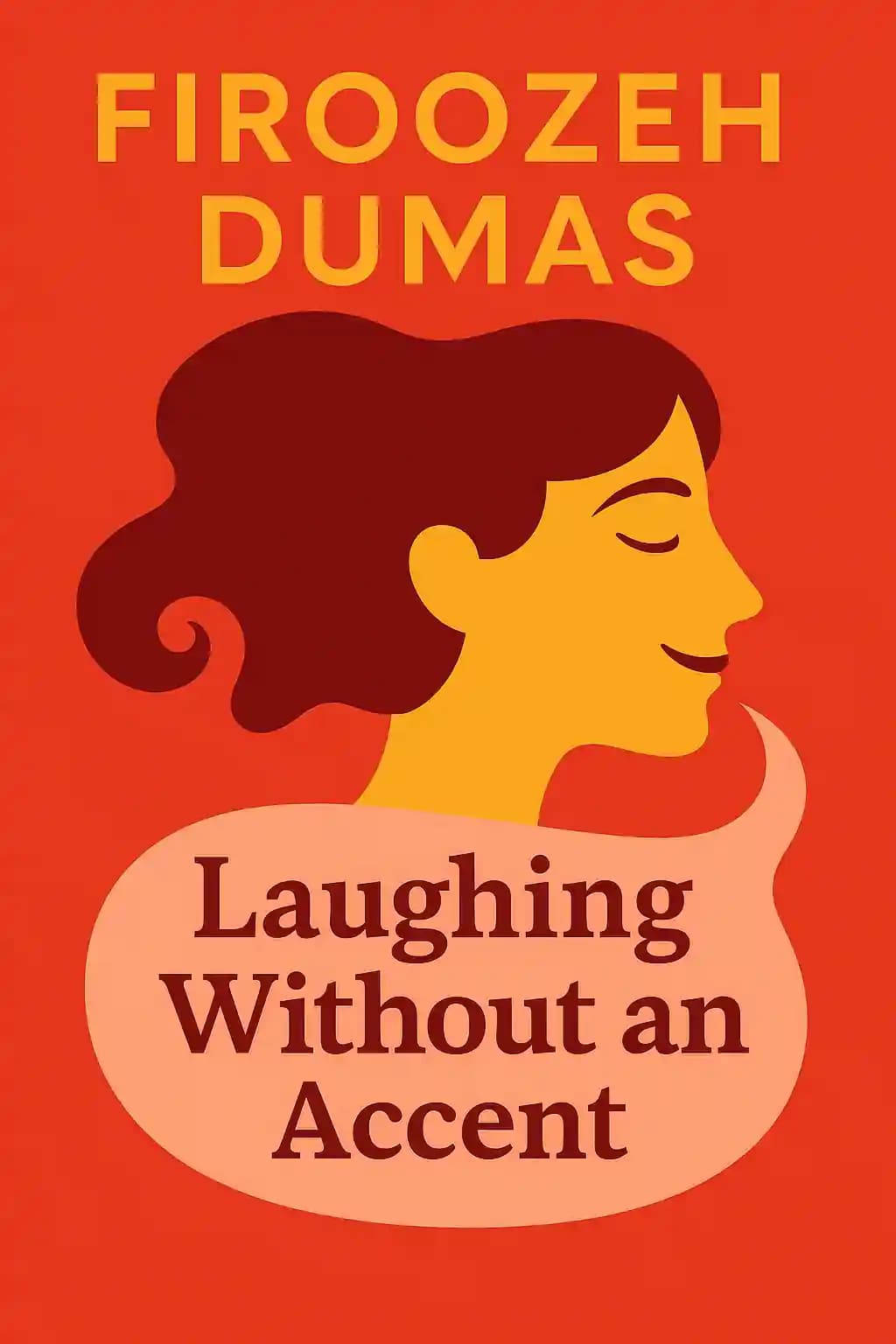
In "Laughing Without an Accent," Firoozeh Dumas hilariously navigates life between Iranian roots and American culture. With a 3.79 Goodreads rating and classroom adoption nationwide, this memoir asks: can humor truly bridge cultural divides that even presidents and prejudice cannot?
Firoozeh Dumas, bestselling author of Laughing Without an Accent: Adventures of an Iranian American, at Home and Abroad, is celebrated for her witty, heartfelt explorations of cultural identity and immigration.
Born in Abadan, Iran, Dumas moved to California at age seven, later shuffling between Iran and the U.S. during her youth—experiences that fuel her memoirs’ themes of belonging and cross-cultural humor.
A UC Berkeley humanities graduate, she began writing to preserve family stories, leading to her breakout memoir Funny in Farsi (2003), a PEN/USA Award finalist and New York Times bestseller.
Her work spans essays in The New York Times and NPR commentaries, alongside her acclaimed middle-grade novel It Ain’t So Awful, Falafel. Dumas’s books, often taught in schools, blend autobiographical insights with universal truths about family and resilience.
Laughing Without an Accent debuted on the New York Times bestseller list and has been translated into multiple languages, cementing her voice in contemporary immigrant literature.
Laughing Without an Accent is a humorous memoir exploring cultural identity through Firoozeh Dumas' experiences as an Iranian-American immigrant. It blends personal anecdotes about family traditions, cross-cultural misunderstandings, and the universal search for belonging. The book contrasts Iranian and American norms through stories like adapting to U.S. Costco culture while preserving Persian New Year rituals.
This book appeals to readers interested in multicultural narratives, immigrant experiences, or humorous cultural observations. Fans of Dumas' debut Funny in Farsi, educators teaching cross-cultural communication, and anyone exploring identity in globalized societies will find value. Its accessible humor makes it suitable for teens and adults.
Yes – the New York Times bestseller offers unique insights into bridging cultural divides through wit and warmth. As a Thurber Prize finalist, it combines literary merit with laugh-out-loud moments while addressing serious themes like grief and prejudice. Dumas' perspective as one of the first prominent Iranian-American humorists makes it culturally significant.
Key themes include:
Dumas employs self-deprecating wit to discuss immigration challenges, parental loss, and post-9/11 prejudice. For example, she frames cultural censorship in Iran through comic misunderstandings about her first book's Persian translation. This approach makes complex issues accessible while maintaining emotional depth.
The memoir contrasts:
While both are humorous memoirs, this sequel broadens its scope beyond Iranian-American experiences to global citizenship themes. It delves deeper into adult responsibilities like parenting multicultural children and coping with grief, reflecting Dumas' personal growth since her debut.
Some readers note the episodic structure lacks narrative momentum compared to traditional memoirs. Others suggest cultural generalizations occasionally oversimplify complex issues. However, most critics praise its authentic voice and ability to humanize cross-cultural experiences.
The book remains timely amid ongoing debates about immigration and cultural polarization. Its emphasis on shared human experiences through humor offers a counterpoint to divisive rhetoric, particularly valuable for educators and workplaces navigating multicultural environments.
Notable passages include:
The chapter "Sob" chronicles Dumas' emotional journey after her father's death, using raw honesty tempered with dark humor. She illustrates how cultural rituals and family bonds provide resilience, contrasting Persian mourning customs with American therapeutic approaches.
Key takeaways include:
Yes – Penguin Random House provides a reading guide with questions about cultural humor norms, grief processing through comedy, and comparing Iranian/U.S. social customs. These resources make the book popular for book clubs and diversity training programs.
Readers often pair it with:
Sinta o livro através da voz do autor
Transforme conhecimento em insights envolventes e ricos em exemplos
Capture ideias-chave em um instante para aprendizado rápido
Aproveite o livro de uma forma divertida e envolvente
humor had achieved something remarkable: it had created a bridge of understanding.
We don't hate Americans.
The bustling Tehran streets with their constant noise and strangers represented everything I disliked-a city without an "off button."
Sometimes the smallest spaces can host our biggest adventures.
My first American teacher, Mrs. Sandberg, completely bewildered me with her kindness.
Divida as ideias-chave de Laughing Without an Accent em pontos fáceis de entender para compreender como equipes inovadoras criam, colaboram e crescem.
Destile Laughing Without an Accent em dicas de memória rápidas que destacam os princípios-chave de franqueza, trabalho em equipe e resiliência criativa.

Experimente Laughing Without an Accent através de narrativas vívidas que transformam lições de inovação em momentos que você lembrará e aplicará.
Pergunte qualquer coisa, escolha a voz e co-crie insights que realmente ressoem com você.

Criado por ex-alunos da Universidade de Columbia em San Francisco
"Instead of endless scrolling, I just hit play on BeFreed. It saves me so much time."
"I never knew where to start with nonfiction—BeFreed’s book lists turned into podcasts gave me a clear path."
"Perfect balance between learning and entertainment. Finished ‘Thinking, Fast and Slow’ on my commute this week."
"Crazy how much I learned while walking the dog. BeFreed = small habits → big gains."
"Reading used to feel like a chore. Now it’s just part of my lifestyle."
"Feels effortless compared to reading. I’ve finished 6 books this month already."
"BeFreed turned my guilty doomscrolling into something that feels productive and inspiring."
"BeFreed turned my commute into learning time. 20-min podcasts are perfect for finishing books I never had time for."
"BeFreed replaced my podcast queue. Imagine Spotify for books — that’s it. 🙌"
"It is great for me to learn something from the book without reading it."
"The themed book list podcasts help me connect ideas across authors—like a guided audio journey."
"Makes me feel smarter every time before going to work"
Criado por ex-alunos da Universidade de Columbia em San Francisco

Obtenha o resumo de Laughing Without an Accent como PDF ou EPUB gratuito. Imprima ou leia offline a qualquer momento.
Picture a child's face lighting up at the mention of Santa Claus-now imagine that same child recoiling in fear at the image of a bearded stranger breaking into homes through chimneys. This is the disorienting reality of living between cultures, where the most innocent references can trigger completely different emotions. Firoozeh Dumas navigated this bewildering landscape when her memoir faced translation into Persian, confronting a challenge far more complex than converting words from one language to another. Iran's position outside international copyright laws meant anyone could translate her work without consultation, creating not just anxiety about quality but genuine fear of embarrassing her extended family back home. The stakes were high: humor, with its delicate cultural nuances, is notoriously difficult to translate. What makes one culture laugh can leave another utterly confused, and Dumas's entire literary voice depended on getting this right.