Capítulo 1
Laughter as Legacy: The Art of Finding Humor in Life's Journey
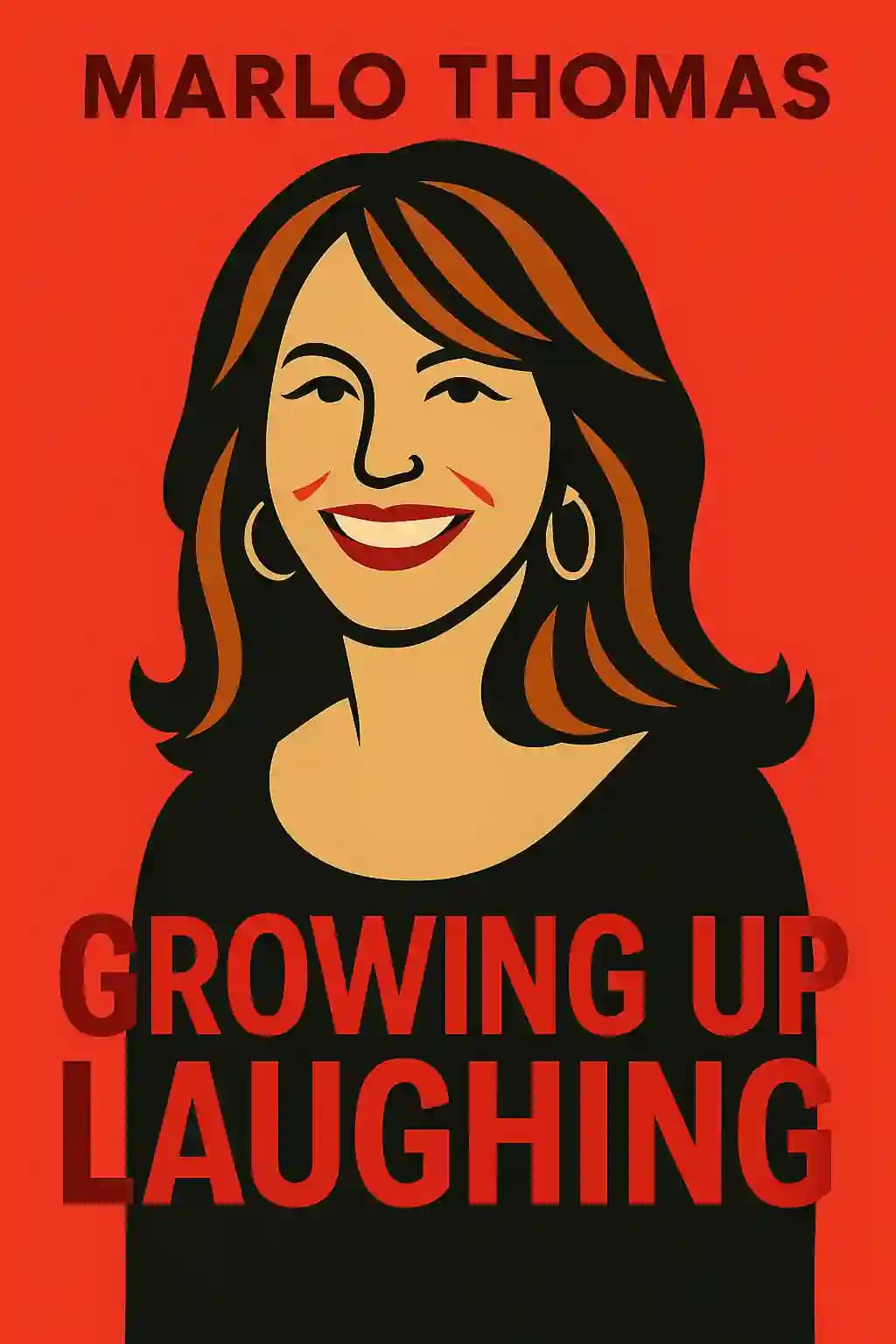
In a world where comedy often feels manufactured, Marlo Thomas's memoir "Growing Up Laughing" stands as a testament to authentic humor's transformative power. This intimate journey through Thomas's life reveals how laughter became her inheritance and salvation. The daughter of legendary comedian Danny Thomas, Marlo grew up surrounded by comedy royalty - from Milton Berle to George Burns - absorbing their craft like osmosis. The book has become a favorite among entertainers and comedy enthusiasts alike, with Jerry Seinfeld calling it "the most insightful exploration of how comedy is born in the human spirit." Beyond its entertainment value, it offers a poignant reminder that humor isn't just about jokes - it's about resilience, connection, and finding light in life's darkest corners.
Capítulo 2
The Comedy Classroom: Learning from Legends
Growing up as Danny Thomas's daughter meant dinner tables transformed into comedy roundtables, with each guest trying to outdo the others. These weren't just funny people - they were masters of their craft, each with distinct approaches to making people laugh. Jan Murray was famously the funniest "in a room," once reducing my father to helpless laughter with a story about chasing Frank Sinatra for an autograph. George Burns displayed remarkable modesty, attributing his own funny remarks to others when retelling them to avoid sounding boastful. Joey Bishop was considered the quickest wit, once getting Sammy Davis Jr. out of a speeding ticket by telling the officer, "The man has one eye. Do you want him to look at the road or at the speedometer?"
These men gathered regularly at Hillcrest Country Club, a Jews-only establishment where my Lebanese Catholic father became an honorary member. Groucho Marx quipped about this arrangement: "I don't mind making a non-Jew an honorary member, but couldn't we at least pick a guy who doesn't look Jewish?" The camaraderie among these comedians created an informal apprenticeship for me - I absorbed their timing, their storytelling techniques, and most importantly, their fearlessness in pursuing laughter.
My father's barber, Harry Gelbart, was another unexpected comedy mentor. His sixteen-year-old son Larry (who later created M*A*S*H) wanted to be a comedy writer, and my father gave him his first chance. Harry's stories often became material for my father's act, though Dad would transform brief anecdotes into elaborate twenty-minute routines while always crediting Harry. This generosity of spirit was common among the comedians of that era - they understood that humor was meant to be shared, not hoarded.
Capítulo 3
The Anatomy of a Joke: Comedy as Craft
Modern comedians approach their work with the same dedication as the legends who preceded them. Jerry Seinfeld, despite his massive success, still tests new material in small clubs, demonstrating his commitment to the craft. He describes the comedian's mindset as a mixture of "humility and outrageous egomania" - doubting your ability to make people laugh while simultaneously believing you deserve an audience's attention.
Seinfeld views comedy as more akin to sports than art: success is objectively measured by laughter, not critics' interpretations. He explains his creative process through his famous missing sock routine, describing how he builds jokes by finding a concept (socks as escaped convicts) and methodically developing all the elements that fit that scenario. "I create false logic for fun," he says, "taking absurd ideas and proving them with rock-solid examples."
Robin Williams credits his mother as his primary comic influence, describing her as "outrageous funny" and willing to "say anything." His comedy awakening came in college when he took an improvisational theater class, partly attracted by the "gorgeous" 25-year-old female teacher, but more importantly because he "started getting laughs on stuff that I improvised." Williams describes comedians as having "a very bizarre combination of masochism and exhibitionism" that amounts to "legalized insanity."
Chris Rock reveals he was "raised by Jews" comedically, spending formative time with comics like Robert Klein and David Brenner rather than exclusively on the chitlin circuit, giving him versatility to perform anywhere. His grandfather and great-grandfather were preachers, explaining his sermon-like delivery style. Rock's grandfather crafted sermons with bullet points rather than full scripts - a technique Rock adopted for his comedy.
Capítulo 4
The Outsider's Advantage: Finding Humor in Difference
Many comedians develop their humor as a response to feeling different or excluded, transforming their perceived weaknesses into comedic strengths. Jon Stewart describes his comedy origins as an outsider - "the only Jew in the neighborhood" in suburban 1970s America. Being "small and Jewish" helped develop his wit as a survival mechanism, forcing him to become quick with comebacks and clever observations. He learned to carefully differentiate between humor that makes people laugh versus getting "your ass kicked," developing a keen sense of timing and audience awareness that would later serve him well in his career.
Stewart explains that his outsider status was good training for stand-up comedy, where "you're just trying to deflect things." He jokes that being funny got him "access to the party" in high school, but only in "some sort of advisory or service role" - even witnessing his first female breast while driving as his better-looking friend got to second base in his Gremlin. This self-deprecating observation about his social status became a cornerstone of his comedic style, allowing him to connect with audiences through shared feelings of awkwardness and exclusion.
Tina Fey shares a similar origin story, deciding at age 12 or 13 to try being funny after realizing "some girls are going to be very pretty, and then the rest of us have to figure out what our coping mechanism is going to be." She credits her "greasy skin and getting your boobs at ten" with building character and forcing her to develop her wit. Rather than being the loud class clown, Fey cultivated a more subtle, observational style of humor, muttering clever comments to make friends laugh - especially in algebra class where humor was easier than math. This early experience shaped her writing style for shows like "30 Rock" and "Mean Girls," where sharp, understated humor often carries the scenes.
Kathy Griffin's comedy developed as a survival strategy against school bullies, not to become popular but to avoid being targeted. Growing up in a working-class Chicago neighborhood, she learned to use humor as both shield and sword. Her self-deprecating style comes from her Irish-Catholic upbringing where parents kept children humble with phrases like "don't get so high and mighty," which she finds more relatable to audiences than the perfect image of celebrities. Griffin's outsider perspective became particularly valuable in her later career when she built her brand around being an industry outsider who could mock celebrity culture while simultaneously participating in it.
These comedians' experiences demonstrate how being an outsider often provides unique perspective and material for comedy. Their early struggles with fitting in became the foundation for successful careers built on observing and commenting on society from a slightly removed vantage point. The ability to find humor in difference and transform personal insecurities into comedic material has proven to be a powerful tool in connecting with audiences who share similar feelings of being outside the mainstream.
Capítulo 5
Family as Comedy Incubator: The First Audience
Almost universally, comedians cite family dynamics as their first comedy training ground. Conan O'Brien credits his Irish-Catholic family dinner table for developing his comedy skills. As the third of six children, he competed to make his discerning father laugh. Early on, he realized comedy was his special talent when his brothers seemed good at everything else.
Billy Crystal describes how his Uncle Berns was particularly influential - a "magic man" who was "dangerous and bawdy" and would perform with Billy, putting him on his shoulders to create an "eight-foot man" or staging fake operas. Billy describes Uncle Berns as a "true eccentric" who equated comedy and art, saying "Who's funnier than Picasso? Everyone has three eyes and six tits!"
Lily Tomlin's childhood home was the D'Elce apartment building, filled with eccentric neighbors who became her first inspiration. From age six or seven, she'd put on shows imitating these neighbors, creating a makeshift stage on the back porch using her mother's sheets as curtains. Her favorite neighbor was the eccentric Mrs. Rupert, who wore fox furs to take out garbage and had mysterious venetian blinds.
My own father inherited his sense of humor from his Uncle Tony, described as "a real card" who was so funny he was banned from family funerals (and later inspired the character Uncle Tonoose on Make Room for Daddy). Dad's flair for drama earned him the family nickname "Orson" (after Welles). His humor was often deployed in parenting - like greeting my date with a shotgun when we arrived home fifteen minutes past curfew, or blasting John Philip Sousa marches through speakers to kill the romantic mood when I was alone with a boyfriend.
Capítulo 6
The Comedian's Journey: Persistence Through Rejection
The path to comedy success is rarely smooth. Joan Rivers pursued comedy not because she knew she was funny, but because she "had no choice" - it was her addiction. Despite family discouragement (her mother couldn't even say "comedian"), Joan persisted through countless rejections. She explains that comedy comes from anger and revenge - "Comedy comes out of 'I'll show you'" - and describes performing as being a "lion tamer" who must command the audience.
My own journey into entertainment faced similar obstacles. Growing up nicknamed "Miss Independence," I was determined to make it in show business on my own despite my father's warnings about how difficult the industry was for women. When my struggles continued, my father tried to help by setting up a meeting with producer Mike Frankovich, who dismissively suggested I should marry and have children instead. Demoralized, I told my father never to make calls on my behalf again.
Eventually, my father directly confronted me, suggesting I give up acting since lightning rarely strikes twice in one family. Furious, I stormed out declaring, "Not only am I going to make it, but someday you and your partner, Sheldon Leonard, are going to want to hire me and you won't be able to fucking afford me!" Years later, watching my sister Terre perform, my father noted she would never make it because she wasn't "angry like you were."
When offered the national touring company of "Barefoot in the Park," I turned it down, refusing to face endless comparisons to my father. Instead, I boldly called Mike Nichols directly to audition for the London production. In England, where my father wasn't well known, I finally stood on my own merits. Opening night was triumphant - my parents flew over, with Dad looking utterly relieved that I would be okay.
Capítulo 7
Vulnerability and Power: The Psychology of Comedy
Alan Alda offers fascinating insights about comedy, noting that comedians "kill" by making audiences helpless with laughter. He describes watching Alan King masterfully control an audience within minutes - an observation completely lost on Dan Rather standing beside him. This stark contrast between those who understand comedy's power and those who don't illustrates the subtle artistry at work. Alda suggests comedians' darker impulses stem from feelings of powerlessness - a desire to control the audience before they control you: "They'll kill you if you don't kill them first." This language reveals the vulnerability beneath comedy - comics who have bad nights say they "died," reflecting the profound psychological stakes of live performance.
The touring comedian's life requires tremendous energy and courage - working two shows nightly, six nights weekly, facing diverse strangers alone and transforming them into your audience. The physical and emotional toll is immense, with performers often living in a perpetual state of anxiety mixed with adrenaline. My father reminded me of a matador, often spinning seemingly into narrative dead ends before masterfully turning with his wit to bring down the house. Like a bullfighter's calculated dance with danger, he would deliberately lead audiences down uncertain paths, knowing exactly when to deliver the punchline that would transform tension into release. I once gave him cuff links with matadors engraved with "Ole" - a fitting tribute to this artful navigation of risk and reward.
Don Rickles mastered perhaps the most dangerous form of comedy: insulting his audience. His approach required exceptional timing and an innate understanding of human psychology - knowing exactly how far to push without crossing the line into genuine offense. Remarkably, people loved it, even paying extra to sit close enough to become targets of his barbs. His technique involved creating a shared experience where the audience felt in on the joke, rather than merely its target. At 85, with an Emmy and bestselling memoir, he continues packing houses because beneath his blustery insults lies an adorable softie - a dynamic that makes his act work by balancing aggression with underlying warmth.
Conan O'Brien believes his Catholic upbringing created the perfect conditions for comedy: "Repression gets a bad rap in our society. Think about the way an engine works - you've got a confined space, you build up all this pressure, and it makes the car go ninety miles an hour." Comedy became his release valve, the acceptable way to express forbidden thoughts. This insight reveals how cultural and religious constraints can paradoxically fuel creativity, as the need to find acceptable outlets for expression leads to more sophisticated forms of humor. Many great comedians share similar backgrounds where early experiences with strict social or religious codes helped shape their comedic voices.
The psychological dynamics of stand-up comedy mirror larger truths about human nature - our need for control, our fear of rejection, and our desire for connection through shared laughter. The best comedians understand these dynamics instinctively, using them to create performances that are both personally cathartic and universally appealing.
Capítulo 8
Breaking Barriers: Comedy as Social Change
Comedy has often been a powerful vehicle for challenging social norms and initiating cultural change. As a young actress in the mid-1960s, I encountered the rigid limitations of Hollywood's gender expectations firsthand. When ABC's influential producer Edgar Scherick offered me typical roles - invariably as someone's wife, secretary, or daughter - I took a bold stance that would alter television history. During that pivotal meeting, I asked the question that would reshape female representation on TV: "Did you ever think about doing a show where the girl is 'the someone'?"
The network's initial resistance was rooted in their market research, which adamantly claimed audiences wouldn't accept shows about independent young women living alone without families. However, "That Girl" not only won its timeslot on premiere night but maintained strong ratings throughout its run. We discovered what the research had missed - millions of young women across America already identified with this supposedly revolutionary character because they saw their own aspirations reflected in her journey.
The impact of the show extended far beyond entertainment. I began receiving desperate letters from young women seeking guidance and help, which profoundly politicized my understanding of women's struggles. These letters revealed a systemic lack of resources for women in crisis, from domestic violence to workplace discrimination. On set, I engaged in constant negotiations about content, fighting against jokes I found demeaning to women, though these battles weren't always successful. A pivotal moment came when I met Gloria Steinem, leading to both a deep friendship and my involvement with welfare mothers' activism, where I witnessed firsthand the intersection of gender and economic inequality.
Years later, while reading to my niece Dionne, I encountered another form of gender stereotyping - this time in children's literature. The books were filled with limiting portrayals: passive princesses, boys who never cried, and rigid gender roles that constrained young imaginations. This discovery inspired me to create "Free to Be... You and Me," an ambitious project designed to offer children more empowering narratives. The album featured an unprecedented collection of diverse talents, including Harry Belafonte, football player Rosie Grier (whose rendition of "It's All Right to Cry" challenged toxic masculinity), and a young Michael Jackson, then just fourteen years old.
The project exceeded our wildest expectations, evolving from a simple album into a multimedia phenomenon that included a bestselling book and an Emmy-winning ABC-TV special. However, this success wasn't without its challenges - network executives initially balked at songs like "William Wants a Doll," fearing backlash from parents. Yet the overwhelming positive response proved that audiences were ready for content that challenged traditional gender roles and celebrated individual authenticity.
Capítulo 9
The Healing Power of Humor: Laughter in Dark Times
Perhaps the most profound lesson from growing up with comedy is understanding humor's healing power. A few months after my father's death, our family gathered at Hillcrest Country Club following his grandchildren's high school graduation ceremony. The atmosphere was heavy with grief, as it had been for weeks. We chose a private room, still treating my mother delicately in her fragile emotional state, aware that any small reminder could trigger tears. The weight of loss hung over us like a thick cloud, threatening to overshadow what should have been a celebratory occasion.
Suddenly, George Burns walked in, his signature cigar in hand, and went straight to my mother. With impeccable comic timing and that mischievous smile he'd perfected over seven decades in show business, he declared, "Hey Rosie, I hear you're single again!" The family froze in terror, collectively holding our breath at what seemed like a catastrophic breach of sensitivity. But my mother, who hadn't genuinely smiled in weeks, threw her head back and roared with laughter, and we all joined in. It was a gutsy, smart move that reminded us all of the healing power of humor - how it could pierce through grief's heaviest moments and remind us that joy was still possible.
When Elaine May and I became close friends after initial misunderstandings, she provided the perfect comfort when my father died by acknowledging the awfulness of the situation rather than offering platitudes. While others awkwardly offered "he's in a better place" or "time heals all wounds," Elaine simply said, "This is terrible, and it's going to be terrible for a while." Then she'd share funny stories about my father, making me laugh through tears. This honest approach to grief through humor became a lifeline, showing how comedy could acknowledge pain while providing relief.
St. Jude Children's Research Hospital - my father's greatest legacy - was literally built on laughter. Danny Thomas raised the initial funds through benefit concerts featuring comedy legends like Milton Berle, Jack Benny, and Bob Hope. His passion stemmed from witnessing children dying without medical care during his immigrant childhood in Toledo, where families couldn't afford basic healthcare. The hospital became his life's mission, fueled by both tragedy and hope. After his death, when I reluctantly visited the hospital, expecting to find only sadness, I discovered an "off-chemo party" with children celebrating one child's recovery. The halls echoed with giggles, and even kids in wheelchairs were telling jokes to their nurses. In that moment, I understood my father's deep personal connection to St. Jude - it wasn't just philanthropy but a community where hope lived through laughter, where healing happened not just through medicine but through joy.
The lesson became clear: humor wasn't just entertainment; it was medicine for the soul. Whether in a country club after a funeral, during late-night conversations with friends, or in hospital corridors, laughter could light the darkest corners of human experience, offering not an escape from pain, but a way to bear it together.
Capítulo 10
The Legacy of Laughter: Comedy's Enduring Impact
In the wee hours of the morning, I'd often hear the sound of an audiotape rewinding and find my father in his study, analyzing his comedy routines. "You can never lie to the audience," he'd tell me, explaining how he carefully crafted his performances. The nightclub comedians of my youth - George Burns, Milton Berle, Sid Caesar - all followed the same pre-show ritual: sitting in their dressing rooms in starched white tux shirts, black satin bow ties, and shorts. As my dad explained, "People eating dinner don't want to look up at a guy with a crumpled crotch." This showed their deep respect for audiences.
These performers made entertaining look effortless, striding onstage to their theme songs looking happy and eager to please. But their seemingly casual performances were meticulously crafted - carefully measured, honed and reworked until worthy of presentation. This dedication to craft is what separates true comedians from those who simply tell jokes.
When my father performed at London's prestigious Palladium, he faced his greatest test. London audiences were notoriously tough, and he was following the beloved Danny Kaye, with newspapers heralding "AMERICA HAS SENT US ANOTHER DANNY!" On opening night, Dad experienced genuine fear for the first time - his knees actually knocked. Facing the well-heeled British audience, he delivered a brilliant, spontaneous line: "I hear you're the toughest, most discriminating audience in the world for a performer. Well, I wouldn't be in your shoes tonight for all the money in the world." The audience roared with laughter, and he knew he'd won them over.
Years later, when I had become successful with "That Girl," I was in my father's audience at the Sands Hotel when I heard him call out, "Ladies and gentlemen, we have a special star in our audience tonight. Miss Marlo Thomas, please stand up and take a bow." For the little girl who had watched her Daddy hone his act so many years before - and for the father who had hoped to spare his big girl the heartache of show business - it was a powerful moment for both of us, a testament to the enduring legacy of laughter that had shaped both our lives.